Department of Gastrointestinal Surgery, Medical Research Institute, Zhongnan Hospital of Wuhan University, Wuhan, China.
College of Life Sciences, Wuhan University, Wuhan, China.
PLoS Pathog. 2019 Apr 3;15(4):e1007680. doi: 10.1371/journal.ppat.1007680. eCollection 2019 Apr.
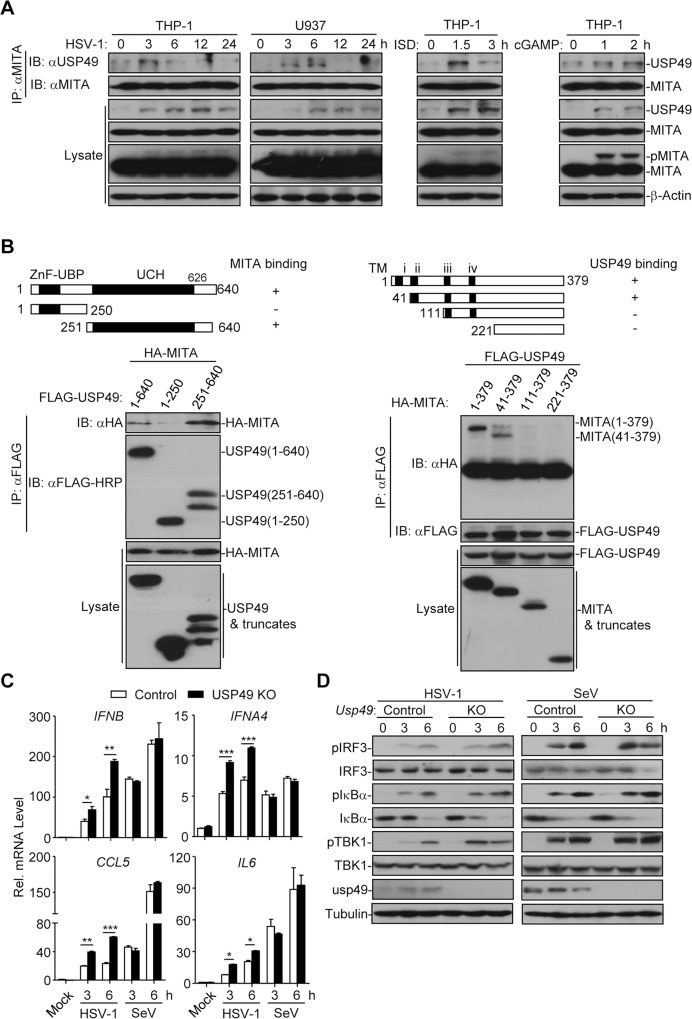
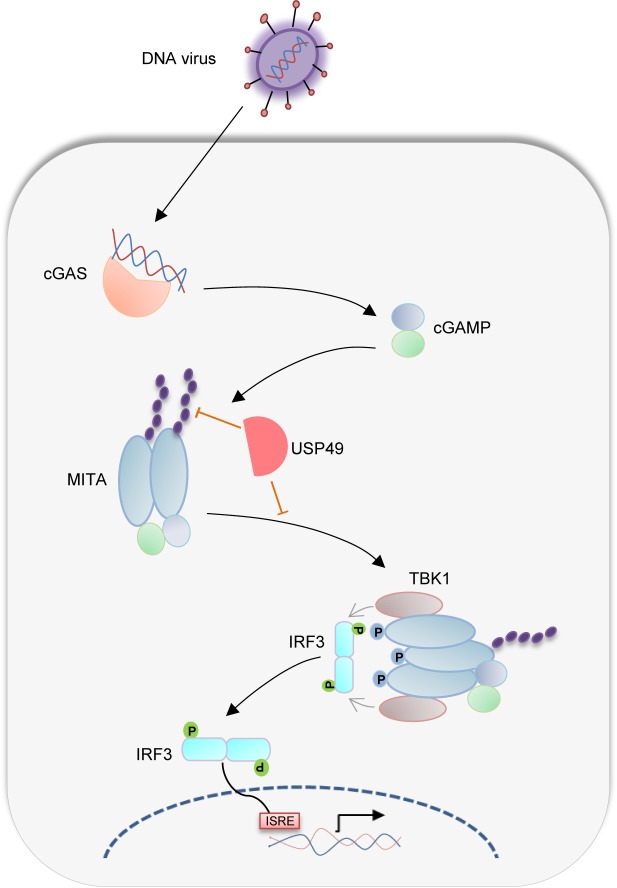
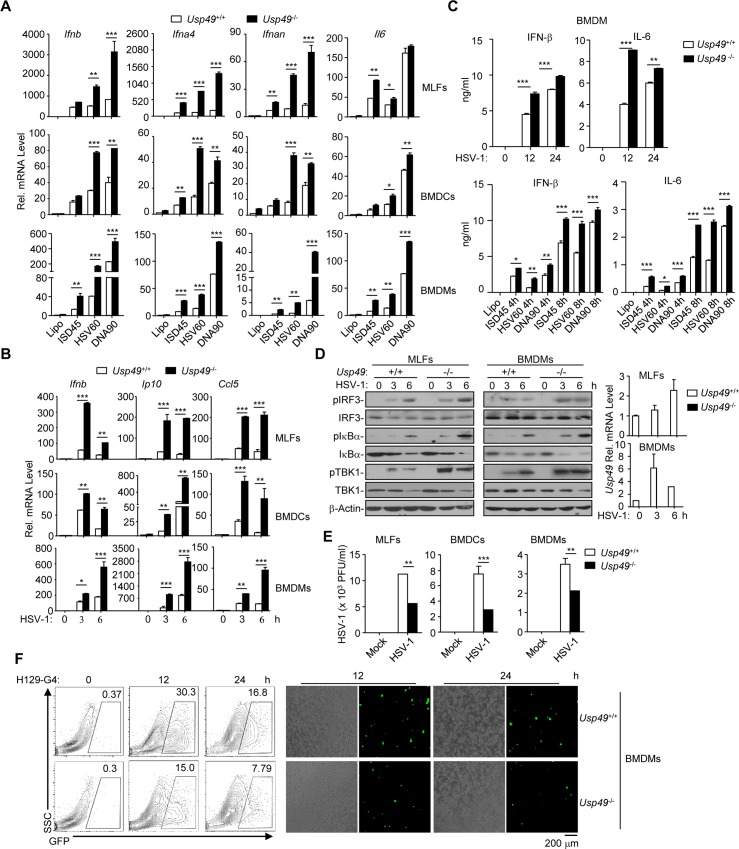
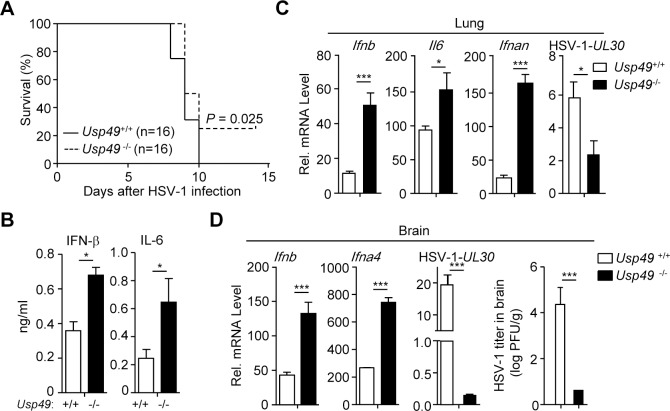
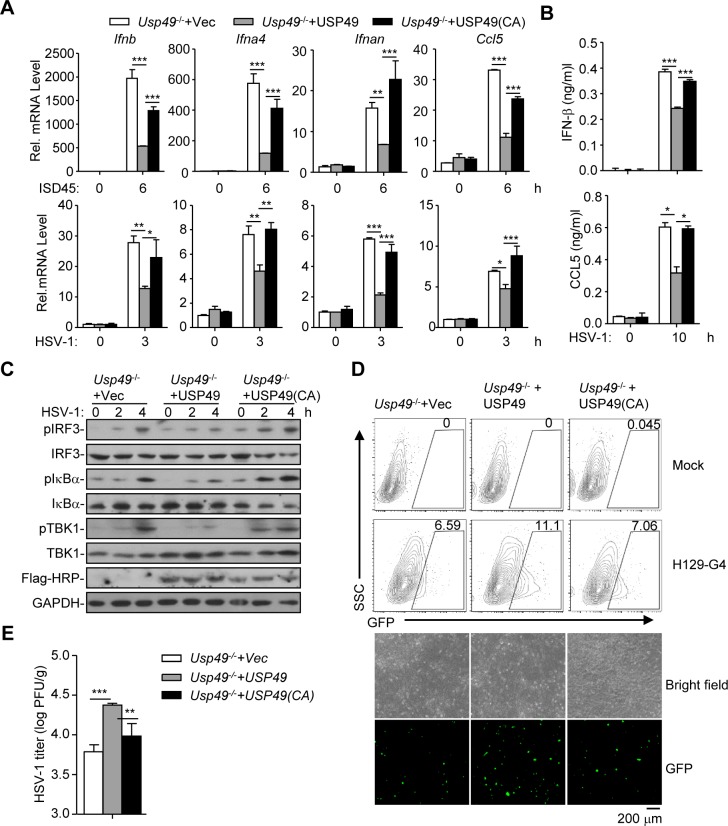
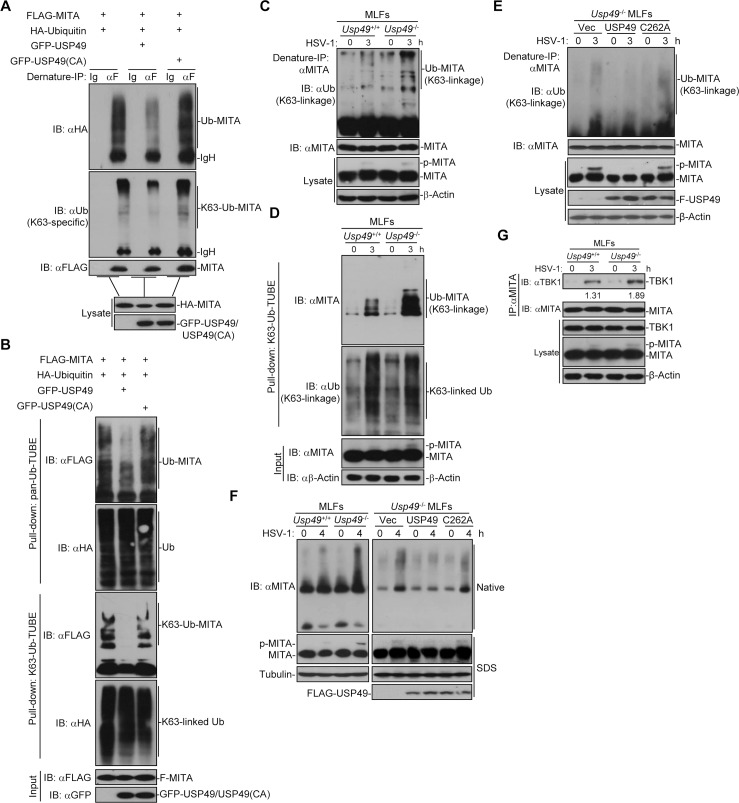
Mediator of IRF3 activation (MITA, also known as STING and ERIS) is an essential adaptor protein for cytoplasmic DNA-triggered signaling and involved in innate immune responses, autoimmunity and tumorigenesis. The activity of MITA is critically regulated by ubiquitination and deubiquitination. Here, we report that USP49 interacts with and deubiquitinates MITA after HSV-1 infection, thereby turning down cellular antiviral responses. Knockdown or knockout of USP49 potentiated HSV-1-, cytoplasmic DNA- or cGAMP-induced production of type I interferons (IFNs) and proinflammatory cytokines and impairs HSV-1 replication. Consistently, Usp49-/- mice exhibit resistance to lethal HSV-1 infection and attenuated HSV-1 replication compared to Usp49+/+ mice. Mechanistically, USP49 removes K63-linked ubiquitin chains from MITA after HSV-1 infection which inhibits the aggregation of MITA and the subsequent recruitment of TBK1 to the signaling complex. These findings suggest a critical role of USP49 in terminating innate antiviral responses and provide insights into the complex regulatory mechanisms of MITA activation.
IRF3 激活介体(MITA,也称为 STING 和 ERIS)是细胞质 DNA 触发信号转导所必需的衔接蛋白,参与固有免疫反应、自身免疫和肿瘤发生。MITA 的活性受到泛素化和去泛素化的严格调控。在这里,我们报告说,HSV-1 感染后,USP49 与 MITA 相互作用并使其去泛素化,从而下调细胞抗病毒反应。USP49 的敲低或敲除增强了 HSV-1、细胞质 DNA 或 cGAMP 诱导的 I 型干扰素(IFN)和促炎细胞因子的产生,并损害 HSV-1 复制。一致地,与 Usp49+/+ 小鼠相比,Usp49-/- 小鼠对致死性 HSV-1 感染具有抗性,并且 HSV-1 复制减弱。在机制上,HSV-1 感染后,USP49 从 MITA 上去除 K63 连接的泛素链,从而抑制 MITA 的聚集和随后 TBK1 向信号复合物的募集。这些发现表明 USP49 在终止先天抗病毒反应中起关键作用,并为 MITA 激活的复杂调节机制提供了新的见解。