Department of Biological Sciences, The RNA Institute, University at Albany-SUNY, Albany, New York, USA.
Department of Microbiology, Icahn School of Medicine at Mount Sinai, New York, New York, USA.
J Virol. 2019 May 29;93(12). doi: 10.1128/JVI.00520-19. Print 2019 Jun 15.
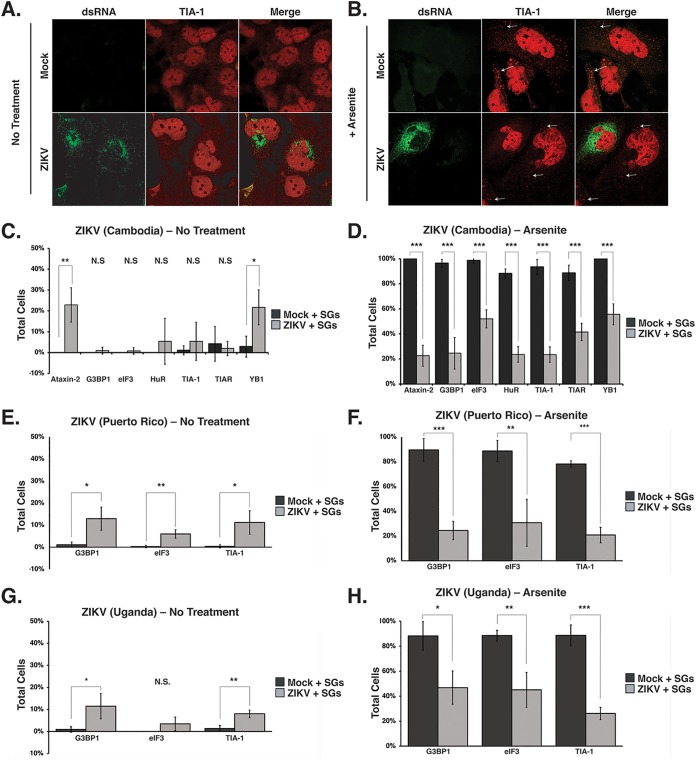
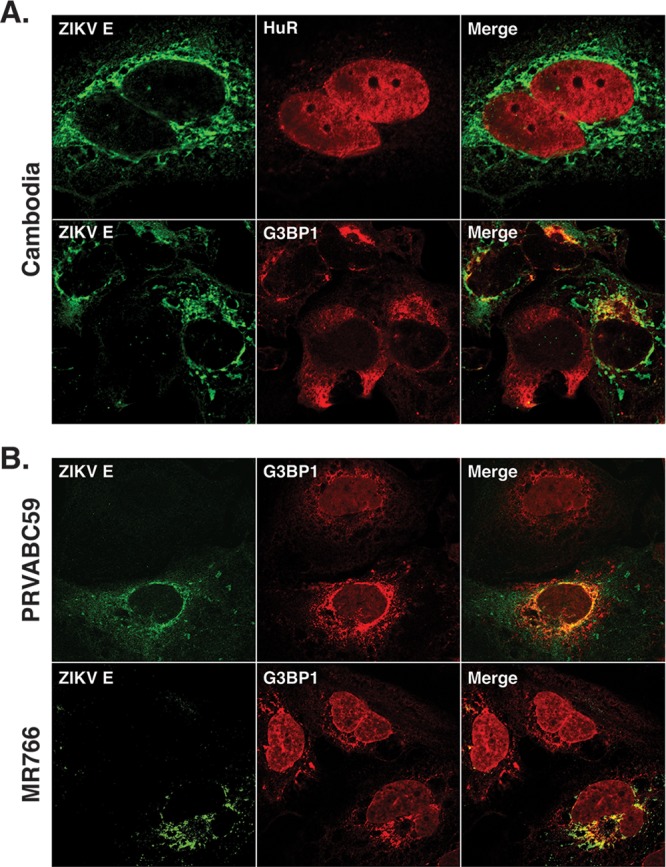
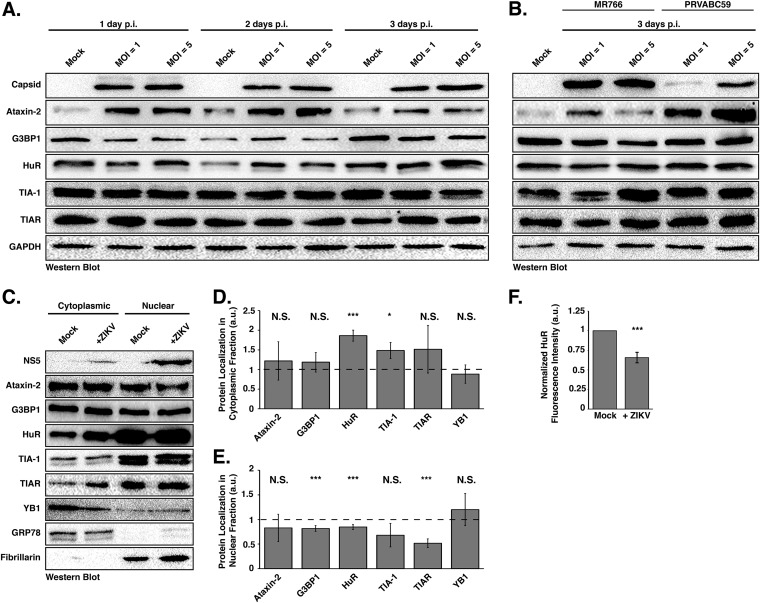
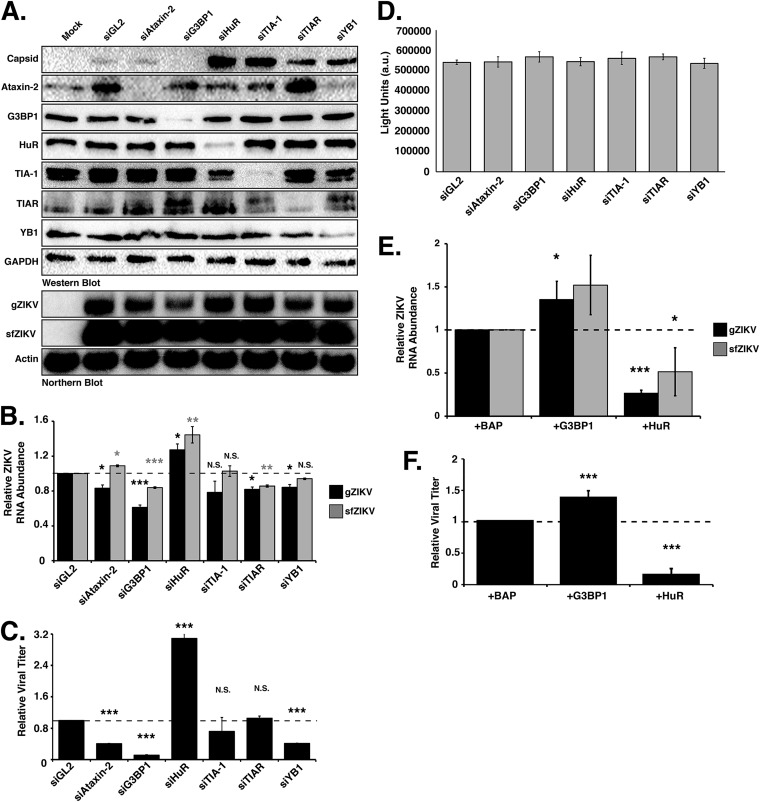
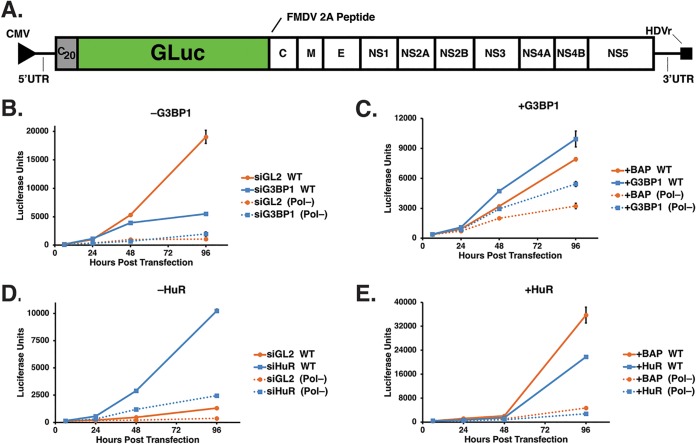
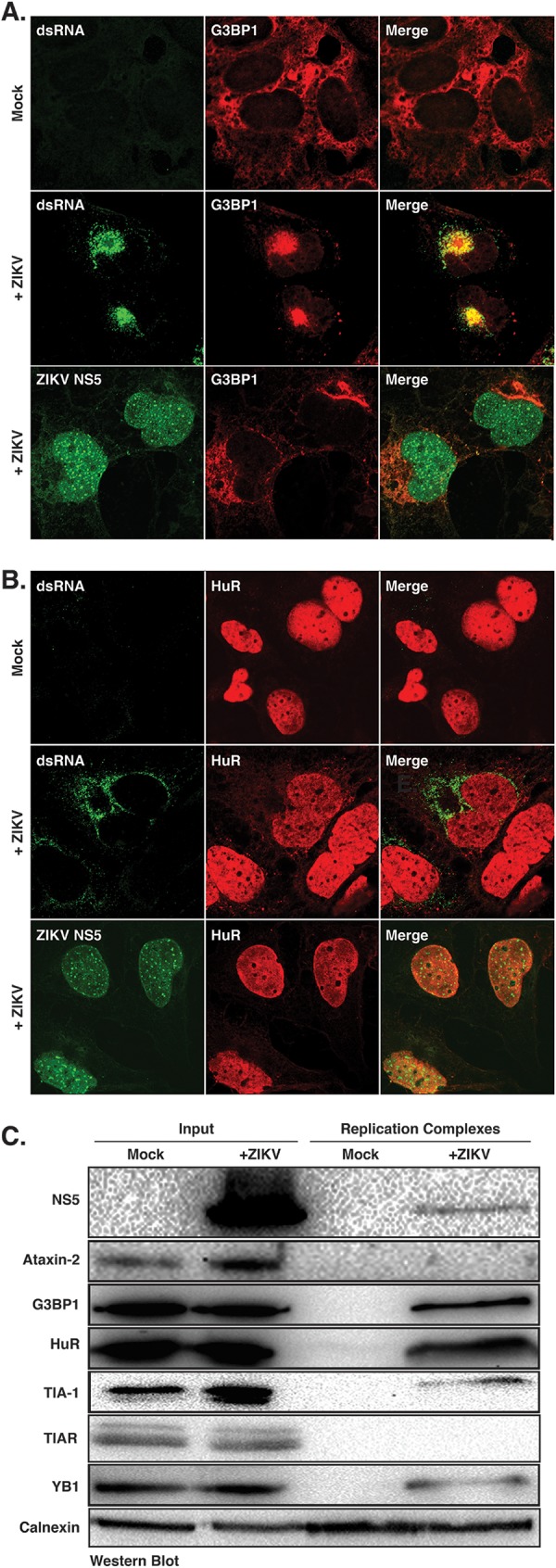
Flaviviruses limit the cell stress response by preventing the formation of stress granules (SGs) and modulate viral gene expression by subverting different proteins involved in the stress granule pathway. In this study, we investigated the formation of stress granules during Zika virus (ZIKV) infection and the role stress granule proteins play during the viral life cycle. Using immunofluorescence and confocal microscopy, we determined that ZIKV disrupted the formation of arsenite-induced stress granules and changed the subcellular distribution, but not the abundance or integrity, of stress granule proteins. We also investigated the role of different stress granule proteins in ZIKV infection by using target-specific short interfering RNAs to deplete Ataxin2, G3BP1, HuR, TIA-1, TIAR, and YB1. Knockdown of TIA-1 and TIAR affected ZIKV protein and RNA levels but not viral titers. Conversely, depletion of Ataxin2 and YB1 decreased virion production despite having only a small effect on ZIKV protein expression. Notably, however, depletion of G3BP1 and HuR decreased and increased ZIKV gene expression and virion production, respectively. Using an MR766 Luciferase reporter genome together with knockdown and overexpression assays, G3BP1 and HuR were found to modulate ZIKV replication. These data indicate that ZIKV disrupts the formation of stress granules by sequestering stress granule proteins required for replication, where G3BP1 functions to promote ZIKV infection while HuR exhibits an antiviral effect. The results of ZIKV relocalizing and subverting select stress granule proteins might have broader consequences on cellular RNA homeostasis and contribute to cellular gene dysregulation and ZIKV pathogenesis. Many viruses inhibit SGs. In this study, we observed that ZIKV restricts SG assembly, likely by relocalizing and subverting specific SG proteins to modulate ZIKV replication. This ZIKV-SG protein interaction is interesting, as many SG proteins are also known to function in neuronal granules, which are critical in neural development and function. Moreover, dysregulation of different SG proteins in neurons has been shown to play a role in the progression of neurodegenerative diseases. The likely consequences of ZIKV modulating SG assembly and subverting specific SG proteins are alterations to cellular mRNA transcription, splicing, stability, and translation. Such changes in cellular ribostasis could profoundly affect neural development and contribute to the devastating developmental and neurological anomalies observed following intrauterine ZIKV infection. Our study provides new insights into virus-host interactions and the identification of the SG proteins that may contribute to the unusual pathogenesis associated with this reemerging arbovirus.
黄病毒通过阻止应激颗粒(SGs)的形成来限制细胞应激反应,并通过颠覆参与应激颗粒途径的不同蛋白来调节病毒基因表达。在这项研究中,我们研究了寨卡病毒(ZIKV)感染过程中应激颗粒的形成,以及应激颗粒蛋白在病毒生命周期中的作用。通过免疫荧光和共聚焦显微镜,我们确定 ZIKV 破坏了亚砷酸盐诱导的应激颗粒的形成,并改变了应激颗粒蛋白的亚细胞分布,但不影响其丰度或完整性。我们还通过使用靶向特定的短干扰 RNA 耗尽 Ataxin2、G3BP1、HuR、TIA-1、TIAR 和 YB1 来研究不同应激颗粒蛋白在 ZIKV 感染中的作用。TIA-1 和 TIAR 的敲低影响 ZIKV 蛋白和 RNA 水平,但不影响病毒滴度。相反,尽管对 ZIKV 蛋白表达的影响很小,但 Ataxin2 和 YB1 的耗尽会降低病毒粒子的产生。值得注意的是,然而,G3BP1 和 HuR 的耗尽分别降低和增加了 ZIKV 基因表达和病毒粒子的产生。使用 MR766 荧光素酶报告基因组以及敲低和过表达测定,发现 G3BP1 和 HuR 调节 ZIKV 复制。这些数据表明,ZIKV 通过隔离复制所需的应激颗粒蛋白来破坏应激颗粒的形成,其中 G3BP1 促进 ZIKV 感染,而 HuR 则表现出抗病毒作用。ZIKV 重新定位和颠覆选择应激颗粒蛋白的结果可能对细胞 RNA 稳态产生更广泛的影响,并导致细胞基因失调和 ZIKV 发病机制。许多病毒抑制 SGs。在这项研究中,我们观察到 ZIKV 限制 SG 组装,可能是通过重新定位和颠覆特定的 SG 蛋白来调节 ZIKV 复制。这种 ZIKV-SG 蛋白相互作用很有趣,因为许多 SG 蛋白也已知在神经元颗粒中发挥作用,神经元颗粒在神经发育和功能中至关重要。此外,神经元中不同 SG 蛋白的失调已被证明在神经退行性疾病的进展中发挥作用。ZIKV 调节 SG 组装和颠覆特定 SG 蛋白的可能后果是改变细胞 mRNA 转录、剪接、稳定性和翻译。这种细胞核糖体的变化可能会深刻影响神经发育,并导致宫内 ZIKV 感染后观察到的破坏性发育和神经异常。我们的研究为病毒-宿主相互作用提供了新的见解,并确定了可能导致这种新兴虫媒病毒相关异常发病机制的 SG 蛋白。