Department of Surgery, University of California, San Diego, La Jolla, CA 92093.
Department of Surgery, University of California, San Diego, La Jolla, CA 92093
Proc Natl Acad Sci U S A. 2019 Apr 16;116(16):7932-7940. doi: 10.1073/pnas.1821853116. Epub 2019 Apr 3.
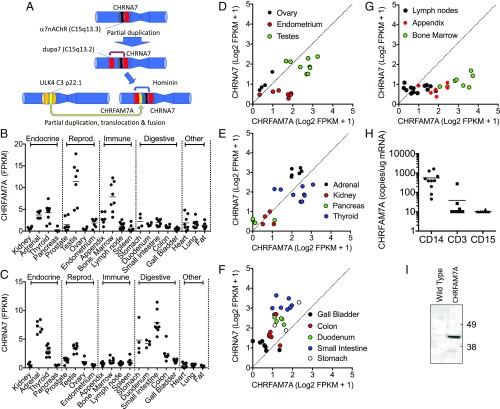
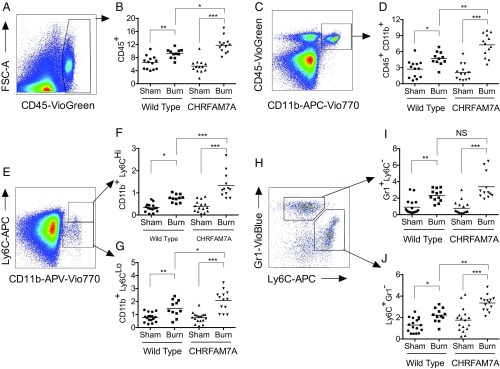
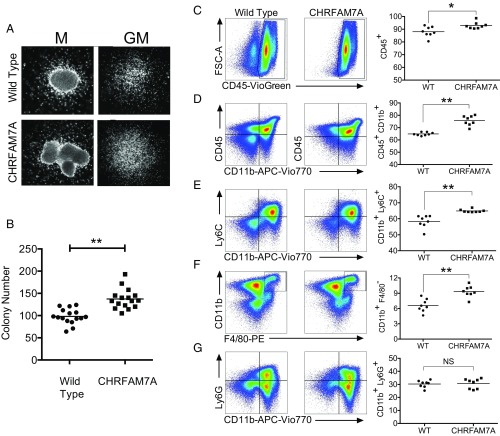
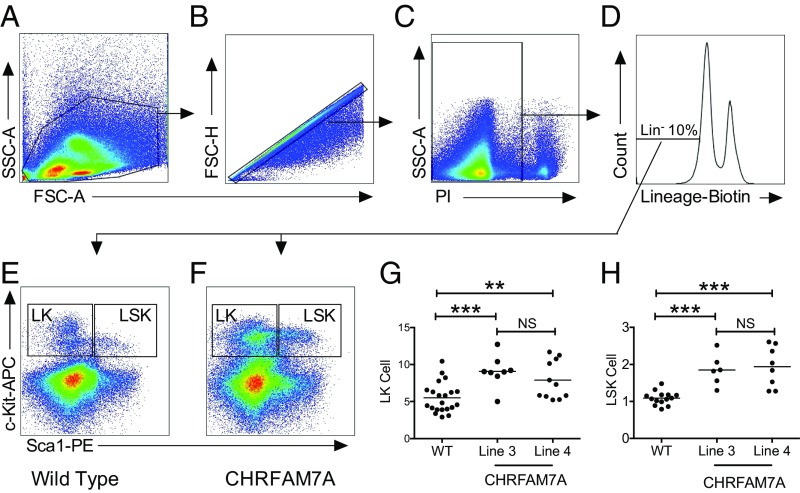
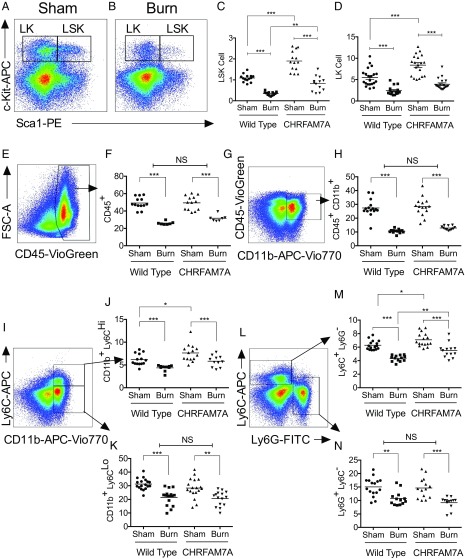
A subset of genes in the human genome are uniquely human and not found in other species. One example is CHRFAM7A, a dominant-negative inhibitor of the antiinflammatory α7 nicotinic acetylcholine receptor (α7nAChR/CHRNA7) that is also a neurotransmitter receptor linked to cognitive function, mental health, and neurodegenerative disease. Here we show that CHRFAM7A blocks ligand binding to both mouse and human α7nAChR, and hypothesized that CHRFAM7A-transgenic mice would allow us to study its biological significance in a tractable animal model of human inflammatory disease, namely SIRS, the systemic inflammatory response syndrome that accompanies severe injury and sepsis. We found that CHRFAM7A increased the hematopoietic stem cell (HSC) reservoir in bone marrow and biased HSC differentiation to the monocyte lineage in vitro. We also observed that while the HSC reservoir was depleted in SIRS, HSCs were spared in CHRFAM7A-transgenic mice and that these mice also had increased immune cell mobilization, myeloid cell differentiation, and a shift to inflammatory monocytes from granulocytes in their inflamed lungs. Together, the findings point to a pathophysiological inflammatory consequence to the emergence of CHRFAM7A in the human genome. To this end, it is interesting to speculate that human genes like CHRFAM7A can account for discrepancies between the effectiveness of drugs like α7nAChR agonists in animal models and human clinical trials for inflammatory and neurodegenerative disease. The findings also support the hypothesis that uniquely human genes may be contributing to underrecognized human-specific differences in resiliency/susceptibility to complications of injury, infection, and inflammation, not to mention the onset of neurodegenerative disease.
人类基因组中的一部分基因是人类特有的,在其他物种中找不到。一个例子是 CHRFAM7A,它是一种抗炎α7 烟碱型乙酰胆碱受体(α7nAChR/CHRNA7)的显性负抑制剂,也是一种与认知功能、心理健康和神经退行性疾病相关的神经递质受体。在这里,我们表明 CHRFAM7A 阻断了配体与小鼠和人类 α7nAChR 的结合,并假设 CHRFAM7A 转基因小鼠将使我们能够在一种易于处理的人类炎症疾病模型中研究其生物学意义,即 SIRS,即严重损伤和败血症伴随的全身炎症反应综合征。我们发现 CHRFAM7A 增加了骨髓中的造血干细胞(HSC)储备,并使 HSC 在体外偏向于单核细胞谱系分化。我们还观察到,虽然 SIRS 中 HSC 储备被耗尽,但 CHRFAM7A 转基因小鼠中的 HSC 得以幸免,并且这些小鼠还增加了免疫细胞动员、髓样细胞分化,以及它们发炎的肺部中从粒细胞向炎性单核细胞的转变。总之,这些发现表明 CHRFAM7A 在人类基因组中的出现导致了病理生理炎症后果。为此,有趣的是推测像 CHRFAM7A 这样的人类基因可以解释在动物模型和人类临床试验中,α7nAChR 激动剂等药物的有效性存在差异的原因。这些发现还支持了这样一种假设,即独特的人类基因可能是导致人类对损伤、感染和炎症并发症的弹性/易感性存在未被认识到的差异的原因之一,更不用说神经退行性疾病的发病了。