Ben May Department for Cancer Research, University of Chicago, Chicago, IL, 60637, USA.
Department of Pathology and Laboratory Medicine, Indiana University School of Medicine, Indianapolis, IN, 46202, USA.
Cell Death Dis. 2019 Apr 5;10(4):311. doi: 10.1038/s41419-019-1548-7.
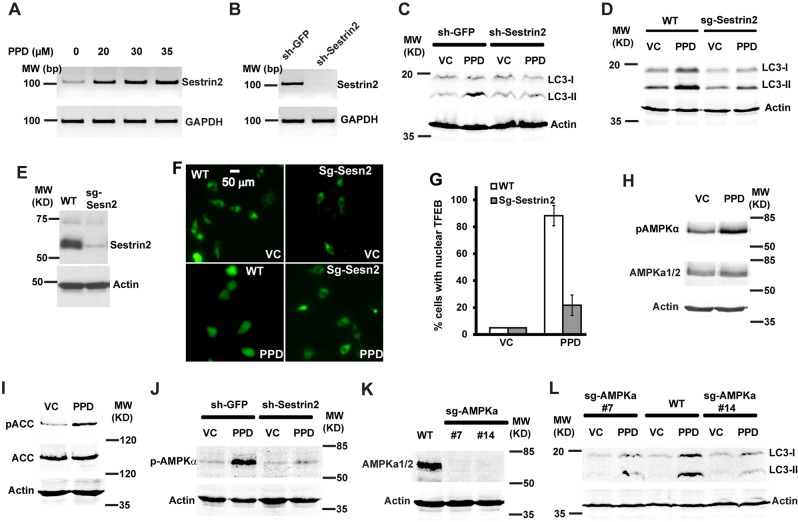
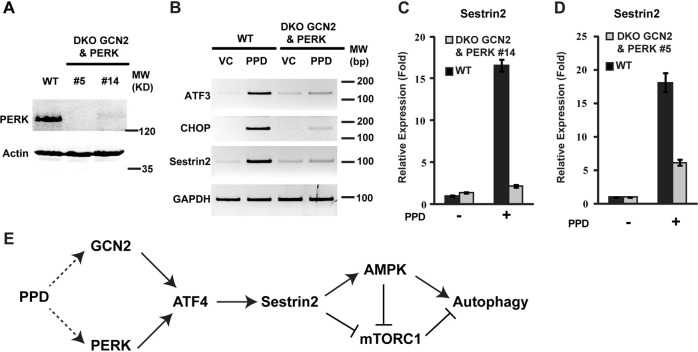
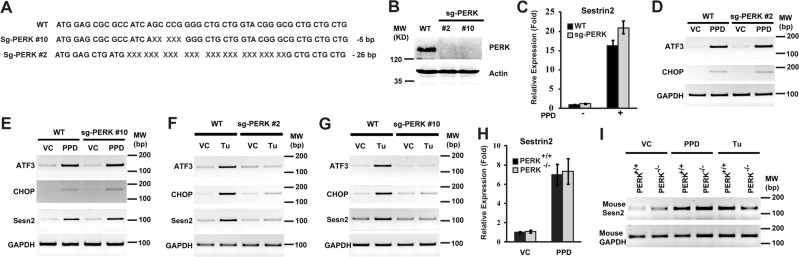
Ginseng is one of the most commonly used herbs that is believed to have a variety of biological activities, including reducing blood sugar and cholesterol levels, anti-cancer, and anti-diabetes activities. However, little is known about the molecular mechanisms involved. In this study, we showed that protopanaxadiol (PPD), a metabolite of the protopanaxadiol group ginsenosides that are the major pharmacological constituents of ginsengs, significantly altered the expression of genes involved in metabolism, elevated Sestrin2 (Sesn2) expression, activated AMPK, and induced autophagy. Using CRISPR/CAS9-mediated gene editing and shRNA-mediated gene silencing, we demonstrated that Sesn2 is required for PPD-induced AMPK activation and autophagy. Interestingly, we showed that PPD-induced Sesn2 expression is mediated redundantly by the GCN2/ATF4 amino acid-sensing pathway and the PERK/ATF4 endoplasmic reticulum (ER) stress pathway. Our results suggest that ginseng metabolite PPD modulates the metabolism of amino acids and lipids, leading to the activation of the stress-sensing kinases GCN2 and PERK to induce Sesn2 expression, which promotes AMPK activation, autophagy, and metabolic health.
人参是最常用的草药之一,被认为具有多种生物活性,包括降低血糖和胆固醇水平、抗癌和抗糖尿病作用。然而,关于涉及的分子机制知之甚少。在这项研究中,我们表明,原人参二醇(PPD),一种人参中主要药理成分的原人参二醇组人参皂苷的代谢产物,显著改变了参与代谢的基因的表达,上调 Sestrin2(Sesn2)的表达,激活 AMPK,并诱导自噬。使用 CRISPR/CAS9 介导的基因编辑和 shRNA 介导的基因沉默,我们证明 Sesn2 是 PPD 诱导的 AMPK 激活和自噬所必需的。有趣的是,我们表明 PPD 诱导的 Sesn2 表达是由 GCN2/ATF4 氨基酸感应途径和 PERK/ATF4 内质网(ER)应激途径冗余介导的。我们的研究结果表明,人参代谢物 PPD 调节氨基酸和脂质的代谢,激活应激感应激酶 GCN2 和 PERK 诱导 Sesn2 的表达,从而促进 AMPK 的激活、自噬和代谢健康。