Strathclyde Institute of Pharmacy and Biomedical Sciences, University of Strathclyde, Glasgow, G4 0RE, UK.
Institute of Infection, Immunity and Inflammation, University of Glasgow, Glasgow, G12 8TA, UK.
Nat Commun. 2019 Apr 5;10(1):1554. doi: 10.1038/s41467-019-09361-0.
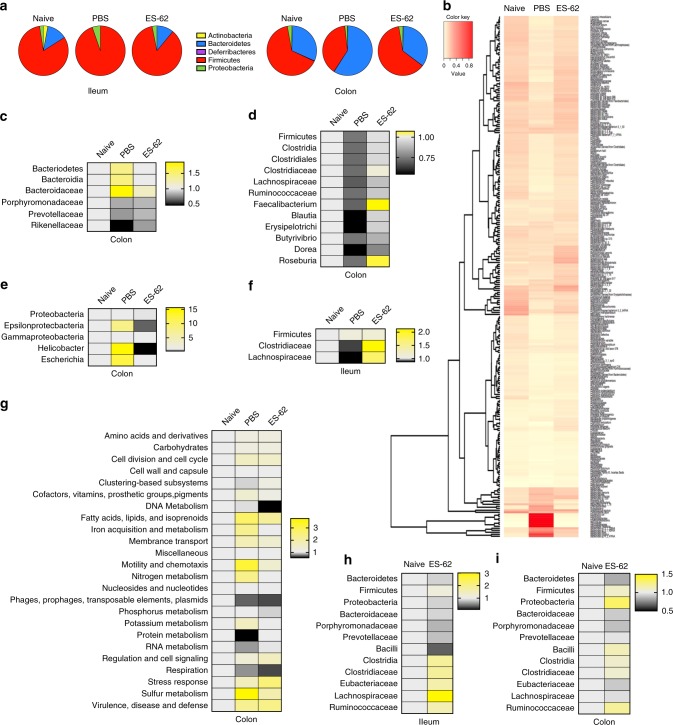
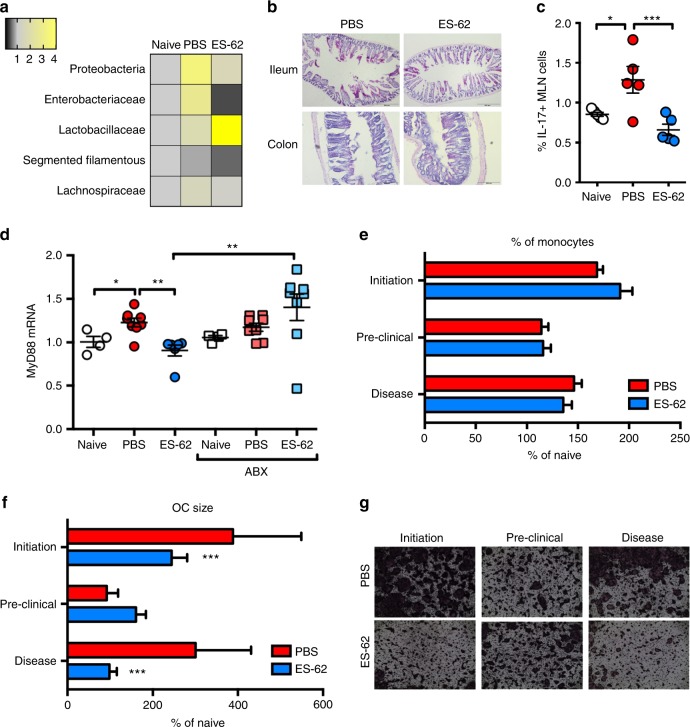
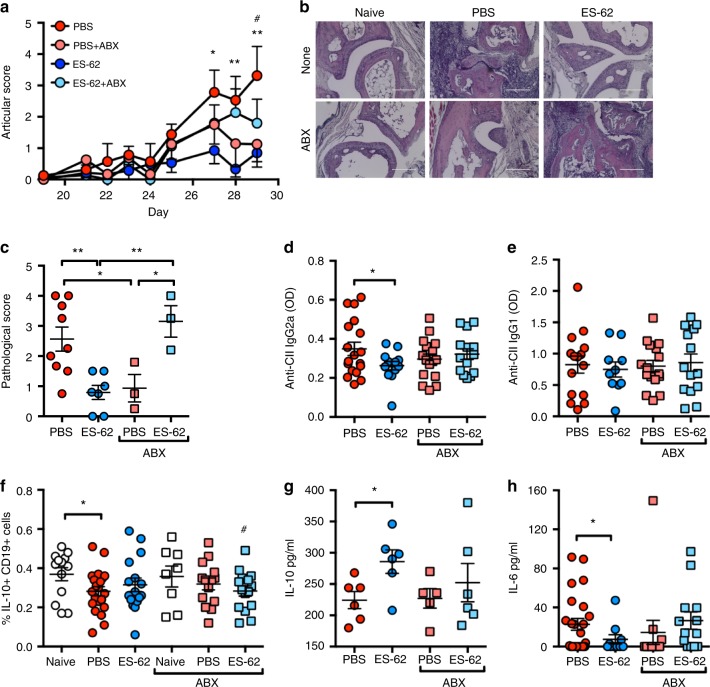
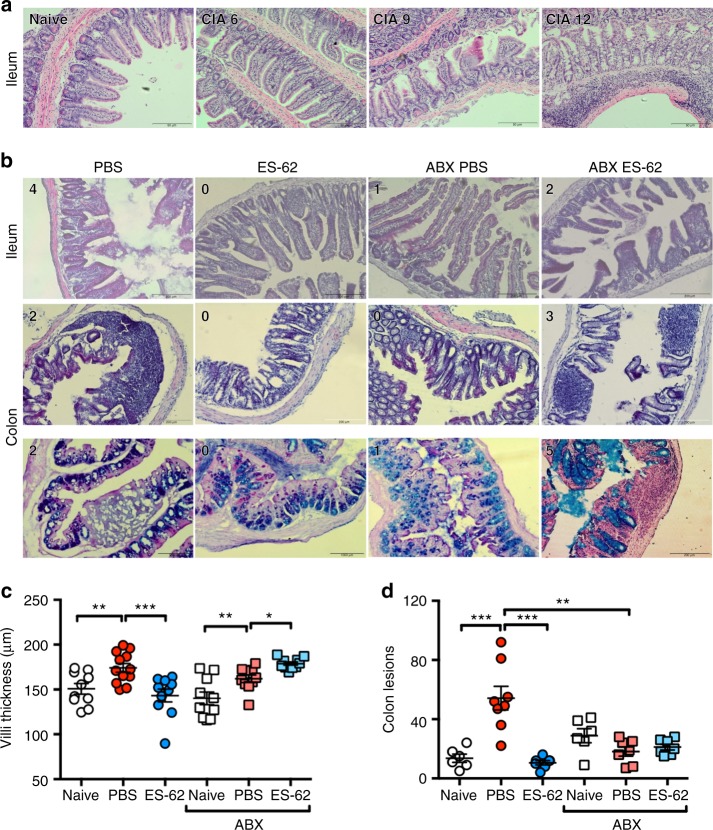
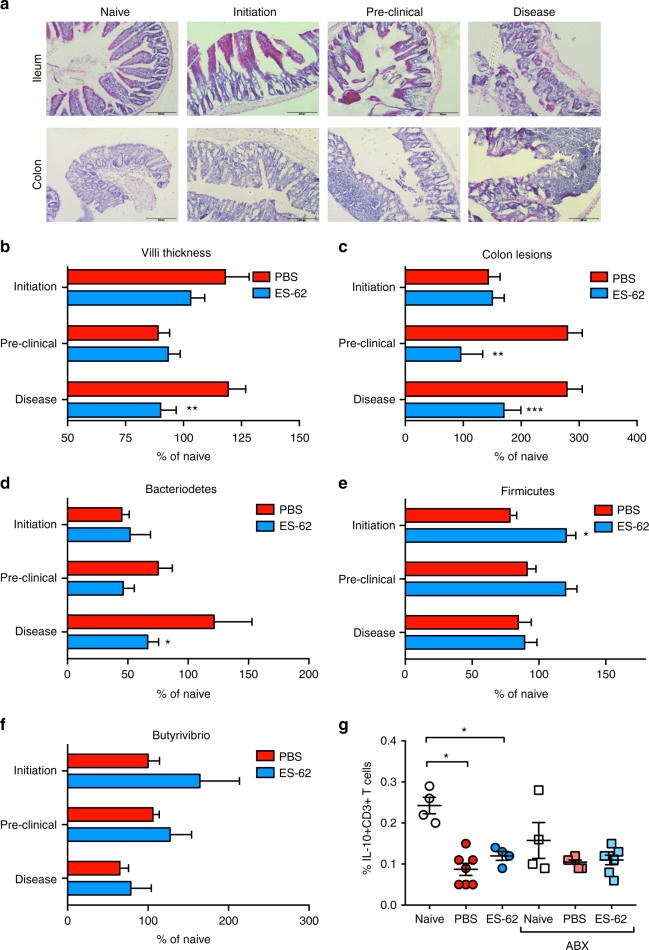
The human immune system has evolved in the context of our colonisation by bacteria, viruses, fungi and parasitic helminths. Reflecting this, the rapid eradication of pathogens appears to have resulted in reduced microbiome diversity and generation of chronically activated immune systems, presaging the recent rise of allergic, autoimmune and metabolic disorders. Certainly, gastrointestinal helminths can protect against gut and lung mucosa inflammatory conditions by modulating the microbiome and suppressing the chronic inflammation associated with dysbiosis. Here, we employ ES-62, an immunomodulator secreted by tissue-dwelling Acanthocheilonema viteae to show that helminth-modulation of the gut microbiome does not require live infection with gastrointestinal-based worms nor is protection restricted to mucosal diseases. Specifically, subcutaneous administration of this defined immunomodulator affords protection against joint disease in collagen-induced arthritis, a mouse model of rheumatoid arthritis, which is associated with normalisation of gut microbiota and prevention of loss of intestinal barrier integrity.
人类免疫系统是在与细菌、病毒、真菌和寄生性蠕虫共同进化的过程中形成的。反映这一点的是,病原体的迅速根除似乎导致了微生物组多样性的减少和慢性激活的免疫系统的产生,预示着最近过敏、自身免疫和代谢紊乱的出现。当然,胃肠道蠕虫可以通过调节微生物组和抑制与菌群失调相关的慢性炎症来预防肠道和肺部黏膜炎症。在这里,我们使用 ES-62,一种组织驻留的 Acanthocheilonema viteae 分泌的免疫调节剂来表明,肠道微生物组的蠕虫调节不需要与胃肠道蠕虫的活感染,也不限于黏膜疾病的保护。具体而言,这种明确的免疫调节剂的皮下给药可预防胶原诱导性关节炎(一种类风湿关节炎的小鼠模型)中的关节疾病,这与肠道微生物组的正常化和防止肠道屏障完整性丧失有关。