Institute of Complex Systems, Structural Biochemistry (ICS-6), Research Center Jülich, 52428, Jülich, Germany.
Central Institute for Engineering, Electronics and Analytics (ZEA-3), Research Center Jülich, 52428, Jülich, Germany.
Sci Rep. 2019 Apr 5;9(1):5715. doi: 10.1038/s41598-019-41993-6.
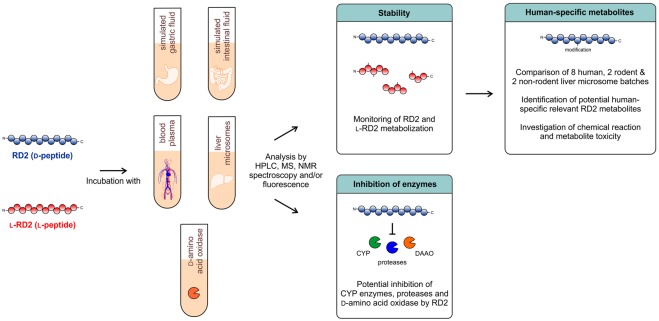
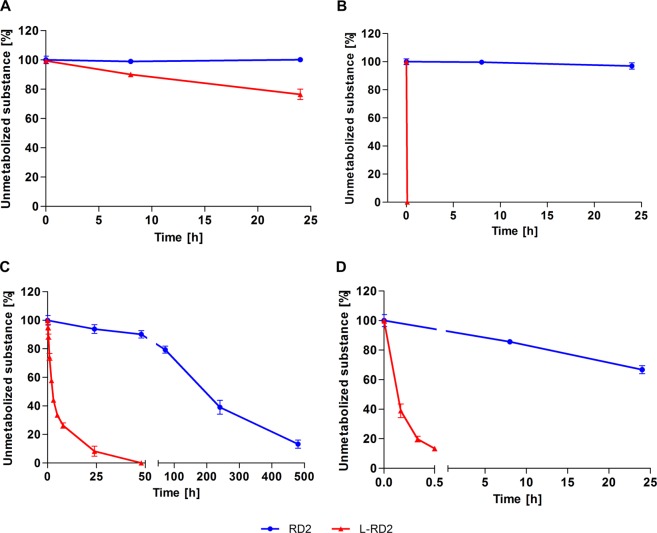
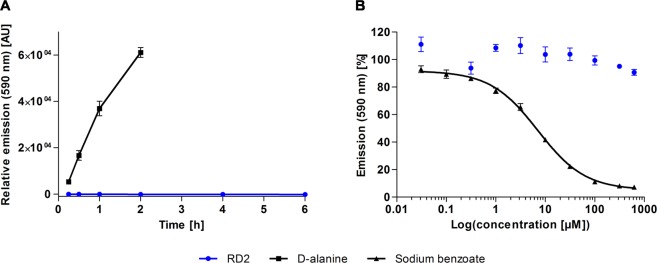
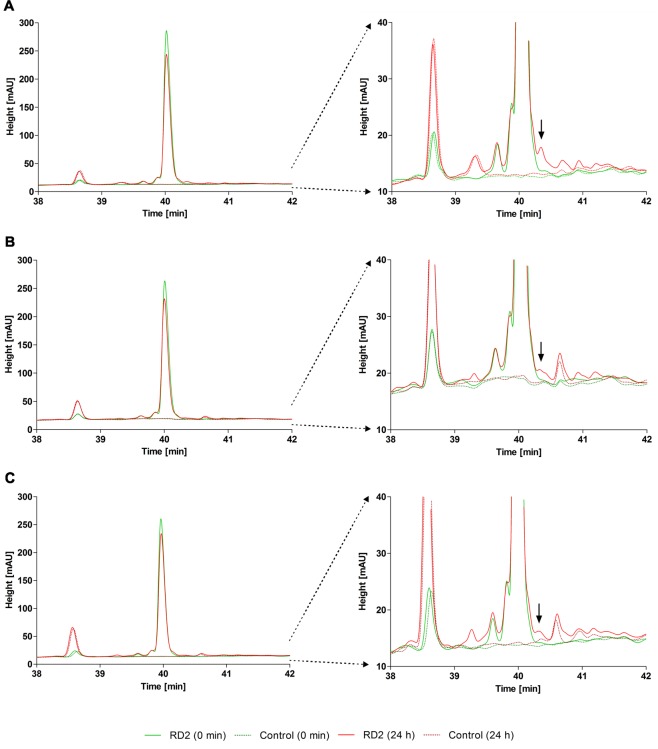
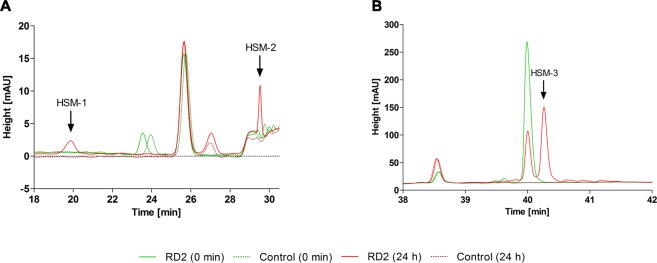
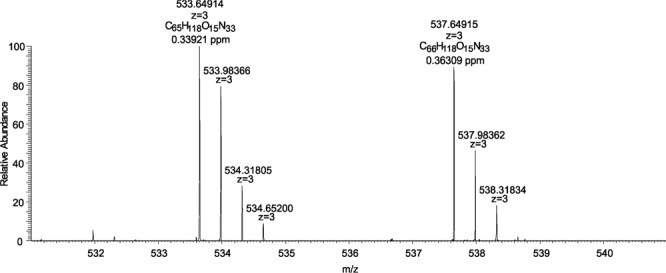
Alzheimer's disease (AD) is a neurodegenerative disorder leading to dementia. Aggregation of the amyloid-β peptide (Aβ) plays an important role in the disease, with Aβ oligomers representing the most toxic species. Previously, we have developed the Aβ oligomer eliminating therapeutic compound RD2 consisting solely of D-enantiomeric amino acid residues. RD2 has been described to have an oral bioavailability of more than 75% and to improve cognition in transgenic Alzheimer's disease mouse models after oral administration. In the present study, we further examined the stability of RD2 in simulated gastrointestinal fluids, blood plasma and liver microsomes. In addition, we have examined whether RD2 is a substrate for the human D-amino acid oxidase (hDAAO). Furthermore, metabolite profiles of RD2 incubated in human, rodent and non-rodent liver microsomes were compared across species to search for human-specific metabolites that might possibly constitute a threat when applying the compound in humans. RD2 was remarkably resistant against metabolization in all investigated media and not converted by hDAAO. Moreover, RD2 did not influence the activity of any of the tested enzymes. In conclusion, the high stability and the absence of relevant human-specific metabolites support RD2 to be safe for oral administration in humans.
阿尔茨海默病(AD)是一种导致痴呆的神经退行性疾病。淀粉样β肽(Aβ)的聚集在疾病中起着重要作用,其中 Aβ寡聚体代表最具毒性的物种。此前,我们开发了仅由 D-对映体氨基酸残基组成的 Aβ寡聚体消除治疗化合物 RD2。RD2 的口服生物利用度超过 75%,并在口服给药后改善了转基因阿尔茨海默病小鼠模型的认知能力。在本研究中,我们进一步研究了 RD2 在模拟胃肠道液、血浆和肝微粒体中的稳定性。此外,我们还研究了 RD2 是否是人类 D-氨基酸氧化酶(hDAAO)的底物。此外,比较了 RD2 在人、啮齿动物和非啮齿动物肝微粒体中孵育的代谢产物谱,以寻找在人类中应用该化合物时可能构成威胁的人类特异性代谢产物。RD2 在所有研究的介质中都具有出色的抗代谢能力,并且不会被 hDAAO 转化。此外,RD2 不会影响任何测试酶的活性。总之,高稳定性和缺乏相关的人类特异性代谢产物支持 RD2 可安全用于人类口服给药。