Department of Tumor Biology, The Norwegian Radium Hospital, Institute for Cancer Research, Oslo University Hospital, Oslo, Norway.
Department of Circulation and Medical Imaging, NTNU - Norwegian University of Science and Technology, Trondheim, Norway.
Sci Rep. 2019 Apr 5;9(1):5670. doi: 10.1038/s41598-019-42153-6.
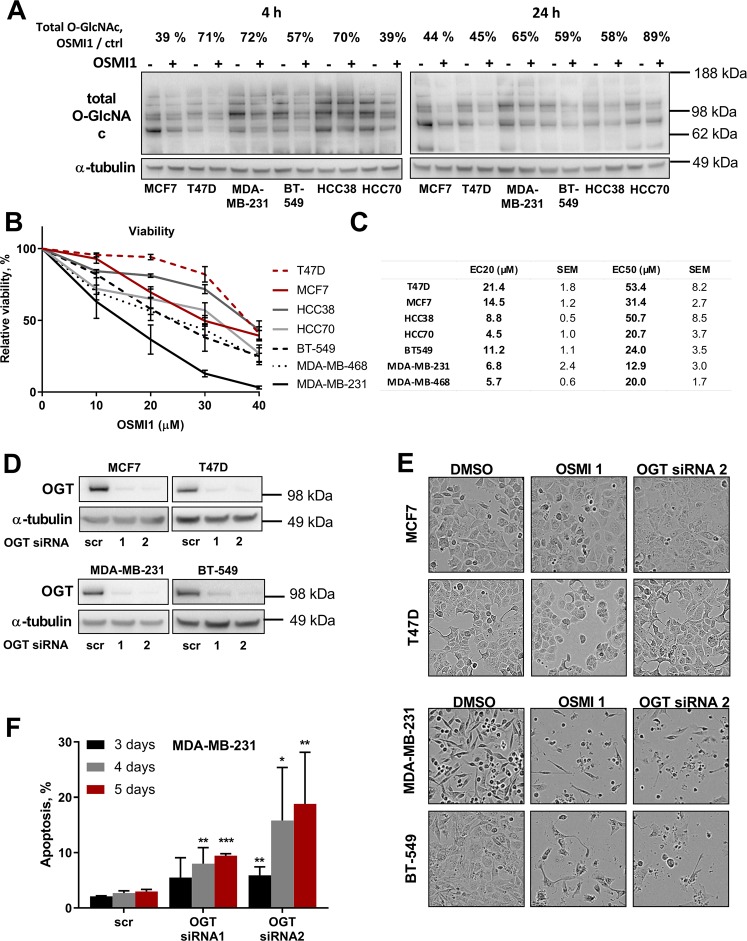
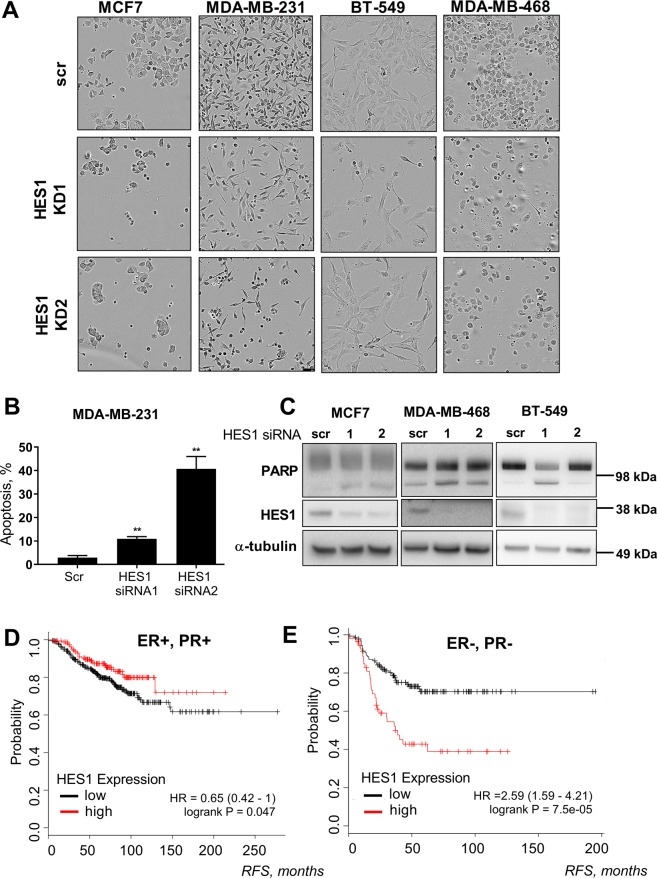
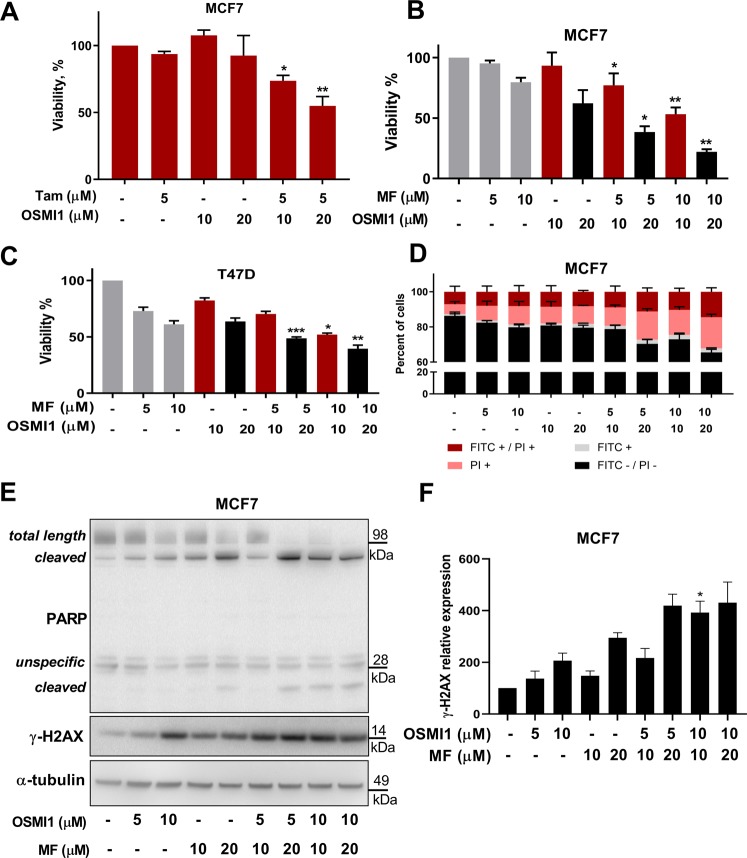
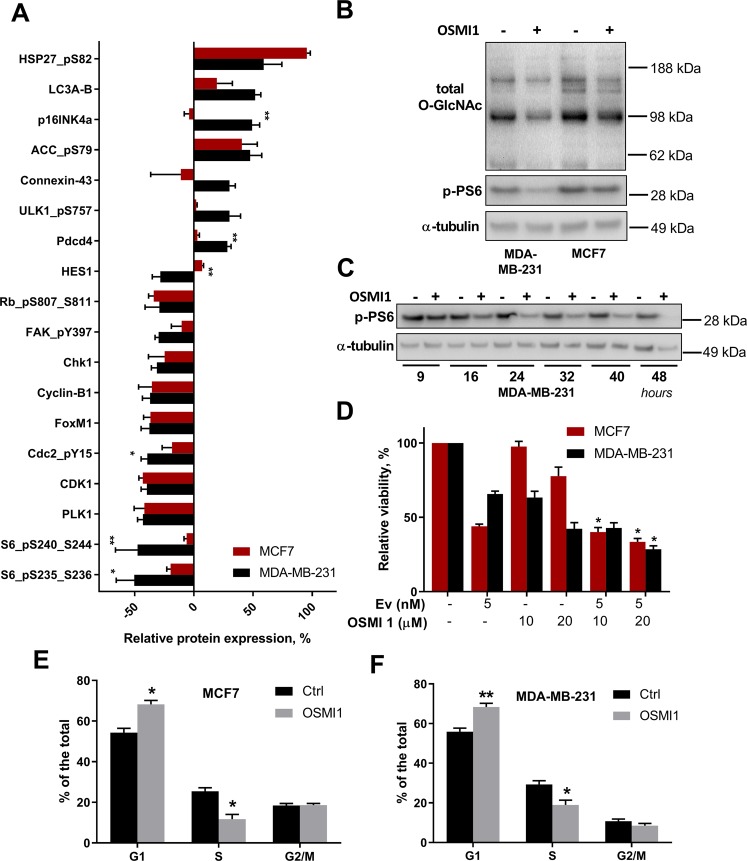
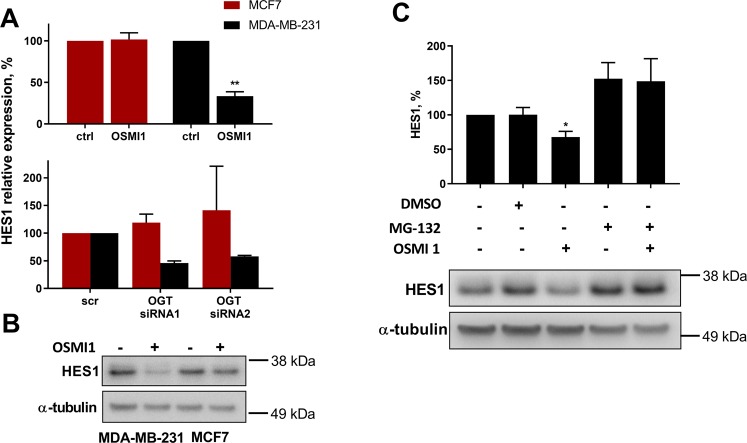
Post-translational modification of intracellular proteins with a single N-acetylglucosamine sugar (O-GlcNAcylation) regulates signaling, proliferation, metabolism and protein stability. In breast cancer, expression of the enzyme that catalyzes O-GlcNAcylation - O-GlcNAc-transferase (OGT), and the extent of protein O-GlcNAcylation, are upregulated in tumor tissue, and correlate with cancer progression. Here we compare the significance of O-GlcNAcylation in a panel of breast cancer cells of different phenotypes. We find a greater dependency on OGT among triple-negative breast cancer (TNBC) cell lines, which respond to OGT inhibition by undergoing cell cycle arrest and apoptosis. Searching for the cause of this response, we evaluate the changes in the proteome that occur after OGT inhibition or knock-down, employing a reverse-phase protein array (RPPA). We identify transcriptional repressor - hairy and enhancer of split-1 (HES1) - as a mediator of the OGT inhibition response in the TNBC cells. Inhibition of OGT as well as the loss of HES1 results in potent cytotoxicity and apoptosis. The study raises a possibility of using OGT inhibition to potentiate DNA damage in the TNBC cells.
细胞内蛋白质的翻译后修饰,单个 N-乙酰葡萄糖胺糖(O-GlcNAcylation),可调节信号转导、增殖、代谢和蛋白质稳定性。在乳腺癌中,催化 O-GlcNAcylation 的酶-O-GlcNAc 转移酶(OGT)的表达,以及蛋白质 O-GlcNAcylation 的程度,在肿瘤组织中上调,并与癌症进展相关。在这里,我们比较了不同表型的一组乳腺癌细胞中 O-GlcNAcylation 的意义。我们发现,三阴性乳腺癌(TNBC)细胞系对 OGT 抑制的依赖性更强,这些细胞通过细胞周期停滞和凋亡对 OGT 抑制作出反应。为了寻找这种反应的原因,我们评估了 OGT 抑制或敲低后发生的蛋白质组变化,采用反相蛋白阵列(RPPA)。我们发现转录抑制因子——毛状和分裂增强子 1(HES1)——是 TNBC 细胞中 OGT 抑制反应的介质。OGT 抑制以及 HES1 的缺失导致强烈的细胞毒性和细胞凋亡。这项研究提出了一种可能性,即使用 OGT 抑制来增强 TNBC 细胞中的 DNA 损伤。