Department of Neurology, Huashan Hospital, Fudan University, No.12 Middle Wulumuqi Road, Shanghai, 200040, China.
The State Key Laboratory of Medical Neurobiology, Fudan University, Shanghai, China.
J Neuroinflammation. 2019 Apr 5;16(1):72. doi: 10.1186/s12974-019-1460-1.
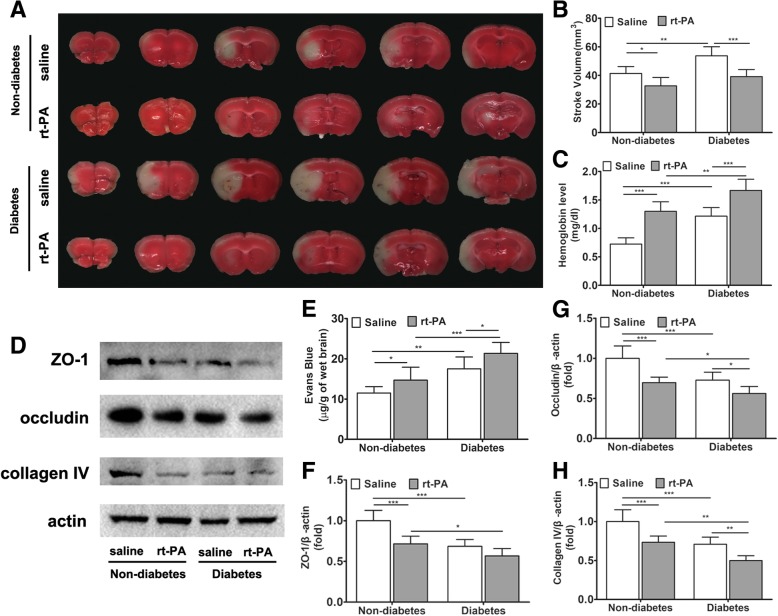
Diabetes is known to be a main risk factor of post-stroke hemorrhagic transformation following recombinant tissue plasminogen activator (rt-PA) therapy. However, the mechanism through which diabetes exacerbates hemorrhagic transformation is insufficiently understood. We aimed to verify that CD147, the extracellular matrix metalloproteinase (MMP) inducer, played a vital role in the progress.
We performed middle cerebral artery occlusion on diabetic and non-diabetic rats, with or without rt-PA treatment, and then compared the glycosylation level of CD147, caveolin-1, MMPs activities, and blood-brain barrier (BBB) permeability. In vitro, tunicamycin treatment and genetic tools were used to produce non-glycosylated and lowly glycosylated CD147. An endogenous glucagon-like peptide-1 receptor (GLP-1R) agonist was used to downregulate the glycosylation of CD147 in vivo.
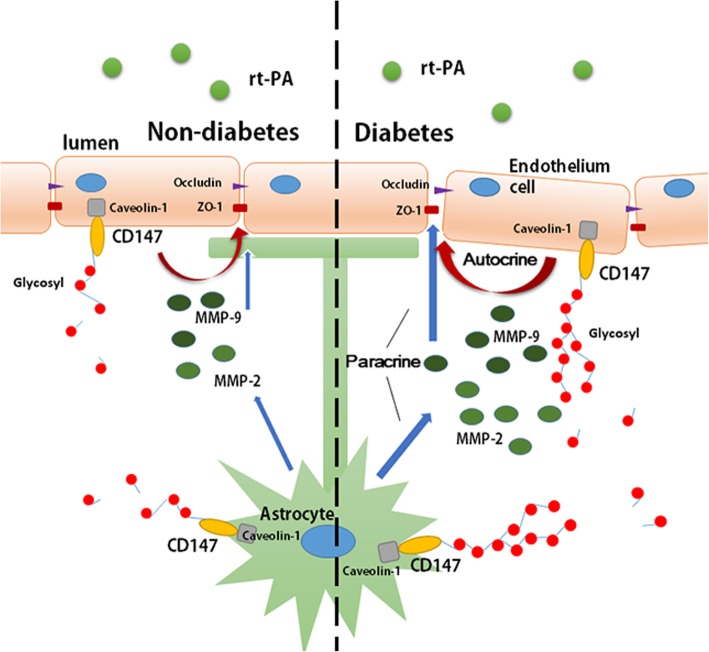
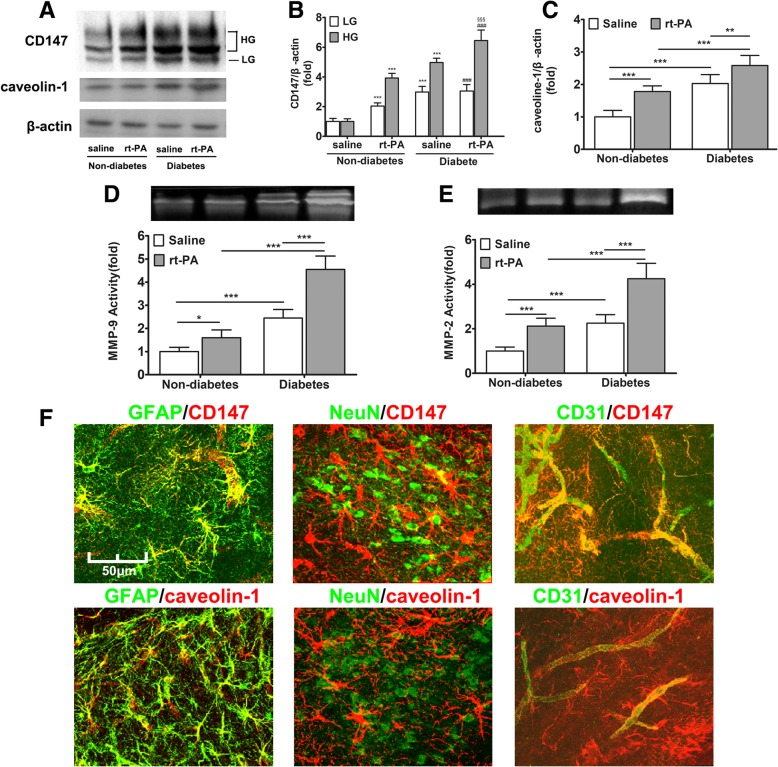
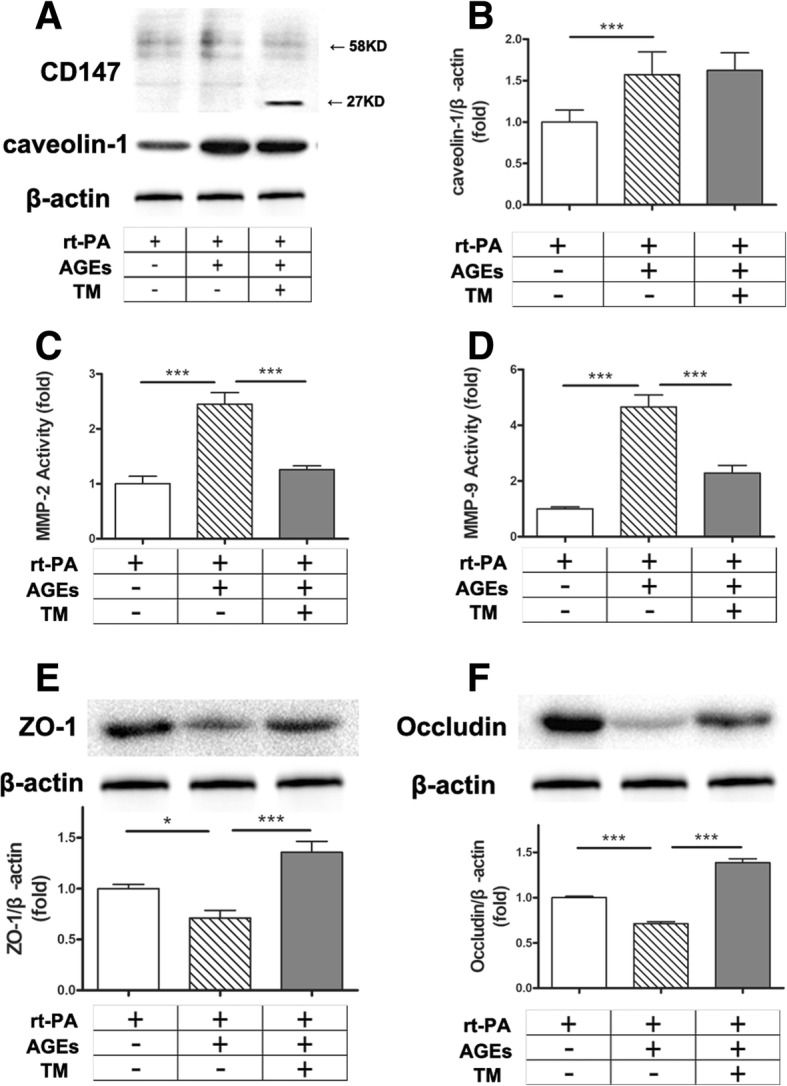
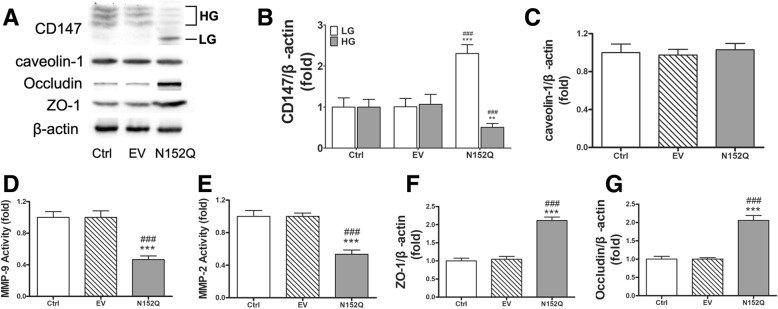
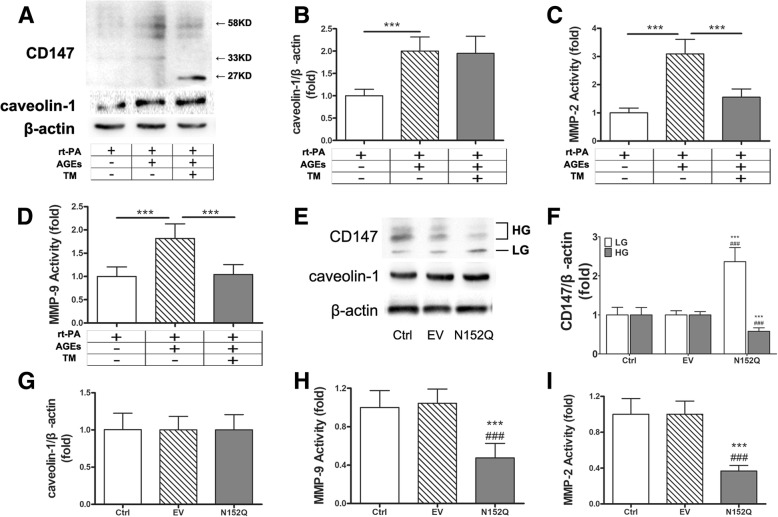
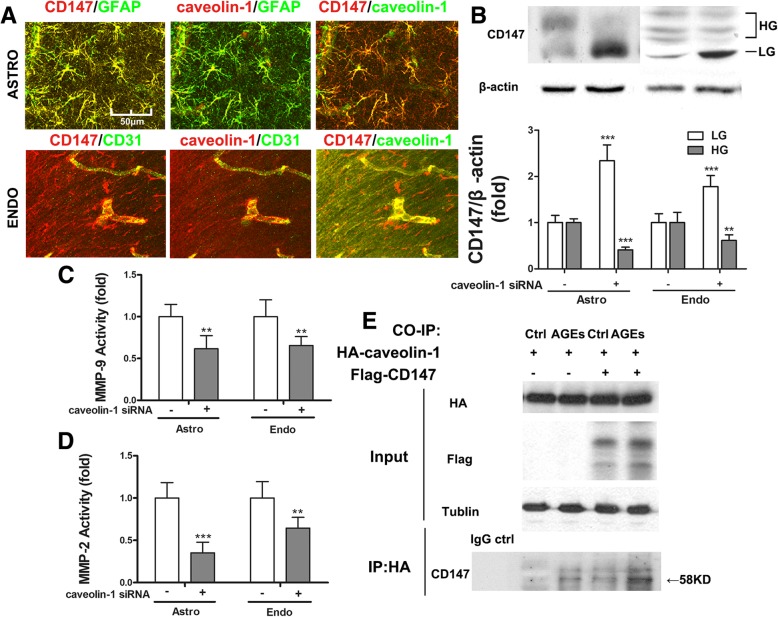
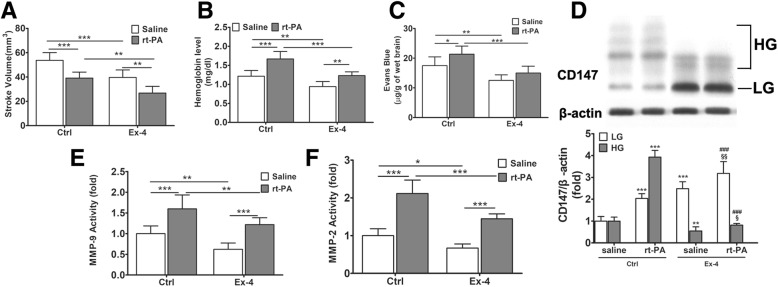
Compared with non-diabetic rats, diabetic rats expressed higher levels of highly glycosylated CD147 in endothelium and astrocytes following rt-PA treatment accompanied by higher activity of MMPs and BBB permeability, in the middle cerebral artery occlusion model. Caveolin-1 was also overexpressed and co-localized with CD147 in astrocytes and endothelium in diabetic rats. In vitro, advanced glycation end products increased the expression of highly glycosylated CD147 in astrocytes and endothelial cells. Downregulating the glycosylation of CD147 lowered the activity of MMPs and promoted the expression of tight junction proteins. The expression of caveolin-1 in endothelial cells and astrocytes was not inhibited by tunicamycin, which revealed that caveolin-1 was an upstream of CD147. In vivo, GLP-1R agonist downregulated the glycosylation of CD147 and further reduced the activity of MMPs and protected the BBB in diabetic rats.
CD147 is essential for diabetes-associated rt-PA-induced hemorrhagic transformation, and downregulation of CD147 glycosylation is a promising therapy for neurovascular-unit repair after rt-PA treatment of patients with diabetes.
已知糖尿病是重组组织纤溶酶原激活物(rt-PA)治疗后卒中后出血性转化的主要危险因素。然而,糖尿病加重出血转化的机制尚不清楚。我们旨在验证细胞外基质金属蛋白酶(MMP)诱导物 CD147 在进展中起重要作用。
我们对糖尿病和非糖尿病大鼠进行大脑中动脉闭塞,并用或不用 rt-PA 治疗,然后比较 CD147、窖蛋白-1、MMPs 活性和血脑屏障(BBB)通透性的糖基化水平。在体外,使用衣霉素处理和遗传工具产生非糖基化和低糖基化的 CD147。使用内源性胰高血糖素样肽-1 受体(GLP-1R)激动剂体内下调 CD147 的糖基化。
与非糖尿病大鼠相比,糖尿病大鼠在 rt-PA 治疗后,大脑中动脉闭塞模型中内皮细胞和星形胶质细胞中表达更高水平的高度糖基化 CD147,同时 MMP 活性和 BBB 通透性升高。窖蛋白-1在糖尿病大鼠中也过度表达并与星形胶质细胞和内皮细胞中的 CD147 共定位。在体外,晚期糖基化终产物增加了星形胶质细胞和内皮细胞中高度糖基化 CD147 的表达。下调 CD147 的糖基化降低了 MMP 的活性并促进了紧密连接蛋白的表达。内皮细胞和星形胶质细胞中的窖蛋白-1不受衣霉素的抑制,这表明窖蛋白-1是 CD147 的上游。在体内,GLP-1R 激动剂下调 CD147 的糖基化,进一步降低 MMP 的活性并保护糖尿病大鼠的 BBB。
CD147 是糖尿病相关 rt-PA 诱导出血转化所必需的,下调 CD147 的糖基化是糖尿病患者 rt-PA 治疗后神经血管单元修复的一种有前途的治疗方法。