Department of Internal Medicine IV, Division of Endocrinology, Diabetology, Vascular Disease, Nephrology and Clinical Chemistry, University Hospital Tübingen, Otfried-Müller-Str.10, 72076, Tübingen, Germany.
Institute of Diabetes Research and Metabolic Diseases (IDM), Helmholtz Center Munich at the University of Tübingen, Otfried-Müller-Strasse 10, 72076, Tübingen, Germany.
Cardiovasc Diabetol. 2019 Apr 5;18(1):46. doi: 10.1186/s12933-019-0852-y.
SGLT2-inhibitors are potent antihyperglycemic drugs for patients with type 2 diabetes and have been shown to reduce body weight. However, it is unclear which body compartments are reduced and to what extent.
In this longitudinal observational study, we analyzed the body composition of 27 outpatients with type 2 diabetes mellitus during the first week and up to 6 months after initiation of treatment with SGLT2-inhibitors (n = 18 empagliflozin, n = 9 dapagliflozin) using bioimpedance spectroscopy (BCM, Fresenius). Fluid status of hypertensive patients taking medication with hydrochlorothiazide (n = 14) and healthy persons (n = 16) were analyzed for comparison.
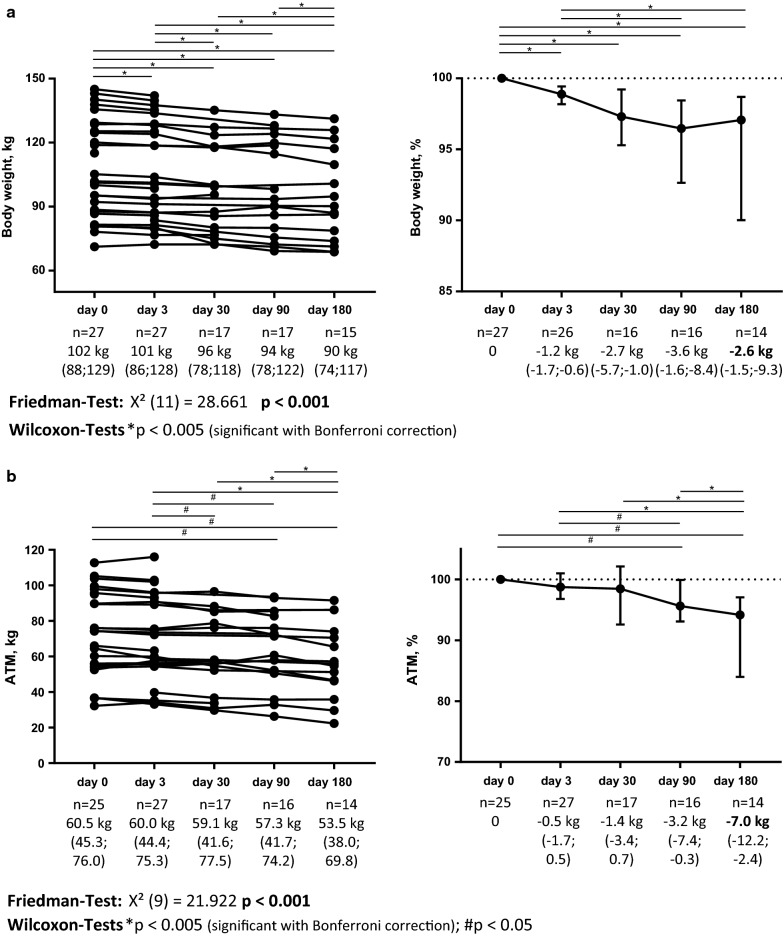
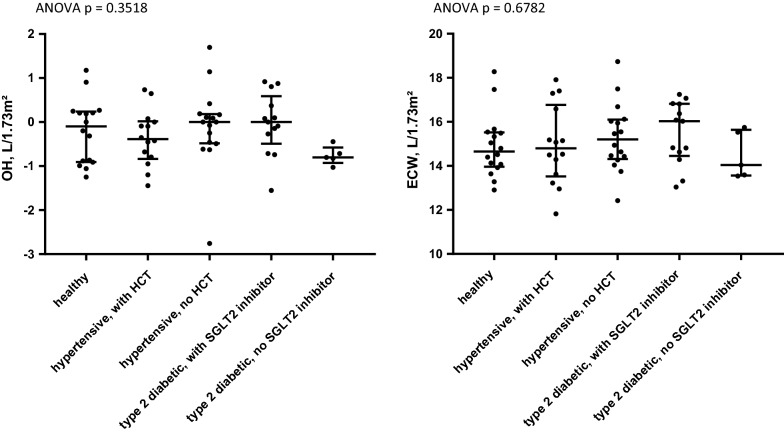
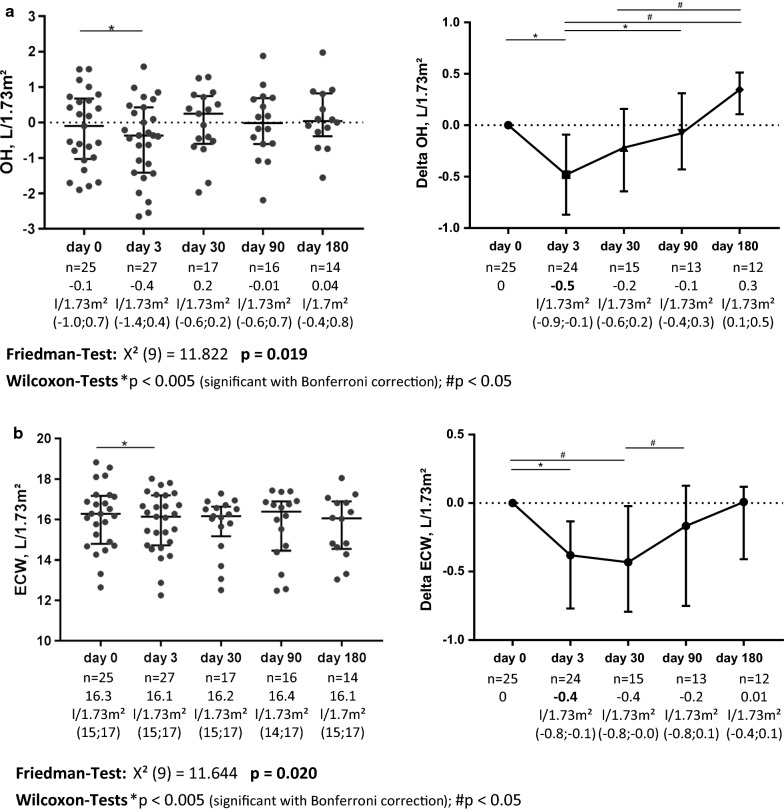
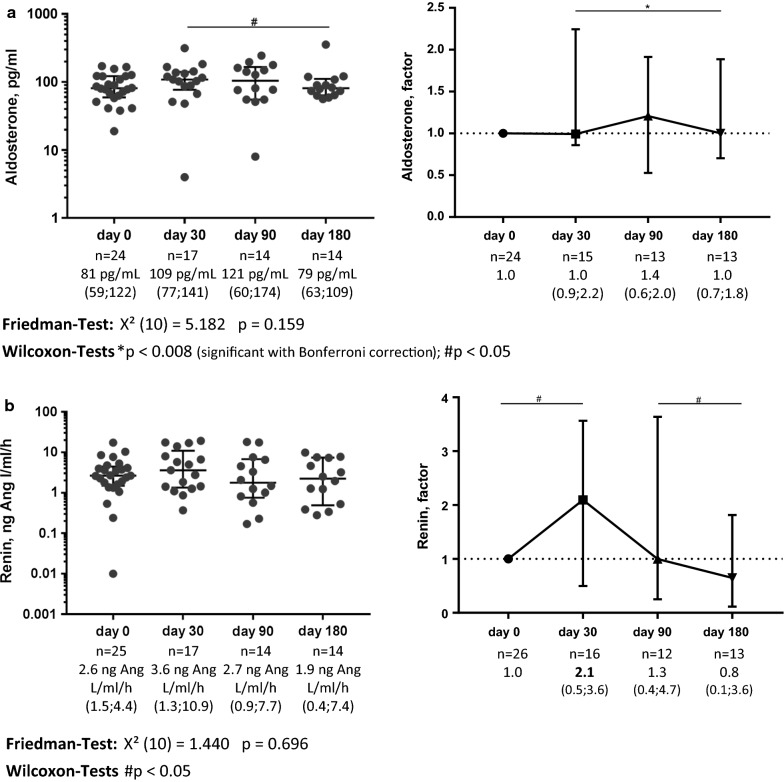
At 6 months, HbA1c decreased by 0.8% (IQR 2.3; 0.4), body weight and BMI by 2.6 kg (1.5; 9.3) and 0.9 kg/m (0.4; 3.3), respectively. Bioimpedance spectroscopy revealed significant decrease in adipose tissue mass and fat tissue index while lean tissue parameters remained stable. Overhydration (OH) and extracellular water (ECW) decreased by - 0.5 L/1.73 m (- 0.1; - 0.9) and - 0.4 L/1.73 m (- 0.1; - 0.8) at day 3, respectively, and returned to the initial value after 3 and 6 months. Plasma renin activity increased by 2.1-fold (0.5; 3.6) at 1 month and returned to the initial level at month 3 and 6. Fluid status of patients with SGLT2 inhibitors after 6 months showed no difference from that of hypertensive patients taking hydrochlorothiazide or healthy persons.
Body weight reduction under the treatment with SGLT2-inhibitors is caused by reduction of adipose tissue mass and transient loss of extracellular fluid, which is accompanied by upregulation of renin-angiotensin-aldosterone system (RAAS). Permanent loss of extracellular water does not occur under SGLT2 inhibition.
SGLT2 抑制剂是治疗 2 型糖尿病患者的强效抗高血糖药物,已被证明可减轻体重。然而,目前尚不清楚哪些身体部位会被减少以及减少的程度。
在这项纵向观察性研究中,我们使用生物电阻抗谱法(BCM,Fresenius)分析了 27 名 2 型糖尿病门诊患者在开始 SGLT2 抑制剂治疗后的第一周和 6 个月内的身体成分(n=18 例恩格列净,n=9 例达格列净)。分析了同时服用氢氯噻嗪(n=14)和健康人(n=16)药物的高血压患者的液体状态,以作比较。
6 个月时,HbA1c 下降 0.8%(IQR 2.3;0.4),体重和 BMI 分别下降 2.6kg(1.5;9.3)和 0.9kg/m(0.4;3.3)。生物电阻抗谱法显示,脂肪组织质量和脂肪组织指数显著下降,而瘦组织参数保持稳定。总体水(OH)和细胞外液(ECW)在第 3 天分别减少了-0.5L/1.73m(-0.1;-0.9)和-0.4L/1.73m(-0.1;-0.8),并在 3 个月和 6 个月后恢复到初始值。血浆肾素活性在 1 个月时增加了 2.1 倍(0.5;3.6),并在 3 个月和 6 个月时恢复到初始水平。6 个月后 SGLT2 抑制剂患者的液体状态与服用氢氯噻嗪的高血压患者或健康人无差异。
SGLT2 抑制剂治疗导致体重减轻是由于脂肪组织质量减少和细胞外液的短暂丢失,同时伴有肾素-血管紧张素-醛固酮系统(RAAS)的上调。SGLT2 抑制下不会发生细胞外水的永久性丢失。