State Key Laboratory of Oncogenes and Related Genes, Renji-Med X Clinical Stem Cell Research Center, Ren Ji Hospital, Shanghai Cancer Institute, School of Medicine, Shanghai Jiao Tong University, Shanghai, 200127, China.
Department of Radiotherapy, Ren Ji Hospital, School of Medicine, Shanghai Jiao Tong University, Shanghai, 200127, China.
J Exp Clin Cancer Res. 2019 Apr 5;38(1):147. doi: 10.1186/s13046-019-1151-x.
Ionizing radiation (IR) therapy is the standard first-line treatment for newly diagnosed patients with glioblastoma (GBM), the most common and malignant primary brain tumor. However, the effects of IR are limited due to the aberrant radioresistance of GBM.
Transcriptome analysis was performed using RNA-seq in radioresistant patient-derived glioma stem-like cells (GSCs). Survival of glioma patient and mice bearing-brain tumors was analyzed by Kaplan-Meier survival analysis. Lipid droplet and γ-H2AX foci-positive cells were evaluated using immunofluorescence staining.
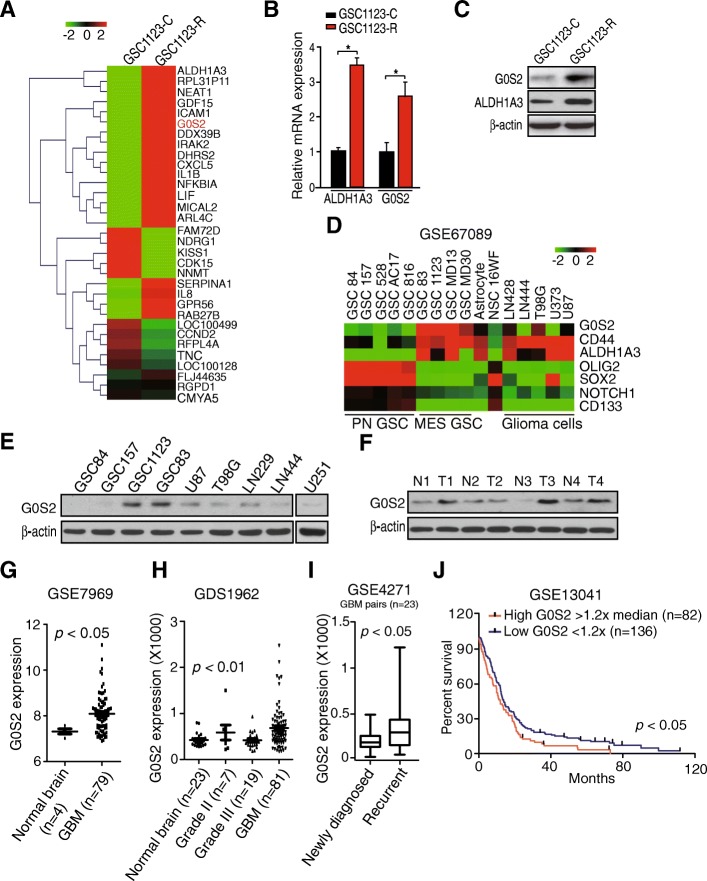
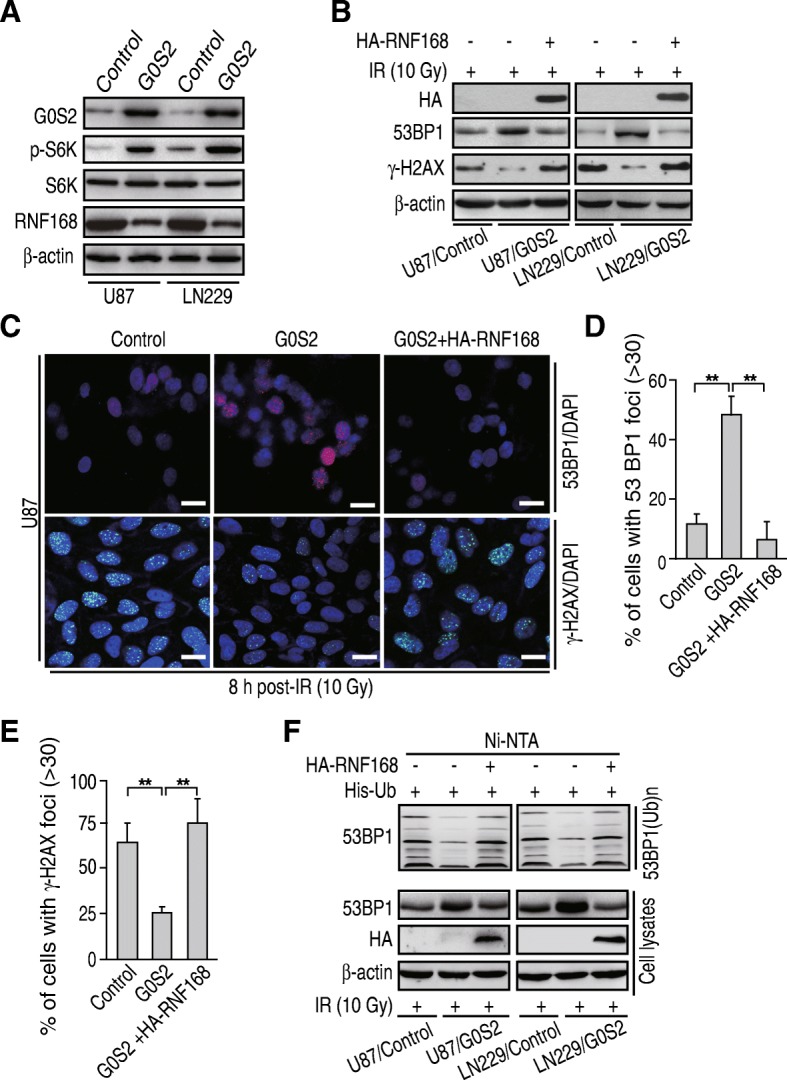
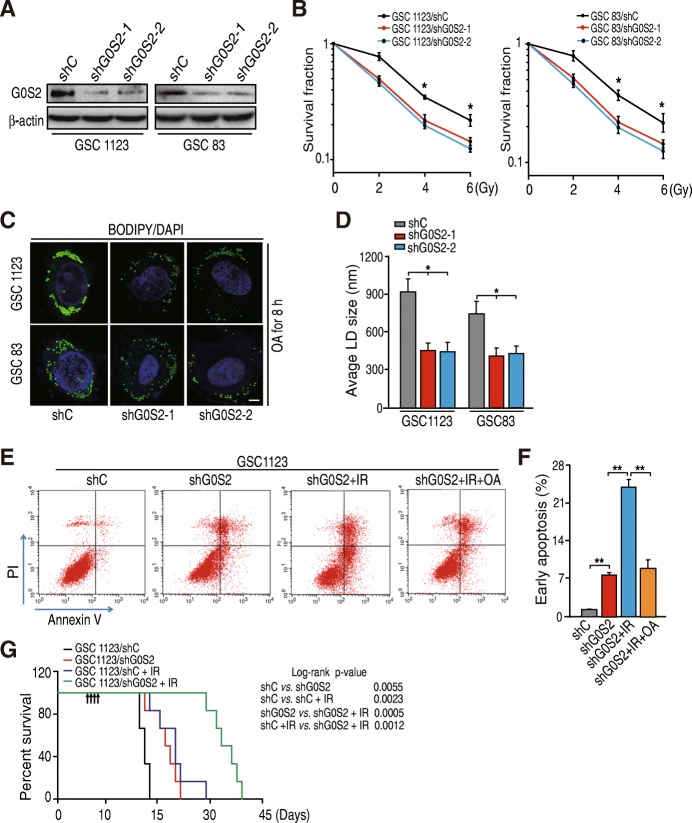
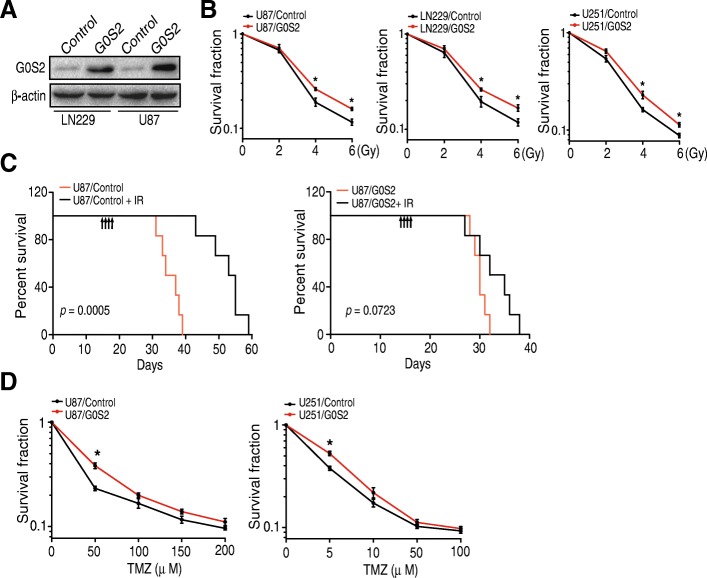
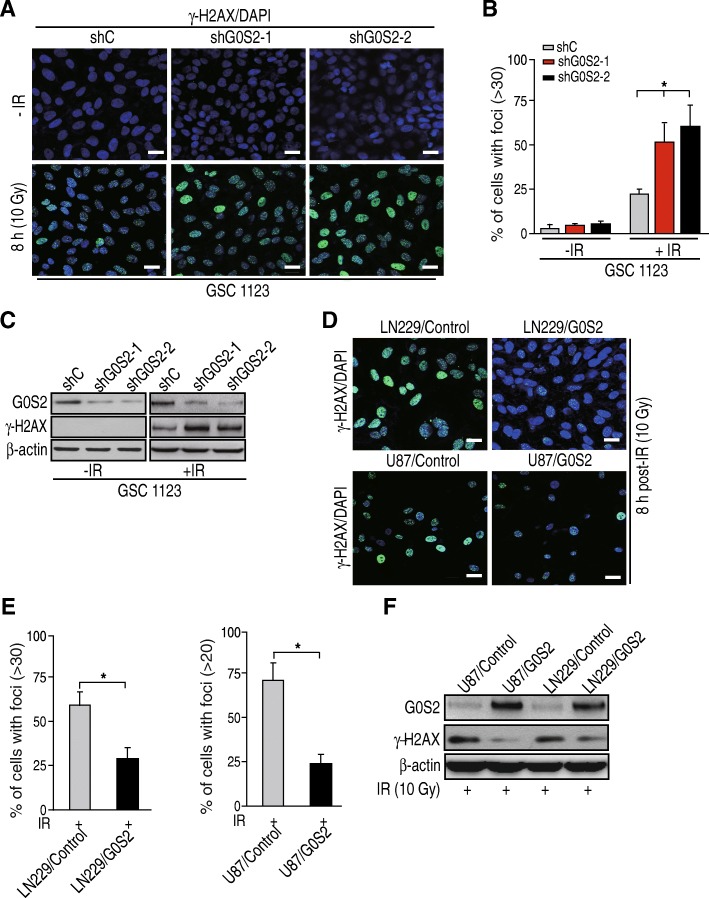
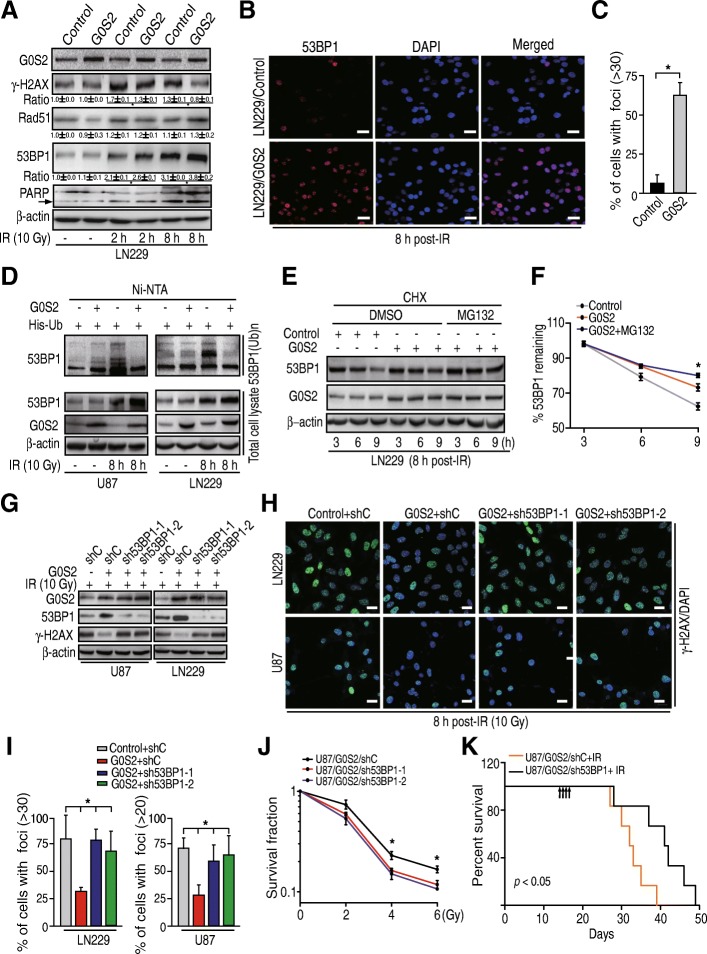
Lipolytic inhibitor G0/G1 switch gene 2 (G0S2) is upregulated in radioresistant GSCs and elevated in clinical GBM. GBM patients with high G0S2 expression had significantly shorter overall survival compared with those with low expression of G0S2. Using genetic approaches targeting G0S2 in glioma cells and GSCs, we found that knockdown of G0S2 promoted lipid droplet turnover, inhibited GSC radioresistance, and extended survival of xenograft tumor mice with or without IR. In contrast, overexpression of G0S2 promoted glioma cell radiation resistance. Mechanistically, high expression of G0S2 reduced lipid droplet turnover and thereby attenuated E3 ligase RNF168-mediated 53BP1 ubiquitination through activated the mechanistic target of rapamycin (mTOR)-ribosomal S6 kinase (S6K) signaling and increased 53BP1 protein stability in response to IR, leading to enhanced DNA repair and glioma radioresistance.
Our findings uncover a new function for lipolytic inhibitor G0S2 as an important regulator for GSC radioresistance, suggesting G0S2 as a potential therapeutic target for treating gliomas.
电离辐射(IR)治疗是新诊断的胶质母细胞瘤(GBM)患者的标准一线治疗方法,GBM 是最常见和恶性的原发性脑肿瘤。然而,由于 GBM 的异常放射抗性,IR 的效果受到限制。
使用 RNA-seq 在放射抗性患者来源的神经胶质瘤干细胞样细胞(GSCs)中进行转录组分析。通过 Kaplan-Meier 生存分析分析胶质瘤患者和携带脑肿瘤的小鼠的存活情况。使用免疫荧光染色评估脂滴和 γ-H2AX 焦点阳性细胞。
脂解抑制剂 G0/G1 开关基因 2(G0S2)在放射抗性 GSCs 中上调,并在临床 GBM 中升高。G0S2 高表达的 GBM 患者总生存期明显短于 G0S2 低表达的患者。通过针对胶质瘤细胞和 GSCs 中的 G0S2 的遗传方法,我们发现 G0S2 的敲低促进了脂滴周转,抑制了 GSC 的放射抗性,并延长了有无 IR 的异种移植肿瘤小鼠的存活期。相比之下,G0S2 的过表达促进了胶质瘤细胞的辐射抗性。机制上,G0S2 的高表达通过激活雷帕霉素(mTOR)-核糖体 S6 激酶(S6K)信号减少脂滴周转,从而减弱 E3 连接酶 RNF168 介导的 53BP1 泛素化,并增加 53BP1 蛋白稳定性对 IR 的反应,导致增强的 DNA 修复和胶质瘤放射抗性。
我们的研究结果揭示了脂解抑制剂 G0S2 作为 GSC 放射抗性的重要调节因子的新功能,表明 G0S2 可能是治疗胶质瘤的潜在治疗靶点。