Alimba Chibuisi G, Adekoya Khalid O, Soyinka Olufemi O
Cell Biology and Genetics Unit, Department of Zoology, University of Ibadan, Nigeria.
Leibniz Research Centre for Working Environment and Human Factors (IfADo), Technical University of Dortmund, 44139 Dortmund, Germany.
EXCLI J. 2019 Feb 6;18:63-78. eCollection 2019.
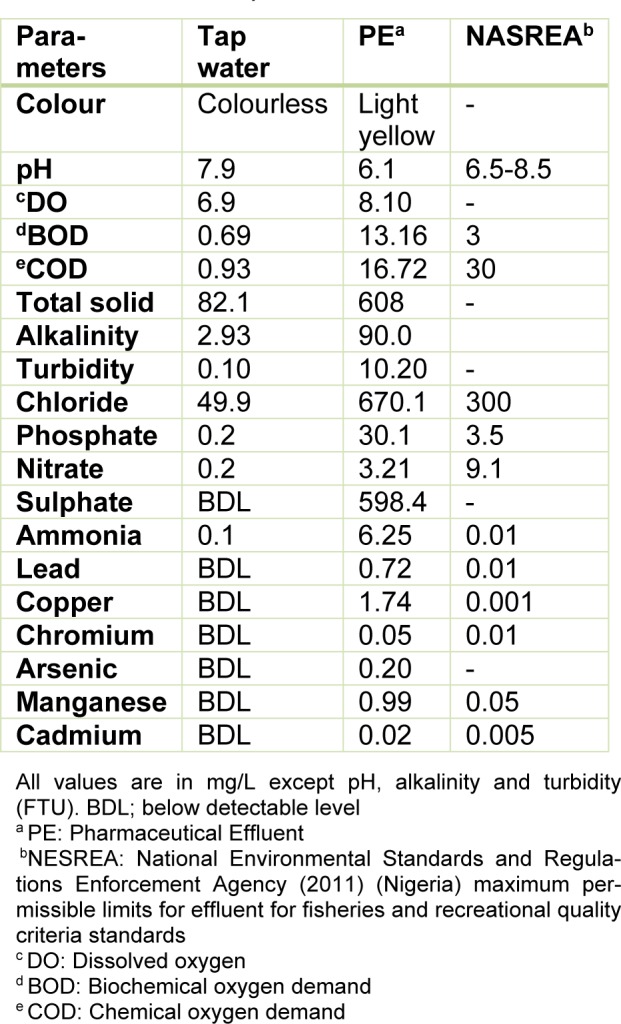
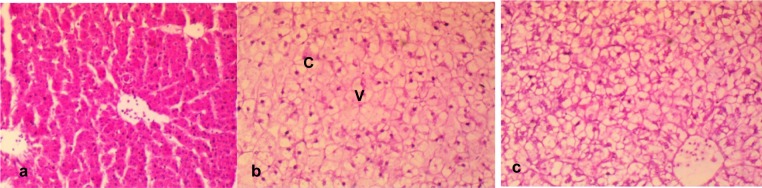
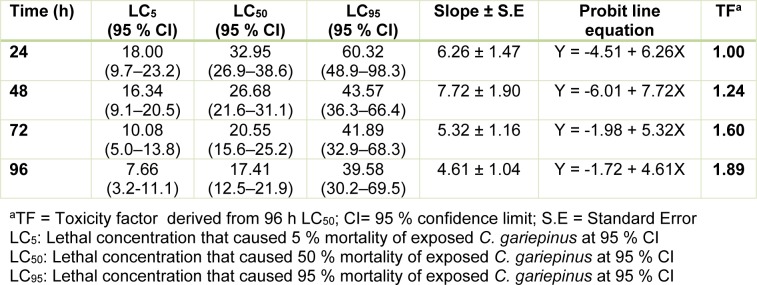
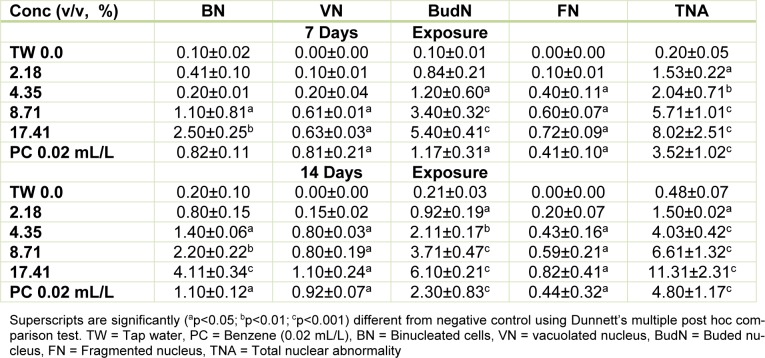
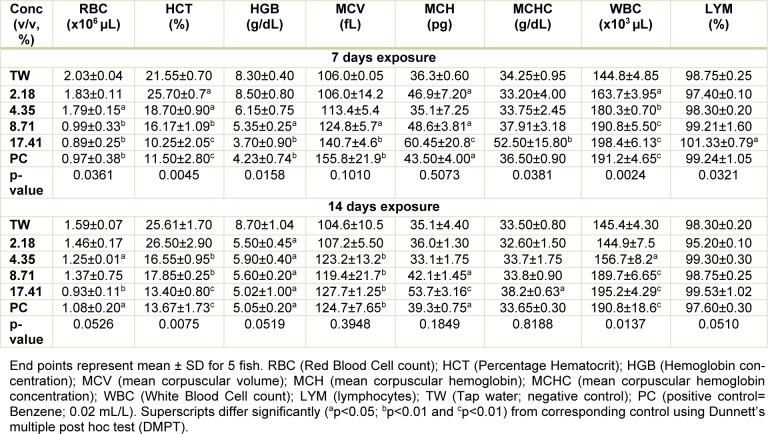
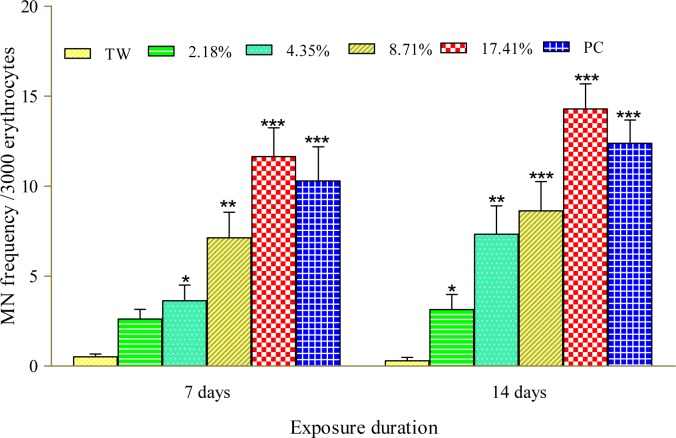
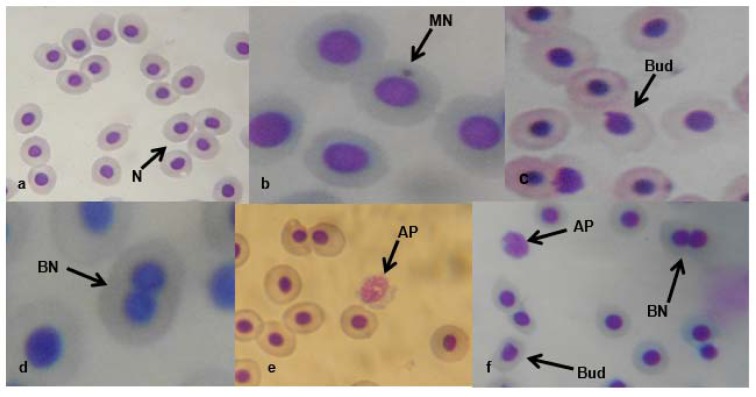
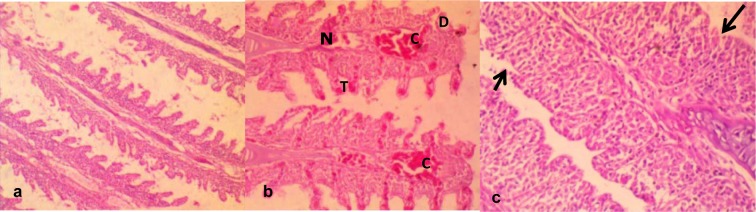
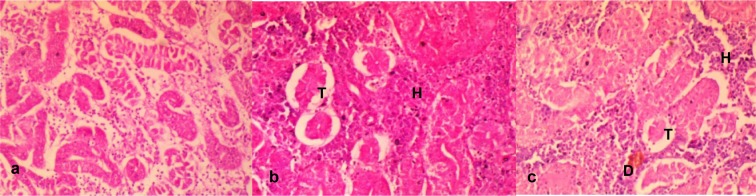
Pharmaceutical effluents contain toxic xenobiotics capable of contaminating aquatic environments. Untreated effluents are illegally discharged into aquatic environment in most developing countries. Pharmaceutical effluent induced alterations in biomarkers of genetic and systemic damage on rodents. However, information is relatively scarce on the possible cytogenotoxicity and systemic toxicity of this effluent on aquatic vertebrates. The study herein assessed the cytogenotoxic, hematological and histopathological alterations induced by pharmaceutical effluent in . 96 h acute toxicity of the effluent was determined after was exposed to six different concentrations (10 - 60 %) of the effluent. Subsequently, fish was exposed to sub-lethal concentrations (2.18 - 17.41 %) obtained from the 96 h LC for 7 and 14 days after which micronucleus (MN) and nuclear abnormalities (NAs) in peripheral erythrocytes were assessed as cytogenotoxic biomarkers, alterations in hematological indices and histopathological lesions were also examined. Fish, concurrently exposed to dechlorinated tap water and benzene (0.01 mL/L), served as negative and positive controls respectively. The derived 96 h LC of 17.41 % which was 1.89 times more toxic than the 24 h LC (32.95 %) showed that the effluent induced concentration-dependent mortality according to exposure duration. The effluent caused significant (<0.05) time-dependent increase in the frequency of MN and abnormal nuclear erythrocytes compared to the negative control. Also, there was decrease in total erythrocyte counts, hemoglobin and hematocrit concentrations and increase in leucocyte and lymphocyte counts. The effluent induced pathological lesions on gills, liver and kidneys of treated fish. Higher physicochemical parameters than standard permissible limits in the effluent are capable of inducing genomic instability and systemic damage in fish. Pharmaceutical effluent can increase micropollutants in aquatic environmental and health risks to aquatic biota. There is need to promulgate stringent laws against illegal discharge of effluents into aquatic environment.
制药废水含有能够污染水生环境的有毒外源性物质。在大多数发展中国家,未经处理的废水被非法排放到水生环境中。制药废水会导致啮齿动物遗传和全身损伤生物标志物的改变。然而,关于这种废水对水生脊椎动物可能的细胞遗传毒性和全身毒性的信息相对较少。本文的研究评估了制药废水在[未提及具体受试对象]中诱导的细胞遗传毒性、血液学和组织病理学改变。在[未提及具体受试对象]暴露于六种不同浓度(10% - 60%)的废水后,测定了废水的96小时急性毒性。随后,将鱼暴露于从96小时半数致死浓度(LC)获得的亚致死浓度(2.18% - 17.41%)下7天和14天,之后评估外周血红细胞中的微核(MN)和核异常(NAs)作为细胞遗传毒性生物标志物,还检查了血液学指标的变化和组织病理学损伤。同时暴露于脱氯自来水和苯(0.01 mL/L)的鱼分别作为阴性和阳性对照。得出的96小时半数致死浓度为17.41%,其毒性比24小时半数致死浓度(32.95%)高1.89倍,表明废水根据暴露持续时间诱导浓度依赖性死亡率。与阴性对照相比,废水导致MN和异常核红细胞频率出现显著(<0.05)的时间依赖性增加。此外,总红细胞计数、血红蛋白和血细胞比容浓度降低,白细胞和淋巴细胞计数增加。废水在处理过的鱼的鳃、肝脏和肾脏上诱导了病理损伤。废水中高于标准允许限值的更高理化参数能够诱导鱼类的基因组不稳定和全身损伤。制药废水会增加水生环境中的微污染物以及对水生生物群的健康风险。有必要颁布严格法律禁止向水生环境非法排放废水。