Iwasa Masami, Harada Takeshi, Oda Asuka, Bat-Erdene Ariunzaya, Teramachi Jumpei, Tenshin Hirofumi, Ashtar Mohannad, Oura Masahiro, Sogabe Kimiko, Udaka Kengo, Fujii Shiro, Nakamura Shingen, Miki Hirokazu, Kagawa Kumiko, Ozaki Shuji, Abe Masahiro
Department of Hematology, Endocrinology and Metabolism, Institute of Biomedical Sciences, Tokushima University Graduate School, Tokushima, Japan.
Department of Tissue Regeneration, Institute of Biomedical Sciences, Tokushima University Graduate School, Tokushima, Japan.
Oncotarget. 2019 Mar 8;10(20):1903-1917. doi: 10.18632/oncotarget.26726.
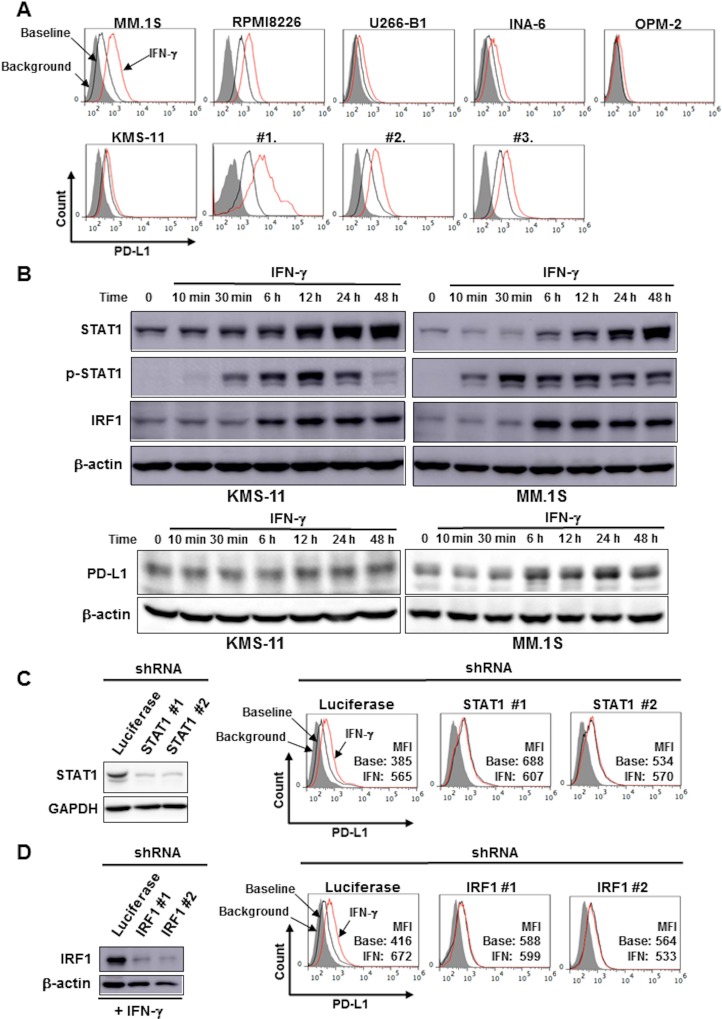
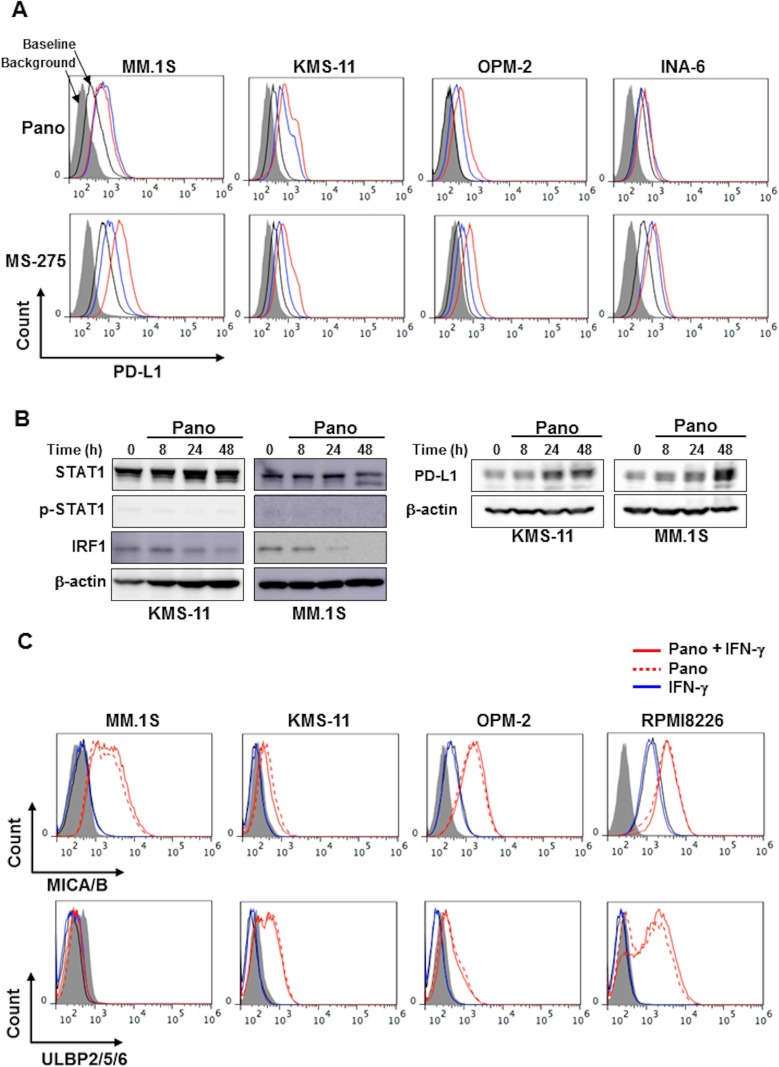
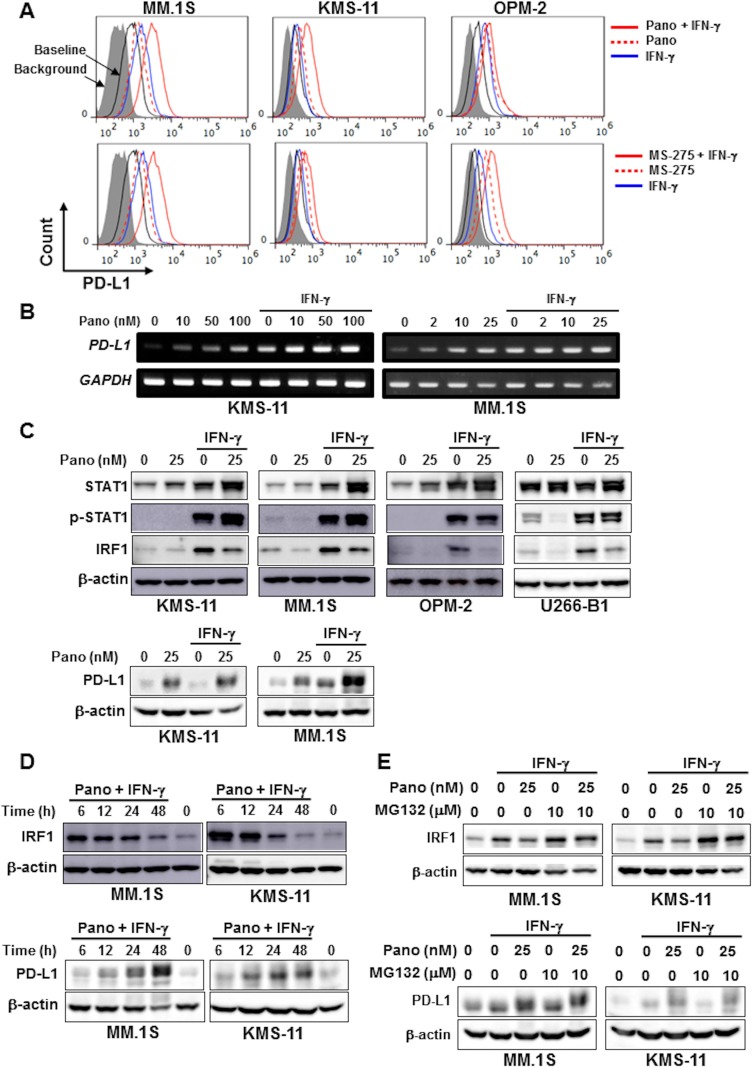
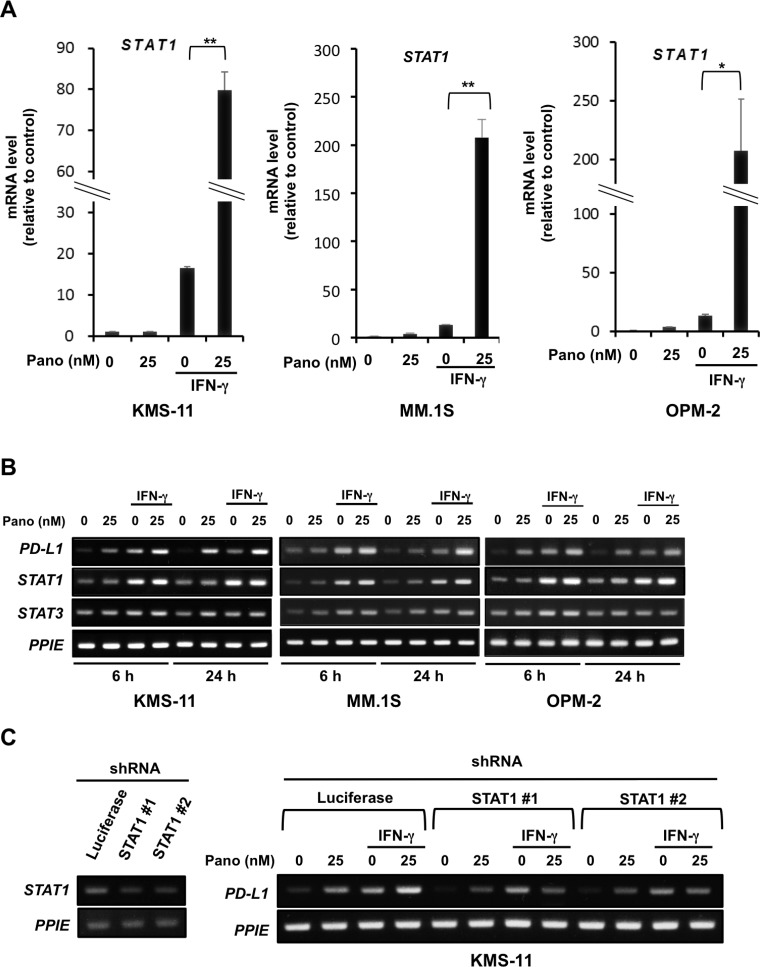
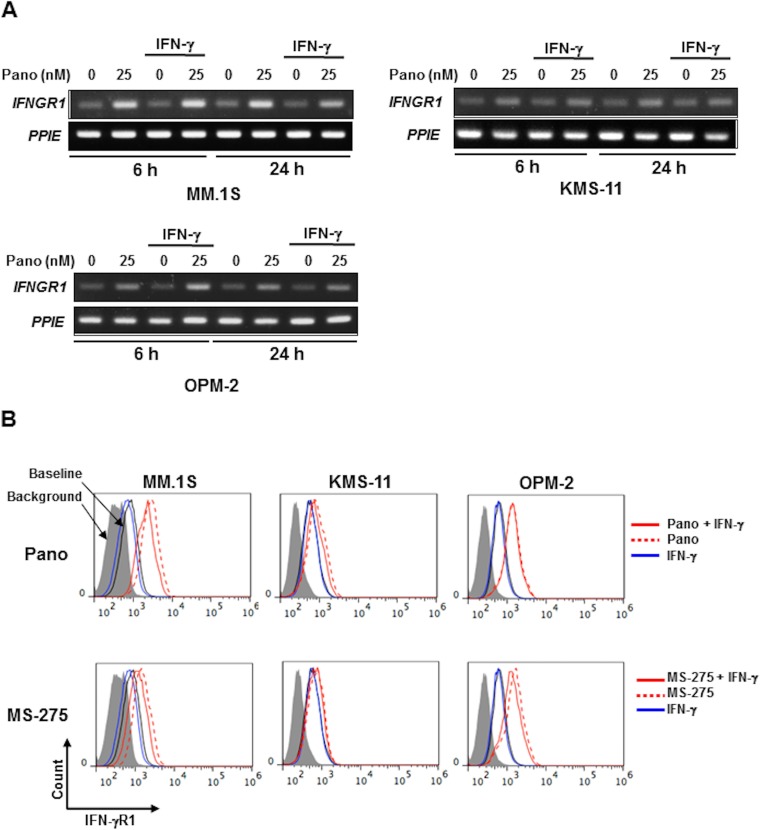
Immunotherapy is revolutionizing the treatment paradigm for multiple myeloma (MM). Interferon (IFN)-γ is essential for immune responses, whereas immune checkpoint molecules, such as programmed cell death-1 ligand-1 (PD-L1), mitigate the beneficial anti-tumor immune responses. As HDAC inhibitors alter the immunogenicity and anti-tumor immune responses, we here explored the regulation of PD-L1 expression in MM cells by the clinically available HDAC inhibitor panobinostat in the presence of IFN-γ. IFN-γ activated the STAT1-IRF1 pathway to upregulate PD-L1 expression in MM cells, and panobinostat was able to upregulate their PD-L1 expression without activating the STAT1-IRF1 pathway. Of note, panobinostat enhanced IFN-γR1 expression, which substantially increased the total and phosphorylated levels of STAT1 protein but reduced IRF1 protein levels through proteasomal degradation in the presence of IFN-γ. Panobinostat further enhanced the IFN-γ-mediated durable STAT1 activation in MM cells; gene silencing abolished the PD-L1 upregulation by panobinostat and IFN-γ in combination, indicating a critical role for STAT1. These results suggest that panobinostat enhances PD-L1 expression by facilitating the IFN-γ-STAT1 pathway in a ligand-dependent manner in MM cells with ambient IFN-γ. PD-L1 upregulation should be taken into account when combining immunotherapies with panobinostat.
免疫疗法正在彻底改变多发性骨髓瘤(MM)的治疗模式。干扰素(IFN)-γ对免疫反应至关重要,而免疫检查点分子,如程序性细胞死亡蛋白1配体1(PD-L1),会减轻有益的抗肿瘤免疫反应。由于组蛋白去乙酰化酶(HDAC)抑制剂会改变免疫原性和抗肿瘤免疫反应,我们在此探讨了临床可用的HDAC抑制剂帕比司他在IFN-γ存在的情况下对MM细胞中PD-L1表达的调控。IFN-γ激活STAT1-IRF1通路以上调MM细胞中PD-L1的表达,而帕比司他能够在不激活STAT1-IRF1通路的情况下上调其PD-L1表达。值得注意的是,帕比司他增强了IFN-γR1的表达,这在IFN-γ存在的情况下显著增加了STAT1蛋白的总量和磷酸化水平,但通过蛋白酶体降解降低了IRF1蛋白水平。帕比司他进一步增强了IFN-γ介导的MM细胞中STAT1的持久激活;基因沉默消除了帕比司他和IFN-γ联合上调的PD-L1,表明STAT1起关键作用。这些结果表明,在存在环境IFN-γ的MM细胞中,帕比司他通过以配体依赖的方式促进IFN-γ-STAT1通路来增强PD-L1表达。在将免疫疗法与帕比司他联合使用时,应考虑PD-L1的上调。