Dreksler Noemi, Spence Charles
Crossmodal Research Laboratory, Department of Experimental Psychology, University of Oxford, UK.
Iperception. 2019 Mar 29;10(2):2041669519834042. doi: 10.1177/2041669519834042. eCollection 2019 Mar-Apr.
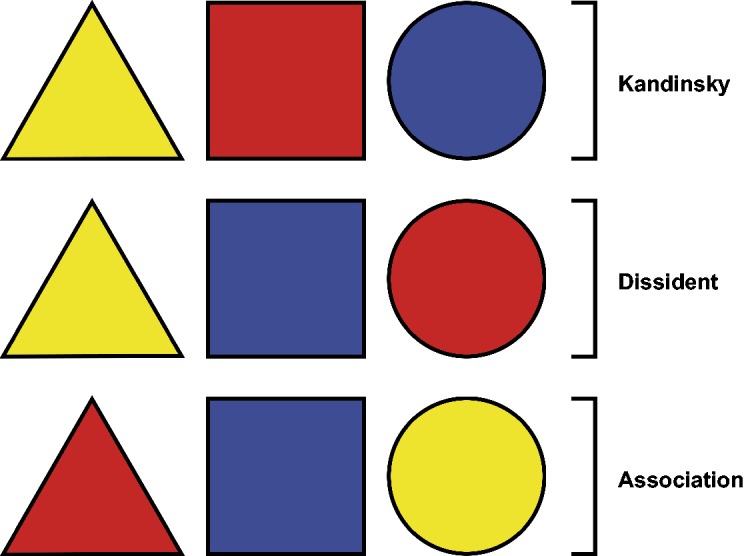
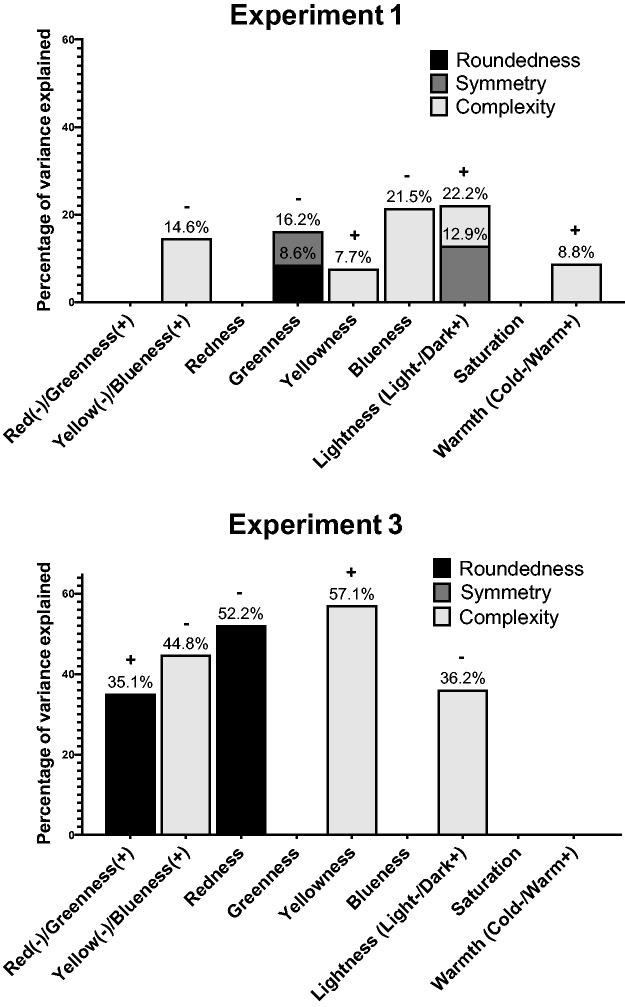
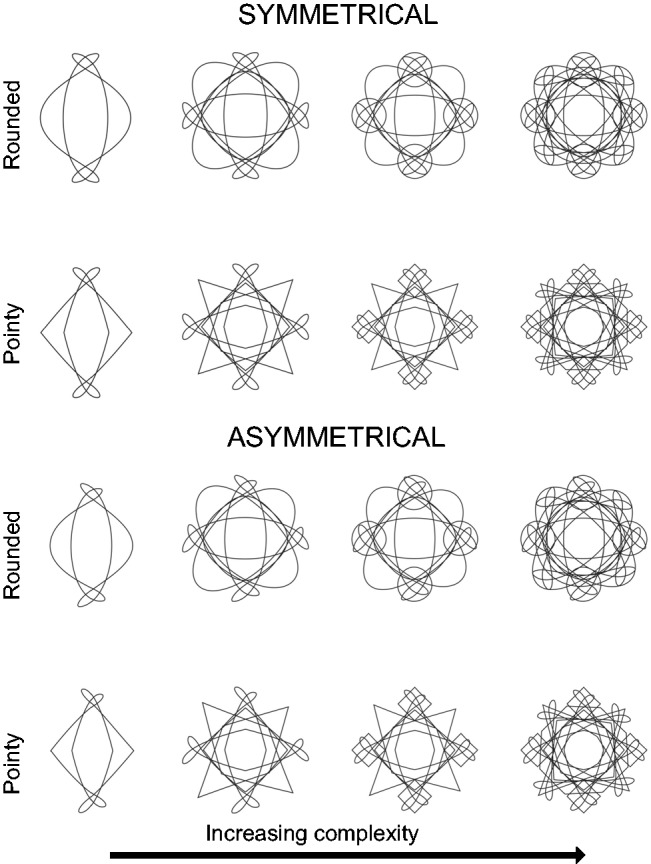
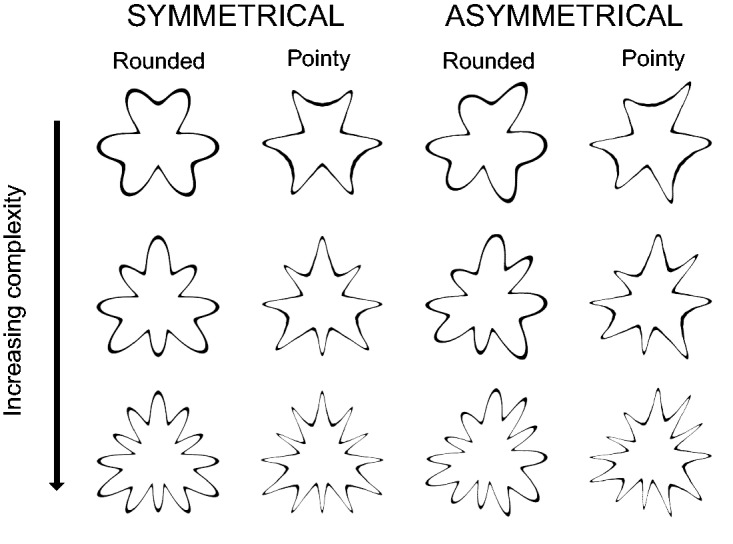
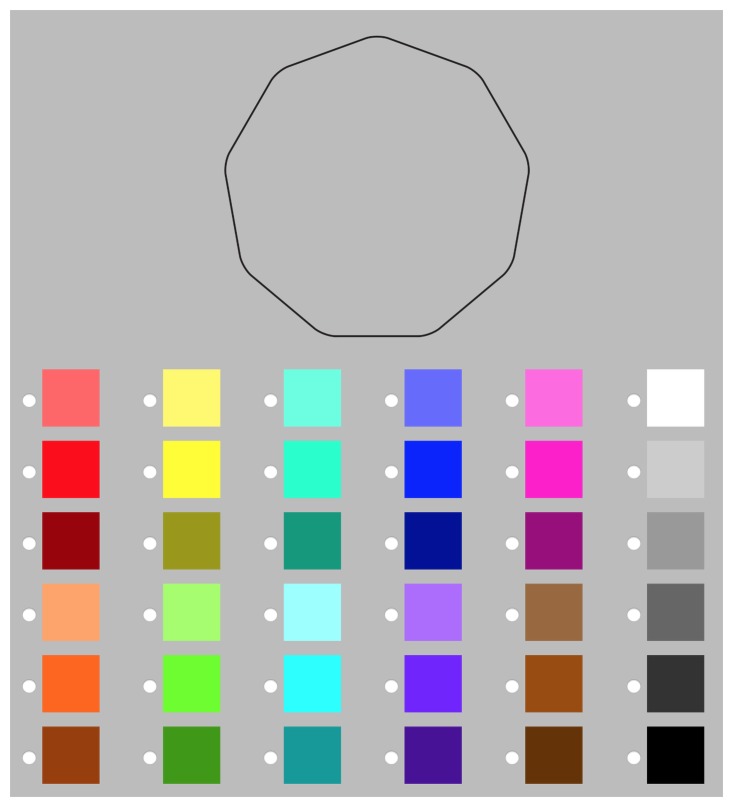
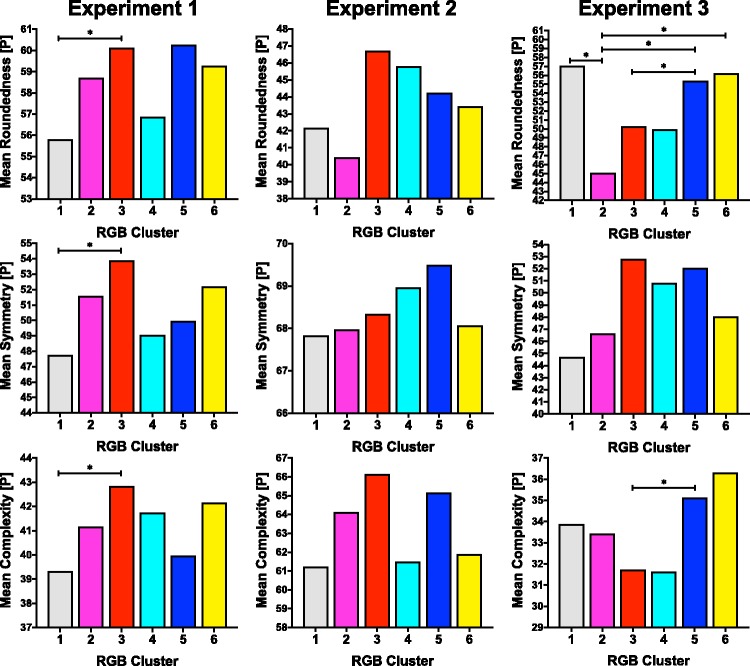
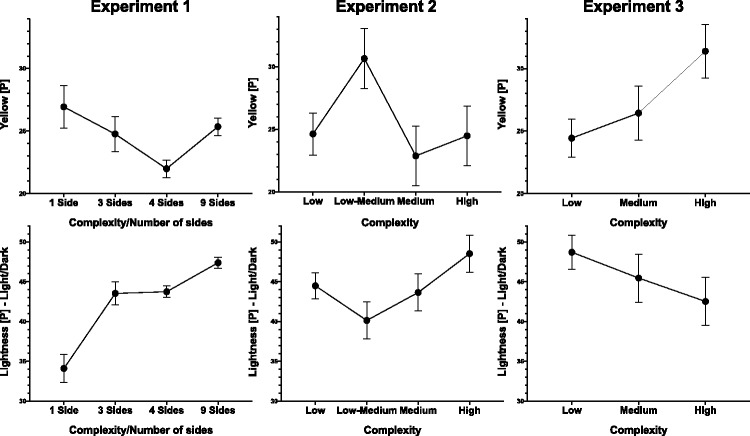
Research on the topic of colour-shape correspondences started in the early 20th century with the Bauhaus artist Wassily Kandinsky. However, more recently, the topic has been examined using the empirical framework of crossmodal correspondences research. The field remains one in which consistent results and generalisable hypotheses about the existence and nature of colour-shape correspondences are lacking. The replicability and consistency of findings concerning colour-shape correspondences are examined in three online colour-shape matching experiments using the same procedure and study design while varying the sets of shape stimuli that are evaluated. Participants matched one of 36 colours to each shape as well as made preference and arousal appraisal ratings for each of the shapes and colours. The complexities of analysing colour-shape correspondence data are discussed and illustrated by classifying and analysing shape and colours in a variety of different ways, including using continuous perceptual and objective measures. Significant colour-shape associations were found. However, as hypothesised, limited consistent results in regard to what perceptual shape characteristics predicted colour choices were documented across the three stimuli sets. This was the case both within and across different analysis methods. The factors that may be responsible for these inconsistencies are critically discussed. Intriguingly, however, evidence for emotional mediation, whereby shape and colour liking and arousal appraisals appear to influence the colour-shape correspondences made by participants, was found across all three experiments.
关于颜色与形状对应关系这一主题的研究始于20世纪初包豪斯艺术家瓦西里·康定斯基。然而,最近该主题是在跨通道对应关系研究的实证框架下进行探讨的。该领域仍然缺乏关于颜色与形状对应关系的存在及本质的一致结果和可推广的假设。在三项在线颜色与形状匹配实验中,使用相同的程序和研究设计,同时改变所评估的形状刺激集,来检验颜色与形状对应关系研究结果的可重复性和一致性。参与者将36种颜色中的一种与每个形状进行匹配,并对每个形状和颜色进行偏好和唤醒评估。通过以多种不同方式对形状和颜色进行分类和分析,包括使用连续的感知和客观测量方法,来讨论和说明分析颜色与形状对应关系数据的复杂性。发现了显著的颜色与形状关联。然而,正如所假设的那样,在三个刺激集上记录到的关于哪些感知形状特征预测颜色选择的一致结果有限。在不同的分析方法内部和之间都是如此。对可能导致这些不一致的因素进行了批判性讨论。然而,有趣的是,在所有三项实验中都发现了情感中介的证据,即形状和颜色的喜好以及唤醒评估似乎会影响参与者做出的颜色与形状对应关系。