Respiratory Medicine, University College London Medical School, London, UK.
Respiratory Care, King Faisal University, Al-Ahsa, Saudi Arabia.
BMJ Open Respir Res. 2019 Feb 18;6(1):e000345. doi: 10.1136/bmjresp-2018-000345. eCollection 2019.
Although the effectiveness of domiciliary monitoring (telehealth) to improve outcomes in chronic obstructive pulmonary disease (COPD) is controversial, it is being used in the National Health Service (NHS).
To explore the use of teleheath for COPD across England and Wales, to assess the perceptions of clinicians employing telehealth in COPD and to summarise the techniques that have been used by healthcare providers to personalise alarm limits for patients with COPD enrolled in telehealth programmes.
A cross-sectional survey consisting of 14 questions was sent to 230 COPD community services in England and Wales. Questions were designed to cover five aspects of telehealth in COPD: purpose of use, equipment type, clinician perceptions, variables monitored and personalisation of alarm limits.
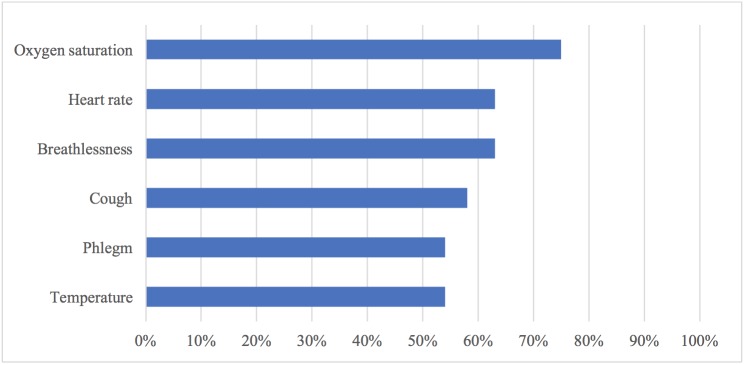
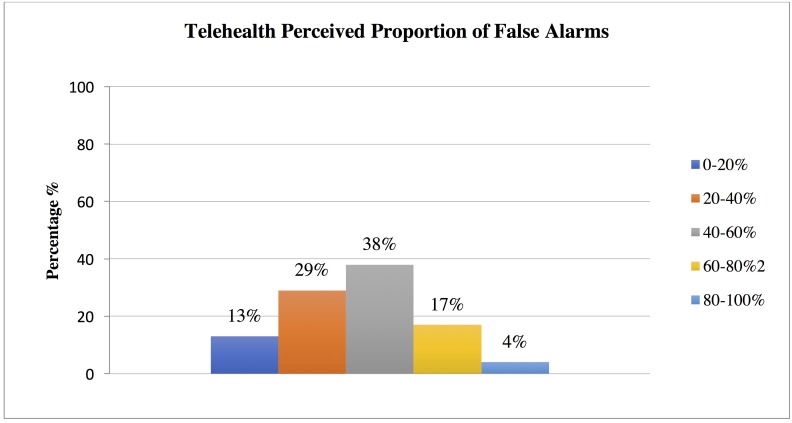
65 participants completed the survey from 52 different NHS Trusts. 46% of Trusts had used telehealth for COPD, and currently, 31% still provided telehealth services to patients with COPD. Telehealth is most commonly used for baseline monitoring and to allow early detection of exacerbations, with 54% believing it to be effective. The three most commonly monitored variables were oxygen saturation, heart rate and breathlessness. A variety of methods were used to set alarm limits with the majority of respondents believing that at least 40% of alarms were false.
Around one-third of responded community COPD services are using telehealth, believing it to be effective without robust evidence, with a variety of variables monitored, a variety of hardware and varying techniques to set alarm limits with high false alarm frequencies.
尽管家庭监测(远程医疗)对改善慢性阻塞性肺疾病(COPD)的疗效存在争议,但它已在国民保健制度(NHS)中使用。
探索英格兰和威尔士 COPD 的远程医疗使用情况,评估在 COPD 中使用远程医疗的临床医生的看法,并总结医疗保健提供者用于为参与远程医疗计划的 COPD 患者个性化报警限的技术。
一项横断面调查包括 14 个问题,发送给英格兰和威尔士的 230 个 COPD 社区服务。问题旨在涵盖 COPD 远程医疗的五个方面:使用目的、设备类型、临床医生的看法、监测变量和报警限的个性化。
来自 52 个不同 NHS 信托基金的 65 名参与者完成了调查。46%的信托基金曾使用远程医疗治疗 COPD,目前 31%仍向 COPD 患者提供远程医疗服务。远程医疗最常用于基线监测和早期发现恶化,54%的人认为它是有效的。最常监测的三个变量是血氧饱和度、心率和呼吸困难。设置报警限的方法多种多样,大多数受访者认为至少 40%的报警是错误的。
约三分之一的社区 COPD 服务机构正在使用远程医疗,认为它是有效的,尽管缺乏确凿的证据,监测的变量多种多样,硬件种类繁多,设置报警限的技术也多种多样,假报警频率很高。