Department of General Surgery, Colorectal Surgery Unit Mansoura University Mansoura Egypt.
Department of General Surgery Rome Tor Vergata University Rome Italy.
BJS Open. 2018 Dec 26;3(2):153-160. doi: 10.1002/bjs5.50124. eCollection 2019 Apr.
Endoluminal vacuum-assisted therapy (EVT) has been introduced recently to treat colorectal anastomotic leakage. The aim of this study was to evaluate the safety and efficacy of EVT in the treatment of anastomotic leakage and rectal stump insufficiency after Hartmann's procedure.
A systematic search of MEDLINE, Scopus and Cochrane databases was performed using search terms related to EVT and anastomotic leakage or rectal stump insufficiency in line with the PRISMA checklist. Observational studies, RCTs and case series studies published to July 2017 were included. Primary outcomes of the review were the success of EVT, defined as complete or partial healing of the anastomotic defect and associated cavity, and the rate of stoma reversal after EVT. Secondary outcomes included the duration of treatment to complete healing, complications of treatment and the need for further intervention. A meta-analysis was conducted. The potential effect of clinical confounders on the failure of EVT was investigated using the random-effects meta-regression model.
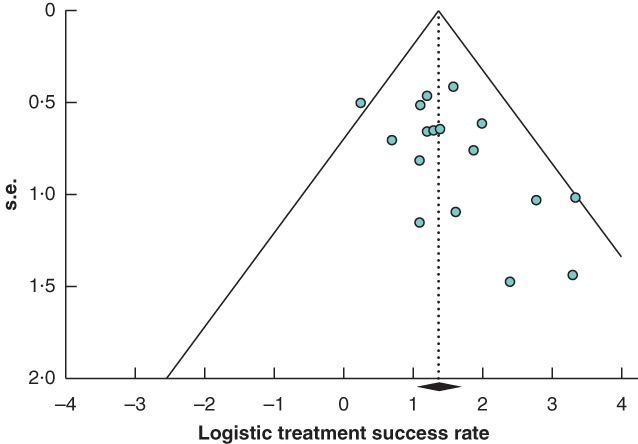
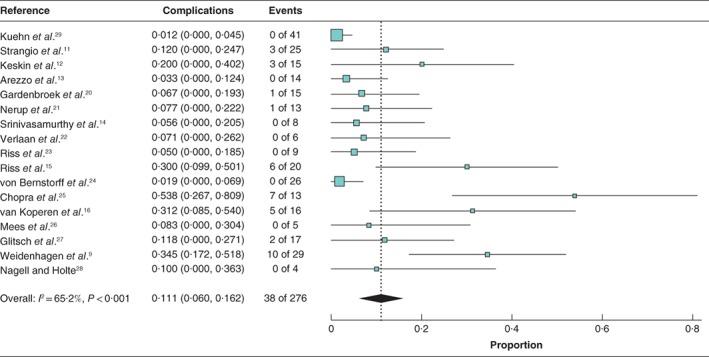
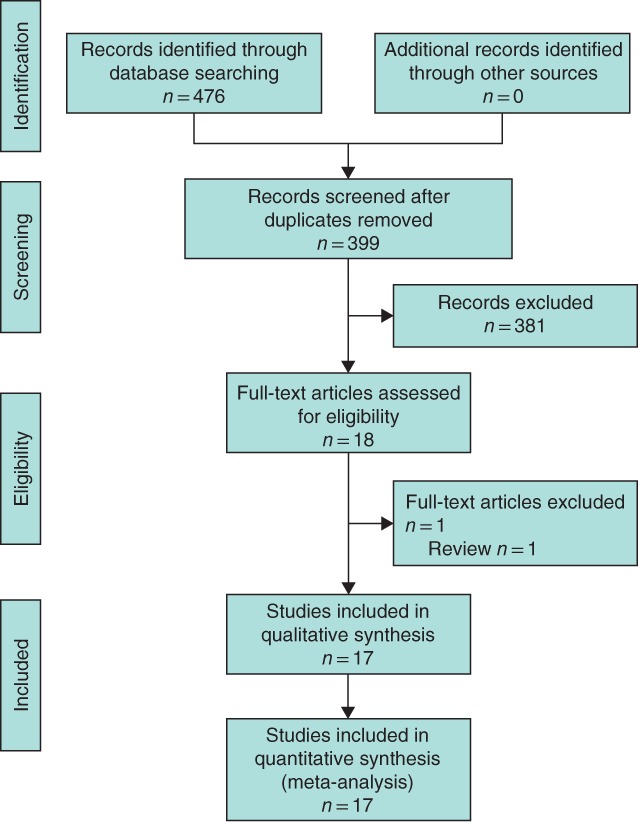
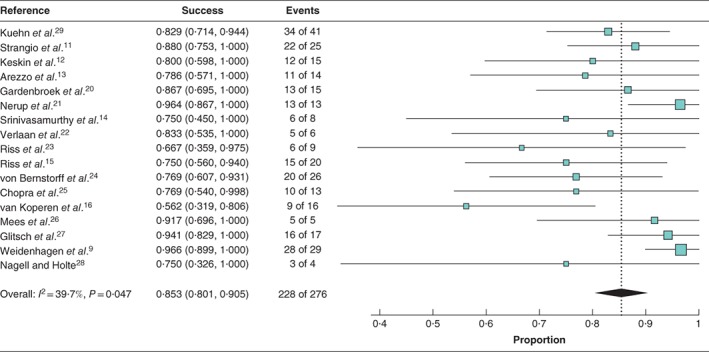
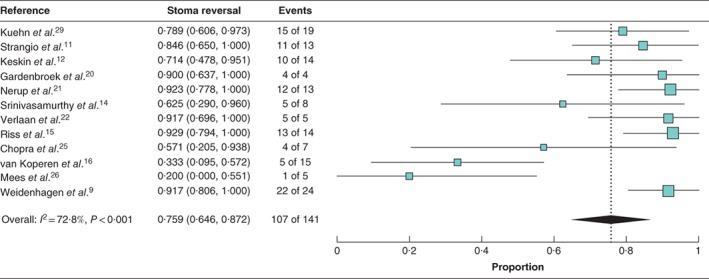
Of 476 articles identified, 17 studies reporting on 276 patients were ultimately included. The weighted mean rate of success was 85·3 (95 per cent c.i. 80·1 to 90·5) per cent, with a median duration from inception of EVT to complete healing of 47 (range 40-105) days. The weighted mean rate of stoma reversal across the studies was 75·9 (64·6 to 87·2) per cent. Twenty-five patients (9·1 per cent) required additional interventions after EVT. Thirty-eight patients (13·8 per cent) developed complications. The weighted mean complication rate across the studies was 11·1 (6·0 to 16·2) per cent. Variables significantly associated with failure included preoperative radiotherapy, absence of diverting stoma, complications and male sex.
EVT is associated with a high rate of complete healing of anastomotic leakage and stoma reversal. It is an effective option in appropriately selected patients with anastomotic leakage.
腔内真空辅助治疗(EVT)最近已被引入用于治疗结直肠吻合口漏。本研究旨在评估 EVT 治疗 Hartmann 手术后吻合口漏和直肠残端不足的安全性和有效性。
根据 PRISMA 清单,通过与 EVT 和吻合口漏或直肠残端不足相关的搜索词,对 MEDLINE、Scopus 和 Cochrane 数据库进行系统搜索。纳入的研究包括观察性研究、RCT 和病例系列研究,这些研究的发表时间截至 2017 年 7 月。本综述的主要结局是 EVT 的成功,定义为吻合缺陷和相关腔完全或部分愈合,以及 EVT 后造口反转的比例。次要结局包括完全愈合的治疗时间、治疗并发症和进一步干预的需求。进行了 meta 分析。使用随机效应 meta 回归模型研究了临床混杂因素对 EVT 失败的潜在影响。
在 476 篇文章中,最终有 17 项研究报告了 276 例患者。EVT 的成功率加权平均值为 85.3%(95%可信区间 80.1%至 90.5%),从 EVT 开始到完全愈合的中位数时间为 47 天(范围 40-105 天)。研究中造口逆转的加权平均值为 75.9%(64.6%至 87.2%)。25 例患者(9.1%)在 EVT 后需要进一步干预。38 例患者(13.8%)发生并发症。研究中并发症的加权平均值为 11.1%(6.0%至 16.2%)。与失败相关的变量包括术前放疗、无转流造口、并发症和男性。
EVT 与吻合口漏的完全愈合和造口逆转率高有关。在适当选择的吻合口漏患者中,EVT 是一种有效的选择。