School of Medicine, Fu-Jen Catholic University, New Taipei City 242, Taiwan.
Department of Urology, Fu-Jen Catholic University Hospital, New Taipei City 242, Taiwan.
Mar Drugs. 2019 Apr 6;17(4):215. doi: 10.3390/md17040215.
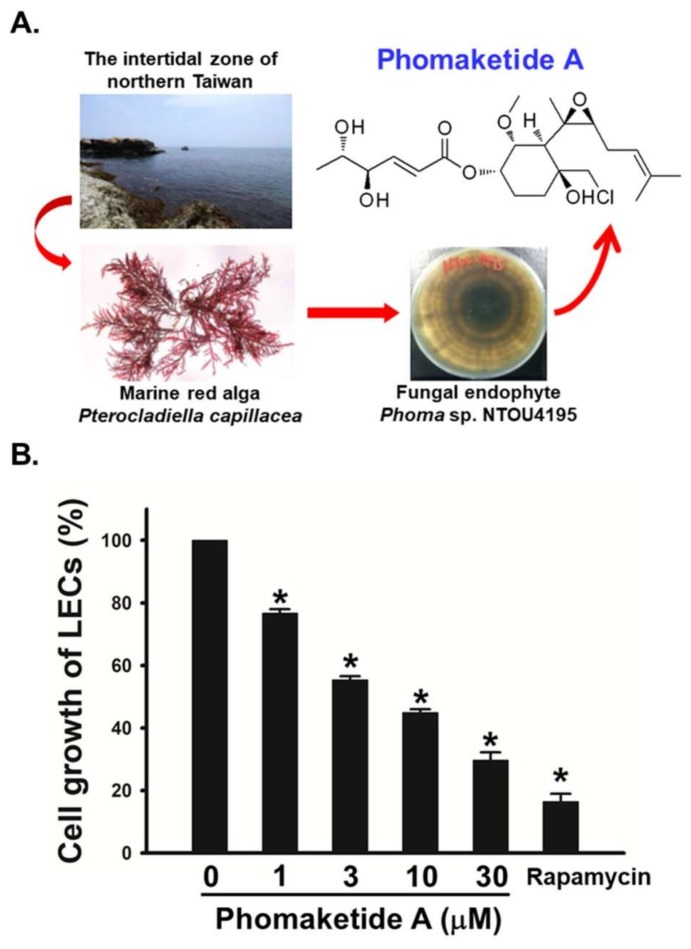
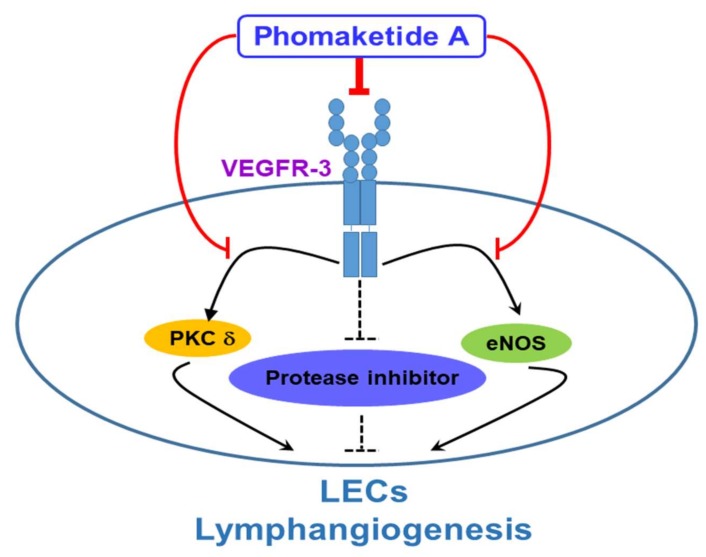
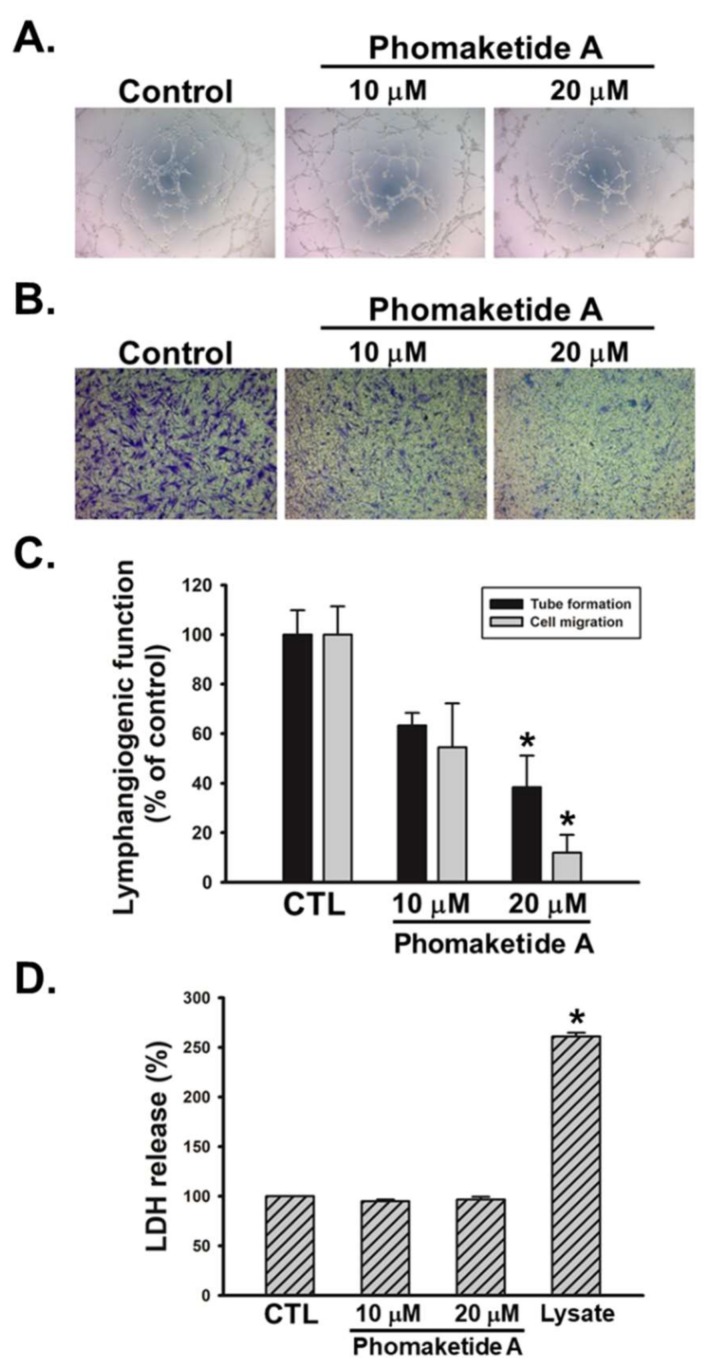
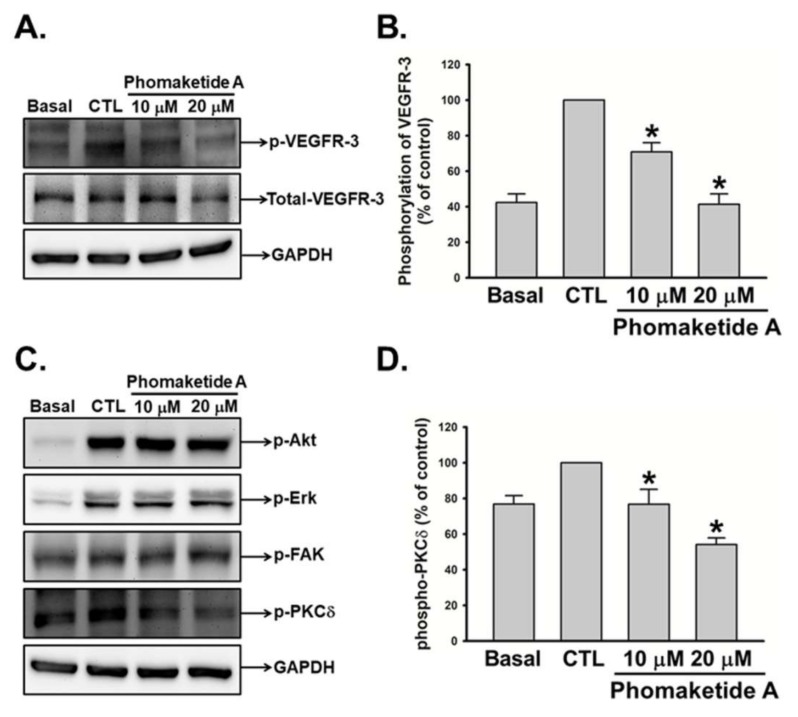
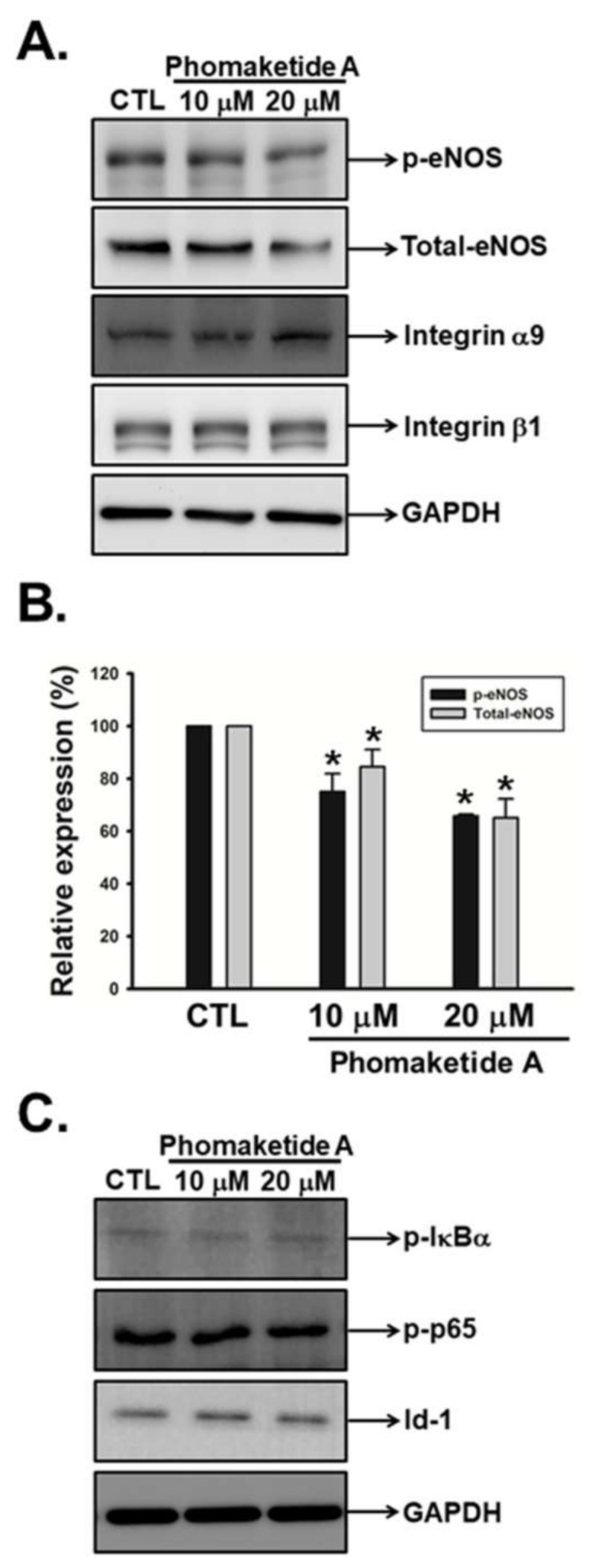
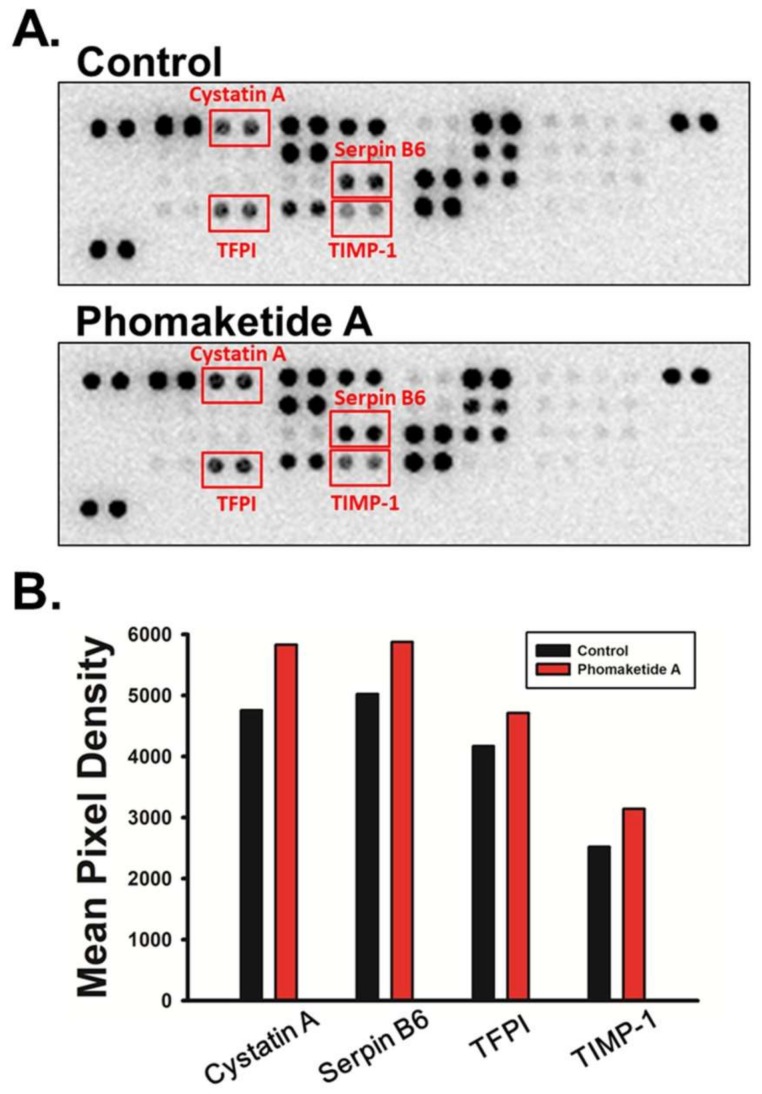
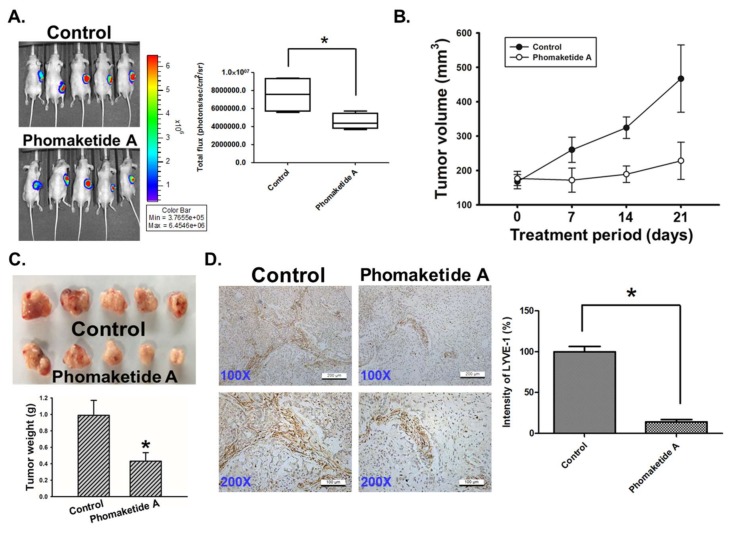
Lymphangiogenesis is an important biological process associated with cancer metastasis. The development of new drugs that block lymphangiogenesis represents a promising therapeutic strategy. Marine fungus-derived compound phomaketide A, isolated from the fermented broth of sp. NTOU4195, has been reported to exhibit anti-angiogenic and anti-inflammatory effects. However, its anti-lymphangiogenic activity has not been clarified to date. In this study, we showed that phomaketide A inhibited cell growth, migration, and tube formation of lymphatic endothelial cells (LECs) without an evidence of cytotoxicity. Mechanistic investigations revealed that phomaketide A reduced LECs-induced lymphangiogenesis via vascular endothelial growth factor receptor-3 (VEGFR-3), protein kinase Cδ (PKCδ), and endothelial nitric oxide synthase (eNOS) signalings. Furthermore, human proteome array analysis indicated that phomaketide A significantly enhanced the protein levels of various protease inhibitors, including cystatin A, serpin B6, tissue factor pathway inhibitor (TFPI), and tissue inhibitor matrix metalloproteinase 1 (TIMP-1). Importantly, phomaketide A impeded tumor growth and lymphangiogenesis by decreasing the expression of LYVE-1, a specific marker for lymphatic vessels, in tumor xenograft animal model. These results suggest that phomaketide A may impair lymphangiogenesis by suppressing VEGFR-3, PKCδ, and eNOS signaling cascades, while simultaneously activating protease inhibitors in human LECs. We document for the first time that phomaketide A inhibits lymphangiogenesis both and , which suggests that this natural product could potentially treat cancer metastasis.
淋巴管生成是与癌症转移相关的重要生物学过程。开发抑制淋巴管生成的新药代表了一种有前途的治疗策略。从 sp. NTOU4195 的发酵肉汤中分离得到的海洋真菌衍生化合物 phomaketide A 已被报道具有抗血管生成和抗炎作用。然而,其抗淋巴管生成活性迄今尚未阐明。在这项研究中,我们表明 phomaketide A 抑制淋巴管内皮细胞 (LEC) 的细胞生长、迁移和管形成,而没有细胞毒性的证据。机制研究表明,phomaketide A 通过血管内皮生长因子受体-3 (VEGFR-3)、蛋白激酶 Cδ (PKCδ) 和内皮型一氧化氮合酶 (eNOS) 信号通路减少 LEC 诱导的淋巴管生成。此外,人类蛋白质组阵列分析表明,phomaketide A 显著增强了各种蛋白酶抑制剂的蛋白水平,包括半胱氨酸蛋白酶抑制剂 A、丝氨酸蛋白酶抑制剂 B6、组织因子途径抑制剂 (TFPI) 和组织抑制剂基质金属蛋白酶 1 (TIMP-1)。重要的是,phomaketide A 通过降低肿瘤异种移植动物模型中淋巴管特异性标志物 LYVE-1 的表达来抑制肿瘤生长和淋巴管生成。这些结果表明,phomaketide A 可能通过抑制 VEGFR-3、PKCδ 和 eNOS 信号级联来损害淋巴管生成,同时在人 LEC 中激活蛋白酶抑制剂。我们首次记录到 phomaketide A 抑制淋巴管生成,这表明这种天然产物可能有潜力治疗癌症转移。