School of Electrical and Electronic Engineering, The University of Manchester, Manchester M13 9PL, UK.
Centre for Doctoral Training in Sensor Technologies and Application, Department of Chemical Engineering and Biotechnology, University of Cambridge, Cambridge CB2 1TN, UK.
Sensors (Basel). 2019 Apr 6;19(7):1650. doi: 10.3390/s19071650.
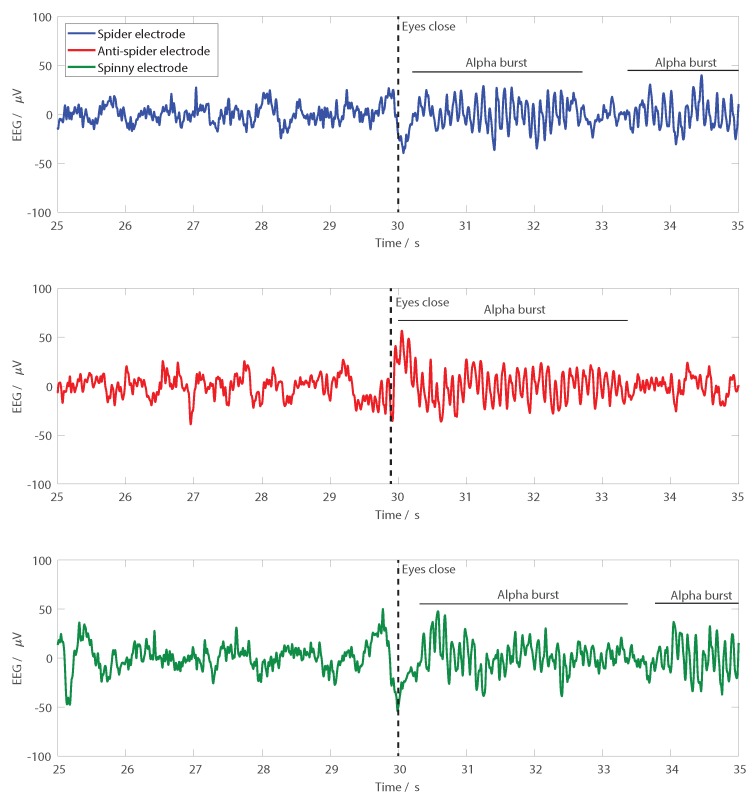
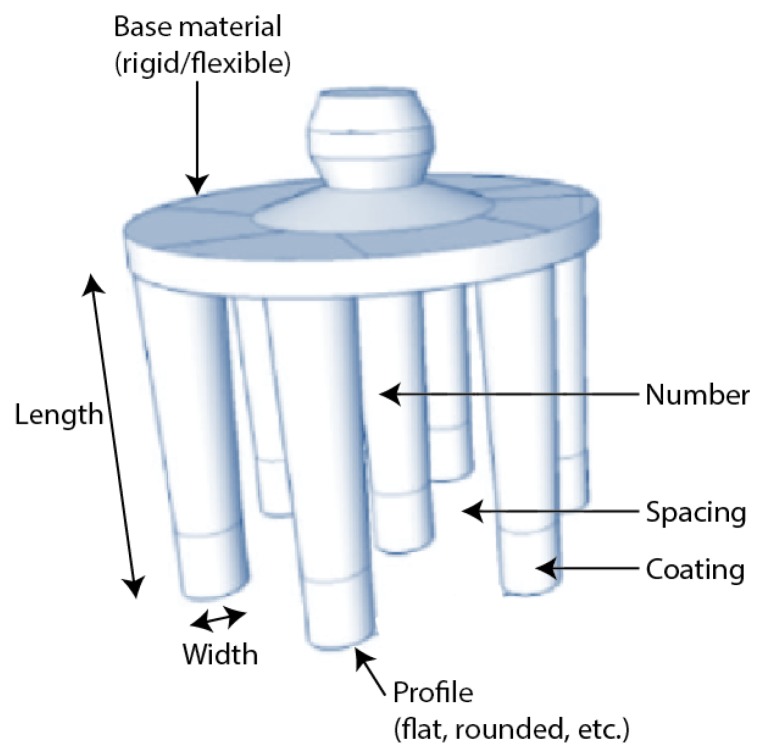
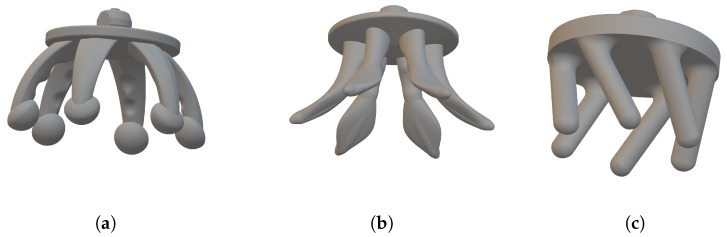
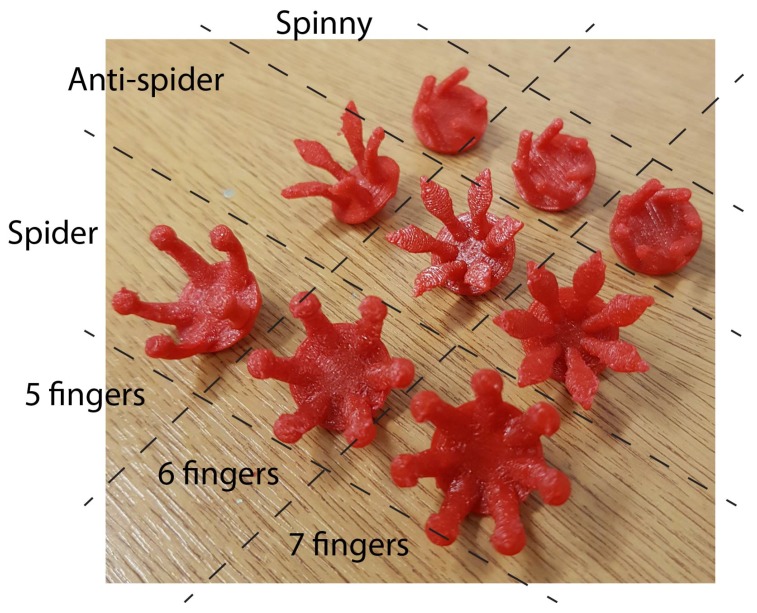
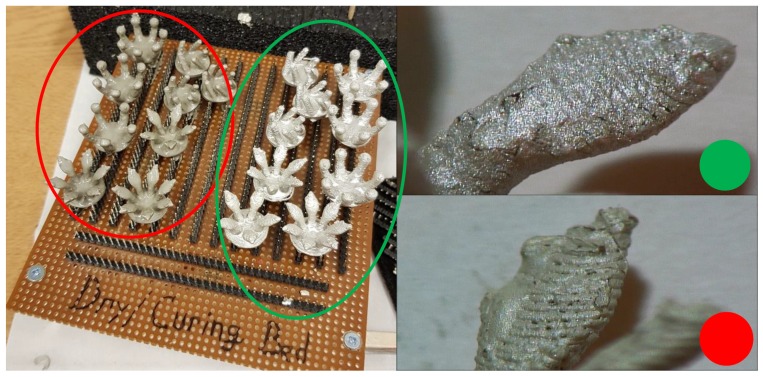
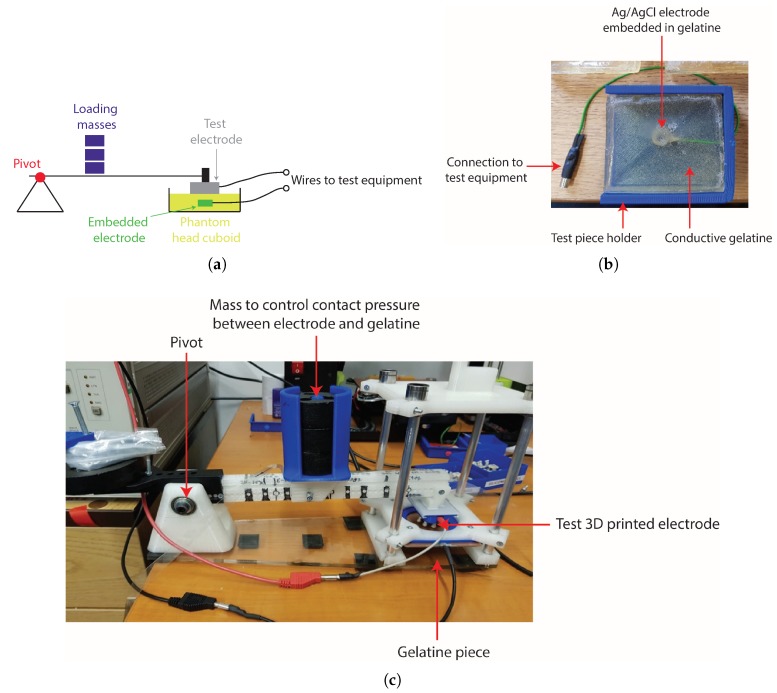
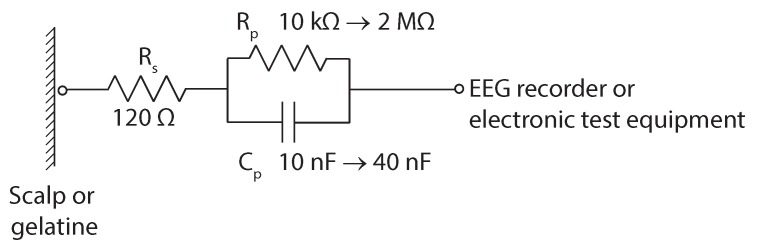
For electroencephalography (EEG) in haired regions of the head, finger-based electrodes have been proposed in order to part the hair and make a direct contact with the scalp. Previous work has demonstrated 3D-printed fingered electrodes to allow personalisation and different configurations of electrodes to be used for different people or for different parts of the head. This paper presents flexible 3D-printed EEG electrodes for the first time. A flexible 3D printing element is now used, with three different base mechanical structures giving differently-shaped electrodes. To obtain improved sensing performance, the silver coatings used previously have been replaced with a silver/silver-chloride coating. This results in reduced electrode contact impedance and reduced contact noise. Detailed electro-mechanical testing is presented to demonstrate the performance of the operation of the new electrodes, particularly with regards to changes in conductivity under compression, together with on-person tests to demonstrate the recording of EEG signals.
对于头部有毛发的区域的脑电图(EEG),已经提出了基于手指的电极,以便分开头发并直接与头皮接触。以前的工作已经证明 3D 打印的指状电极可以实现个性化,并可以使用不同的电极配置用于不同的人或头部的不同部位。本文首次提出了用于 EEG 的柔性 3D 打印电极。现在使用了一种柔性 3D 打印元件,具有三种不同的基础机械结构,可形成不同形状的电极。为了获得更好的传感性能,以前使用的银涂层已被银/氯化银涂层取代。这导致电极接触阻抗降低和接触噪声降低。详细的机电测试用于演示新电极的操作性能,特别是在压缩下的电导率变化方面,以及人体测试以证明 EEG 信号的记录。