Heo Tae-Young, Kim Inhye, Chen Liwen, Lee Eunji, Lee Sangwoo, Choi Soo-Hyung
Department of Chemical Engineering, Hongik University, Seoul 04066, Korea.
Graduate School of Analytical Science and Technology, Chungnam National University, Daejeon 34134, Korea.
Polymers (Basel). 2019 Mar 10;11(3):455. doi: 10.3390/polym11030455.
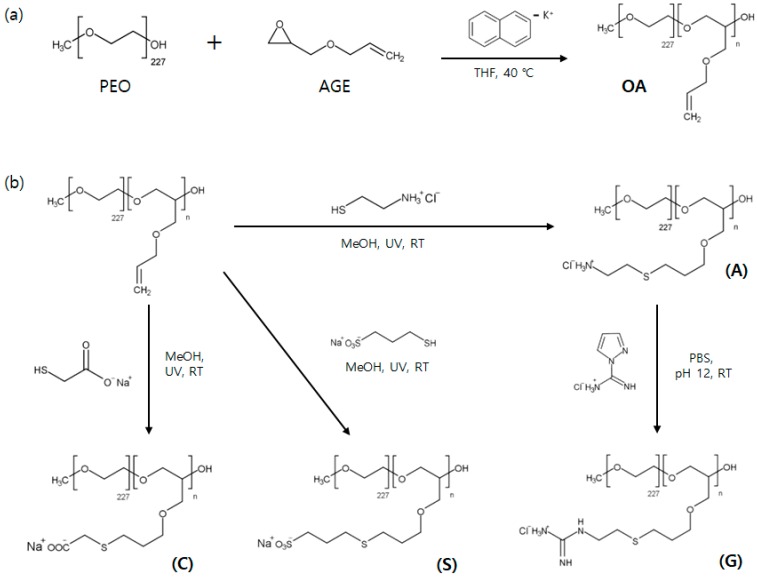
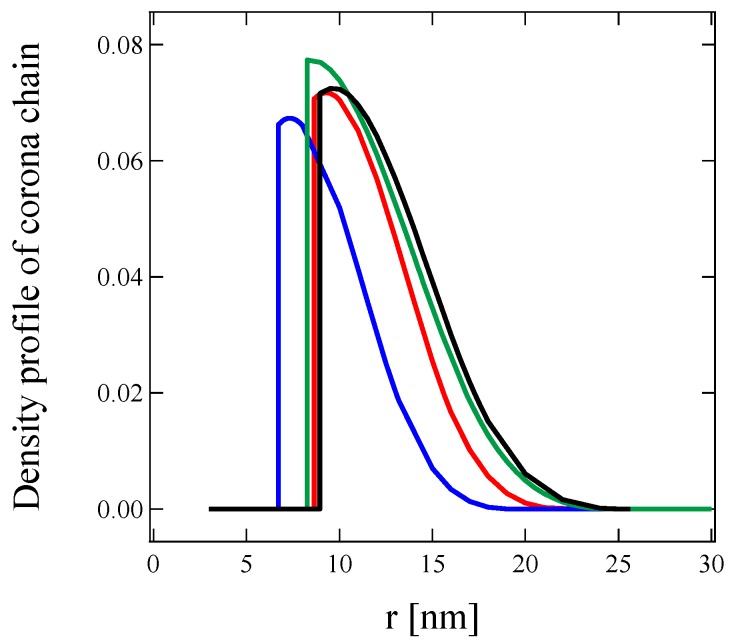
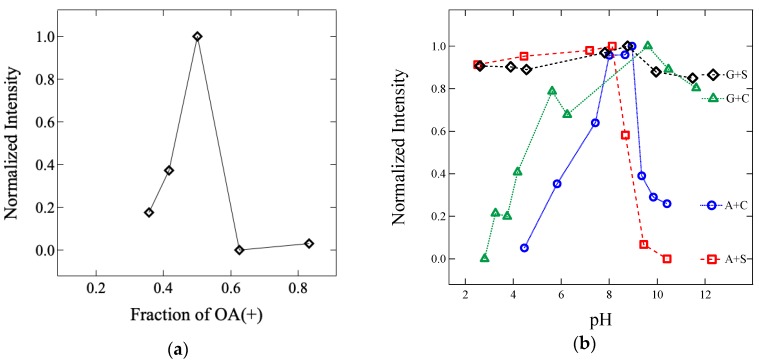
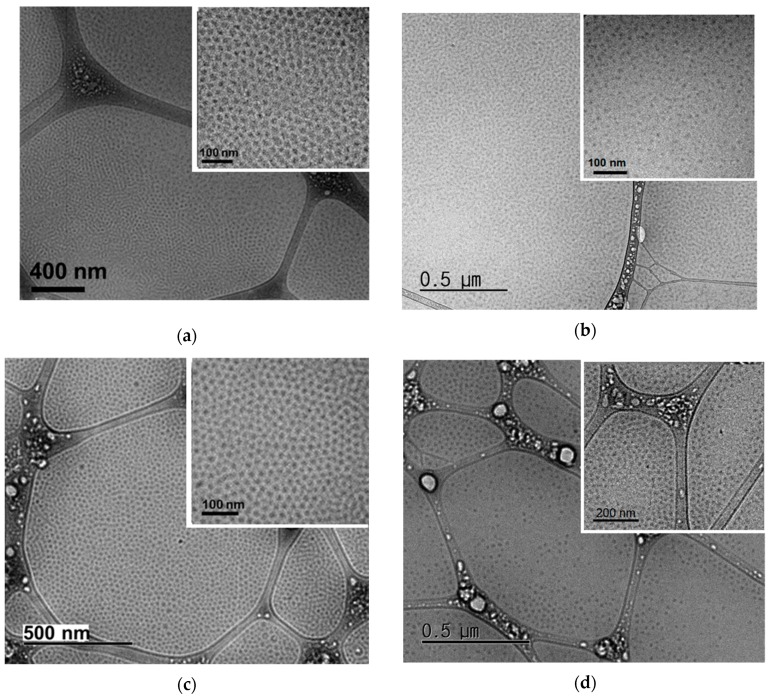
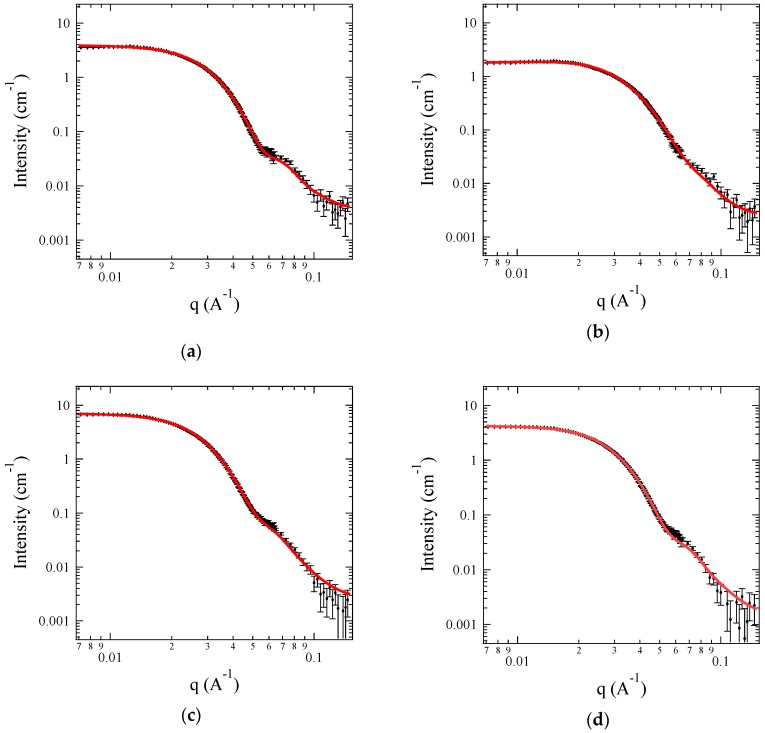
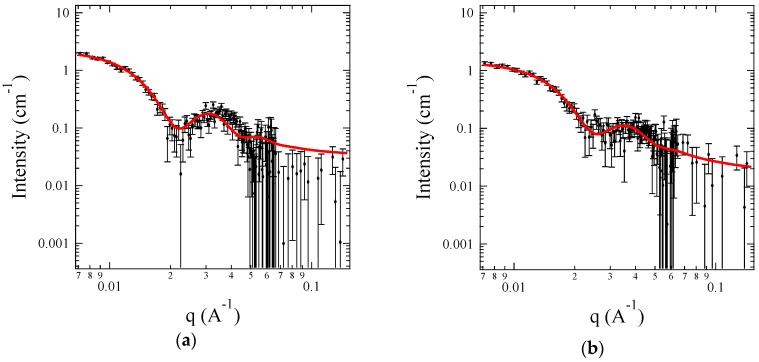
Pairs of ionic group dependence of the structure of a complex coacervate core micelle (C3M) in an aqueous solution was investigated using DLS, cryo-TEM, and SANS with a contrast matching technique and a detailed model analysis. Block copolyelectrolytes were prepared by introducing an ionic group (i.e., ammonium, guanidinium, carboxylate, and sulfonate) to poly(ethylene oxide--allyl glycidyl ether) ( = 227 and = 52), and C3Ms were formed by simple mixing of two oppositely-charged block copolyelectrolyte solutions with the exactly same degree of polymerization. All four C3Ms are spherical with narrow distribution of micelle dimension, and the cores are significantly swollen by water, resulting in relatively low brush density of PEO chains on the core surface. With the pair of strong polyelectrolytes, core radius and aggregation number increases, which reflects that the formation of complex coacervates are significantly sensitive to the pairs of ionic groups rather than simple charge pairing.
使用动态光散射(DLS)、冷冻透射电子显微镜(cryo-TEM)以及采用对比匹配技术和详细模型分析的小角中子散射(SANS),研究了水溶液中复合凝聚层核心胶束(C3M)结构对离子基团对的依赖性。通过将离子基团(即铵基、胍基、羧基和磺酸基)引入聚(环氧乙烷-烯丙基缩水甘油醚)((M_n = 227)和(M_w = 52))制备嵌段聚电解质,通过简单混合两种具有完全相同聚合度的带相反电荷的嵌段聚电解质溶液形成C3M。所有四种C3M均为球形,胶束尺寸分布狭窄,并且核心被水显著溶胀,导致核心表面PEO链的刷密度相对较低。对于强聚电解质对,核心半径和聚集数增加,这反映出复合凝聚层的形成对离子基团对而非简单的电荷配对显著敏感。