Grimm Oliver, Wendler Felix, Schacher Felix H
Institute of Organic Chemistry and Macromolecular Chemistry (IOMC), Friedrich-Schiller-University Jena, Humboldtstraße 10, D-07743 Jena, Germany.
Jena Center for Soft Matter (JCSM), Friedrich-Schiller-University Jena, Philosophenweg 7, D-07743 Jena, Germany.
Polymers (Basel). 2017 Aug 26;9(9):396. doi: 10.3390/polym9090396.
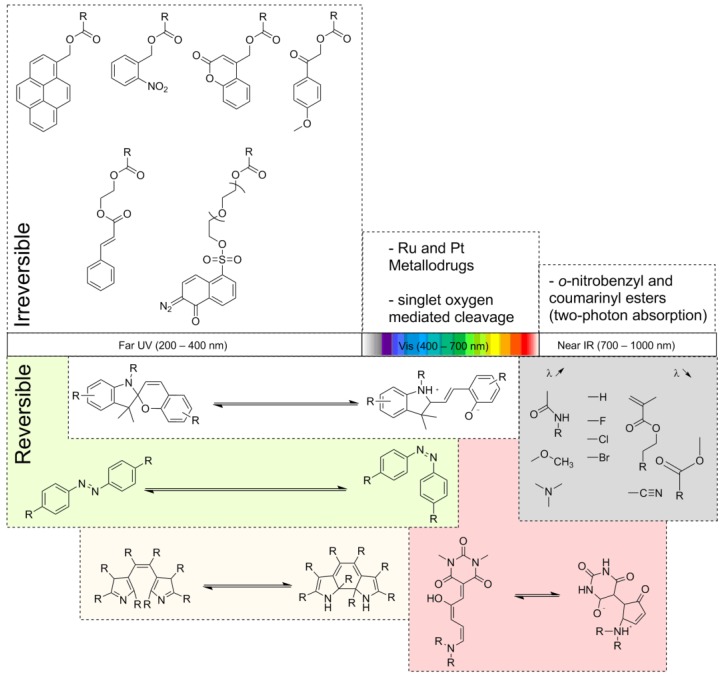
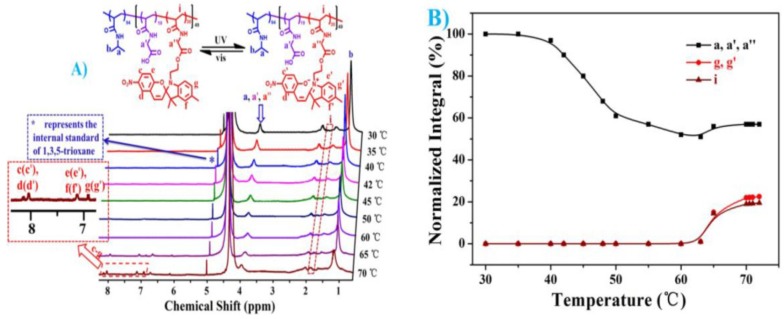
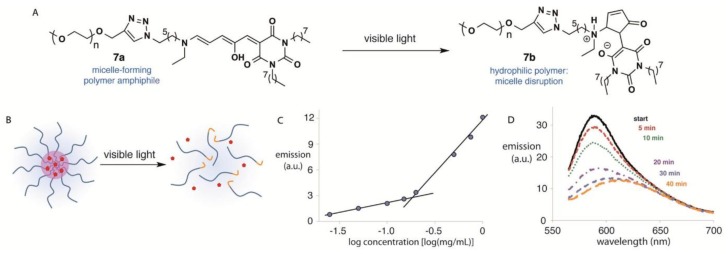
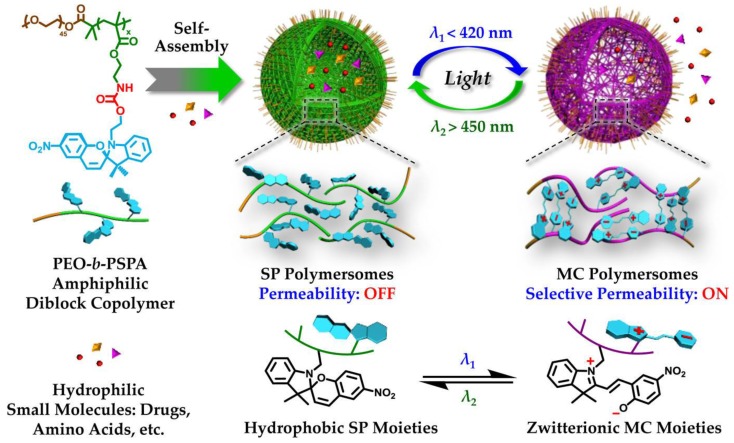
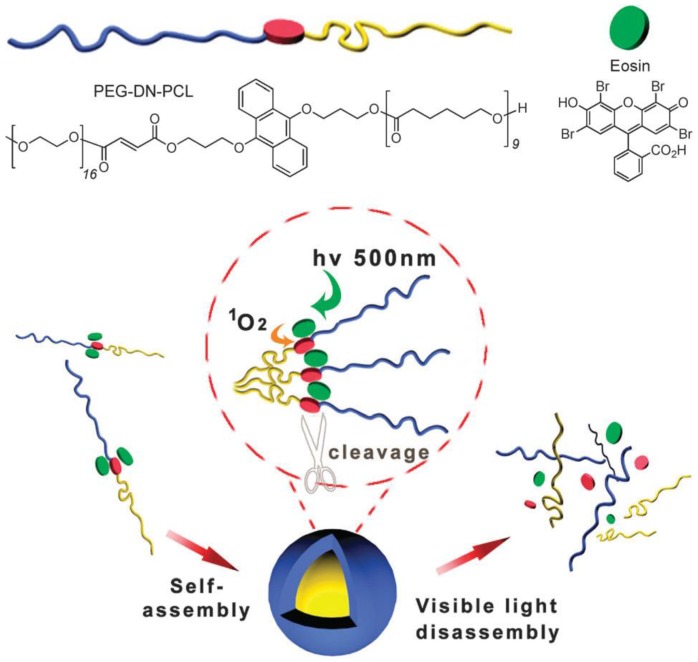
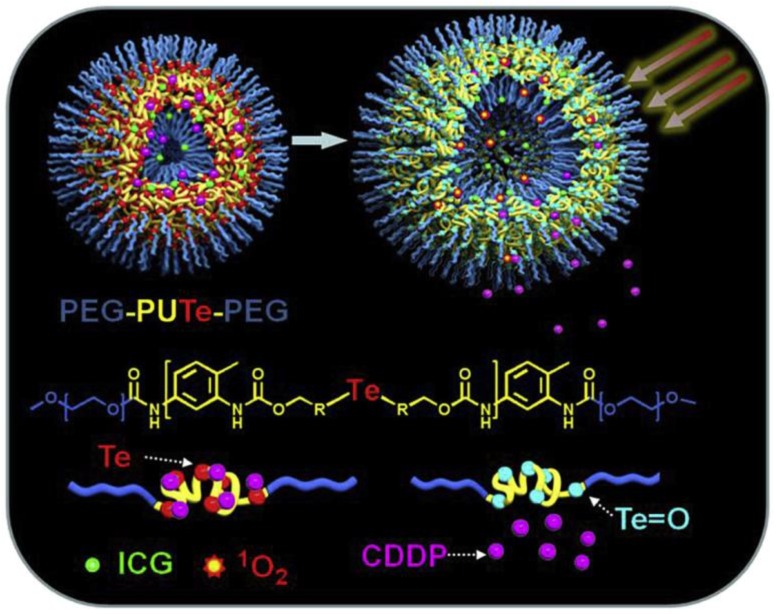
This review focuses on block copolymers featuring different photo-responsive building blocks and self-assembly of such materials in different selective solvents. We have subdivided the specific examples we selected: (1) according to the wavelength at which the irradiation has to be carried out to achieve photo-response; and (2) according to whether irradiation with light of a suitable wavelength leads to reversible or irreversible changes in material properties (e.g., solubility, charge, or polarity). Exemplarily, an irreversible change could be the photo-cleavage of a nitrobenzyl, pyrenyl or coumarinyl ester, whereas the photo-mediated transition between spiropyran and merocyanin form as well as the isomerization of azobenzenes would represent reversible response to light. The examples presented cover applications including drug delivery (controllable release rates), controlled aggregation/disaggregation, sensing, and the preparation of photochromic hybrid materials.
本综述聚焦于具有不同光响应性结构单元的嵌段共聚物,以及此类材料在不同选择性溶剂中的自组装。我们对所选的具体实例进行了细分:(1)根据实现光响应所需进行辐照的波长;(2)根据用合适波长的光进行辐照是否会导致材料性质(如溶解性、电荷或极性)发生可逆或不可逆变化。例如,不可逆变化可能是硝基苄基、芘基或香豆素酯的光裂解,而螺吡喃和部花青形式之间的光介导转变以及偶氮苯的异构化则代表对光的可逆响应。所展示的实例涵盖了包括药物递送(可控释放速率)、可控聚集/解聚、传感以及光致变色杂化材料制备等应用。