Li Jiongjiong, Zhang Jizhi, Zhang Shifeng, Gao Qiang, Li Jianzhang, Zhang Wei
Ministry of Education (MOE) Key Laboratory of Wooden Material Science and Application, Beijing Key Laboratory of Wood Science and Engineering, School of Materials Science and Technology, Beijing Forestry University, Beijing 100083, China.
Key Laboratory for Liquid-Solid Structural Evolution and Processing of Materials (MOE), School of Materials Science and Engineering, Shandong University, Jinan 250061, China.
Polymers (Basel). 2017 Sep 7;9(9):428. doi: 10.3390/polym9090428.
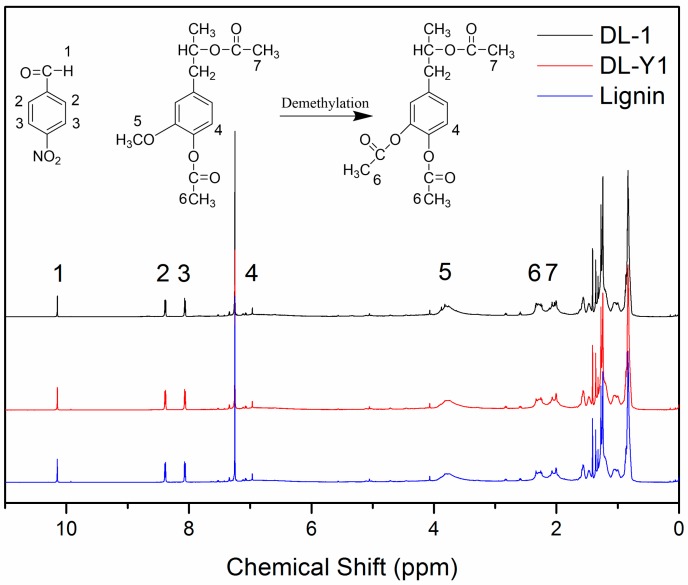
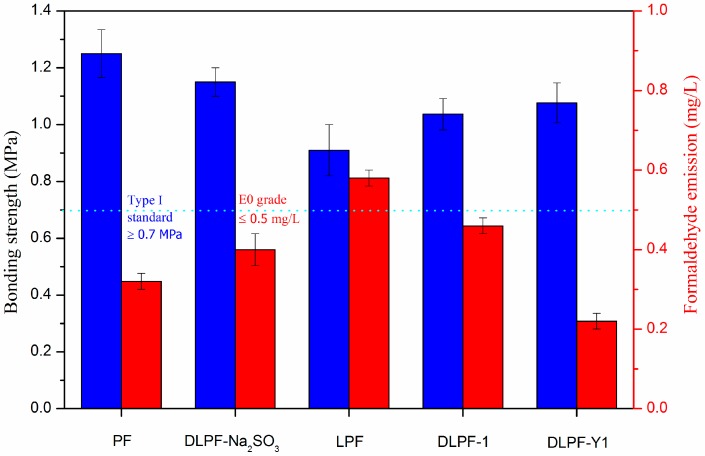
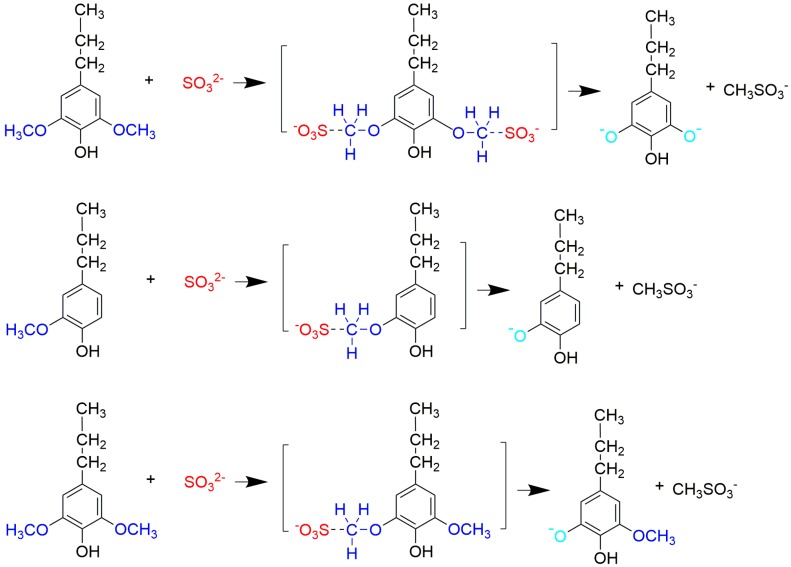
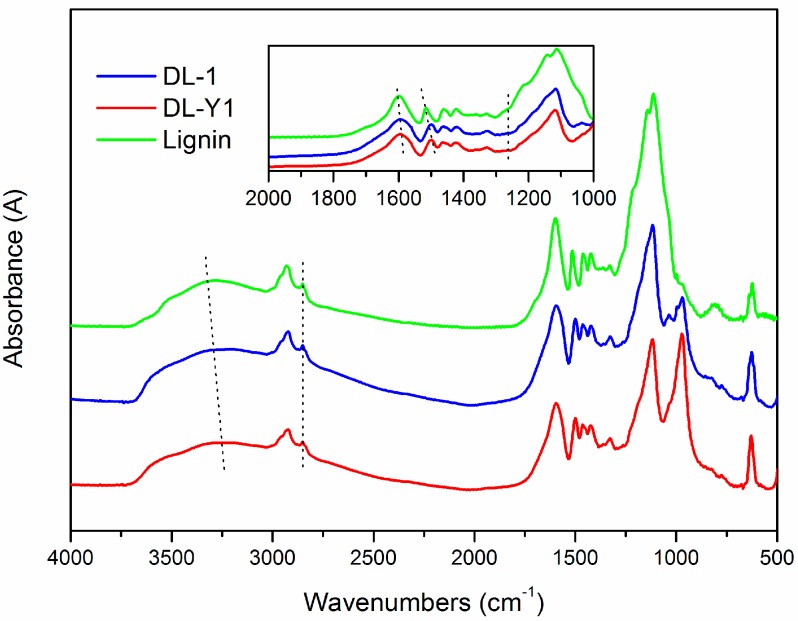
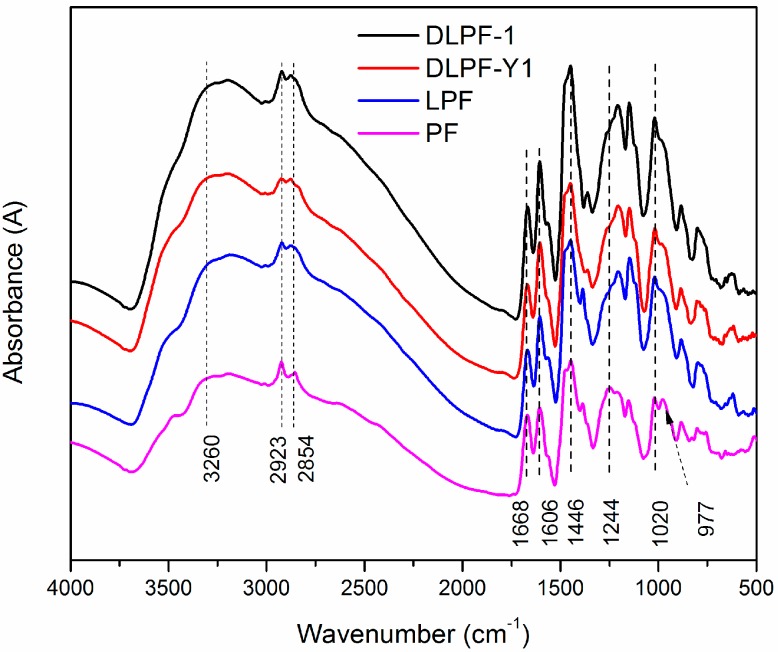
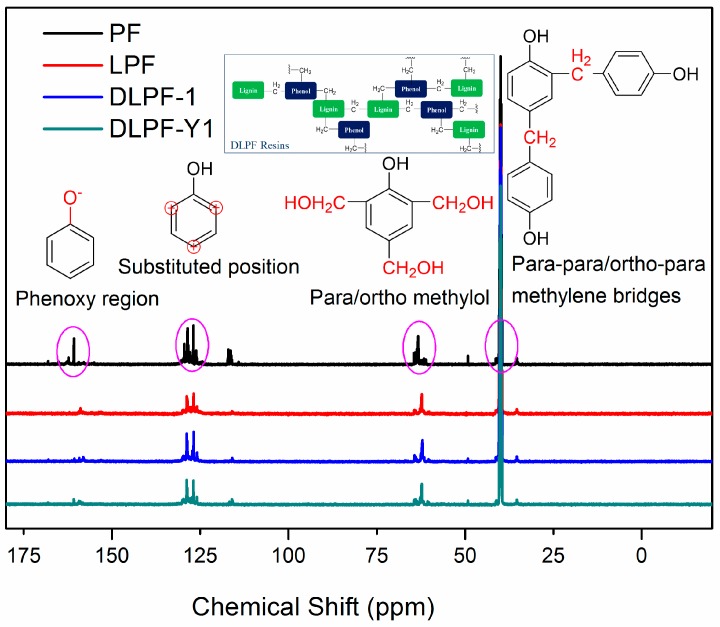
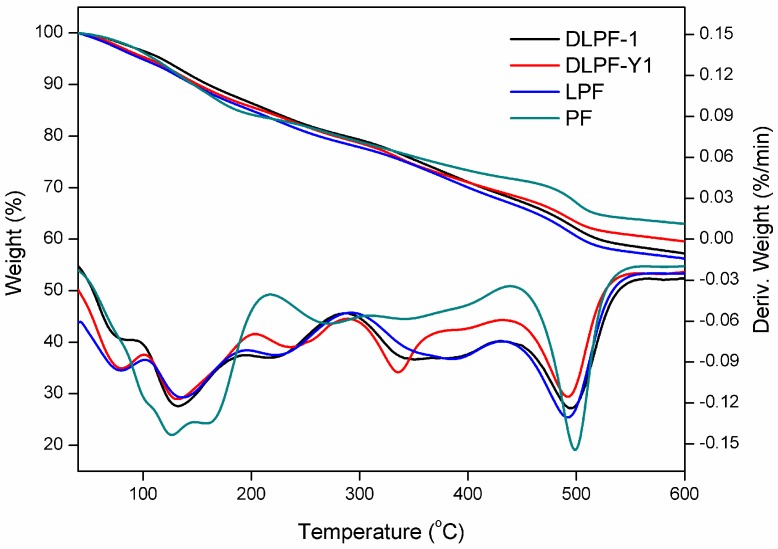
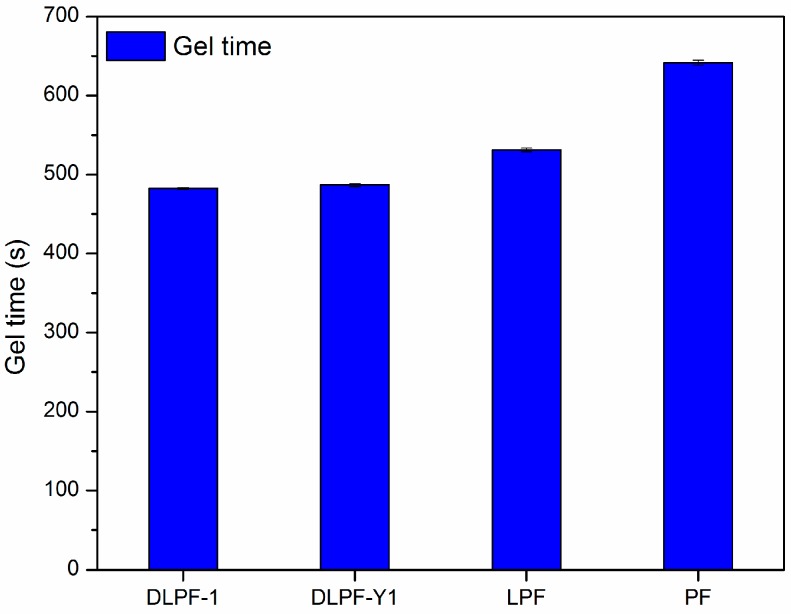
Demethylation technique has been used to enhance lignin reactivity for preparation of phenolic resins. However, the demethylation efficiency and the demethylated lignin (DL) reactivity were still unsatisfactory. To improve the demethylation efficiency, alkali lignin was demethylated under different mild conditions using sodium sulfite as a catalyst. Lignin and DL were characterized by ¹H-NMR (nuclear magnetic resonance) and Fourier transform infrared (FT-IR) spectroscopy to determine the demethylation mechanism. With the demethylation of lignin, the methoxyl group content decreased from 1.93 m mol/g to 1.09 m mol/g, and the phenolic hydroxyl group content increased from 0.56 m mol/g to 0.82 m mol/g. These results revealed that methoxyl groups were attacked by SO₃², and some methoxyl groups were converted to phenolic hydroxyl groups by a nucleophilic substitution reaction, generating DL with high reactivity. The chemical properties of lignin-based phenolic resins were studied by C-NMR and FT-IR spectroscopy, and their physical properties were also investigated. The results indicated that lignin-based phenolic resins exhibited faster curing rate and shorter gel time. In addition, the bonding strength increased from 0.92 MPa to 1.07 MPa, and the formaldehyde emission decreased from 0.58 mg/L to 0.22 mg/L after lignin demethylated at the optimum condition.
脱甲基技术已被用于提高木质素的反应活性以制备酚醛树脂。然而,脱甲基效率和脱甲基木质素(DL)的反应活性仍不尽人意。为了提高脱甲基效率,以亚硫酸钠为催化剂,在不同温和条件下对碱木质素进行脱甲基反应。通过¹H-NMR(核磁共振)和傅里叶变换红外(FT-IR)光谱对木质素和DL进行表征,以确定脱甲基机理。随着木质素的脱甲基,甲氧基含量从1.93 mmol/g降至1.09 mmol/g,酚羟基含量从0.56 mmol/g增至0.82 mmol/g。这些结果表明,甲氧基受到SO₃²⁻的攻击,一些甲氧基通过亲核取代反应转化为酚羟基,生成具有高反应活性的DL。通过C-NMR和FT-IR光谱研究了木质素基酚醛树脂的化学性质,并对其物理性质进行了研究。结果表明,木质素基酚醛树脂表现出更快的固化速率和更短的凝胶时间。此外,在最佳条件下对木质素进行脱甲基后,粘结强度从0.92 MPa提高到1.07 MPa,甲醛释放量从0.58 mg/L降至0.22 mg/L。