Zhang Xiaoxing, Wen Hao, Wu Yunjian
School of Electrical Engineering, Wuhan University, Wuhan 430072, China.
Polymers (Basel). 2017 Sep 8;9(9):430. doi: 10.3390/polym9090430.
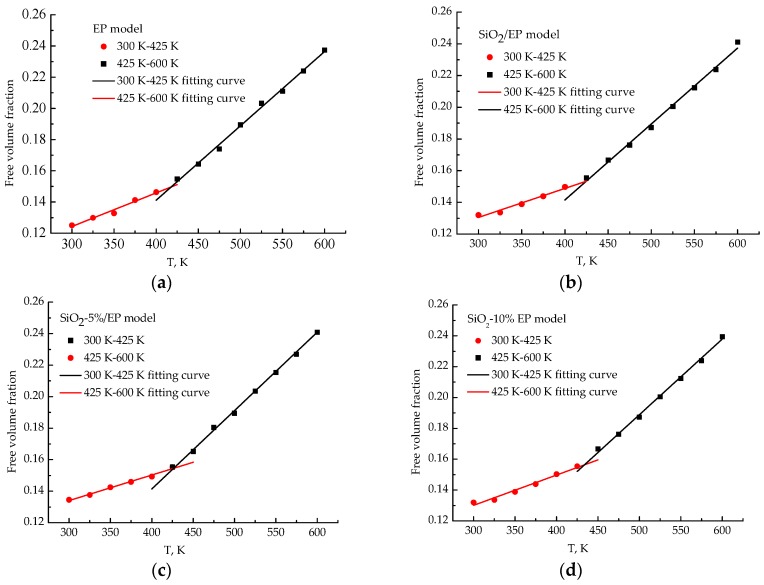
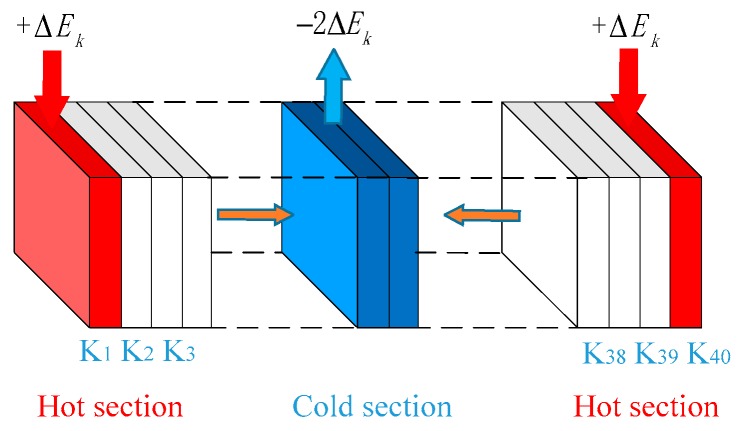
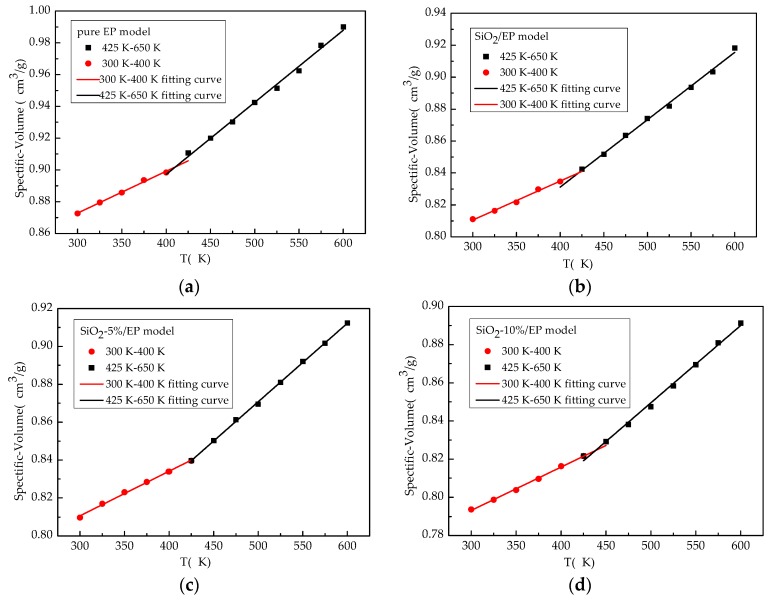
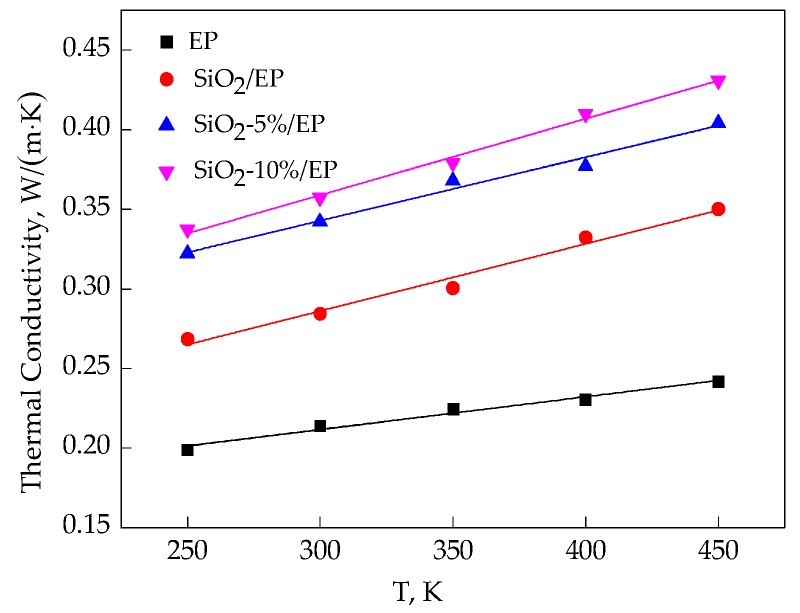
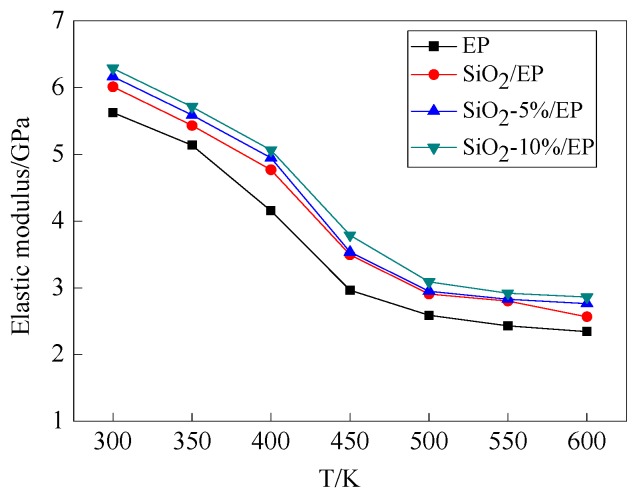
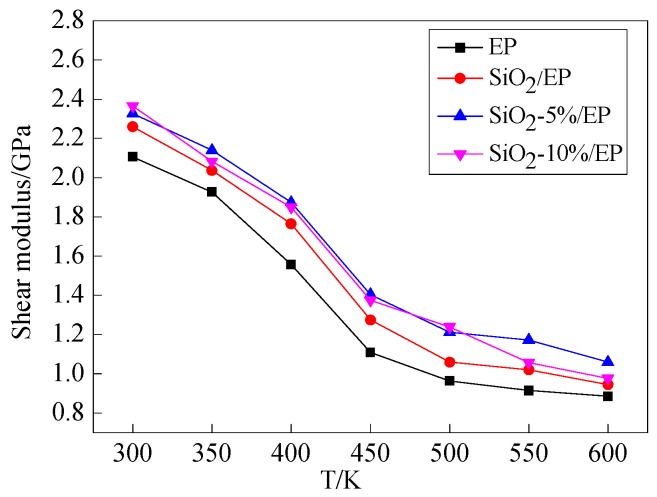
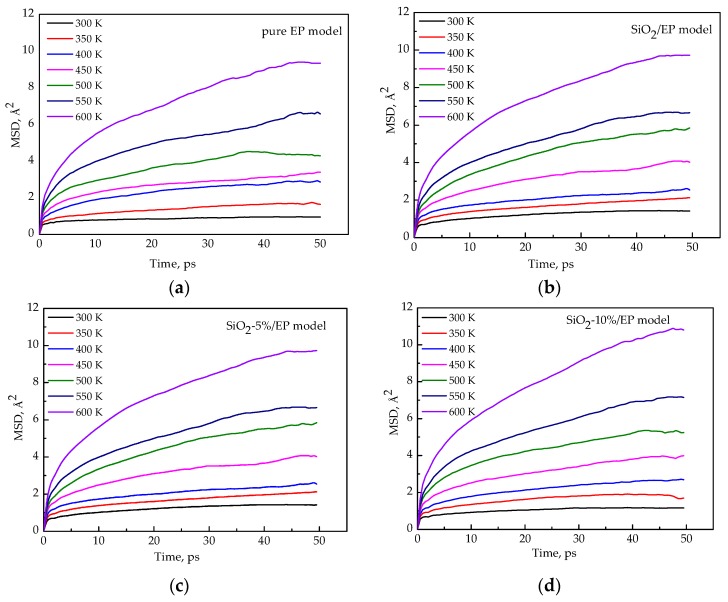
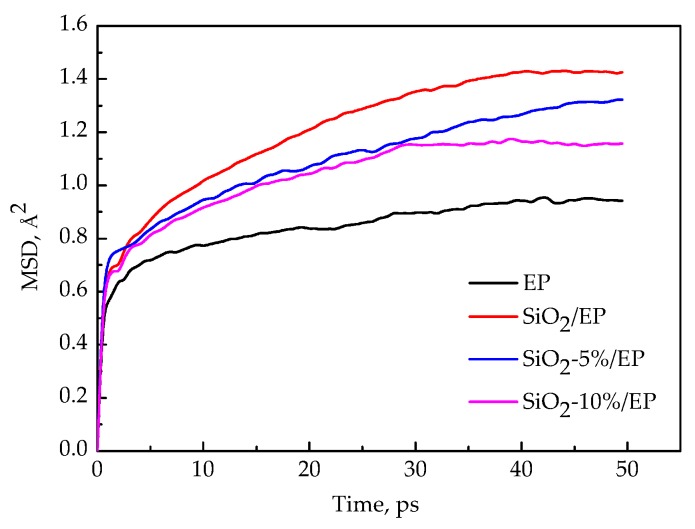
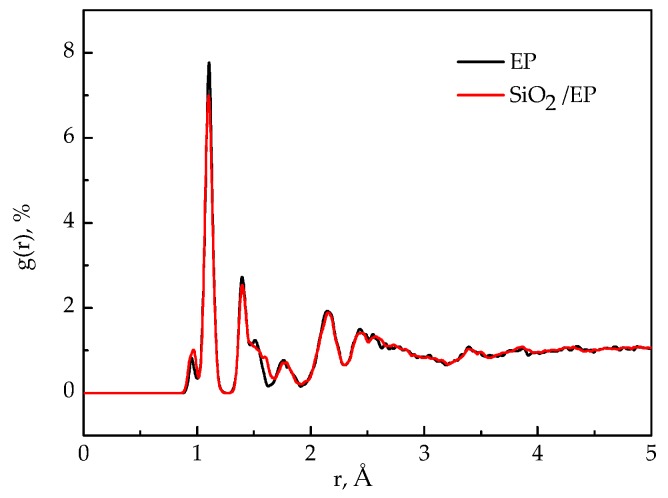
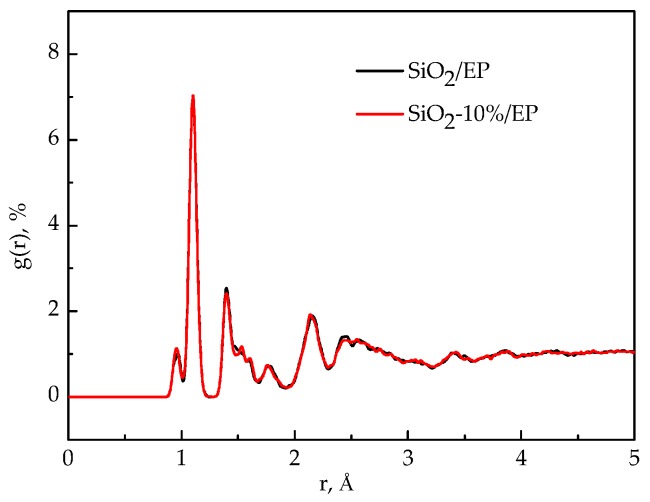
Silica⁻epoxy nanocomposite models were established to investigate the influence of silane coupling agent on the structure and thermomechanical properties of the nanocomposites through molecular dynamics simulation. Results revealed that incorporating silica nanoparticles into a polymer matrix could improve thermomechanical properties of the composites and increase their glass transition temperature and thermal conductivity. Their thermomechanical properties were further enhanced through silane coupling agent modification on the surface of fillers. Compared with that of pure epoxy, the glass transition temperatures of the silica⁻epoxy composites with grafting ratios of 5% and 10% increased by 17 and 28 K, respectively. The thermal conductivities of the two models at room temperature respectively increased by 60.0% and 67.1%. At higher temperature 450 K, thermal conductivity of the nanocomposite model with a high grafting ratio of 10% demonstrated a considerable increase of approximately 50% over the pure epoxy resin (EP) model. The elastic and shear modulus of the nanocomposite models decreased at temperatures below their glass transition temperatures. These observations were further addressed in the interpretation from three aspects: segmental mobility capability, radial distribution function, and free volume fraction. Our computational results are largely consistent with existing experimental data, and our simulation model got fully validated.
通过分子动力学模拟建立了二氧化硅-环氧树脂纳米复合材料模型,以研究硅烷偶联剂对纳米复合材料结构和热机械性能的影响。结果表明,将二氧化硅纳米颗粒掺入聚合物基体中可以改善复合材料的热机械性能,并提高其玻璃化转变温度和热导率。通过对填料表面进行硅烷偶联剂改性,其热机械性能进一步增强。与纯环氧树脂相比,接枝率为5%和10%的二氧化硅-环氧树脂复合材料的玻璃化转变温度分别提高了17 K和28 K。两种模型在室温下的热导率分别提高了60.0%和67.1%。在450 K的较高温度下,接枝率为10%的纳米复合材料模型的热导率比纯环氧树脂(EP)模型显著提高了约50%。纳米复合材料模型的弹性模量和剪切模量在低于其玻璃化转变温度时降低。从链段迁移能力、径向分布函数和自由体积分数三个方面对这些观察结果进行了进一步解释。我们的计算结果与现有的实验数据基本一致,并且我们的模拟模型得到了充分验证。