Kuznetsov Vladimir E, Solonin Alexey N, Urzhumtsev Oleg D, Schilling Richard, Tavitov Azamat G
Department of Physical Metallurgy of Non-Ferrous Metals, National University of Science and Technology "MISIS", Leninskiy Prospekt 4, NUST MISIS, Moscow 119049, Russia.
School of Textiles and Design, Reutlingen University, Alteburgstraße 150, D-72762 Reutlingen, Germany.
Polymers (Basel). 2018 Mar 13;10(3):313. doi: 10.3390/polym10030313.
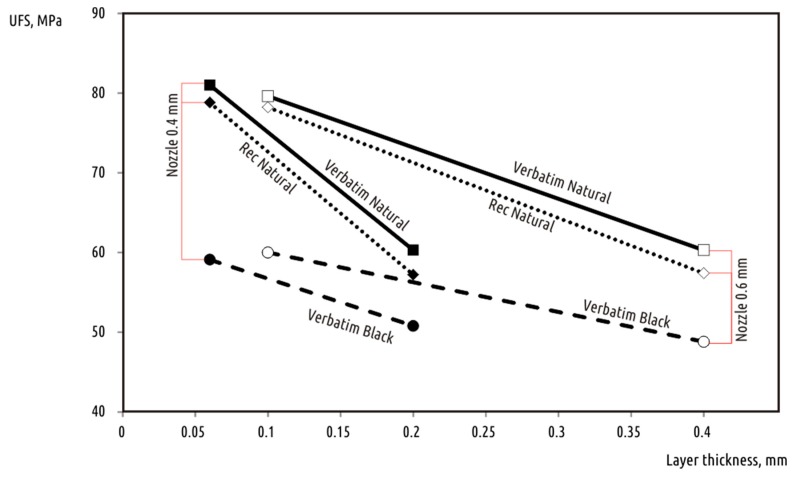
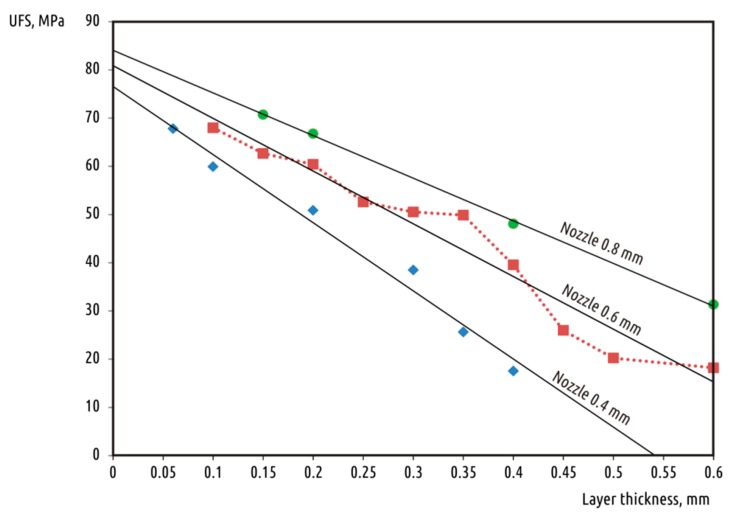
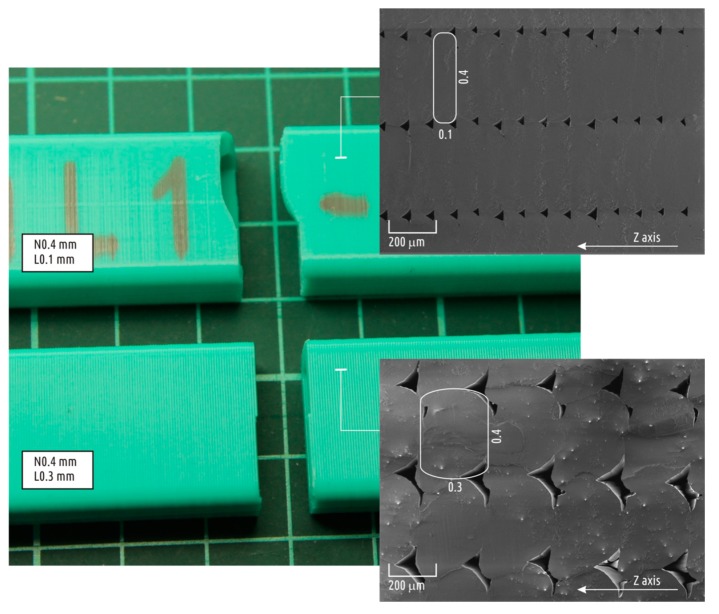
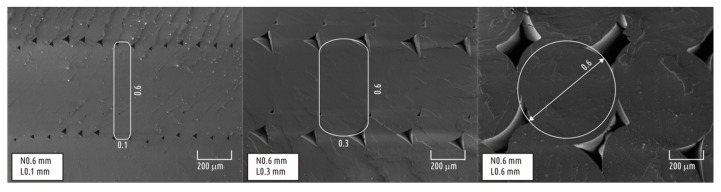
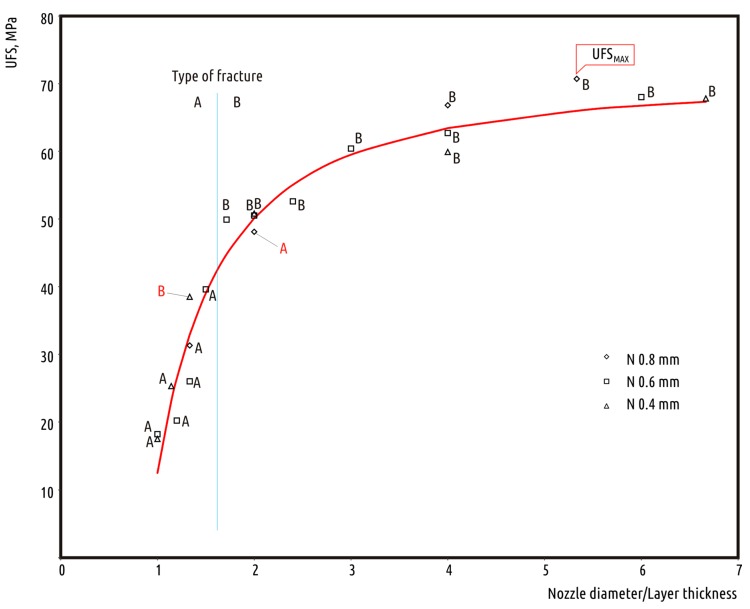
The current paper studies the influence of geometrical parameters of the fused deposition modeling (FDM)-fused filament fabrication (FFF) 3D printing process on printed part strength for open source desktop 3D printers and the most popular material used for that purpose-i.e., polylactic acid (PLA). The study was conducted using a set of different nozzles (0.4, 0.6, and 0.8 mm) and a range of layer heights from the minimum to maximum physical limits of the machine. To assess print strength, a novel assessment method is proposed. A tubular sample is loaded in the weakest direction (across layers) in a three-point bending fixture. Mesostructure evaluation through scanning electronic microscopy (SEM) scans of the samples was used to explain the obtained results. We detected a significant influence of geometric process parameters on sample mesostructure, and consequently, on sample strength.
本文研究了开源桌面3D打印机的熔融沉积成型(FDM)-熔融长丝制造(FFF)3D打印工艺的几何参数对打印部件强度的影响,以及用于该目的最常用的材料——即聚乳酸(PLA)。该研究使用了一组不同的喷嘴(0.4、0.6和0.8毫米)以及从机器的最小到最大物理极限范围内的一系列层高。为了评估打印强度,提出了一种新颖的评估方法。将管状样品在三点弯曲夹具中沿最弱方向(跨层)加载。通过对样品进行扫描电子显微镜(SEM)扫描来评估细观结构,以解释所得结果。我们检测到工艺几何参数对样品细观结构有显著影响,进而对样品强度产生影响。