Yu Wanyong, Han Na, Qian Yongqiang, Zhang Xingxiang, Li Wei
Tianjin Municipal Key Laboratory of Advanced Fiber and Energy Storage, School of Materials Science and Engineering, Tianjin Polytechnic University, Tianjin 300387, China.
Polymers (Basel). 2018 May 4;10(5):498. doi: 10.3390/polym10050498.
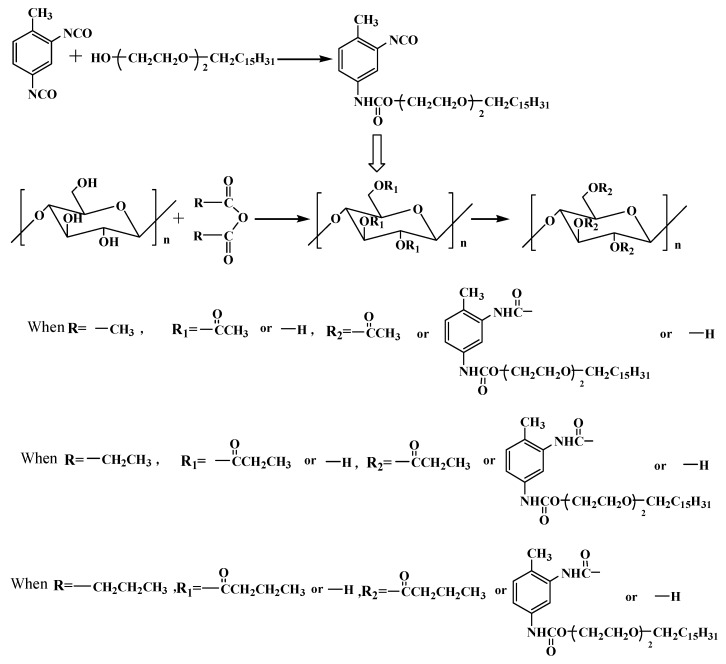
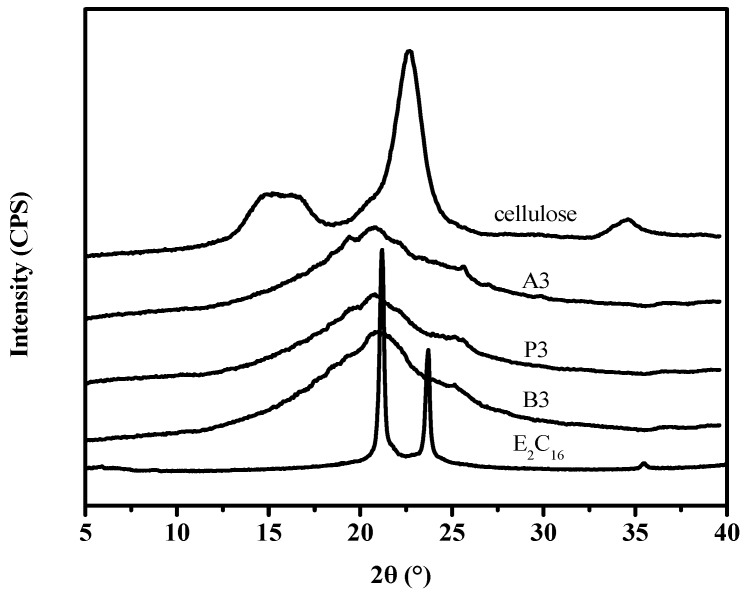
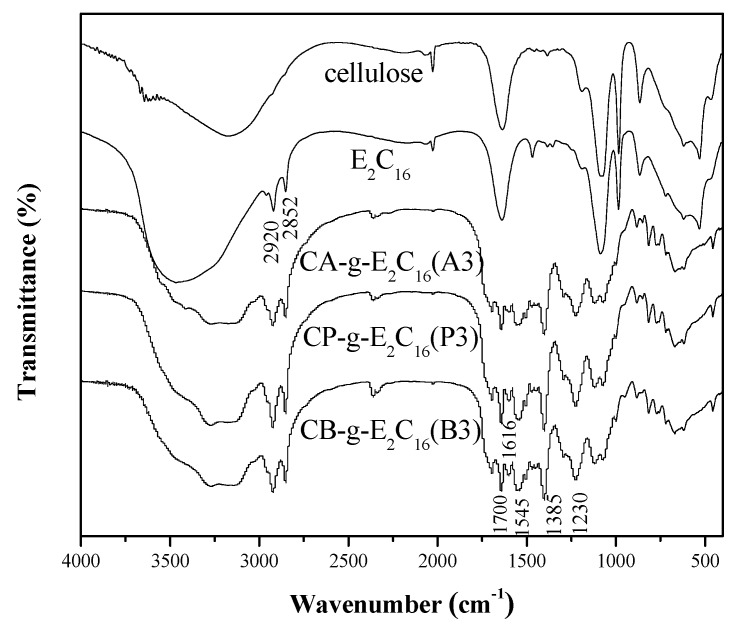
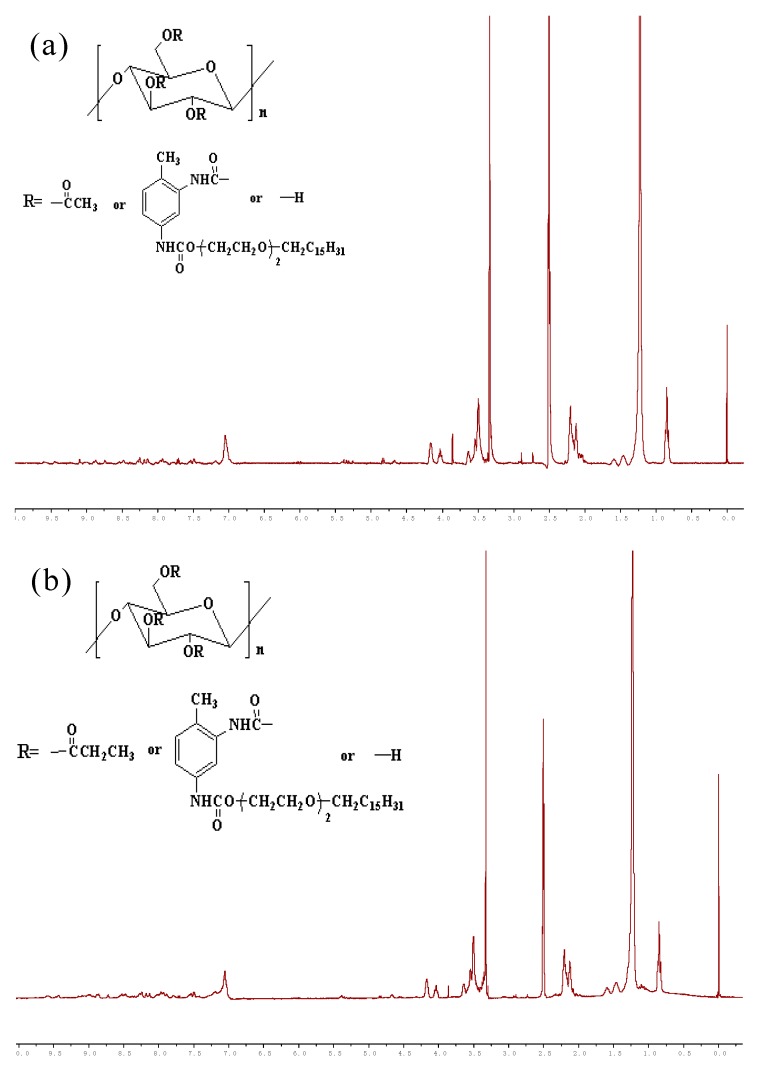
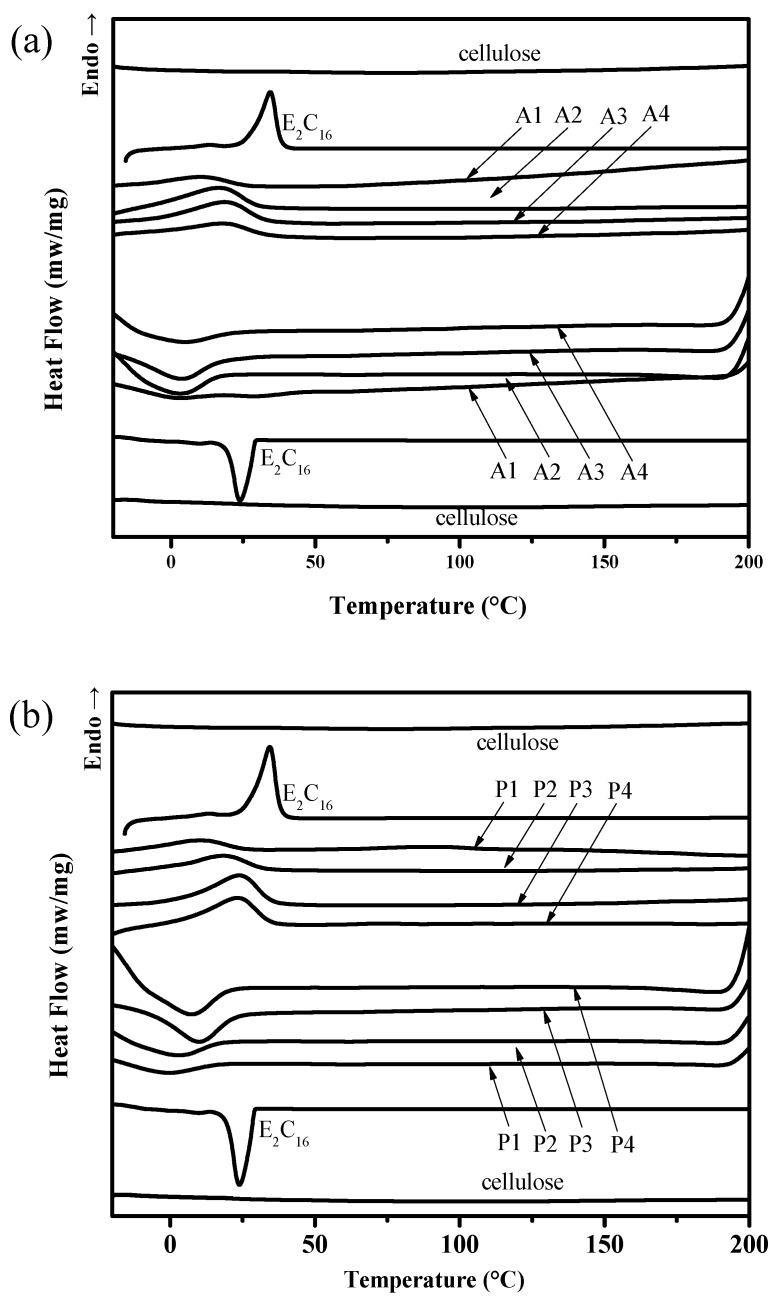
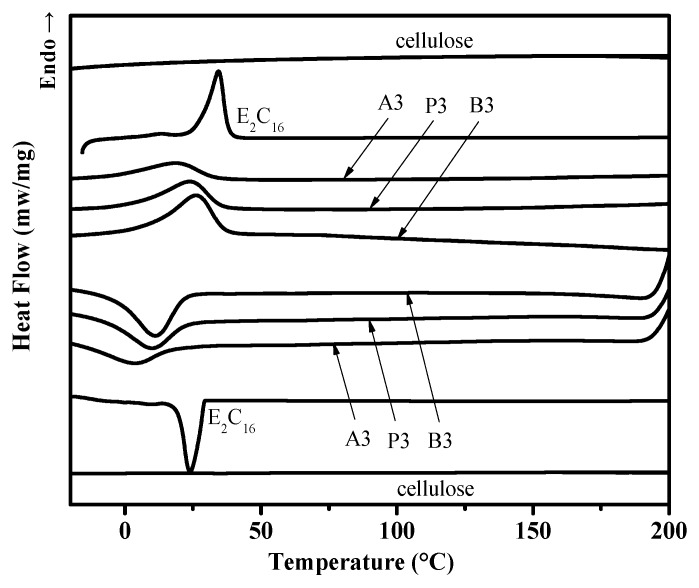
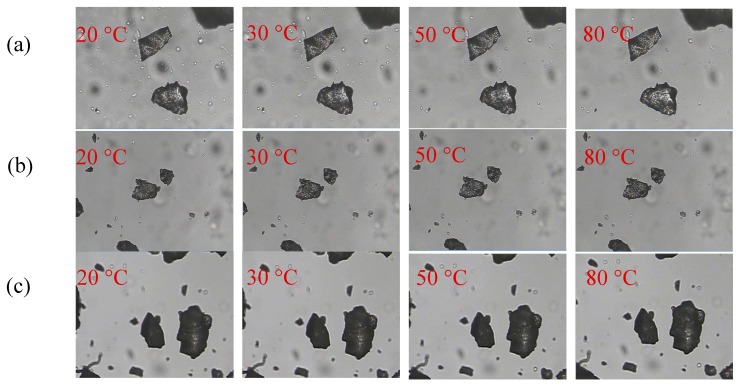
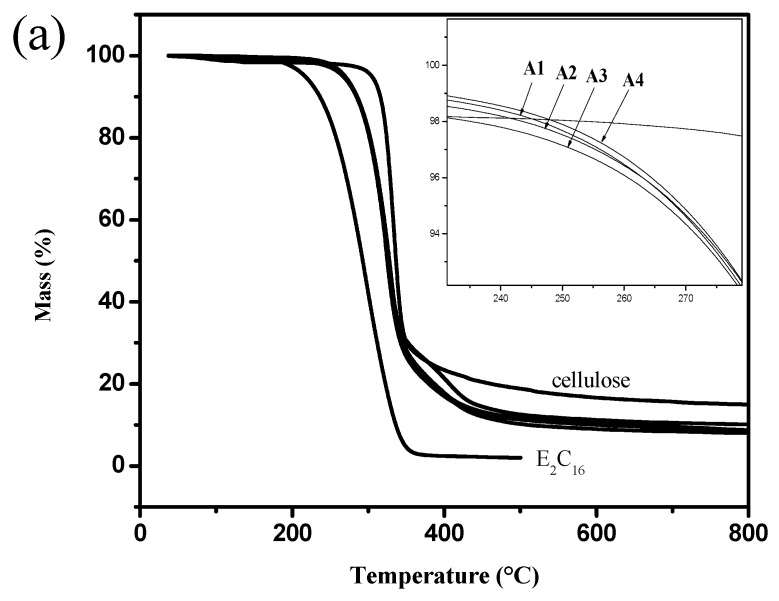
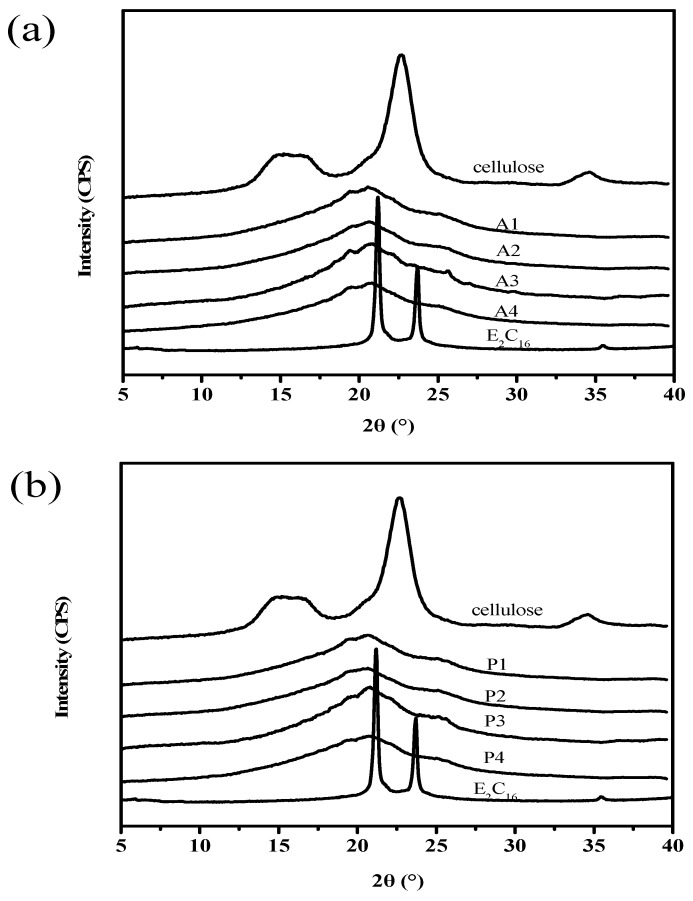
Cellulose was premodified by short-chain fatty acid anhydrides, such as acetic anhydride (CA), propionic anhydride (CP), and butyric anhydride (CB), followed by grafting of polyoxyethylene (2) hexadecyl ether (E₂C) using toluene-2,4-diisocyanate as a coupling agent. The feeding molar ratio of E₂C and the anhydroglucose unit (AGU) was fixed at 4:1, and then a series of CA-g-E₂C, CP-g-E₂C, and CB-g-E₂C copolymers were successfully prepared. The structures and properties of the copolymers were characterized using FTIR (fourier transform infrared spectra), ¹H-NMR (Proton nuclear magnetic resonance), DSC (Differential scanning calorimeter), POM (polarized light microscopy), TGA (thermogravimetric analysis) and WAXD (wide-angle X-ray diffraction). It was shown that with the anhydride/AGU ratio increasing, the degree of substitution (DS) value of E₂C showed a trend of up first and then down. With the carbon chain length increasing, the DS value of E₂C continuously increases. The phase transition temperature and thermal enthalpy of the copolymers increased with an increasing DS value of E₂C. When the ratio of CB/AGU was 1.5:1, the DS of E₂C was up to the maximum value of 1.02, and the corresponding melting enthalpy and crystallization enthalpy were 32 J/g and 30 J/g, respectively. The copolymers showed solid⁻solid phase change behavior. The heat resistant temperature of cellulose-based solid⁻solid phase change materials was always higher than 270 °C. After the grafting reaction, the crystallinity of E₂C decreased, while the crystal type was still hexagonal.
纤维素先用短链脂肪酸酐进行预改性,如乙酸酐(CA)、丙酸酐(CP)和丁酸酐(CB),然后以甲苯 - 2,4 - 二异氰酸酯为偶联剂接枝聚氧乙烯(2)十六烷基醚(E₂C)。E₂C与脱水葡萄糖单元(AGU)的进料摩尔比固定为4:1,随后成功制备了一系列CA - g - E₂C、CP - g - E₂C和CB - g - E₂C共聚物。使用傅里叶变换红外光谱(FTIR)、质子核磁共振(¹H - NMR)、差示扫描量热仪(DSC)、偏光显微镜(POM)、热重分析(TGA)和广角X射线衍射(WAXD)对共聚物的结构和性能进行了表征。结果表明,随着酸酐/AGU比例的增加,E₂C的取代度(DS)值呈现先上升后下降的趋势。随着碳链长度的增加,E₂C的DS值持续增加。共聚物的相变温度和热焓随着E₂C的DS值增加而升高。当CB/AGU比例为1.5:1时,E₂C的DS达到最大值1.02,相应的熔融焓和结晶焓分别为32 J/g和30 J/g。共聚物表现出固 - 固相转变行为。纤维素基固 - 固相转变材料的耐热温度始终高于270℃。接枝反应后,E₂C的结晶度降低,但其晶型仍为六方晶型。