Jamaluddin Naharullah, Hsu Yu-I, Asoh Taka-Aki, Uyama Hiroshi
Department of Applied Chemistry, Graduate School of Engineering, Osaka University, 2-1 Yamadaoka, Suita, Osaka 565-0871, Japan.
Nanomaterials (Basel). 2021 Mar 17;11(3):753. doi: 10.3390/nano11030753.
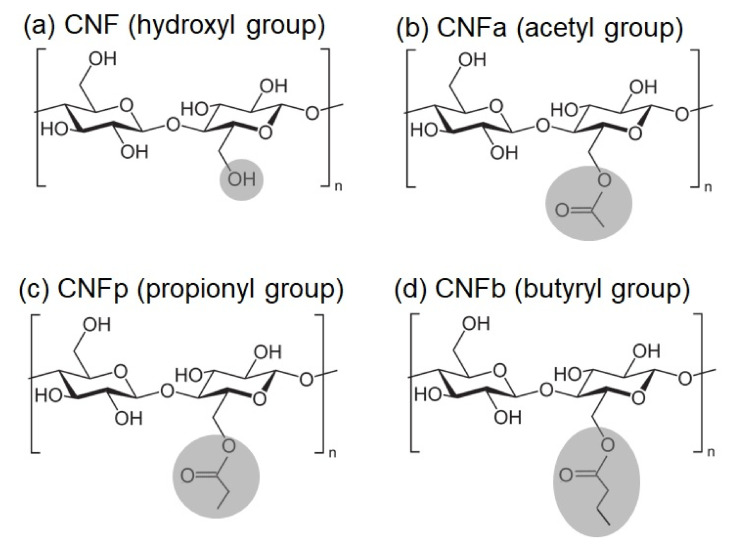
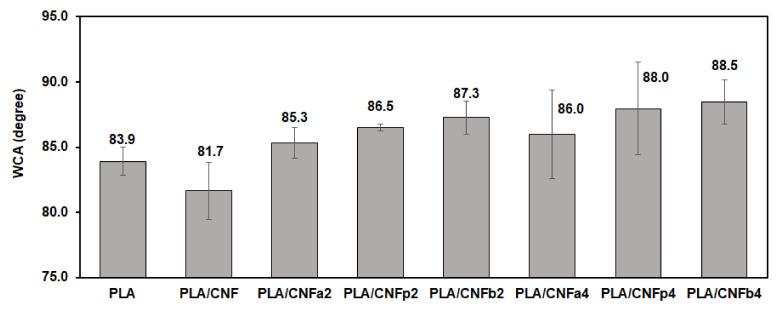
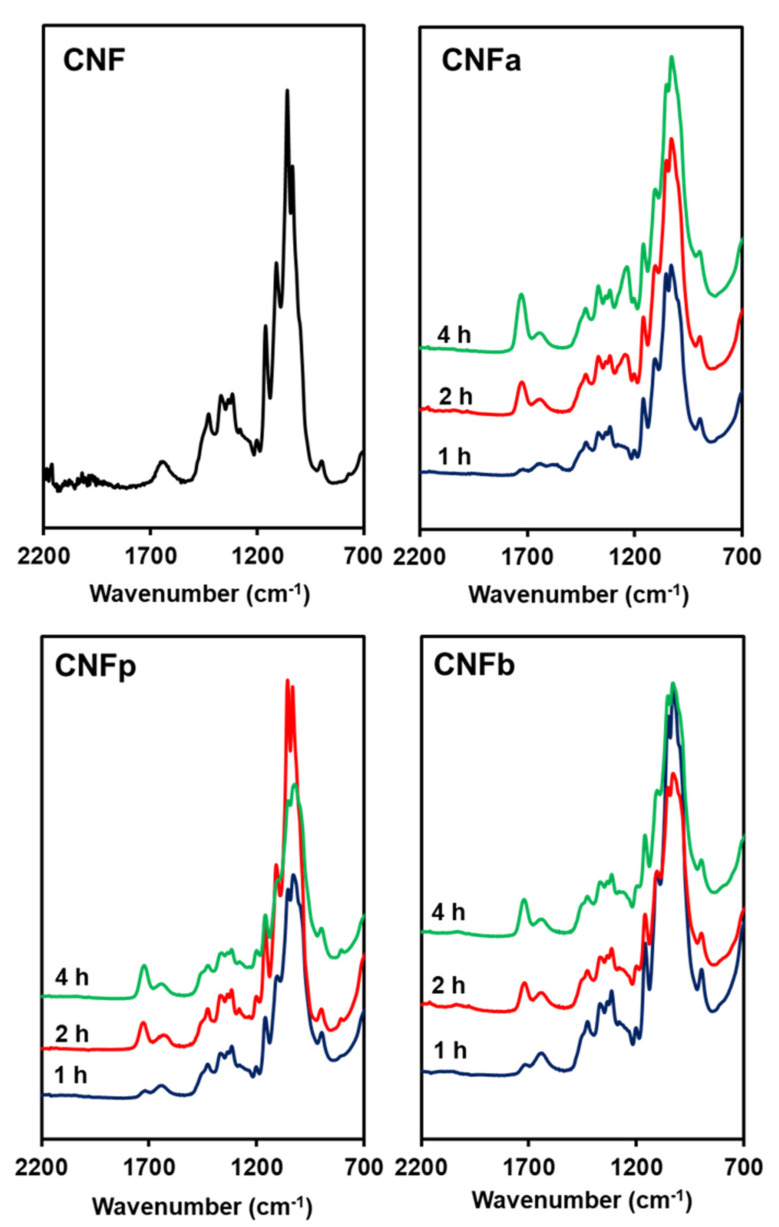
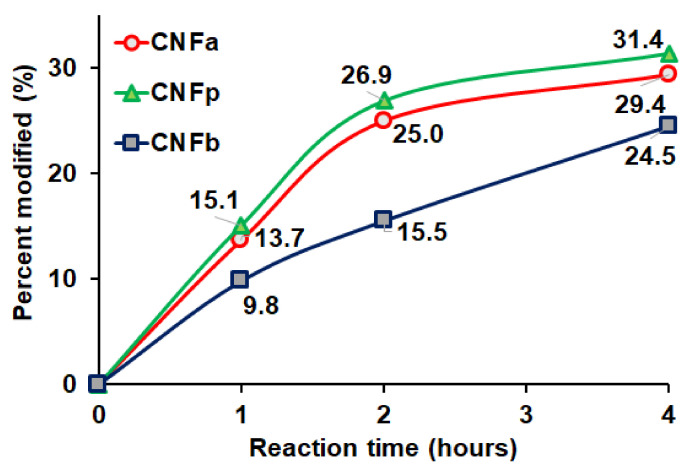
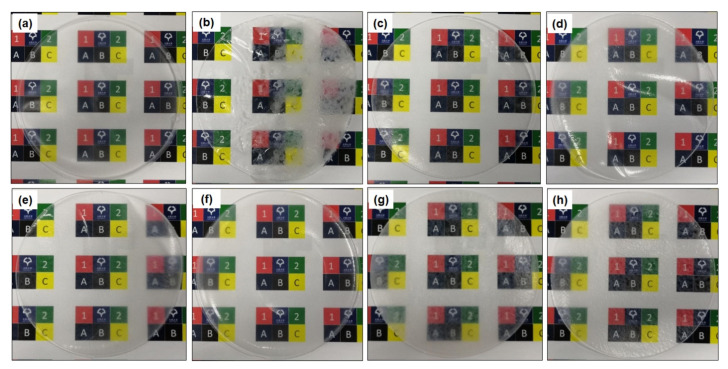
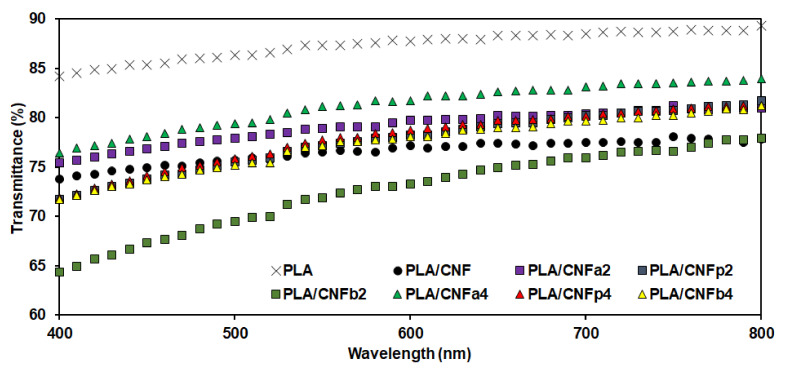
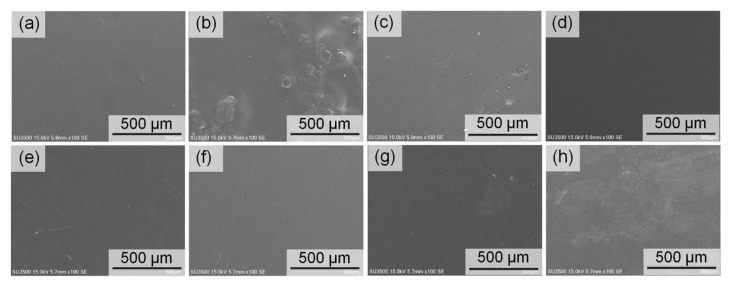
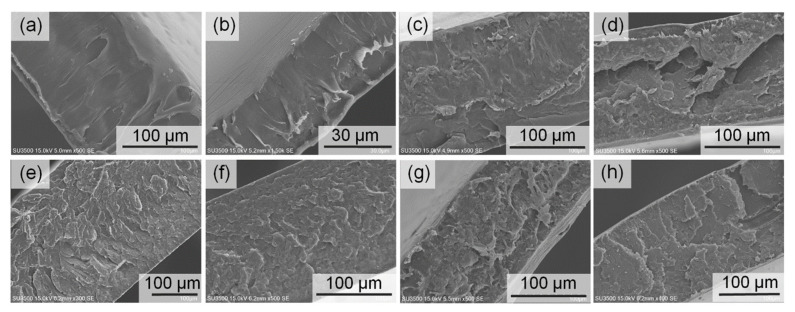
In this study, we investigated the effect of the addition of cellulose nanofiber (CNF) fillers on the performance of poly(lactic acid) (PLA). Modification of the hydroxyl group of cellulose to the acyl group by acid anhydrides changed the compatibility of the CNF with PLA. CNF was modified by acetic anhydride, propionic anhydride, and butyric anhydride to form surface-modified acetylated CNF (CNFa), propionylated CNF (CNFp), and butyrylated CNF (CNFb), respectively, to improve the compatibility with the PLA matrix. The effects of the different acid anhydrides were compared based on their rates of reaction in the acylation process. PLA with modified cellulose nanofiber fillers formed smoother surfaces with better transparency, mechanical, and wettability properties compared with the PLA/CNF composite film. The effects of CNFa, CNFp, and CNFb on the PLA matrix were compared, and it was found that CNFp was the best filler for PLA.
在本研究中,我们研究了添加纤维素纳米纤维(CNF)填料对聚乳酸(PLA)性能的影响。通过酸酐将纤维素的羟基改性为酰基,改变了CNF与PLA的相容性。分别用乙酸酐、丙酸酐和丁酸酐对CNF进行改性,以形成表面改性的乙酰化CNF(CNFa)、丙酰化CNF(CNFp)和丁酰化CNF(CNFb),从而提高与PLA基体的相容性。基于它们在酰化过程中的反应速率,比较了不同酸酐的效果。与PLA/CNF复合膜相比,含有改性纤维素纳米纤维填料的PLA形成了更光滑的表面,具有更好的透明度、机械性能和润湿性。比较了CNFa、CNFp和CNFb对PLA基体的影响,发现CNFp是PLA的最佳填料。