Raeisi Farzaneh, Shahbazi-Gahrouei Daryoush, Raeisi Elham, Heidarian Esfandiar
Department of Medical Physics, School of Medicine, Isfahan University of Medical Sciences, Isfahan, Iran.
Department of Medical Physics and Radiology, Basic Health Sciences Institute, Shahrekord University of Medical Sciences, Shahrekord, Iran.
J Med Signals Sens. 2019 Jan-Mar;9(1):68-74. doi: 10.4103/jmss.JMSS_25_18.
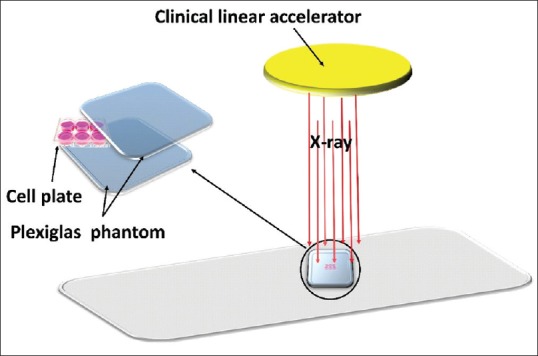
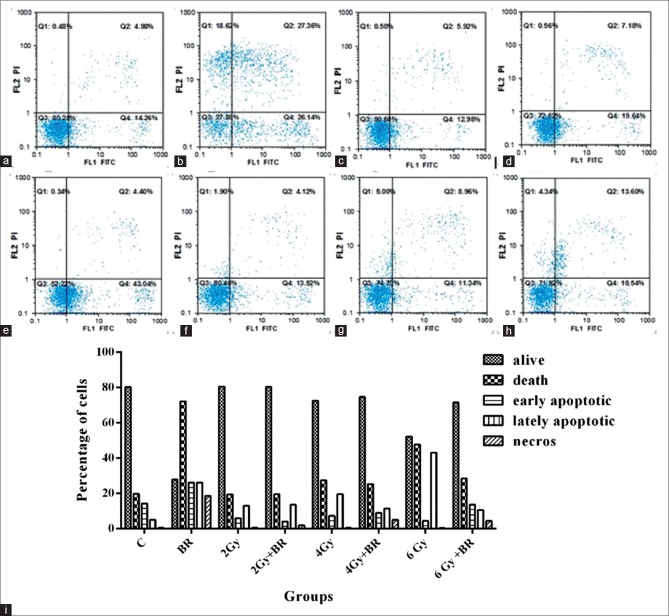
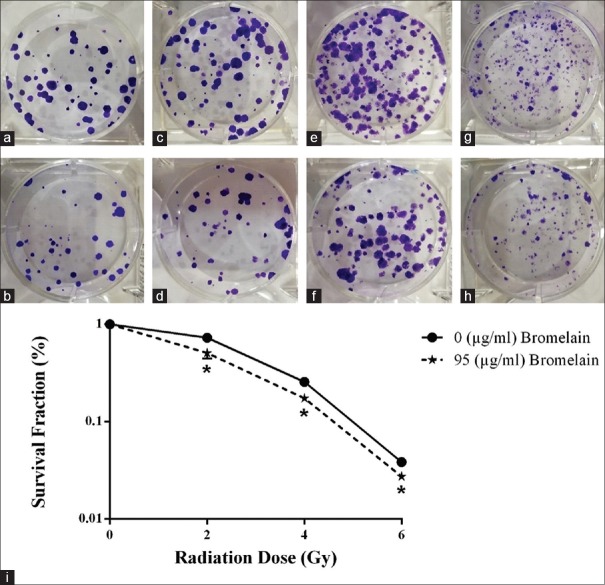
Breast cancer (BC) remains the leading cause of death in women worldwide, despite the improvements of cancer screening and treatment methods. Recently, development of novel anticancer drugs for the improved prevention and treatment of BC is in the center of research. The anticancer effects of bromelain, as enzyme extract derived from the pineapples, contains chemicals that interfere with the growth of tumor cells. The aim of this study was to evaluate the effect of radiosensitizing of bromelain in 4T1 BC cells. This investigation utilized the 3-(4,5-dimethylthiazol-2-yl)-2,5-dimethyltetrazolium bromide assay to characterize the cytotoxicity of bromelain. Colony formation method was used to establish the truth of the capability of bromelain to make sensitive to radiation therapy. Flowcytometry performed to define the contribution the apoptosis effect to bromelain mediated radiosensitization of 4T1 cells. Bromelain reduced growth and proliferation of 4T1 cell as a concentration-dependence manner significantly. The survival of 4T1 cancer cells was decreased after combined treatment in a number and size-dependent manner with regard to the control group ( < 0.05). Combination of bromelain with radiation does not influence 4T1 cell apoptosis. The results suggested that bromelain can inhibit the growth and proliferation and reduce survival of 4T1 BC cells and might be used as a candidate radiosensitizer in BC patient.
尽管癌症筛查和治疗方法有所改进,但乳腺癌(BC)仍是全球女性死亡的主要原因。最近,开发用于改善乳腺癌预防和治疗的新型抗癌药物成为研究的核心。菠萝蛋白酶作为从菠萝中提取的酶,其抗癌作用含有干扰肿瘤细胞生长的化学物质。本研究的目的是评估菠萝蛋白酶对4T1乳腺癌细胞的放射增敏作用。本研究采用3-(4,5-二甲基噻唑-2-基)-2,5-二甲基四氮唑溴盐法来表征菠萝蛋白酶的细胞毒性。采用集落形成法来确定菠萝蛋白酶使细胞对放射治疗敏感的能力。通过流式细胞术来确定凋亡效应在菠萝蛋白酶介导的4T1细胞放射增敏中的作用。菠萝蛋白酶以浓度依赖性方式显著降低4T1细胞的生长和增殖。与对照组相比,联合治疗后4T1癌细胞的存活率以数量和大小依赖性方式降低(<0.05)。菠萝蛋白酶与放疗联合使用不影响4T1细胞凋亡。结果表明,菠萝蛋白酶可以抑制4T1乳腺癌细胞的生长和增殖并降低其存活率,可能作为乳腺癌患者的放射增敏剂候选药物。