School of Medicine, University of Liverpool, Liverpool, UK.
Moscow Scientific and Practical Centre of Dermatovenereology and Cosmetology, Moscow, Russia.
J Eur Acad Dermatol Venereol. 2019 Jun;33(6):1006-1019. doi: 10.1111/jdv.15570. Epub 2019 Apr 10.
Anogenital warts (AGW) can cause economic burden on healthcare systems and are associated with emotional, psychological and physical issues.
To provide guidance to physicians on the diagnosis and management of AGW.
Fourteen global experts on AGW developed guidance on the diagnosis and management of AGW in an effort to unify international recommendations. Guidance was developed based on published international and national AGW guidelines and an evaluation of relevant literature published up to August 2016. Authors provided expert opinion based on their clinical experiences.
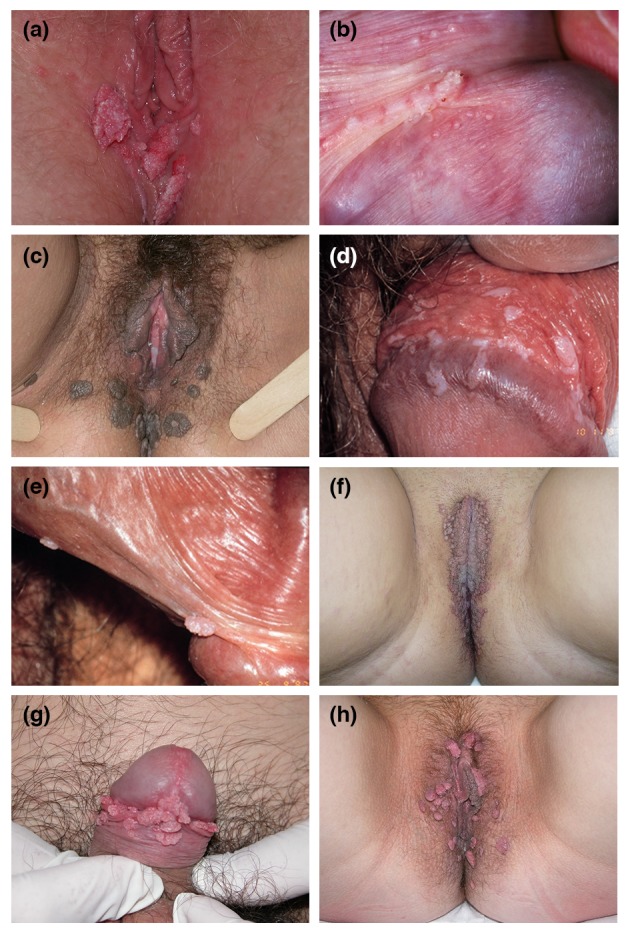
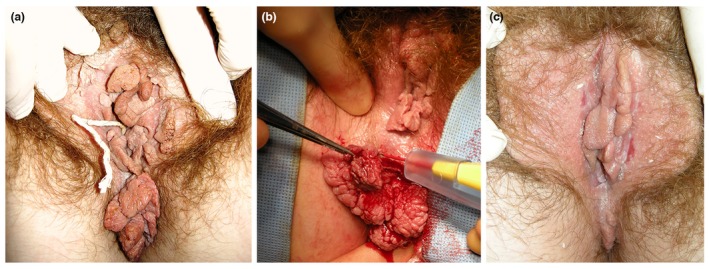
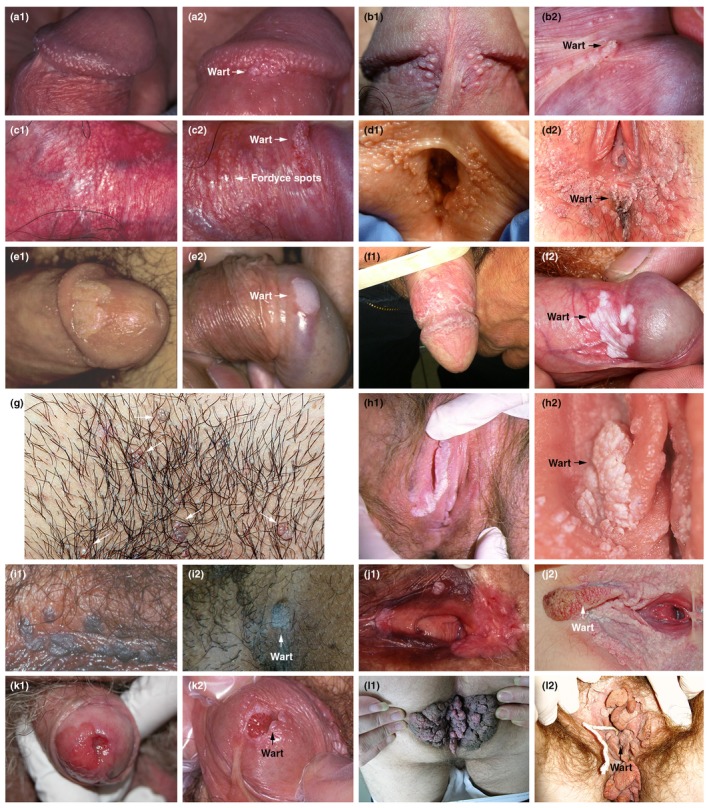
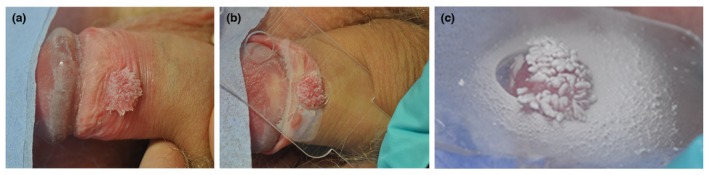
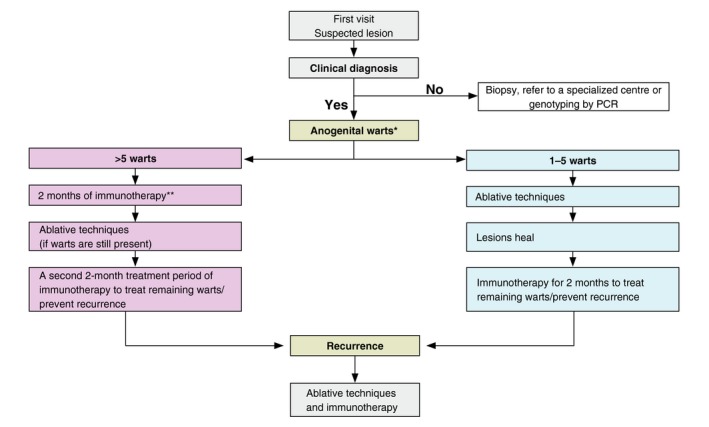
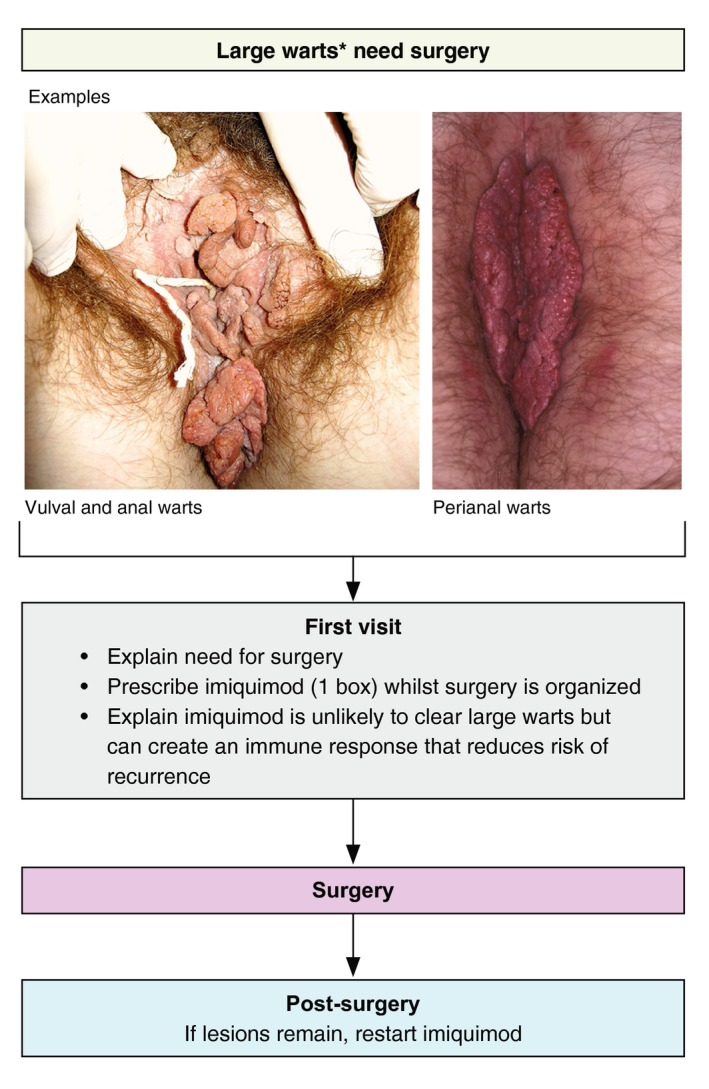
A checklist for a patient's initial consultation is provided to help physicians when diagnosing AGW to get the relevant information from the patient in order to manage and treat the AGW effectively. A number of frequently asked questions are also provided to aid physicians when communicating with patients about AGW. Treatment of AGW should be individualized and selected based on the number, size, morphology, location, and keratinization of warts, and whether they are new or recurrent. Different techniques can be used to treat AGW including ablation, immunotherapy and other topical therapies. Combinations of these techniques are thought to be more effective at reducing AGW recurrence than monotherapy. A simplified algorithm was created suggesting patients with 1-5 warts should be treated with ablation followed by immunotherapy. Patients with >5 warts should use immunotherapy for 2 months followed by ablation and a second 2-month course of immunotherapy. Guidance for daily practice situations and the subsequent action that can be taken, as well as an algorithm for treatment of large warts, were also created.
The guidance provided will help physicians with the diagnosis and management of AGW in order to improve the health and quality of life of patients with AGW.
肛门生殖器疣(AGW)可给医疗系统带来经济负担,并且与情绪、心理和身体问题有关。
为医生提供关于 AGW 的诊断和管理的指导。
14 名 AGW 方面的全球专家制定了 AGW 的诊断和管理指南,以努力统一国际建议。指南是根据已发表的国际和国家 AGW 指南以及截至 2016 年 8 月的相关文献评估制定的。作者根据他们的临床经验提供了专家意见。
提供了一份患者初始咨询检查表,以帮助医生在诊断 AGW 时从患者那里获取相关信息,以便有效管理和治疗 AGW。还提供了一些常见问题,以帮助医生与患者就 AGW 进行沟通。AGW 的治疗应个体化,并根据疣的数量、大小、形态、位置和角化程度,以及它们是新的还是复发的,选择合适的治疗方法。可以使用不同的技术来治疗 AGW,包括消融、免疫疗法和其他局部治疗。与单药治疗相比,这些技术的组合被认为更能有效降低 AGW 的复发率。创建了一个简化的算法,建议 1-5 个疣的患者接受消融治疗,然后进行免疫治疗。大于 5 个疣的患者应先接受 2 个月的免疫治疗,然后进行消融治疗和第二个 2 个月的免疫治疗。还制定了日常实践情况的指导以及可以采取的后续行动的指导,以及治疗大疣的算法。
提供的指导将帮助医生诊断和管理 AGW,以改善 AGW 患者的健康和生活质量。