Oyafuso Márcia H, Carvalho Flávia C, Takeshita Tatiane M, De Souza Ana L Ribeiro, Araújo Daniele R, Merino Virginia, Gremião Maria Palmira D, Chorilli Marlus
School of Pharmaceutical Sciences, São Paulo State University (UNESP), 14800-903 Araraquara, Brazil.
School of Pharmaceutical Sciences, Federal University of Alfenas, UNIFAL-MG, 37130-000 Alfenas, Brazil.
Polymers (Basel). 2017 Aug 2;9(8):330. doi: 10.3390/polym9080330.
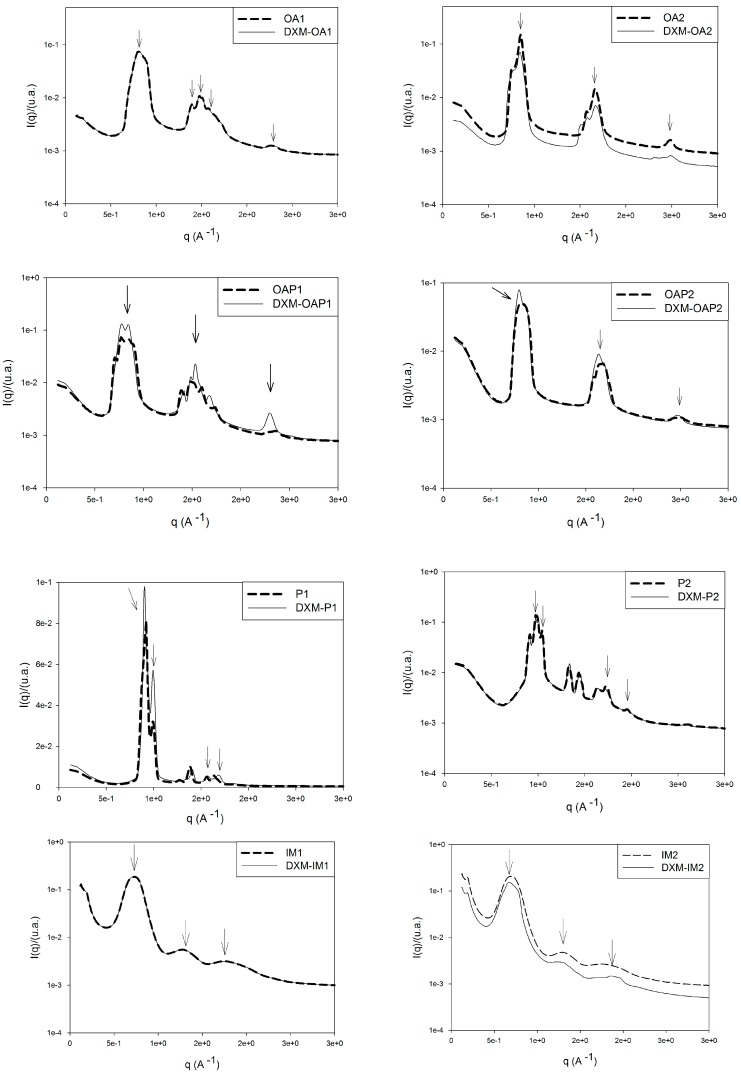
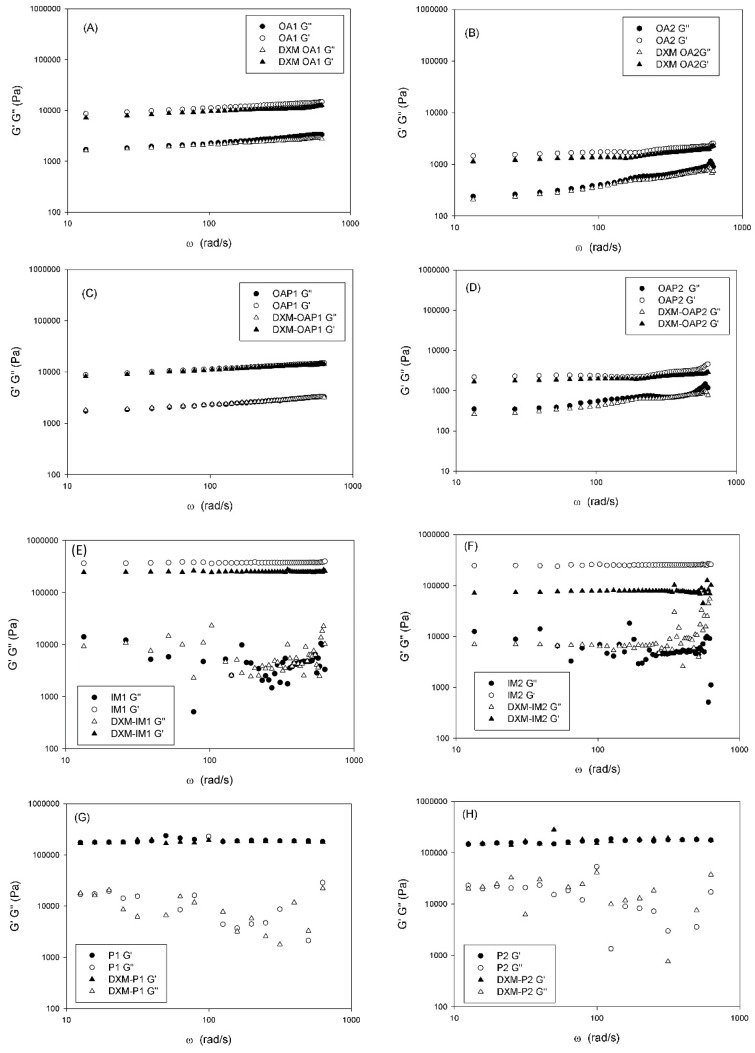
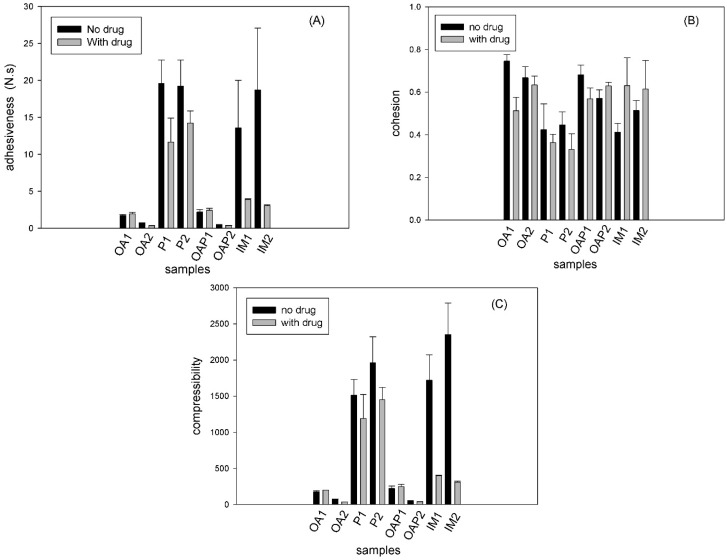
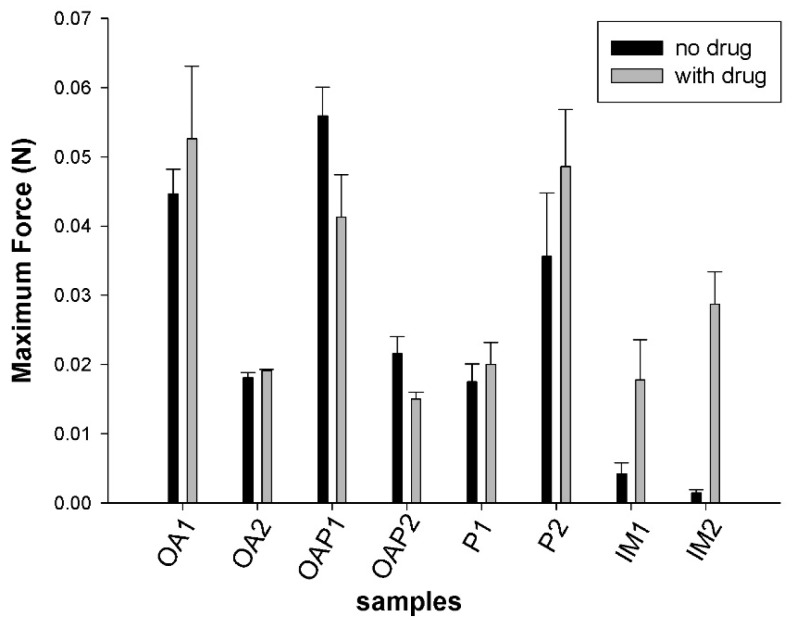
In this study, amphiphilic polymers were investigated as biomaterials that can control dexamethasone (DXM) release. Such materials present interfacial properties in the presence of water and an oily phase that can result in lyotropic liquid crystalline systems (LLCS). In addition, they can form colloidal nanostructures similar to those in living organisms, such as bilayers and hexagonal and cubic phases, which can be exploited to solubilize lipophilic drugs to sustain their release and enhance bioavailability. It was possible to obtain lamellar and hexagonal phases when combining polyoxyethylene (20) cetyl ether (CETETH-20) polymer with oleic acid (OA), -methylpyrrolidone (P), isopropyl myristate (IM), and water. The phases were characterized by polarized light microscopy (PLM), small-angle X-ray scattering (SAXS), rheological, textural, and bioadhesion analyses followed by an in vitro release assay. All samples showed elastic behavior in the rheology studies and hexagonal samples containing P and IM showed the highest adhesiveness. The drug release profile of all LLCS presented an average lag time of 3 h and was best fitted to the Korsmeyer-Peppas and Weibull models, with controlled release governed by a combination of diffusion and erosion mechanisms. These systems are potential carriers for DXM and can be explored in several routes of administration, providing potential advantages over conventional pharmaceutical forms.
在本研究中,两亲性聚合物作为可控制地塞米松(DXM)释放的生物材料进行了研究。这类材料在水相和油相存在时呈现界面特性,可形成溶致液晶体系(LLCS)。此外,它们能形成与生物体中类似的胶体纳米结构,如双层结构以及六方相和立方相,可用于增溶亲脂性药物以维持其释放并提高生物利用度。将聚氧乙烯(20)十六烷基醚(CETETH - 20)聚合物与油酸(OA)、N - 甲基吡咯烷酮(P)、肉豆蔻酸异丙酯(IM)和水混合时,有可能获得层状相和六方相。通过偏光显微镜(PLM)、小角X射线散射(SAXS)、流变学、质地和生物粘附分析以及体外释放试验对这些相进行了表征。在流变学研究中,所有样品均表现出弹性行为,含有P和IM的六方相样品表现出最高的粘附性。所有LLCS的药物释放曲线平均滞后时间为3小时,最符合Korsmeyer - Peppas模型和Weibull模型,其控释由扩散和侵蚀机制共同作用。这些体系是DXM的潜在载体,可在多种给药途径中进行探索,相较于传统药物剂型具有潜在优势。