Wallaert Benoit, Duthoit Louise, Drumez Elodie, Behal Hélène, Wemeau Lidwine, Chenivesse Cécile, Grosbois Jean-Marie
CHU Lille, Hopital Calmette, Service de Pneumologie et ImmunoAllergologie, Centre de Référence Constitutif des Maladies Pulmonaires Rares, Lille, France.
These two authors contributed equally to this work.
ERJ Open Res. 2019 Apr 8;5(2). doi: 10.1183/23120541.00045-2019. eCollection 2019 Apr.
Few studies have examined the benefits of pulmonary rehabilitation in patients with fibrotic idiopathic pulmonary pneumonia (f-IIP). Here, we report the results of an observational study in routine clinical practice of home-based pulmonary rehabilitation for f-IIP patients.
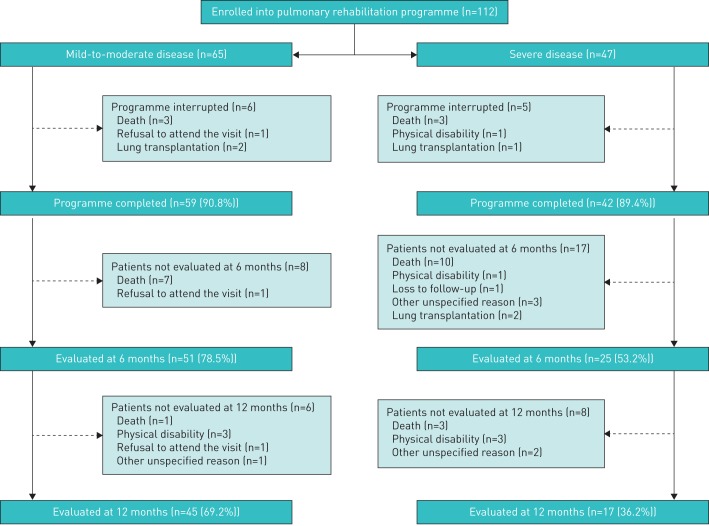
A total of 112 consecutive patients (61 with idiopathic pulmonary fibrosis and 51 with fibrotic nonspecific interstitial pneumonitis) were enrolled, of whom 65 had mild-to-moderate disease (forced vital capacity (FVC) ≥50% predicted and diffusing capacity of the lung for carbon monoxide ( ) ≥30% predicted) and 47 had severe disease (FVC <50% predicted and/or <30% predicted). The 2-month pulmonary rehabilitation programme consisted of a once-weekly visit with retraining, therapeutic education and psychosocial support. Patients were provided with an individualised action plan and were followed-up bimonthly for 12 months. Exercise tolerance (6-min stepper test (6MST)), mood (Hospital Anxiety and Depression Scale (HADS)) and quality of life (QoL) (Visual Simplified Respiratory Questionnaire (VSRQ)) were assessed before (T), immediately after (T), 6 months after (T) and 12 months after (T) the end of the pulmonary rehabilitation programme.
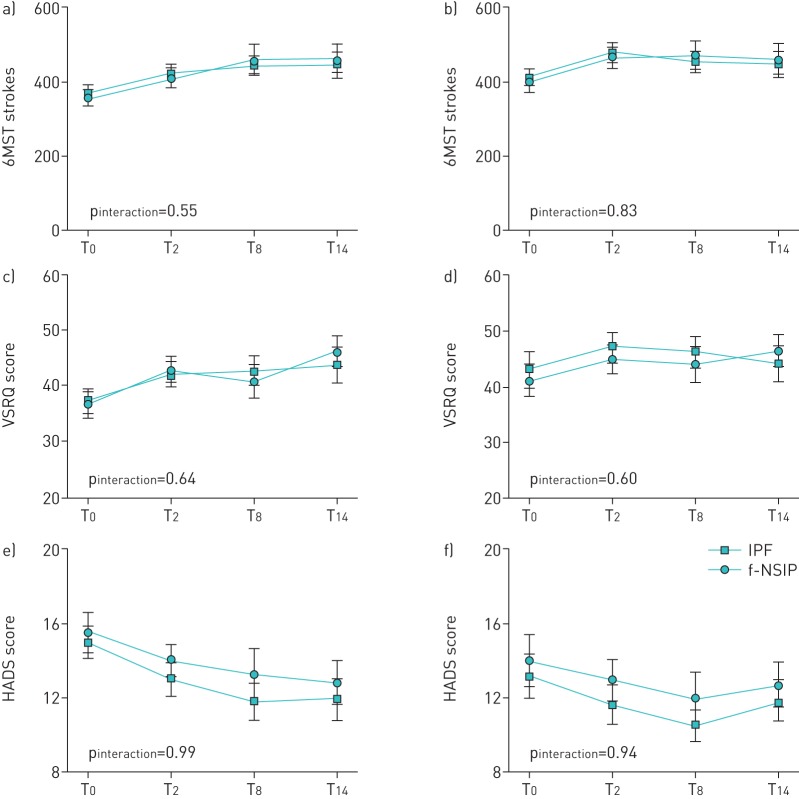
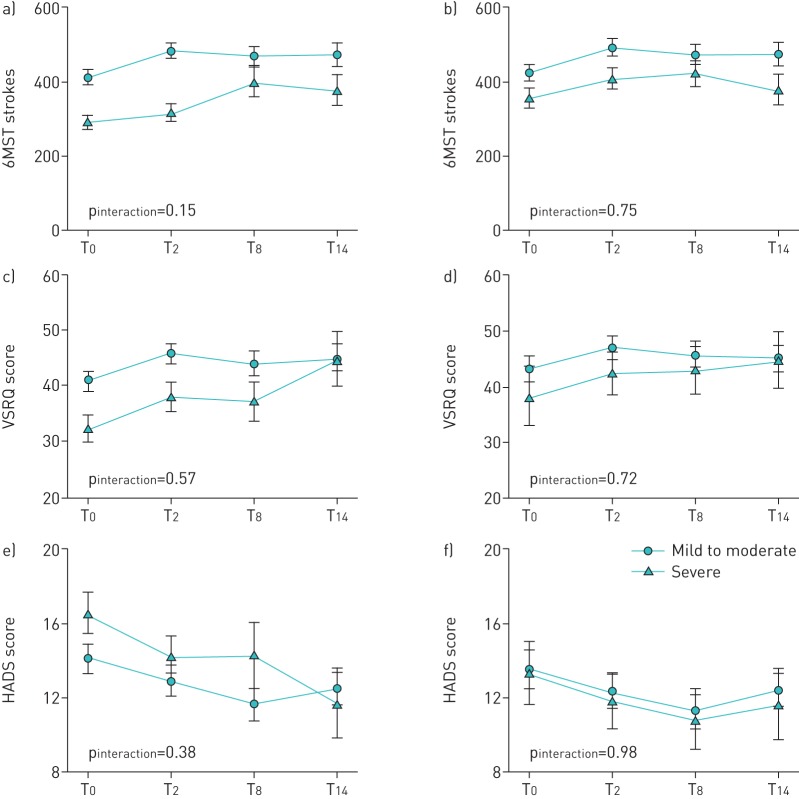
6MST strokes, HADS Anxiety score and VSRQ score were each significantly improved at T (n=101), T (n=76) and T (n=62) compared with T values. The improvements in outcomes were not influenced by disease severity or subtype. Patients who completed the study had significantly better baseline FVC and values than those who did not.
Home-based pulmonary rehabilitation provides long-term benefits in exercise tolerance, anxiety and QoL for patients with f-IIP. Pulmonary rehabilitation should be prescribed systematically as part of the therapeutic arsenal for these patients.
很少有研究探讨肺康复对特发性肺纤维化性肺炎(f-IIP)患者的益处。在此,我们报告一项针对f-IIP患者居家肺康复的常规临床实践观察性研究结果。
共纳入112例连续患者(61例特发性肺纤维化患者和51例纤维化性非特异性间质性肺炎患者),其中65例为轻至中度疾病(用力肺活量(FVC)≥预计值的50%且肺一氧化碳弥散量( )≥预计值的30%),47例为重度疾病(FVC<预计值的50%和/或 <预计值的30%)。为期2个月的肺康复计划包括每周一次的复诊,内容有再训练、治疗教育和心理社会支持。为患者提供个性化行动计划,并每两个月随访12个月。在肺康复计划结束前(T0)、结束后即刻(T1)、结束后6个月(T2)和结束后12个月(T3)评估运动耐量(6分钟踏阶试验(6MST))、情绪(医院焦虑抑郁量表(HADS))和生活质量(QoL)(视觉简化呼吸问卷(VSRQ))。
与T0值相比,在T1(n = 101)、T2(n = 76)和T3(n = 62)时,6MST步数、HADS焦虑评分和VSRQ评分均显著改善。结果的改善不受疾病严重程度或亚型的影响。完成研究的患者基线FVC和 值显著优于未完成研究的患者。
居家肺康复为f-IIP患者的运动耐量、焦虑和生活质量带来长期益处。肺康复应作为这些患者治疗手段的一部分系统开具。