WMG, University of Warwick, Coventry, CV4 7AL, UK.
Department of Trauma & Orthopaedics, University Hospitals Coventry and Warwickshire NHS Trust, Coventry, UK.
Ann Biomed Eng. 2019 Jul;47(7):1642-1656. doi: 10.1007/s10439-019-02260-x. Epub 2019 Apr 10.
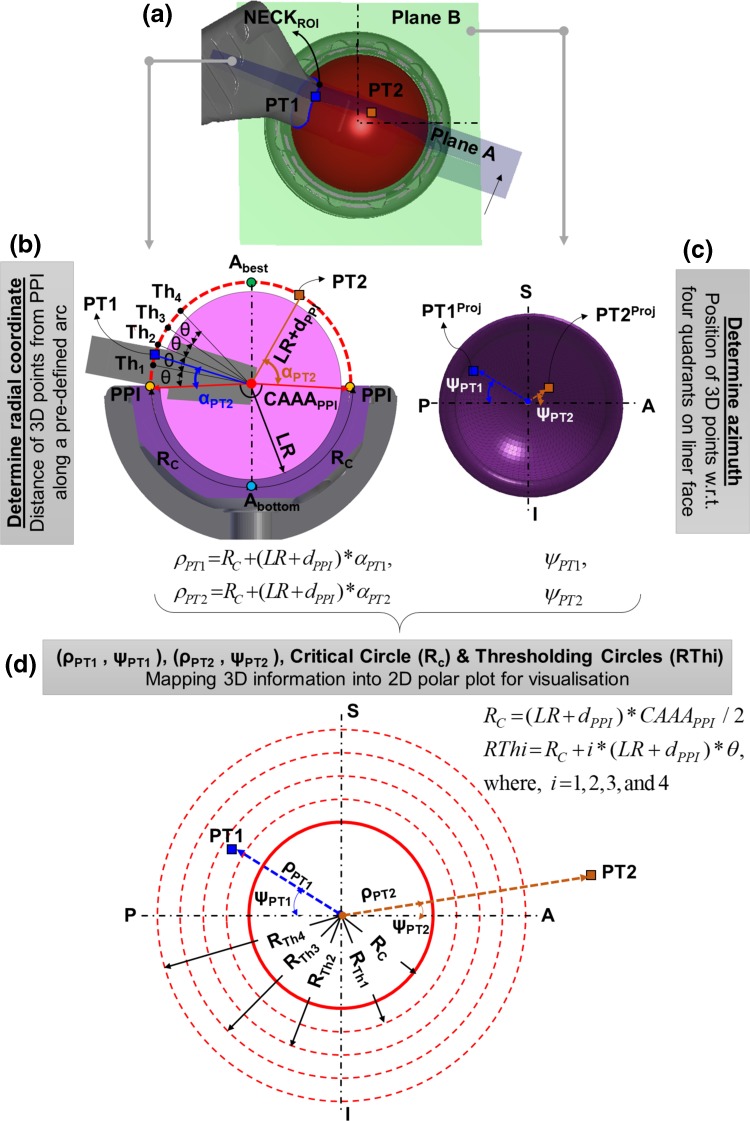
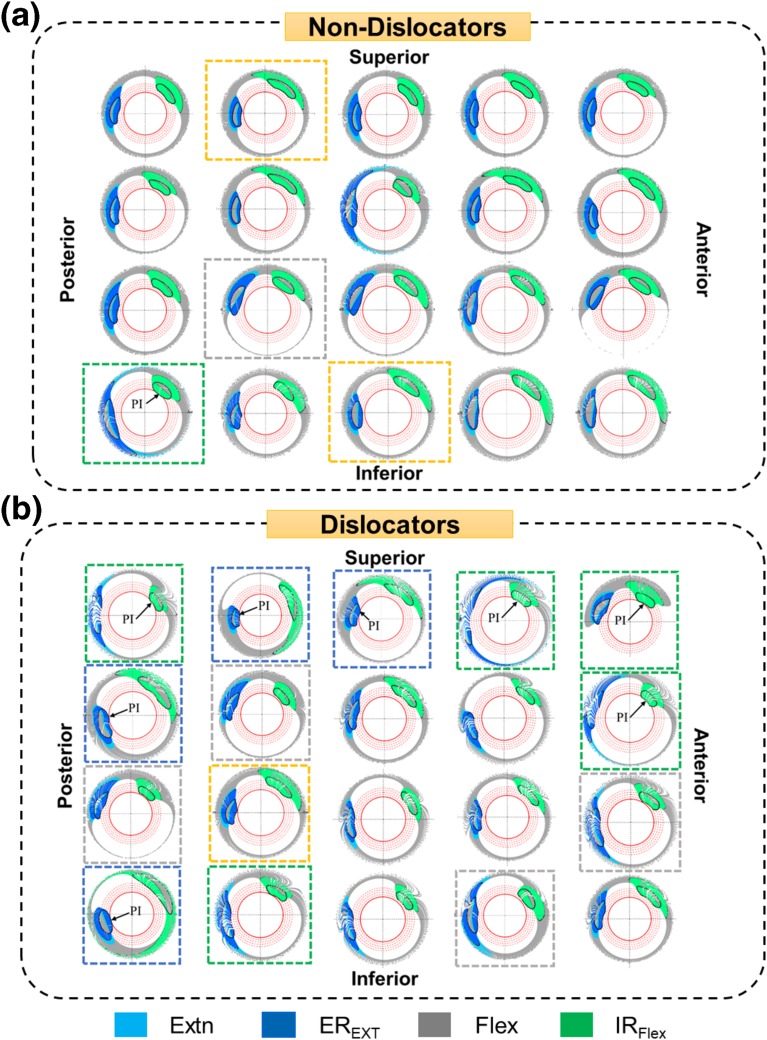
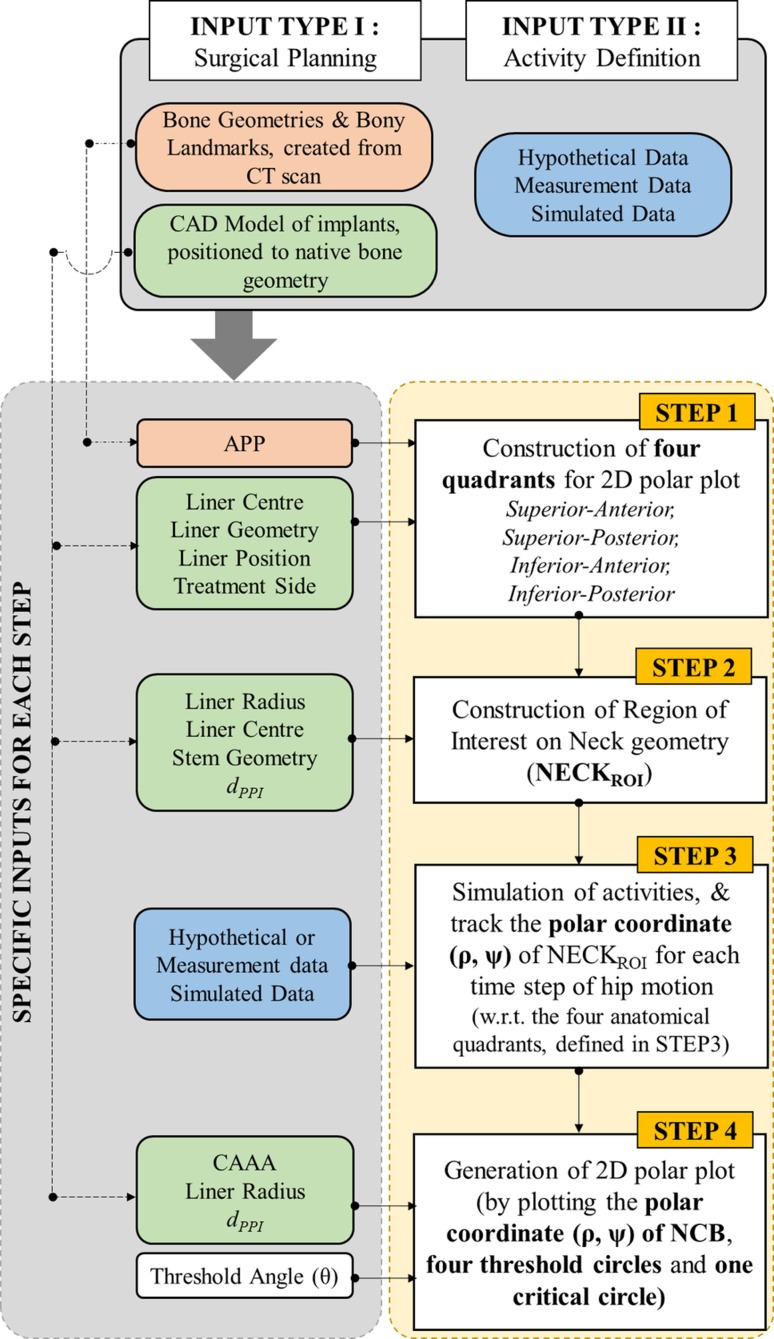
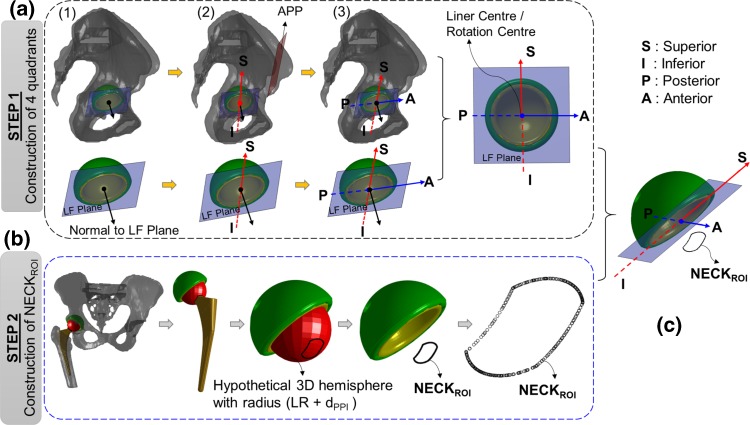
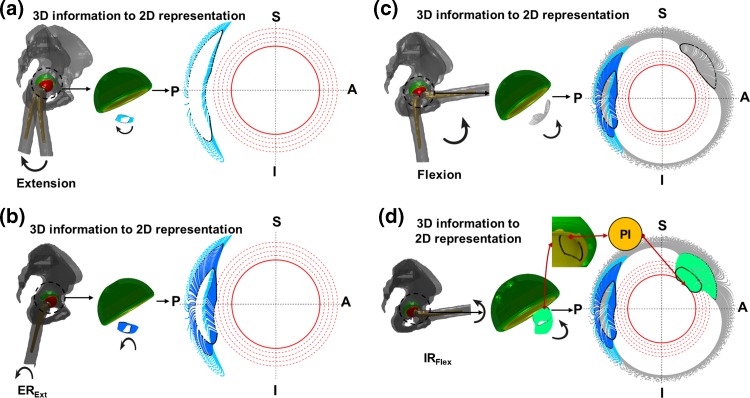
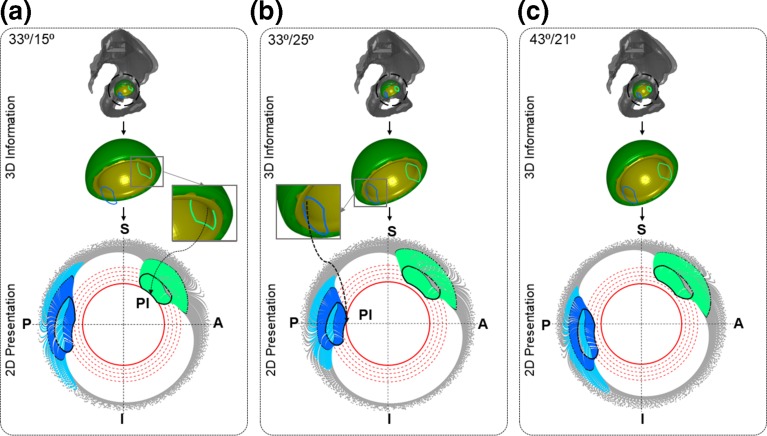
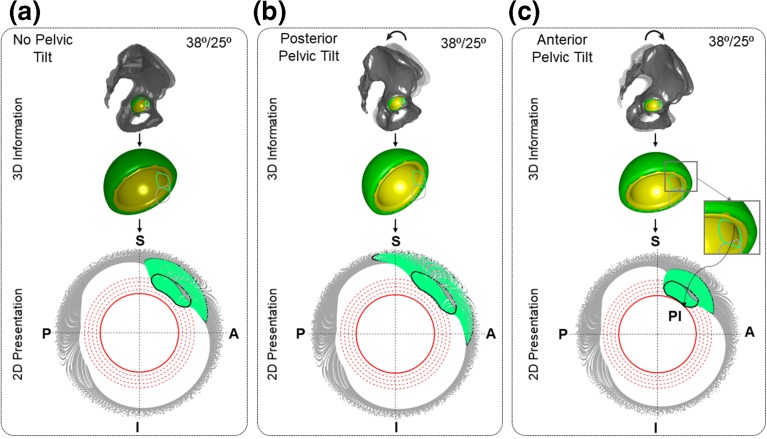
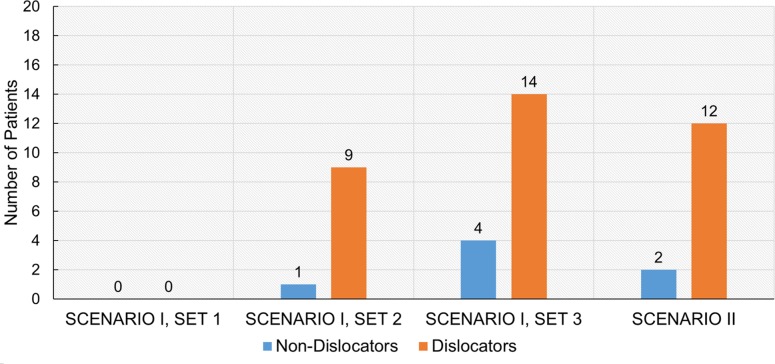
Prosthetic impingement (PI) following total hip arthroplasty (THA), which arises due to the undesirable relative motion of the implants, results in adverse outcomes. Predicting PI through 3D graphical representation is difficult to comprehend when all activities are combined for different implant positions. Therefore, the aim of the paper was to translate this 3D information into a 2D graphical representation for improved understanding of the patient's hip motion. The method used planned implanted geometry, positioned onto native bone anatomy, and activity definitions as inputs to construct the 2D polar plot from 3D hip motion in four steps. Three case studies were performed to highlight its potential use in (a) combining different activities in a single plot, (b) visualising the effect of different cup positions and (c) pelvic tilt on PI. A clinical study with 20 'Non-Dislocators' and 20 'Dislocators' patients after 2 years of THA was performed to validate the method. The results supported the study hypothesis, in that the incidence of PI was always higher in the 'Dislocators' compared to the 'Non-Dislocators' group. The proposed 2D graphical representation could assist in subject-specific THA planning by visualising the effect of different activities, implant positions, pelvic tilt and related aspects on PI.
人工髋关节置换术后假体撞击(PI)是由于假体的不当相对运动引起的,会导致不良后果。当所有活动都结合起来考虑不同的植入物位置时,通过 3D 图形表示来预测 PI 是很难理解的。因此,本文的目的是将这种 3D 信息转换为 2D 图形表示,以提高对患者髋关节运动的理解。该方法使用计划植入的几何形状、定位在原生骨解剖结构上以及活动定义作为输入,通过四个步骤从 3D 髋关节运动构建 2D 极坐标图。进行了三个案例研究,以突出其在以下方面的潜在用途:(a) 在单个图中组合不同的活动,(b) 可视化不同杯位和 (c) 骨盆倾斜对 PI 的影响。对 20 名接受 THA 治疗 2 年后的“非脱位者”和 20 名“脱位者”患者进行了一项临床研究,以验证该方法。结果支持了研究假设,即“脱位者”的 PI 发生率始终高于“非脱位者”组。所提出的 2D 图形表示可以通过可视化不同活动、植入物位置、骨盆倾斜和相关方面对 PI 的影响,帮助进行特定于患者的 THA 规划。