Life Sciences Institute, and the Department of Molecular, Cellular and Developmental Biology, University of Michigan, Ann Arbor, Michigan, United States of America.
Department of Molecular and Integrative Physiology, University of Michigan, Ann Arbor, Michigan, United States of America.
PLoS Biol. 2019 Apr 11;17(4):e3000219. doi: 10.1371/journal.pbio.3000219. eCollection 2019 Apr.
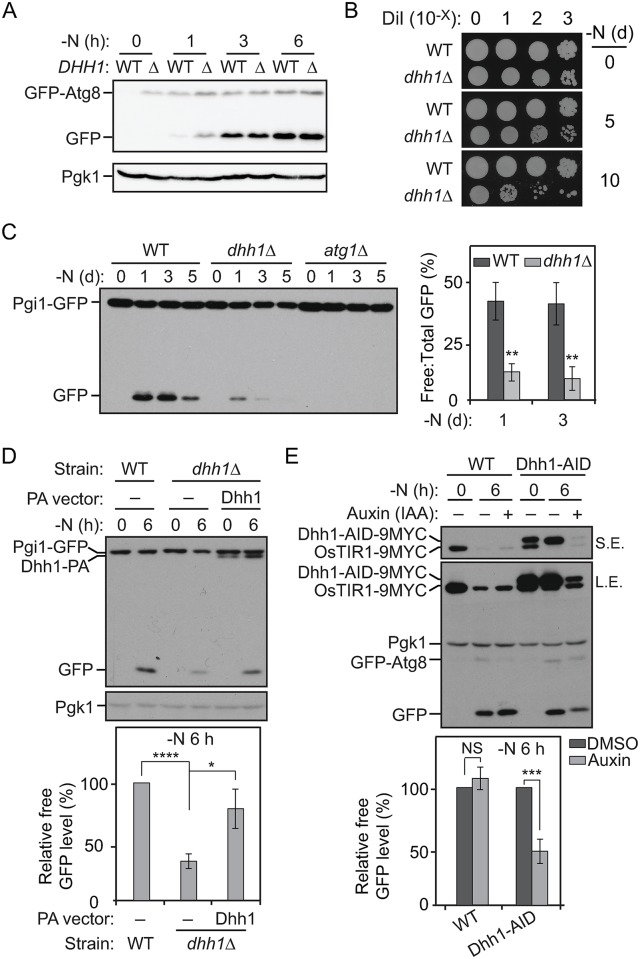
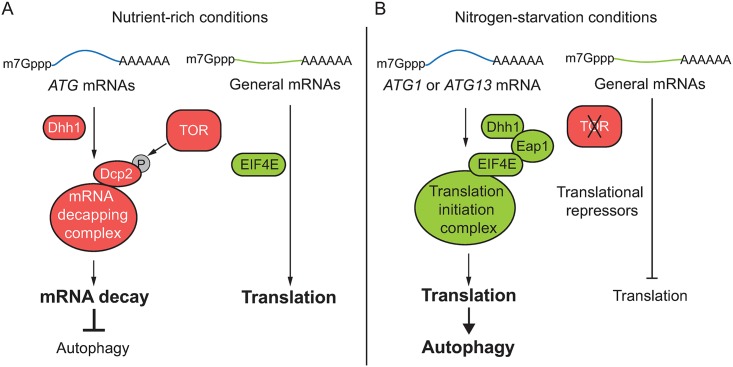
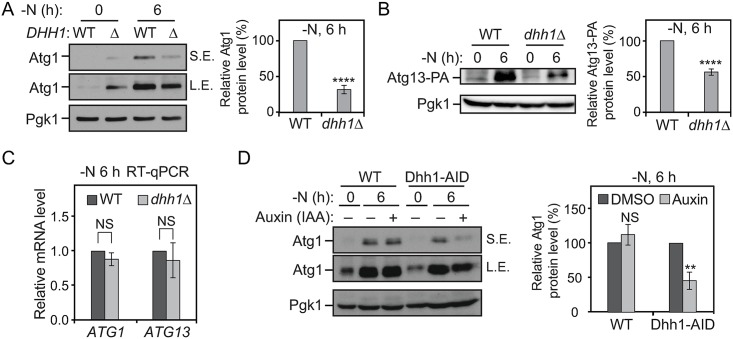
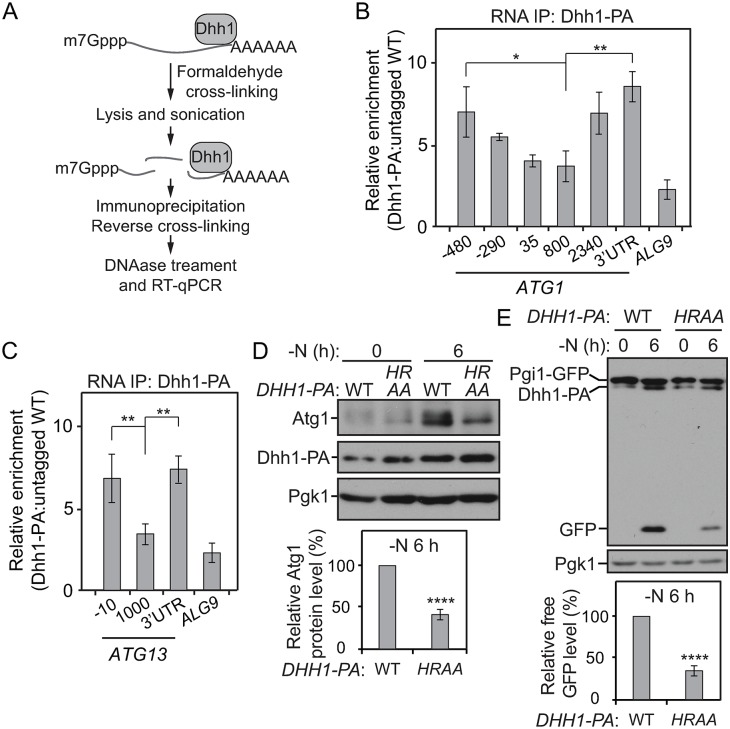
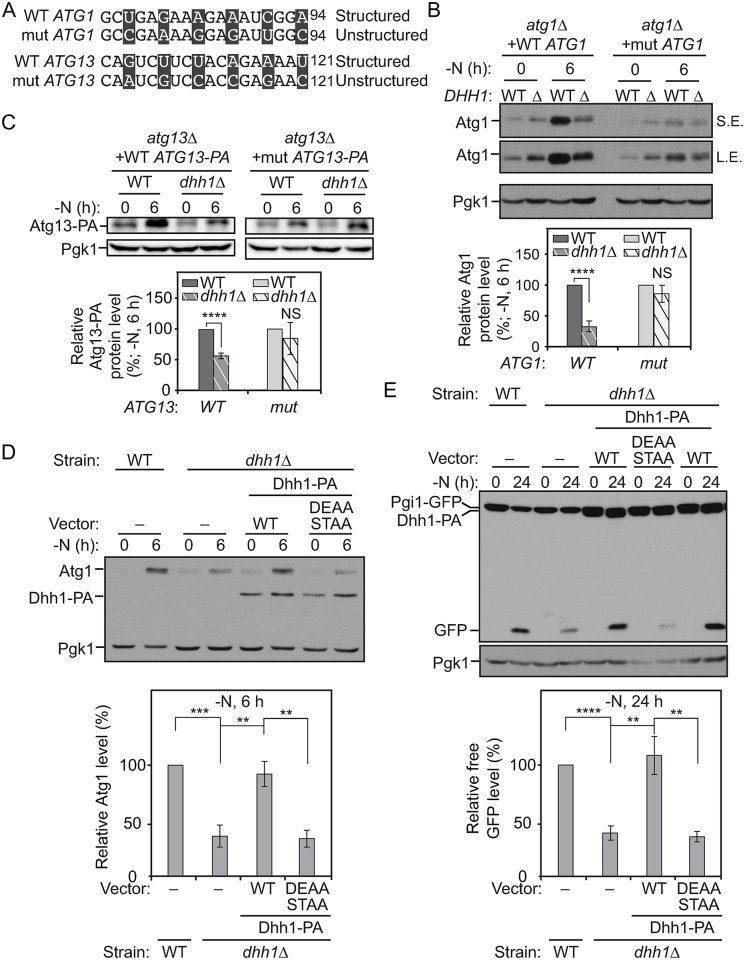
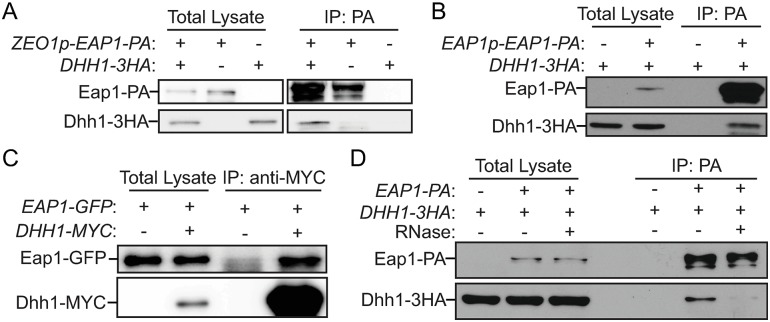
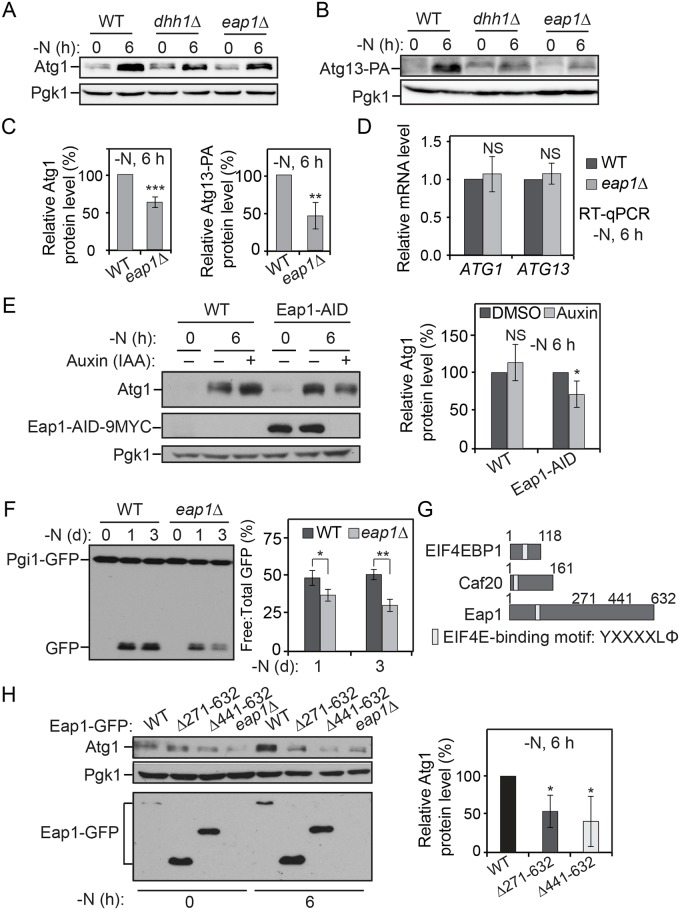
Macroautophagy (hereafter autophagy) is a well-conserved cellular process through which cytoplasmic components are delivered to the vacuole/lysosome for degradation and recycling. Studies have revealed the molecular mechanism of transcriptional regulation of autophagy-related (ATG) genes upon nutrient deprivation. However, little is known about their translational regulation. Here, we found that Dhh1, a DExD/H-box RNA helicase, is required for efficient translation of Atg1 and Atg13, two proteins essential for autophagy induction. Dhh1 directly associates with ATG1 and ATG13 mRNAs under nitrogen-starvation conditions. The structured regions shortly after the start codons of the two ATG mRNAs are necessary for their translational regulation by Dhh1. Both the RNA-binding ability and helicase activity of Dhh1 are indispensable to promote Atg1 translation and autophagy. Moreover, eukaryotic translation initiation factor 4E (EIF4E)-associated protein 1 (Eap1), a target of rapamycin (TOR)-regulated EIF4E binding protein, physically interacts with Dhh1 after nitrogen starvation and facilitates the translation of Atg1 and Atg13. These results suggest a model for how some ATG genes bypass the general translational suppression that occurs during nitrogen starvation to maintain a proper level of autophagy.
自噬(以下简称自噬)是一种高度保守的细胞过程,通过该过程,细胞质成分被递送至液泡/溶酶体进行降解和再循环。研究揭示了营养剥夺时自噬相关(ATG)基因转录调控的分子机制。然而,其翻译调控却知之甚少。在这里,我们发现 Dhh1(一种 DExD/H 盒 RNA 解旋酶)是自噬诱导所必需的 Atg1 和 Atg13 两种蛋白有效翻译所必需的。在氮饥饿条件下,Dhh1 直接与 ATG1 和 ATG13 mRNA 结合。这两个 ATG mRNA 起始密码子之后的短结构区域对于 Dhh1 的翻译调控是必需的。Dhh1 的 RNA 结合能力和解旋酶活性对于促进 Atg1 翻译和自噬都是不可或缺的。此外,雷帕霉素(TOR)调控的 EIF4E 结合蛋白 eIF4E 相关蛋白 1(Eap1)是真核翻译起始因子 4E(EIF4E)的靶标,在氮饥饿后与 Dhh1 相互作用,并促进 Atg1 和 Atg13 的翻译。这些结果提出了一个模型,说明某些 ATG 基因如何绕过氮饥饿时普遍发生的翻译抑制,以维持适当的自噬水平。