Civil & Environmental Engineering Department, King Fahd University of Petroleum & Minerals (KFUPM), Dhahran, Saudi Arabia.
Sci Rep. 2019 Apr 11;9(1):5935. doi: 10.1038/s41598-019-42498-y.
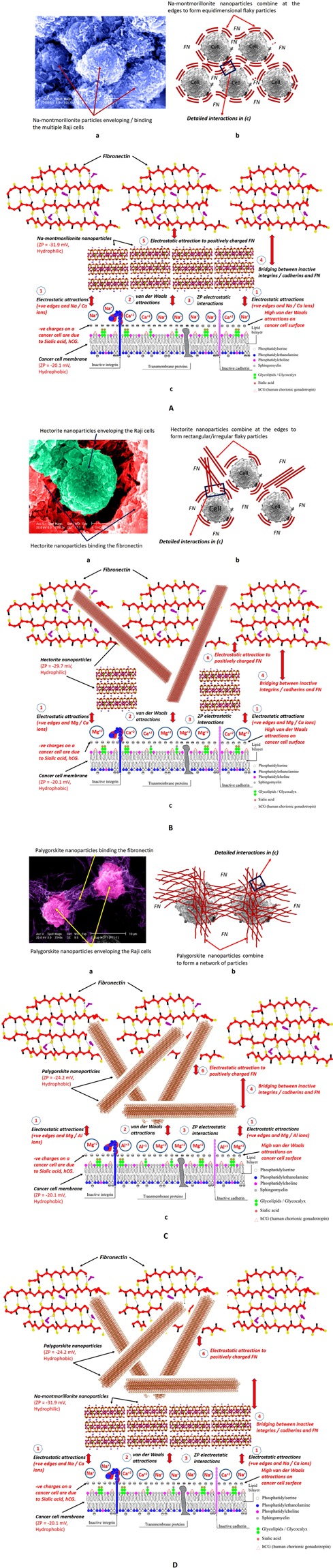
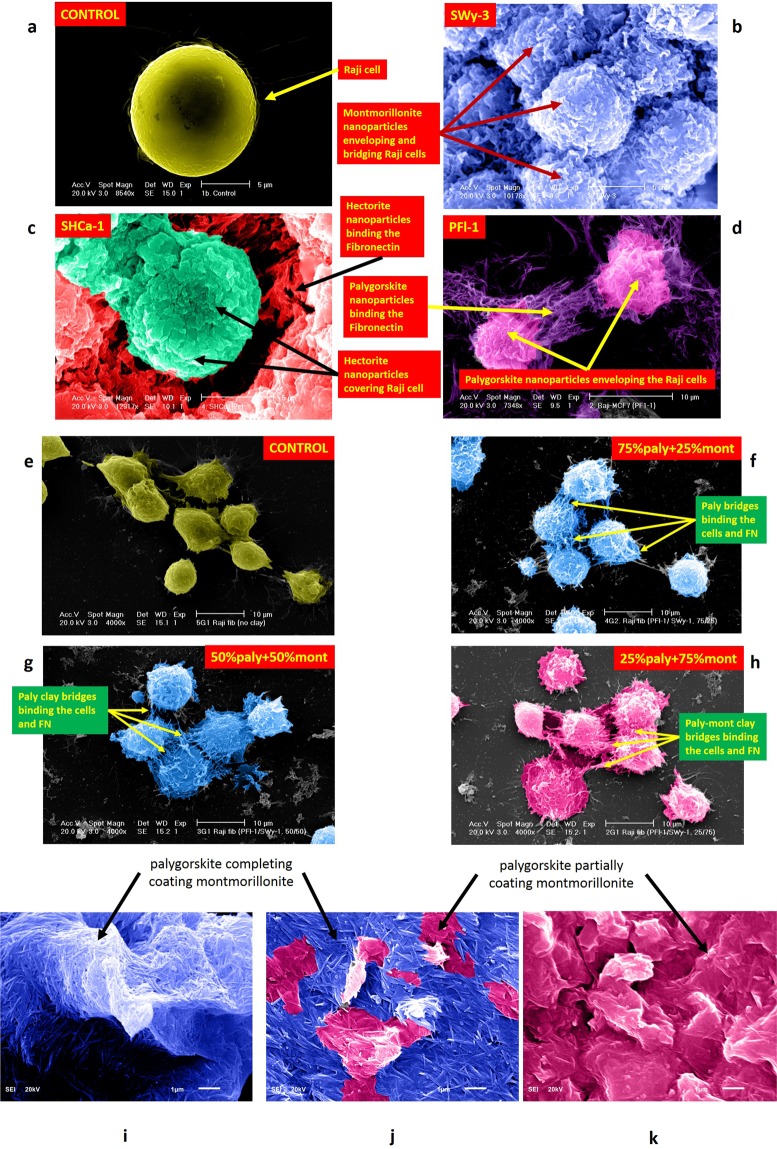
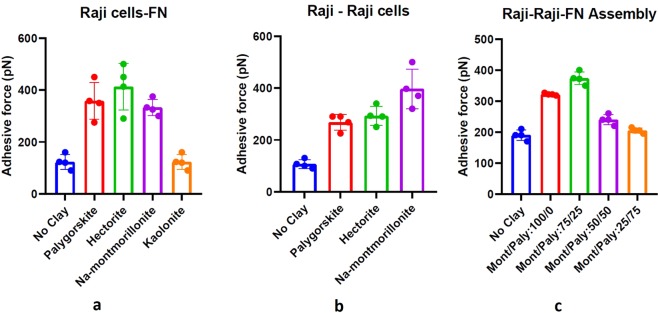
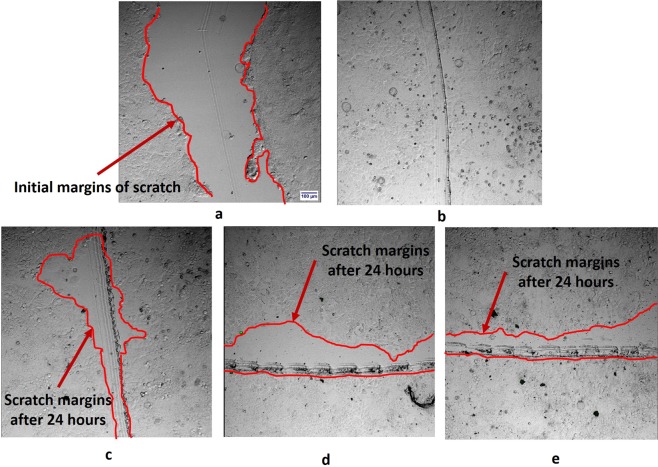
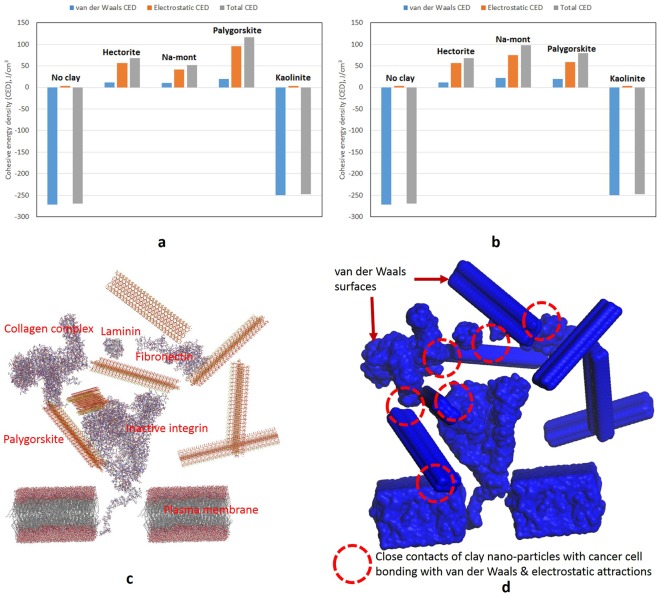
Cancer metastasis results from the suppression of adhesion between cancer cells and the extracellular matrix, causing their migration from the primary tumor location and the subsequent formation of tumors in distant organs. This study demonstrates the potential use of nano-sized clay mineral particles to modulate adhesions between tumor cells and with the surrounding extracellular matrix. Atomic force microscopy studies of live cell cultures reveal a significant increase in adhesion between tumor cells and their environment after treatment with different types of electrically charged clay nanoparticles. The enhancement of adhesion among cancer cells was further confirmed through scratch type of wound healing assay studies. To provide insight into the adhesion mechanisms introduced by the clay nanoparticles, we performed a molecular-level computer simulation of cell adhesions in the presence and absence of the nanoparticles. Strong van der Waals and electrostatic attractions modelled in the molecular simulations result in an increase in the cohesive energy density of these environments when treated with clay crystallites. The increase in the cohesive energy density after the sorption of clay crystallites on cell-cell and cell-extracellular matrix complexes lends weight to our strategy of using clay nanoparticles for the restoration of adhesion among cancer cells and prevention of metastasis.
癌症转移是由于癌细胞与细胞外基质之间的黏附被抑制,导致癌细胞从原发性肿瘤位置迁移,并随后在远处器官形成肿瘤。本研究表明,纳米级粘土矿物颗粒可用于调节肿瘤细胞之间以及与周围细胞外基质之间的黏附。通过原子力显微镜研究活细胞培养物发现,用不同类型带电粘土纳米颗粒处理后,肿瘤细胞与其环境之间的黏附显著增加。通过划痕类型的伤口愈合测定研究进一步证实了癌细胞之间黏附的增强。为了深入了解粘土纳米颗粒引入的黏附机制,我们在存在和不存在纳米颗粒的情况下对细胞黏附进行了分子水平的计算机模拟。在分子模拟中模拟的范德华力和静电力的增强导致处理粘土晶时这些环境的内聚能密度增加。粘土晶在细胞-细胞和细胞-细胞外基质复合物上吸附后内聚能密度的增加支持了我们使用粘土纳米颗粒恢复癌细胞之间的黏附并预防转移的策略。