Zhang Renwen, Burgess Eleanor R, Reddy Madhu C, Rothrock Nan E, Bhatt Surabhi, Rasmussen Luke V, Butt Zeeshan, Starren Justin B
Department of Communication Studies, Northwestern University, Evanston, Illinois, USA.
Feinberg School of Medicine, Northwestern University, Chicago, Illinois, USA.
JAMIA Open. 2019 Apr;2(1):73-80. doi: 10.1093/jamiaopen/ooz001. Epub 2019 Jan 30.
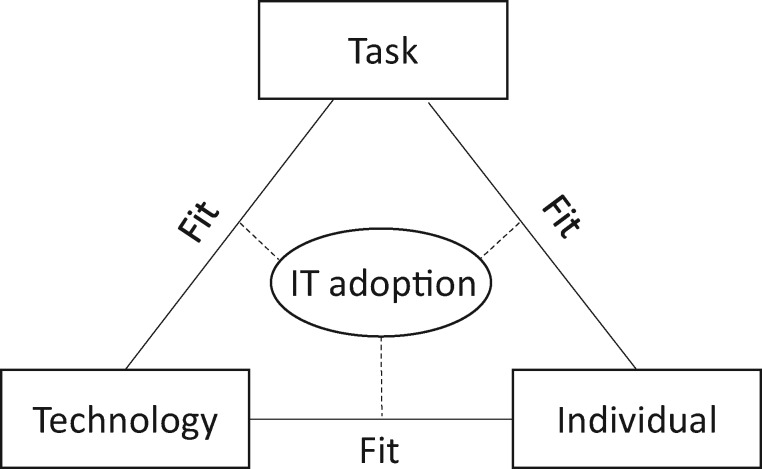
Integrating patient-reported outcomes (PROs) into electronic health records (EHRs) can improve patient-provider communication and delivery of care. However, new system implementation in health-care institutions is often accompanied by a change in clinical workflow and organizational culture. This study examines how well an EHR-integrated PRO system fits clinical workflows and individual needs of different provider groups within 2 clinics.
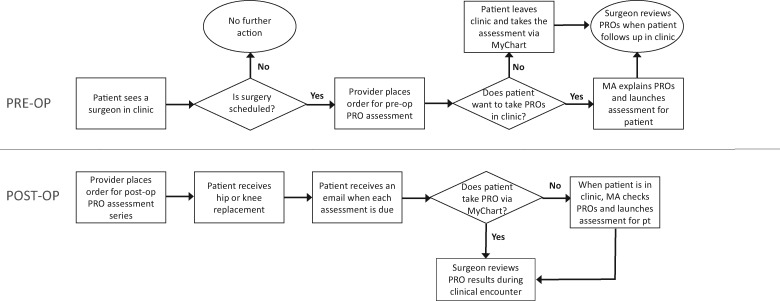
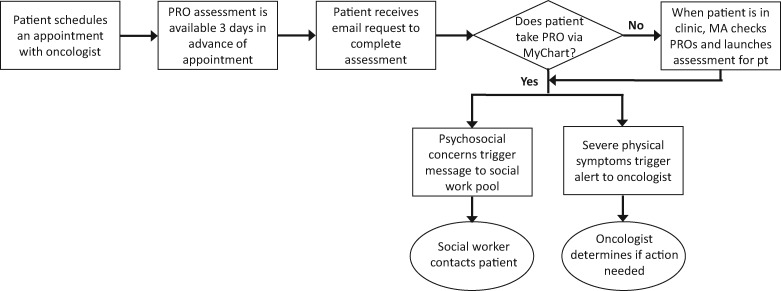
Northwestern Medicine developed and implemented an EHR-integrated PRO system within the orthopedics and oncology departments. We conducted interviews with 11 providers who had interacted with the system. Through thematic analysis, we synthesized themes regarding provider perspectives on clinical workflow, individual needs, and system features.
Our findings show that EHR-integrated PROs facilitate targeted conversation with patients and automated triage for psychosocial care. However, physicians, psychosocial providers, and medical assistants faced different challenges in their use of the PRO system. Barriers mainly stemmed from a lack of actionable data, workflow disruption, technical issues, and a lack of incentives.
This study sheds light on the ecosystem around EHR-integrated PRO systems (such as user needs and organizational factors). We present recommendations to address challenges facing PRO implementation, such as optimizing data collection and auto-referral processes, improving data visualizations, designing effective educational materials, and prioritizing the primary user group.
PRO integration into routine care can be beneficial but also require effective technology design and workflow configuration to reach full potential use. This study provides insights into how patient-generated health data can be better integrated into clinical practice and care delivery processes.
将患者报告结局(PROs)整合到电子健康记录(EHRs)中可改善医患沟通及医疗服务的提供。然而,医疗机构实施新系统时往往伴随着临床工作流程和组织文化的改变。本研究考察了一个整合了电子健康记录的PRO系统在两家诊所内与临床工作流程及不同医疗服务提供者群体的个体需求的契合程度。
西北大学医学院在骨科和肿瘤科开发并实施了一个整合了电子健康记录的PRO系统。我们对11位与该系统有交互的医疗服务提供者进行了访谈。通过主题分析,我们综合了有关医疗服务提供者对临床工作流程、个体需求及系统功能的看法的主题。
我们的研究结果表明,整合了电子健康记录的PROs有助于与患者进行有针对性的对话以及对心理社会护理进行自动分诊。然而,医生、心理社会服务提供者和医疗助理在使用PRO系统时面临不同的挑战。障碍主要源于缺乏可采取行动的数据、工作流程中断、技术问题以及缺乏激励措施。
本研究揭示了围绕整合了电子健康记录的PRO系统的生态系统(如用户需求和组织因素)。我们提出了应对PRO实施所面临挑战的建议,例如优化数据收集和自动转诊流程、改进数据可视化、设计有效的教育材料以及优先考虑主要用户群体。
将PRO整合到常规护理中可能有益,但也需要有效的技术设计和工作流程配置才能充分发挥其潜在用途。本研究为如何将患者生成的健康数据更好地整合到临床实践和护理提供过程中提供了见解。