von Knebel Doeberitz Magnus, Prigge Elena-Sophie
Department of Applied Tumor Biology, Institute of Pathology, University of Heidelberg, Germany; Clinical Cooperation Unit Applied Tumor Biology, German Cancer Research Center (DKFZ), Heidelberg, Germany.
Department of Applied Tumor Biology, Institute of Pathology, University of Heidelberg, Germany; Clinical Cooperation Unit Applied Tumor Biology, German Cancer Research Center (DKFZ), Heidelberg, Germany.
Papillomavirus Res. 2019 Jun;7:180-183. doi: 10.1016/j.pvr.2019.03.005. Epub 2019 Apr 10.
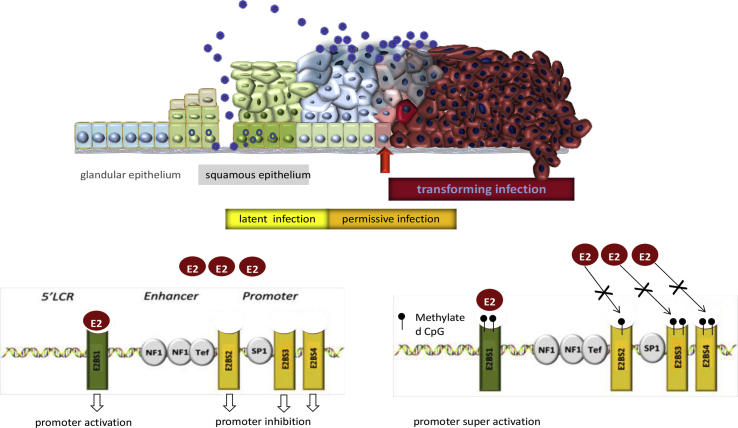
Papillomavirus replication is tightly linked to squamous epithelial differentiation which in turn is governed to a large extent by epigenetic remodeling of genomes within the differentiating squamous epithelial cells. Over the past years it became evident that epigenetic and in particular differential methylation events substantially contribute to the regulation of the papillomavirus life cycle. Moreover, there is now good evidence that the initial trigger for HPV-mediated transformation of squamous epithelial cells is mediated by methylation of distinct CpG dinucleotides within E2-binding sites of the papillomavirus upstream regulatory region (URR). These findings have important implications for novel diagnostic markers but also for novel and indeed targeted therapy strategies for HPV linked neoplastic lesions.
乳头瘤病毒复制与鳞状上皮分化紧密相关,而鳞状上皮分化在很大程度上又受分化中的鳞状上皮细胞内基因组表观遗传重塑的调控。在过去几年中,很明显表观遗传学,尤其是差异甲基化事件,在很大程度上有助于乳头瘤病毒生命周期的调节。此外,现在有充分的证据表明,人乳头瘤病毒介导的鳞状上皮细胞转化的初始触发因素是由乳头瘤病毒上游调控区(URR)的E2结合位点内不同的CpG二核苷酸甲基化介导的。这些发现不仅对新型诊断标志物具有重要意义,而且对人乳头瘤病毒相关肿瘤病变的新型且确实有针对性的治疗策略也具有重要意义。