Hosen Md Akter, Jumaat Mohd Zamin, Alengaram Ubagaram Johnson, Islam A B M Saiful, Bin Hashim Huzaifa
Department of Civil Engineering, Faculty of Engineering, University of Malaya, 50603 Kuala Lumpur, Malaysia.
Department of Construction Engineering, College of Engineering, University of Dammam, 31451 Dammam, Saudi Arabia.
Polymers (Basel). 2016 Mar 3;8(3):67. doi: 10.3390/polym8030067.
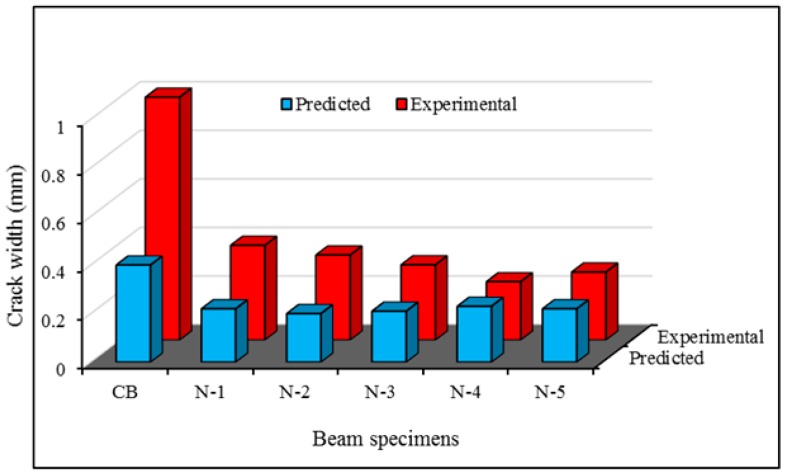
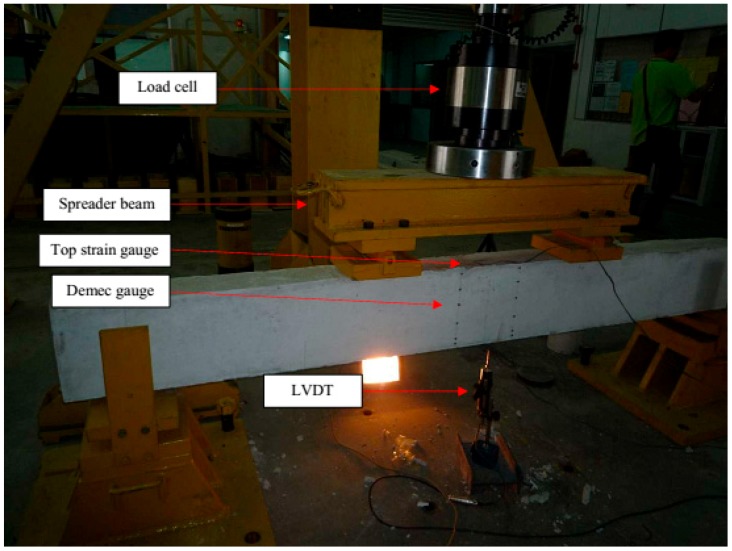
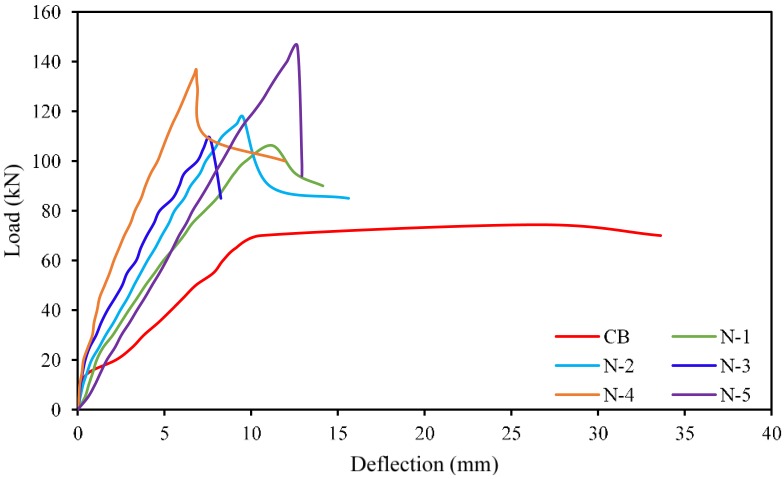
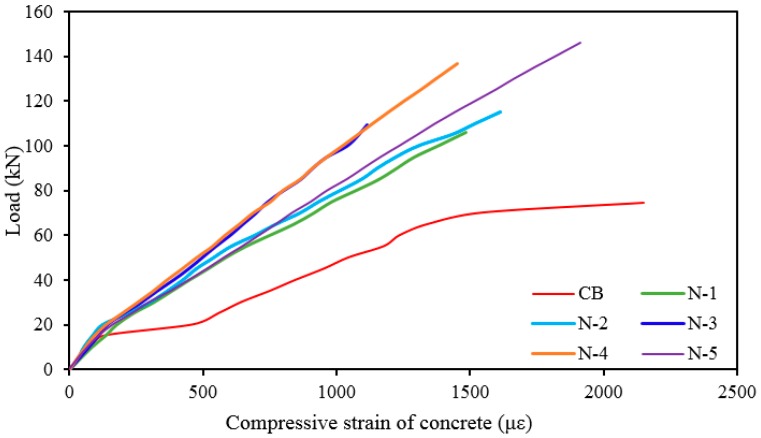
Existing structural components require strengthening after a certain period of time due to increases in service loads, errors in design, mechanical damage, and the need to extend the service period. Externally-bonded reinforcement (EBR) and near-surface mounted (NSM) reinforcement are two preferred strengthening approach. This paper presents a NSM technique incorporating NSM composites, namely steel and carbon fiber-reinforced polymer (CFRP) bars, as reinforcement. Experimental and analytical studies carried out to explore the performance of reinforced concrete (RC) members strengthened with the NSM composites. Analytical models were developed in predicting the maximum crack spacing and width, concrete cover separation failure loads, and deflection. A four-point bending test was applied on beams strengthened with different types and ratios of NSM reinforcement. The failure characteristics, yield, and ultimate capacities, deflection, strain, and cracking behavior of the beams were evaluated based on the experimental output. The test results indicate an increase in the cracking load of 69% and an increase in the ultimate load of 92% compared with the control beam. The predicted result from the analytical model shows good agreement with the experimental result, which ensures the competent implementation of the present NSM-steel and CFRP technique.
由于使用荷载增加、设计失误、机械损伤以及延长使用期限的需要,现有结构构件在一定时间后需要进行加固。外部粘贴加固(EBR)和近表面安装(NSM)加固是两种常用的加固方法。本文提出了一种采用NSM复合材料(即钢和碳纤维增强聚合物(CFRP)筋)作为加固材料的NSM技术。开展了试验和分析研究,以探究采用NSM复合材料加固的钢筋混凝土(RC)构件的性能。建立了分析模型,用于预测最大裂缝间距和宽度、混凝土保护层剥离破坏荷载以及挠度。对采用不同类型和比例的NSM加固材料加固的梁进行了四点弯曲试验。基于试验结果,对梁的破坏特征、屈服和极限承载力、挠度、应变及开裂行为进行了评估。试验结果表明,与对照梁相比,开裂荷载提高了69%,极限荷载提高了92%。分析模型的预测结果与试验结果吻合良好,这确保了当前NSM钢和CFRP技术的有效实施。