Wake Forest University Health Sciences, Winston-Salem, North Carolina, USA.
Wake Forest Institute for Regenerative Medicine, Winston-Salem, North Carolina, USA.
Sci Rep. 2019 Apr 12;9(1):5987. doi: 10.1038/s41598-019-42568-1.
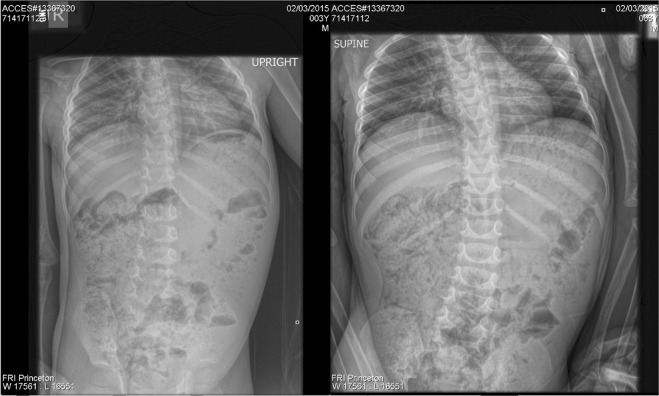
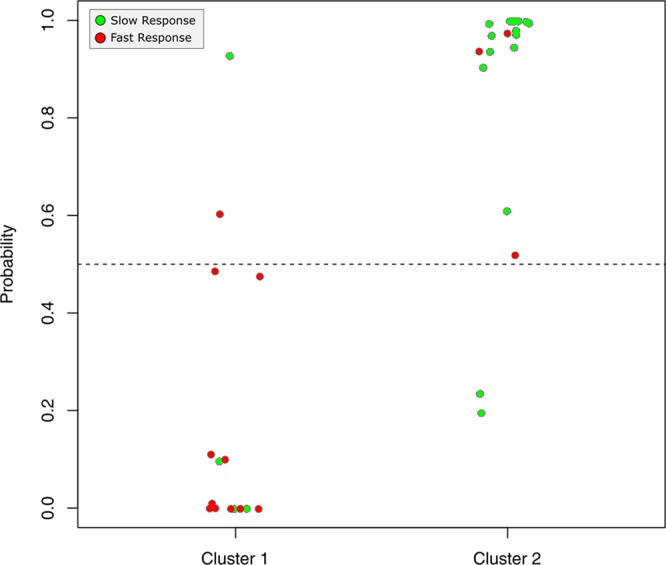
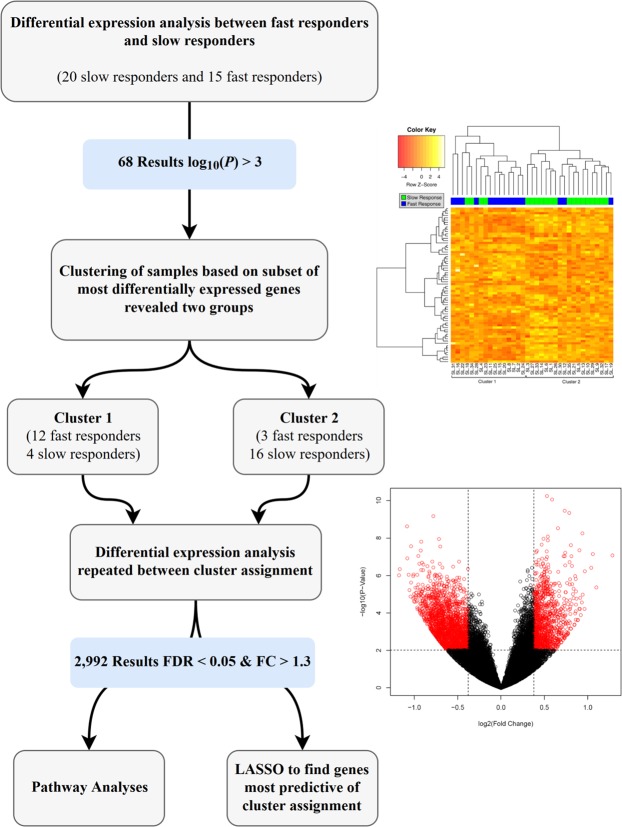
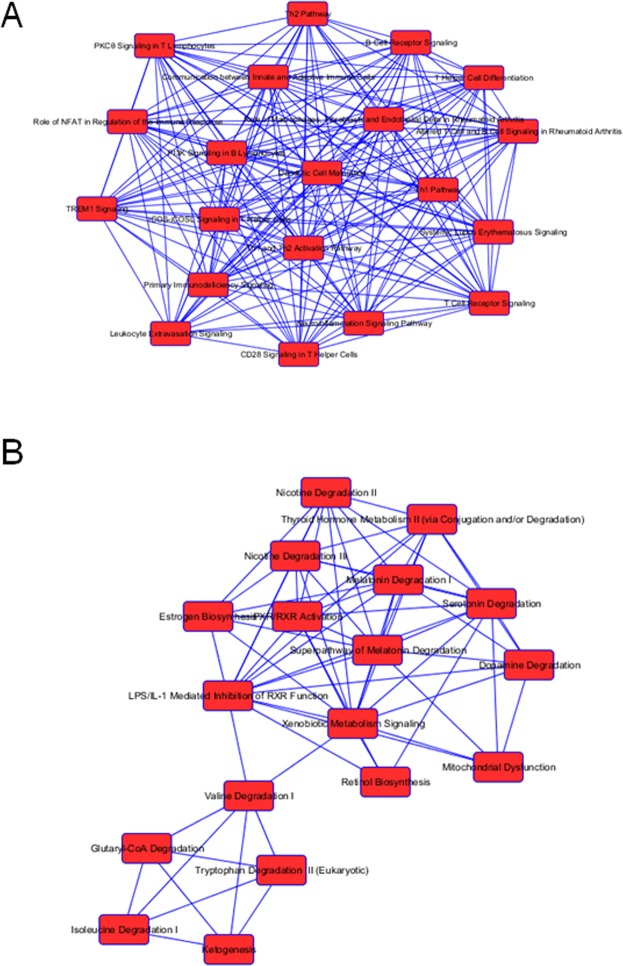
In children with autism spectrum disorder (ASD) who present to the gastroenterologist with chronic constipation on a background of colonic inflammation, we have identified two distinct clinical subtypes: (1) patients who experience a sustained state of GI symptomatic remission while on maintenance anti-inflammatory therapy (fast responders) and, (2) those with recurrent right-sided fecal loading requiring regular colon cleanouts during treatment for enterocolitis (slow responders). We hypothesized that a detailed molecular analysis of tissue from the affected region of the colon would provide mechanistic insights regarding the fast versus slow response to anti-inflammatory therapy. To test this, ascending colon biopsy tissues from 35 children with ASD (20 slow responders and 15 fast responders) were analyzed by RNAseq. Hierarchical cluster analysis was performed to assign samples to clusters and gene expression analysis was performed to identify differentially expressed transcripts (DETs) between samples within the clusters. Significant differences were found between the two clusters with fast responder-predominant cluster showing an upregulation of transcripts involved in the activation of immune and inflammatory response and the slow responder-predominant cluster showing significant over-representation of pathways impacting colonic motility (e.g. genes involved in tryptophan and serotonin degradation and mitochondrial dysfunction). Regression analysis identified a single long non-coding RNA that could predict cluster assignment with a high specificity (0.88), sensitivity (0.89) and accuracy (0.89). Comparison of gene expression profiles in the ascending colon from a subset of patients with ASD, chronic right-sided fecal loading constipation and a slow versus fast response to therapy has identified molecular mechanisms that likely contribute to this differential response following the primary therapeutic intervention (i.e. treatment for colonic inflammation with brief induction immunosuppression followed by maintenance non-steroidal anti-inflammatory therapy). Importantly, we have identified a transcript that, if validated, may provide a biomarker that can predict from the outset which patients will be slow responders who would benefit from an alternate therapeutic strategy in treating their constipation.
在患有自闭症谱系障碍(ASD)并伴有结肠炎症的慢性便秘的儿童中,我们发现了两种不同的临床亚型:(1)在维持抗炎治疗时持续处于胃肠道症状缓解状态的患者(快速缓解者),以及(2)在治疗肠炎时需要定期结肠清洗以清除右侧粪便堆积的患者(缓慢缓解者)。我们假设对受影响结肠区域的组织进行详细的分子分析,可以为快速与缓慢对抗炎治疗的反应提供机制上的见解。为了验证这一点,我们对 35 名 ASD 儿童(20 名缓慢缓解者和 15 名快速缓解者)的升结肠活检组织进行了 RNAseq 分析。进行层次聚类分析以将样本分配到聚类中,并进行基因表达分析以确定聚类内样本之间差异表达的转录本(DET)。两个聚类之间存在显著差异,快速缓解者为主的聚类显示参与免疫和炎症反应激活的转录本上调,而缓慢缓解者为主的聚类显示影响结肠运动的途径(例如,涉及色氨酸和血清素降解以及线粒体功能障碍的基因)显著过表达。回归分析确定了一个可以高特异性(0.88)、高灵敏度(0.89)和高准确性(0.89)预测聚类分配的单一长非编码 RNA。对一组 ASD 患者、慢性右侧粪便堆积性便秘和治疗后快速与缓慢反应的升结肠基因表达谱的比较,确定了可能导致这种治疗后不同反应的分子机制(即通过短暂诱导免疫抑制治疗结肠炎症,然后进行维持非甾体抗炎治疗)。重要的是,我们已经确定了一个转录本,如果得到验证,可能会提供一个生物标志物,可以从一开始预测哪些患者将是缓慢缓解者,他们将从治疗便秘的替代治疗策略中受益。