Erbescu Alina, Papuc Sorina Mihaela, Budisteanu Magdalena, Arghir Aurora, Neagu Monica
Victor Babes National Institute of Pathology, Bucharest, Romania.
Faculty of Biology, Doctoral School, University of Bucharest, Bucharest, Romania.
Front Psychiatry. 2022 Oct 19;13:1006612. doi: 10.3389/fpsyt.2022.1006612. eCollection 2022.
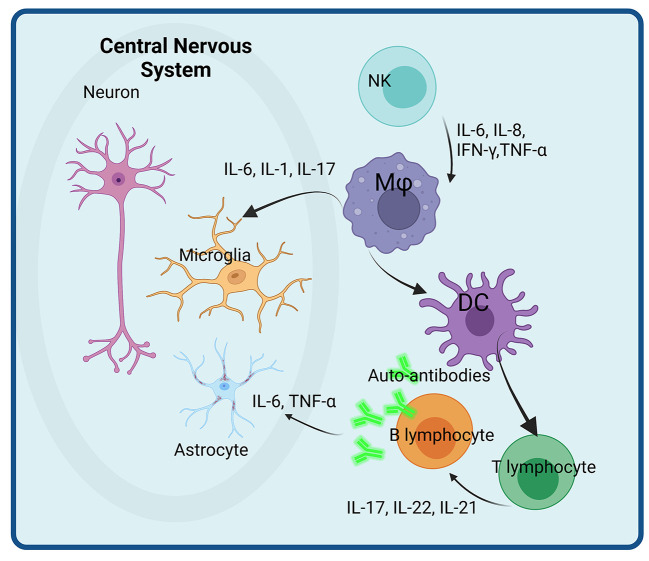
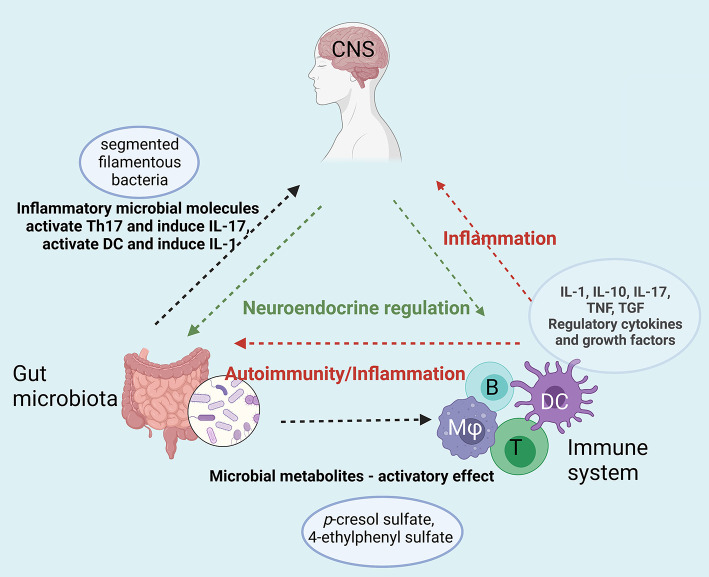
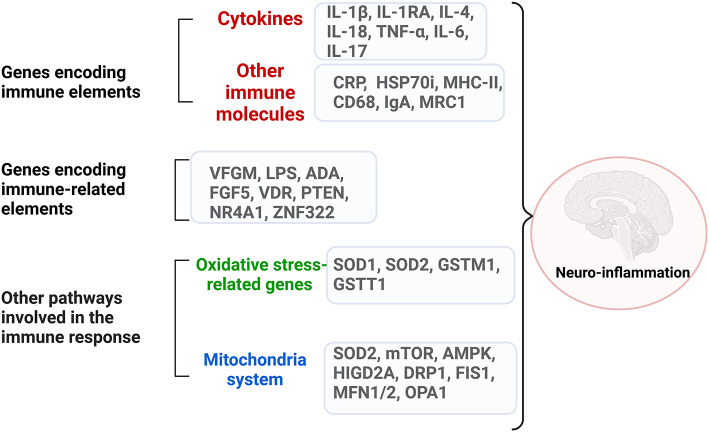
Autism spectrum disorder (ASD) is a neurodevelopmental condition characterized by communication and social interaction deficits, and by restricted interests and stereotyped, repetitive behavior patterns. ASD has a strong genetic component and a complex architecture characterized by the interplay of rare and common genetic variants. Recently, increasing evidence suggest a significant contribution of immune system dysregulation in ASD. The present paper reviews the latest updates regarding the altered immune landscape of this complex disorder highlighting areas with potential for biomarkers discovery as well as personalization of therapeutic approaches. Cross-talk between the central nervous system and immune system has long been envisaged and recent evidence brings insights into the pathways connecting the brain to the immune system. Disturbance of cytokine levels plays an important role in the establishment of a neuroinflammatory milieu in ASD. Several other immune molecules involved in antigen presentation and inflammatory cellular phenotypes are also at play in ASD. Maternal immune activation, the presence of brain-reactive antibodies and autoimmunity are other potential prenatal and postnatal contributors to ASD pathophysiology. The molecular players involved in oxidative-stress response and mitochondrial system function, are discussed as contributors to the pro-inflammatory pattern. The gastrointestinal inflammation pathways proposed to play a role in ASD are also discussed. Moreover, the body of evidence regarding some of the genetic factors linked to the immune system dysregulation is reviewed and discussed. Last, but not least, the epigenetic traits and their interactions with the immune system are reviewed as an expanding field in ASD research. Understanding the immune-mediated pathways that influence brain development and function, metabolism, and intestinal homeostasis, may lead to the identification of robust diagnostic or predictive biomarkers for ASD individuals. Thus, novel therapeutic approaches could be developed, ultimately aiming to improve their quality of life.
自闭症谱系障碍(ASD)是一种神经发育疾病,其特征为沟通和社交互动缺陷,以及兴趣受限和刻板、重复的行为模式。ASD具有很强的遗传成分,其复杂结构的特点是罕见和常见基因变异之间的相互作用。最近,越来越多的证据表明免疫系统失调在ASD中起重要作用。本文综述了关于这种复杂疾病免疫格局改变的最新进展,强调了具有生物标志物发现潜力的领域以及治疗方法的个性化。中枢神经系统和免疫系统之间的相互作用早已被设想,最近的证据为连接大脑和免疫系统的途径提供了见解。细胞因子水平的紊乱在ASD神经炎症环境的形成中起重要作用。参与抗原呈递和炎症细胞表型的其他几种免疫分子在ASD中也发挥作用。母体免疫激活、脑反应性抗体的存在和自身免疫是ASD病理生理学中其他潜在的产前和产后因素。参与氧化应激反应和线粒体系统功能的分子因素也被讨论为促炎模式的促成因素。还讨论了被认为在ASD中起作用的胃肠道炎症途径。此外,还对与免疫系统失调相关的一些遗传因素的证据进行了综述和讨论。最后但同样重要的是,表观遗传特征及其与免疫系统的相互作用作为ASD研究中一个不断扩展的领域进行了综述。了解影响大脑发育和功能、代谢以及肠道稳态的免疫介导途径,可能会导致为ASD个体识别出强大的诊断或预测生物标志物。因此,可以开发新的治疗方法,最终旨在改善他们的生活质量。