Bacterial Cell cycle & Development (BCcD), Biology of Microorganisms Research Unit (URBM), Namur Research Institute for Life Science (NARILIS), University of Namur, 61 Rue de Bruxelles, 5000 Namur, Belgium.
FEMS Microbiol Rev. 2019 Jul 1;43(4):389-400. doi: 10.1093/femsre/fuz009.
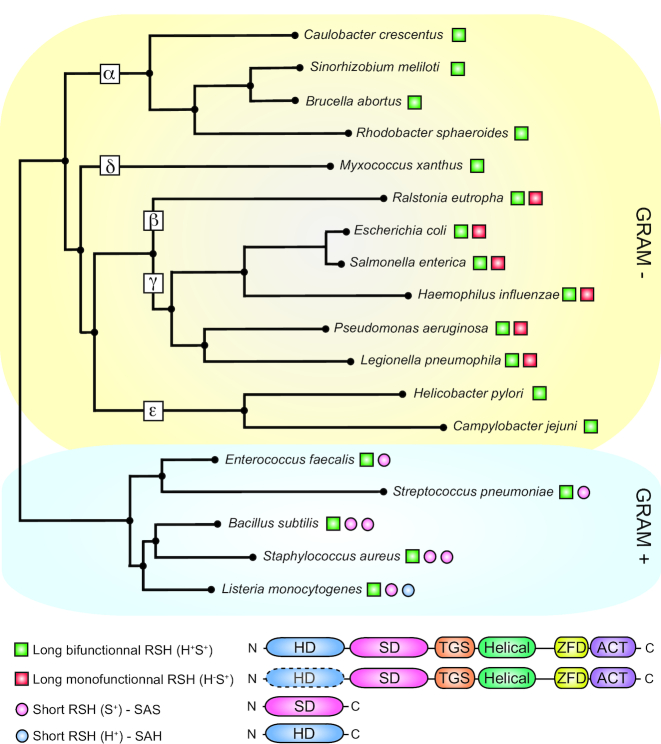
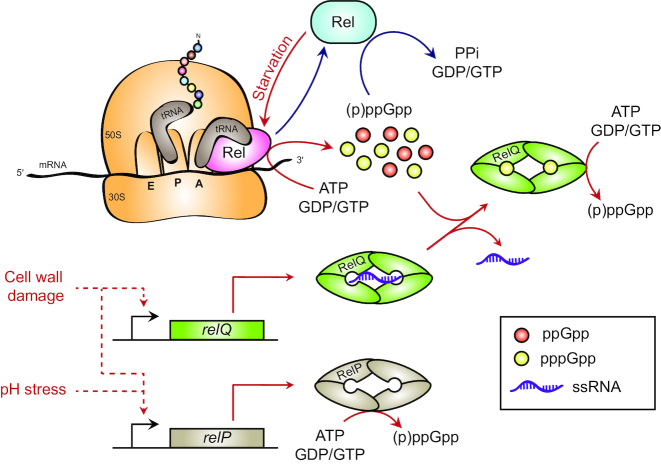
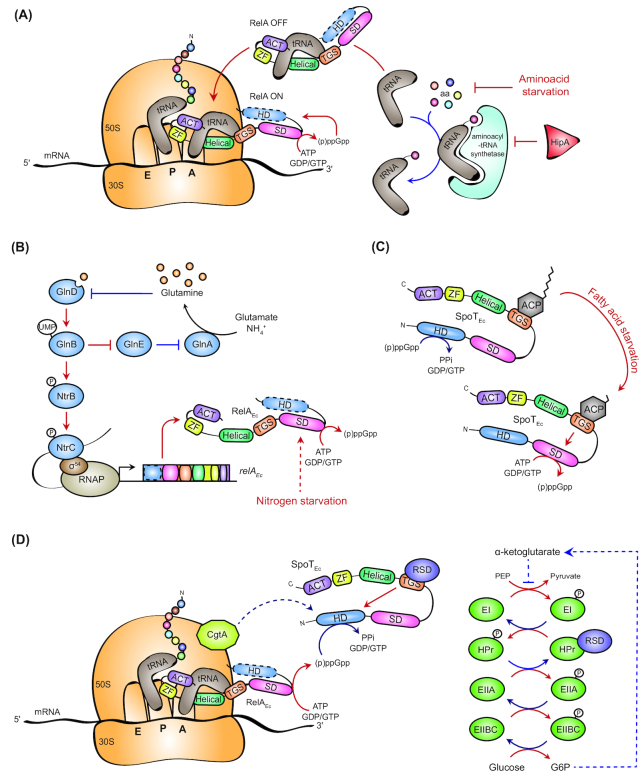
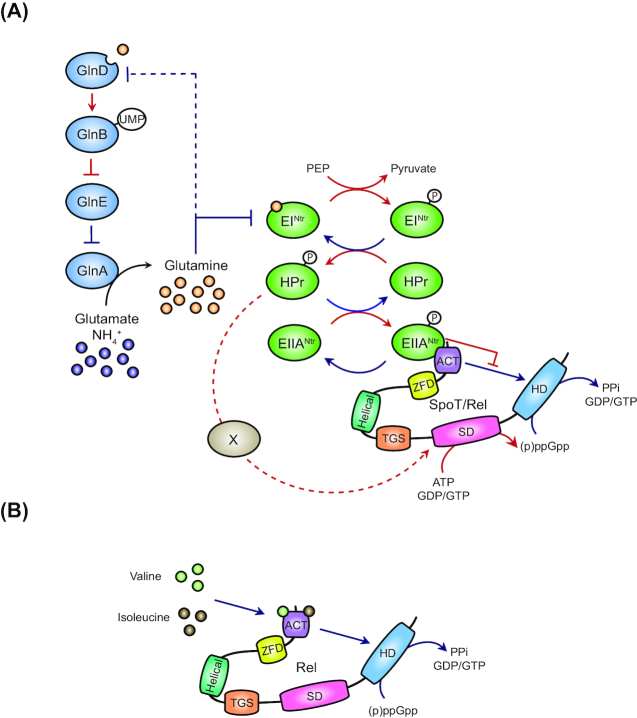
Bacteria use dedicated mechanisms to respond adequately to fluctuating environments and to optimize their chances of survival in harsh conditions. One of the major stress responses used by virtually all bacteria relies on the sharp accumulation of an alarmone, the guanosine penta- or tetra-phosphate commonly referred to as (p)ppGpp. Under stressful conditions, essentially nutrient starvation, these second messengers completely reshape the metabolism and physiology by coordinately modulating growth, transcription, translation and cell cycle. As a central regulator of bacterial stress response, the alarmone is also involved in biofilm formation, virulence, antibiotics tolerance and resistance in many pathogenic bacteria. Intracellular concentrations of (p)ppGpp are determined by a highly conserved and widely distributed family of proteins called RelA-SpoT Homologs (RSH). Recently, several studies uncovering mechanisms that regulate RSH activities have renewed a strong interest in this field. In this review, we outline the diversity of the RSH protein family as well as the molecular devices used by bacteria to integrate and transform environmental cues into intracellular (p)ppGpp levels.
细菌使用专门的机制来充分应对不断变化的环境,并优化其在恶劣条件下生存的机会。几乎所有细菌都依赖于一种主要的应激反应,即警报素(pppGpp)的急剧积累。在应激条件下,特别是营养饥饿时,这些第二信使通过协调调节生长、转录、翻译和细胞周期,彻底重塑代谢和生理学。作为细菌应激反应的中央调节剂,警报素还参与许多病原菌的生物膜形成、毒力、抗生素耐受性和耐药性。(pppGpp)的细胞内浓度由一类高度保守且广泛分布的蛋白家族决定,称为 RelA-SpoT Homologs(RSH)。最近,一些研究揭示了调节 RSH 活性的机制,这使得人们对该领域重新产生了浓厚的兴趣。在这篇综述中,我们概述了 RSH 蛋白家族的多样性,以及细菌用来将环境线索整合并转化为细胞内(pppGpp)水平的分子装置。