• 文献检索
  • 文档翻译
  • 深度研究
  • 学术资讯
  • Suppr Zotero 插件Zotero 插件
  • 邀请有礼
  • 套餐&价格
  • 历史记录
应用&插件
Suppr Zotero 插件Zotero 插件浏览器插件Mac 客户端Windows 客户端微信小程序
定价
高级版会员购买积分包购买API积分包
服务
文献检索文档翻译深度研究API 文档MCP 服务
关于我们
关于 Suppr公司介绍联系我们用户协议隐私条款
关注我们

Suppr 超能文献

核心技术专利:CN118964589B侵权必究
粤ICP备2023148730 号-1Suppr @ 2026

文献检索

告别复杂PubMed语法,用中文像聊天一样搜索,搜遍4000万医学文献。AI智能推荐,让科研检索更轻松。

立即免费搜索

文件翻译

保留排版,准确专业,支持PDF/Word/PPT等文件格式,支持 12+语言互译。

免费翻译文档

深度研究

AI帮你快速写综述,25分钟生成高质量综述,智能提取关键信息,辅助科研写作。

立即免费体验

心理健康类 APP 监管的“烫手山芋”:以澳大利亚政策领域为例的批判性个案研究。

The "Hot Potato" of Mental Health App Regulation: A Critical Case Study of the Australian Policy Arena.

机构信息

Charles Perkins Centre, Faculty of Medicine and Health School of Pharmacy, The University of Sydney, NSW, Sydney, Australia.

NDIS Quality and Safeguards Commission, Penrith, NSW, Australia.

出版信息

Int J Health Policy Manag. 2019 Mar 1;8(3):168-176. doi: 10.15171/ijhpm.2018.117.

DOI:10.15171/ijhpm.2018.117
PMID:30980633
原文链接:https://pmc.ncbi.nlm.nih.gov/articles/PMC6462196/
Abstract

BACKGROUND

Health apps are a booming, yet under-regulated market, with potential consumer harms in privacy and health safety. Regulation of the health app market tends to be siloed, with no single sector holding comprehensive oversight. We sought to explore this phenomenon by critically analysing how the problem of health app regulation is being presented and addressed in the policy arena.

METHODS

We conducted a critical, qualitative case study of regulation of the Australian mental health app market. We purposively sampled influential policies from government, industry and non-profit organisations that provided oversight of app development, distribution or selection for use. We used Bacchi's critical, theoretical approach to policy analysis, analysing policy solutions in relation to the ways the underlying problem was presented and discussed. We analysed the ways that policies characterised key stakeholder groups and the rationale policy authors provided for various mechanisms of health app oversight.

RESULTS

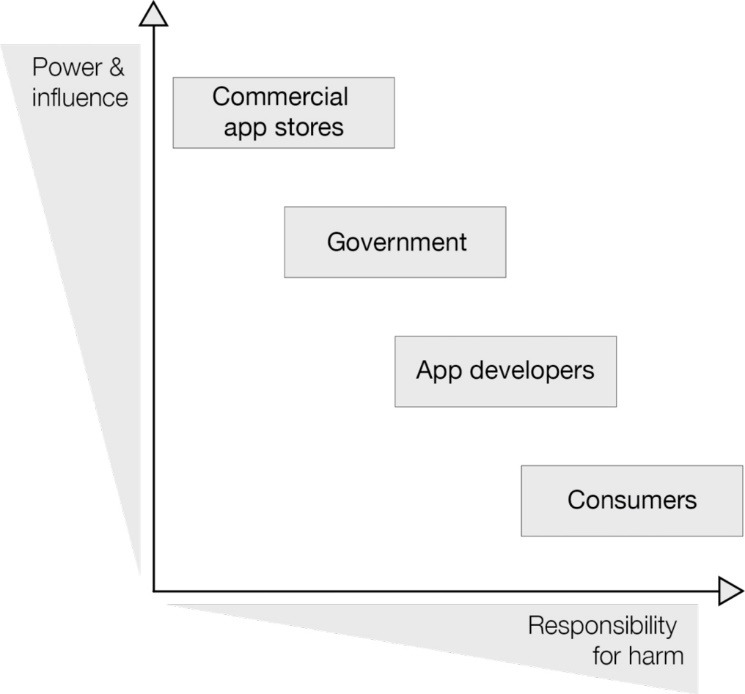
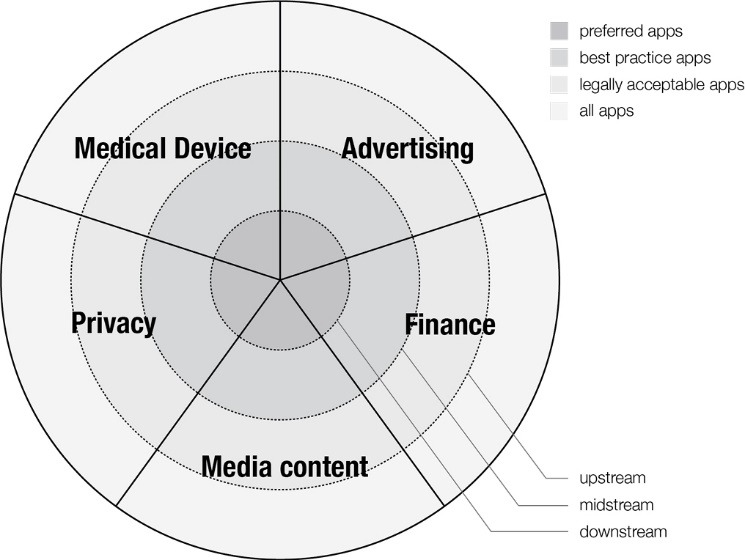
We identified and analysed 29 policies from Australia and beyond, spanning 5 sectors: medical device, privacy, advertising, finance, and digital content. Policy authors predominantly framed the problem as potential loss of commercial reputations and profits, rather than consumer protection. Policy solutions assigned main responsibility for app oversight to the public, with a heavy onus on consumers to select safe and high-quality apps. Commercial actors, including powerful app distributors and commercial third parties were rarely subjects of policy initiatives, despite having considerable power to affect app user outcomes.

CONCLUSION

A stronger regulatory focus on app distributors and commercial partners may improve consumer privacy and safety. Policy-makers in different sectors should work together to develop an overarching regulatory framework for health apps, with a focus on consumer protection.

摘要

背景

健康类应用程序市场蓬勃发展,但监管不足,存在隐私和健康安全方面的潜在消费者危害。健康类应用程序市场的监管往往各自为政,没有任何一个部门能够全面监管。我们试图通过批判性地分析健康类应用程序监管问题在政策领域中的呈现和处理方式来探讨这一现象。

方法

我们对澳大利亚心理健康类应用程序市场的监管进行了批判性的定性案例研究。我们有针对性地选择了来自政府、行业和非营利组织的有影响力的政策,这些政策对应用程序的开发、分发或选择使用进行了监督。我们使用 Bacchi 的批判性政策分析理论方法,根据呈现和讨论潜在问题的方式来分析政策解决方案。我们分析了政策对关键利益相关者群体的特征,以及政策制定者为各种健康类应用程序监督机制提供的理由。

结果

我们从澳大利亚和其他国家确定并分析了 29 项政策,涵盖了 5 个部门:医疗器械、隐私、广告、金融和数字内容。政策制定者主要将问题框架为潜在的商业声誉和利润损失,而不是消费者保护。政策解决方案将应用程序监督的主要责任分配给公众,消费者承担选择安全和高质量应用程序的重任。商业行为者,包括有影响力的应用程序分发商和商业第三方,尽管对应用程序用户的结果有相当大的影响力,但很少成为政策举措的对象。

结论

对应用程序分发商和商业伙伴的监管加强可能会提高消费者的隐私和安全性。不同部门的政策制定者应共同努力,为健康类应用程序制定一个全面的监管框架,重点是保护消费者。
https://cdn.ncbi.nlm.nih.gov/pmc/blobs/b8d1/6462196/ae2a3246b2e2/ijhpm-8-168-g002.jpg
https://cdn.ncbi.nlm.nih.gov/pmc/blobs/b8d1/6462196/76de3bb26ebb/ijhpm-8-168-g001.jpg
https://cdn.ncbi.nlm.nih.gov/pmc/blobs/b8d1/6462196/ae2a3246b2e2/ijhpm-8-168-g002.jpg
https://cdn.ncbi.nlm.nih.gov/pmc/blobs/b8d1/6462196/76de3bb26ebb/ijhpm-8-168-g001.jpg
https://cdn.ncbi.nlm.nih.gov/pmc/blobs/b8d1/6462196/ae2a3246b2e2/ijhpm-8-168-g002.jpg

相似文献

1
The "Hot Potato" of Mental Health App Regulation: A Critical Case Study of the Australian Policy Arena.心理健康类 APP 监管的“烫手山芋”:以澳大利亚政策领域为例的批判性个案研究。
Int J Health Policy Manag. 2019 Mar 1;8(3):168-176. doi: 10.15171/ijhpm.2018.117.
2
A health app developer's guide to law and policy: a multi-sector policy analysis.健康应用程序开发者的法律与政策指南:多部门政策分析
BMC Med Inform Decis Mak. 2017 Oct 2;17(1):141. doi: 10.1186/s12911-017-0535-0.
3
How private is your mental health app data? An empirical study of mental health app privacy policies and practices.你的心理健康应用数据有多隐私?一项关于心理健康应用隐私政策和实践的实证研究。
Int J Law Psychiatry. 2019 May-Jun;64:198-204. doi: 10.1016/j.ijlp.2019.04.002. Epub 2019 Apr 28.
4
The Reviews Are in: A Qualitative Content Analysis of Consumer Perspectives on Apps for Bipolar Disorder.评论如下:关于双相情感障碍应用程序消费者观点的定性内容分析
J Med Internet Res. 2017 Apr 7;19(4):e105. doi: 10.2196/jmir.7273.
5
Smartphone Users' Persuasion Knowledge in the Context of Consumer mHealth Apps: Qualitative Study.智能手机用户在消费者移动医疗应用背景下的说服知识:定性研究。
JMIR Mhealth Uhealth. 2021 Apr 13;9(4):e16518. doi: 10.2196/16518.
6
Data sharing practices of medicines related apps and the mobile ecosystem: traffic, content, and network analysis.药品相关应用程序和移动生态系统的数据共享实践:流量、内容和网络分析。
BMJ. 2019 Mar 20;364:l920. doi: 10.1136/bmj.l920.
7
Assessment of the Data Sharing and Privacy Practices of Smartphone Apps for Depression and Smoking Cessation.智能手机应用程序在抑郁症和戒烟领域的数据共享和隐私实践评估。
JAMA Netw Open. 2019 Apr 5;2(4):e192542. doi: 10.1001/jamanetworkopen.2019.2542.
8
Mobile health and privacy: cross sectional study.移动健康与隐私:横断面研究
BMJ. 2021 Jun 16;373:n1248. doi: 10.1136/bmj.n1248.
9
Tracing the Potential Flow of Consumer Data: A Network Analysis of Prominent Health and Fitness Apps.追踪消费者数据的潜在流动:对知名健康与健身应用程序的网络分析
J Med Internet Res. 2017 Jun 28;19(6):e233. doi: 10.2196/jmir.7347.
10
Multipurpose Mobile Apps for Mental Health in Chinese App Stores: Content Analysis and Quality Evaluation.中文应用商店中用于心理健康的多用途移动应用程序:内容分析和质量评估。
JMIR Mhealth Uhealth. 2022 Jan 4;10(1):e34054. doi: 10.2196/34054.

引用本文的文献

1
Persian adaptation and validation of the user version of The Mobile Application Rating Scale (uMARS).《移动应用评分量表》(uMARS)用户版的波斯语改编与验证。
PLoS One. 2025 Apr 2;20(4):e0320349. doi: 10.1371/journal.pone.0320349. eCollection 2025.
2
Pregnancy mobile app use: A survey of health information practices and quality awareness among pregnant women in Australia.孕妇使用移动应用程序:澳大利亚孕妇健康信息实践和质量意识调查。
Womens Health (Lond). 2024 Jan-Dec;20:17455057241281236. doi: 10.1177/17455057241281236.
3
Interdisciplinary perspectives on digital technologies for global mental health.

本文引用的文献

1
Current Regulation of Mobile Mental Health Applications.移动心理健康应用程序的现行监管
J Am Acad Psychiatry Law. 2018 Jun;46(2):204-211. doi: 10.29158/JAAPL.003748-18.
2
FDA Regulation of Mobile Medical Apps.美国食品药品监督管理局对移动医疗应用程序的监管
JAMA. 2018 Jul 24;320(4):337-338. doi: 10.1001/jama.2018.8832.
3
U.S. Food and Drug Administration Precertification Pilot Program for Digital Health Software: Weighing the Benefits and Risks.美国食品和药物管理局数字健康软件预认证试点计划:权衡利弊。
关于全球精神卫生数字技术的跨学科视角。
PLOS Glob Public Health. 2024 Feb 5;4(2):e0002867. doi: 10.1371/journal.pgph.0002867. eCollection 2024.
4
Assessing the Content and Quality of Digital Tools for Managing Gestational Weight Gain: Systematic Search and Evaluation.评估用于管理妊娠期体重增加的数字工具的内容和质量:系统搜索和评估。
J Med Internet Res. 2022 Nov 25;24(11):e37552. doi: 10.2196/37552.
5
Time to Have Effective Regulation of the Mental Health Apps Market: Maximize Gains and Minimize Harms.是时候对心理健康应用程序市场进行有效监管了:实现收益最大化和危害最小化。
Indian J Psychol Med. 2022 Jul;44(4):399-404. doi: 10.1177/02537176221082902. Epub 2022 May 8.
6
Ethical and regulatory implications of the COVID-19 pandemic for the medical devices industry and its representatives.新冠疫情对医疗器械行业及其代表的伦理和监管影响。
BMC Med Ethics. 2022 Mar 23;23(1):31. doi: 10.1186/s12910-022-00771-2.
7
Mobile phone-based interventions for mental health: A systematic meta-review of 14 meta-analyses of randomized controlled trials.基于手机的心理健康干预措施:对14项随机对照试验的荟萃分析进行的系统元综述。
PLOS Digit Health. 2022;1(1). doi: 10.1371/journal.pdig.0000002. Epub 2022 Jan 18.
8
Spanish adaptation and validation of the User Version of the Mobile Application Rating Scale (uMARS).用户版移动应用评定量表(uMARS)的西班牙语适应性和验证。
J Am Med Inform Assoc. 2021 Nov 25;28(12):2681-2686. doi: 10.1093/jamia/ocab216.
9
Text4Support Mobile-Based Programming for Individuals Accessing Addictions and Mental Health Services-Retroactive Program Analysis at Baseline, 12 Weeks, and 6 Months.文本4:为使用成瘾和心理健康服务的个人提供基于移动设备的编程——在基线、12周和6个月时的追溯性项目分析。
Front Psychiatry. 2021 May 28;12:640795. doi: 10.3389/fpsyt.2021.640795. eCollection 2021.
10
Framework for the Design Engineering and Clinical Implementation and Evaluation of mHealth Apps for Sleep Disturbance: Systematic Review.用于睡眠障碍的移动医疗应用程序的设计工程和临床实施及评估的框架:系统评价。
J Med Internet Res. 2021 Feb 17;23(2):e24607. doi: 10.2196/24607.
Ann Intern Med. 2018 May 15;168(10):730-732. doi: 10.7326/M17-2715. Epub 2018 Apr 10.
4
Needed Innovation in Digital Health and Smartphone Applications for Mental Health: Transparency and Trust.数字健康和心理健康智能手机应用所需的创新:透明度与信任。
JAMA Psychiatry. 2017 May 1;74(5):437-438. doi: 10.1001/jamapsychiatry.2017.0262.
5
Web-Based and Mobile Suicide Prevention Interventions for Young People: A Systematic Review.针对年轻人的基于网络和移动设备的自杀预防干预措施:一项系统综述。
J Can Acad Child Adolesc Psychiatry. 2016 Spring;25(2):73-9. Epub 2016 May 1.
6
A Systematic, Multi-domain Review of Mobile Smartphone Apps for Evidence-Based Stress Management.一项关于基于证据的压力管理的移动智能手机应用程序的系统多领域综述。
Am J Prev Med. 2016 Jul;51(1):95-105. doi: 10.1016/j.amepre.2016.01.026. Epub 2016 Mar 15.
7
Smartphone Apps for Schizophrenia: A Systematic Review.智能手机应用程序治疗精神分裂症:系统评价。
JMIR Mhealth Uhealth. 2015 Nov 6;3(4):e102. doi: 10.2196/mhealth.4930.
8
Unaddressed privacy risks in accredited health and wellness apps: a cross-sectional systematic assessment.经认证的健康与健身应用中未解决的隐私风险:一项横断面系统评估。
BMC Med. 2015 Sep 7;13:214. doi: 10.1186/s12916-015-0444-y.
9
Technological innovations in mental healthcare: harnessing the digital revolution.精神健康保健领域的技术创新:利用数字革命。
Br J Psychiatry. 2015 Apr;206(4):263-5. doi: 10.1192/bjp.bp.113.142612.
10
Finding a depression app: a review and content analysis of the depression app marketplace.寻找抑郁应用程序:抑郁应用程序市场的回顾与内容分析。
JMIR Mhealth Uhealth. 2015 Feb 16;3(1):e16. doi: 10.2196/mhealth.3713.