Shah Nishel M, Lai Pei F, Imami Nesrina, Johnson Mark R
Department of Surgery and Cancer, Chelsea and Westminster Hospital, Imperial College London, London, United Kingdom.
Department of Medicine, Chelsea and Westminster Hospital, Imperial College London, London, United Kingdom.
Front Endocrinol (Lausanne). 2019 Mar 29;10:198. doi: 10.3389/fendo.2019.00198. eCollection 2019.
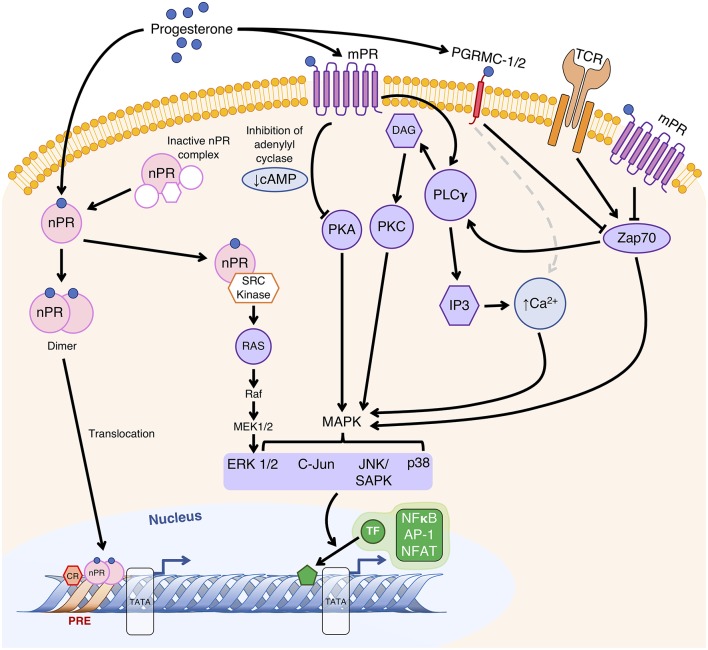
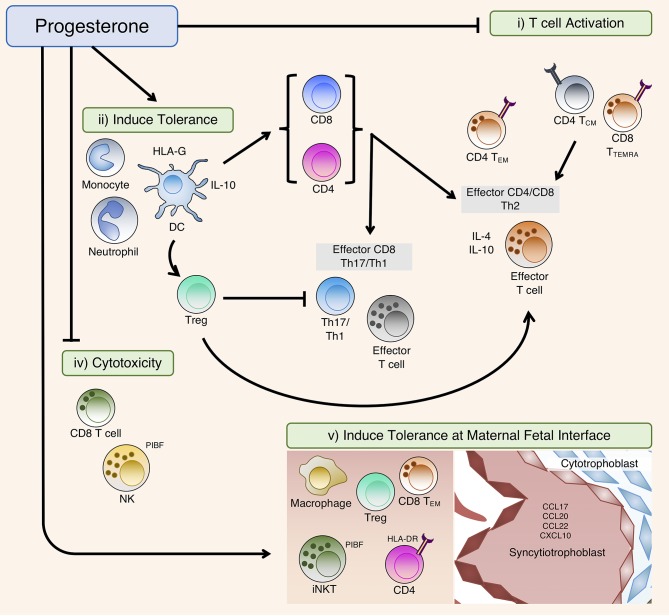
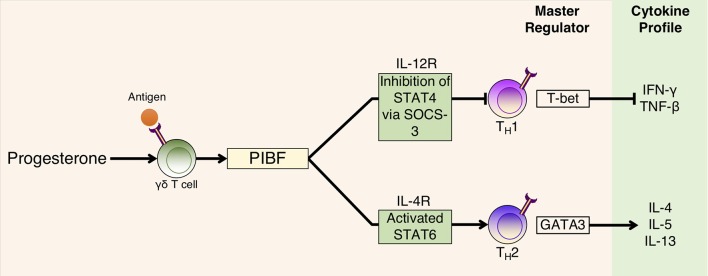
Pregnancy involves a complex interplay between maternal neuroendocrine and immunological systems in order to establish and sustain a growing fetus. It is thought that the uterus at pregnancy transitions from quiescent to laboring state in response to interactions between maternal and fetal systems at least partly altered neuroendocrine signaling. Progesterone (P4) is a vital hormone in maternal reproductive tissues and immune cells during pregnancy. As such, P4 is widely used in clinical interventions to improve the chance of embryo implantation, as well as reduce the risk of miscarriage and premature labor. Here we review research to date that focus on the pathways through which P4 mediates its actions on both the maternal reproductive and immune system. We will dissect the role of P4 as a modulator of inflammation, both systemic and intrinsic to the uterus, during human pregnancy and labor.
怀孕涉及母体神经内分泌系统和免疫系统之间复杂的相互作用,以建立和维持胎儿的生长发育。据认为,孕期子宫会从静止状态转变为分娩状态,这至少部分是由于母体和胎儿系统之间的相互作用改变了神经内分泌信号。孕酮(P4)是孕期母体生殖组织和免疫细胞中的一种重要激素。因此,P4被广泛用于临床干预,以提高胚胎着床的几率,以及降低流产和早产的风险。在此,我们回顾了迄今为止聚焦于P4介导其对母体生殖和免疫系统作用的途径的研究。我们将剖析P4在人类怀孕和分娩期间作为全身及子宫内炎症调节剂的作用。