Call Jerry W, Wang Yu, Montoya Denisse, Scherzer Norman J, Heinrich Michael C
1Life Raft Group, 155 Route 46 West, Suite 202, Wayne, NJ 07470 USA.
2Portland VA Health Care System and Knight Cancer Institute, Oregon Health & Science University, Portland, OR USA.
Clin Sarcoma Res. 2019 Apr 2;9:4. doi: 10.1186/s13569-019-0114-5. eCollection 2019.
The use of imatinib, sunitinib, and regorafenib has transformed the treatment of advanced GIST. Sunitinib and regorafenib improve progression free-survival in the second (2L) and third (3L) line, respectively, compared with placebo. However, the impact of these agents on overall survival (OS) is unclear.
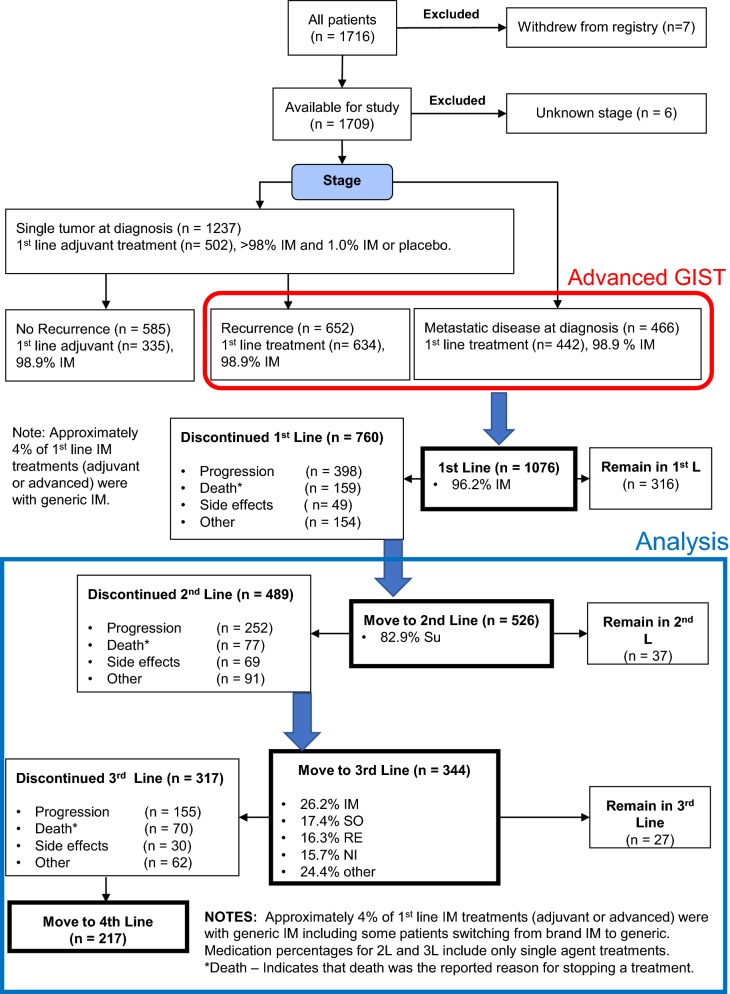
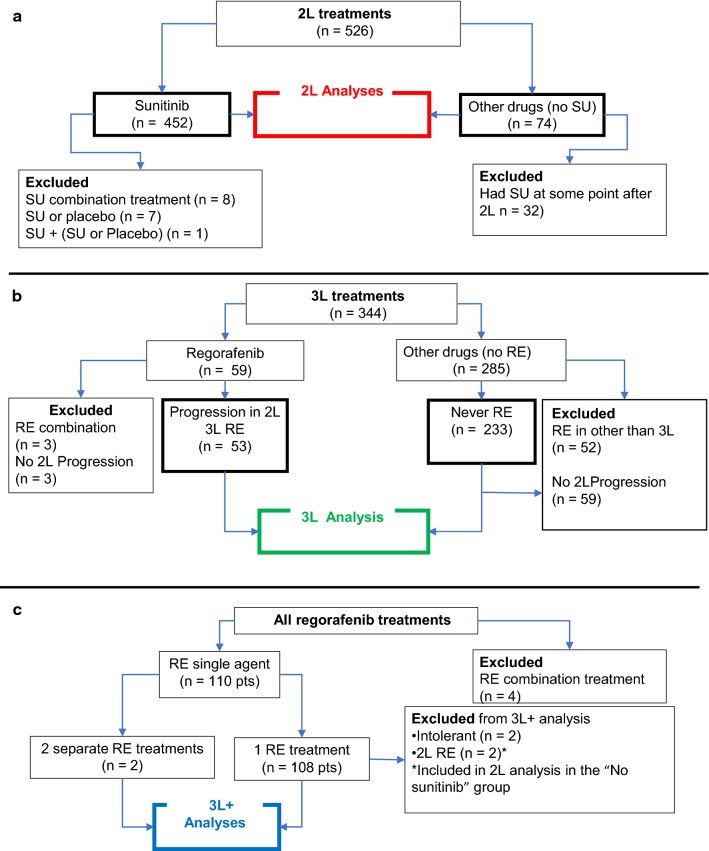
The Life Raft Group (LRG) patient registry contains records from 1716 GIST patients; 526 have advanced to at least 2L treatment. Patient-reported treatment and outcome data were examined to determine treatment patterns and their impact on OS.
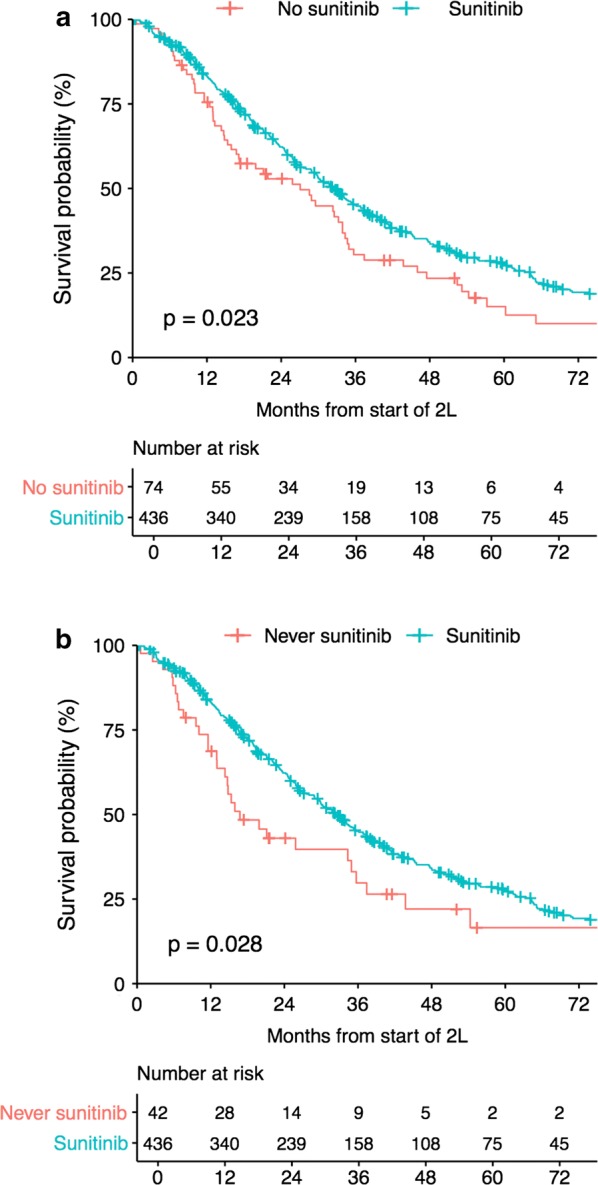
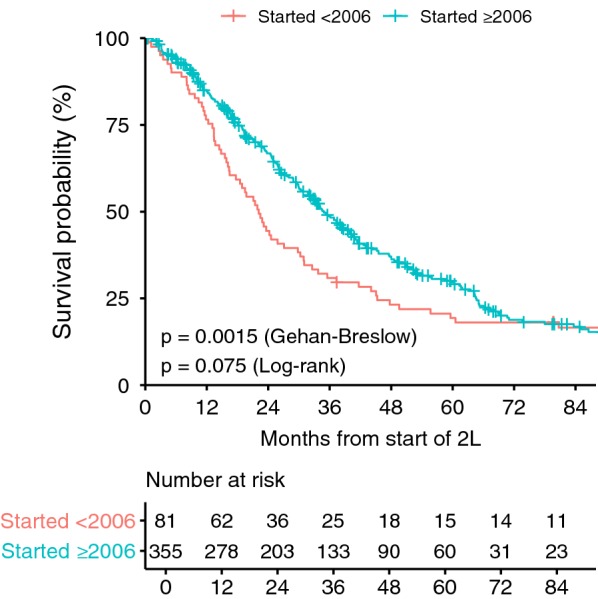
Median OS from start of 2L therapy was 32.4 months for sunitinib (n = 436) compared with 27.1 months for patients treated with any other 2L drug (n = 74, = 0.023, HR 1.377) and 16.8 months for patients who never received sunitinib in any treatment line (n = 42, = 0.028, HR 1.52). In patients reporting progression in 2L, the median OS in patients subsequently receiving 3L regorafenib (n = 53, 26.2 months) was longer than that of 3L patients who never received regorafenib in any line of therapy (n = 174, 14.3 months, = 0.0002, HR 2.231), and was longer than that of patients who received any other 3L treatment (19.8 months, = 0.044, HR 1.525). OS for advanced GIST patients in the LRG registry has improved over time ( = 0.0013), correlated with the increased use of TKIs in ≥ 2L settings.
In our analysis, sunitinib and regorafenib significantly improved OS compared with patients who never received these agents. Our data also support the hypothesis that the use of KIT/PDGFRA inhibitors, including non-approved agents, has improved OS for patients with imatinib- and sunitinib-resistant GIST.
伊马替尼、舒尼替尼和瑞戈非尼的应用改变了晚期胃肠间质瘤(GIST)的治疗方式。与安慰剂相比,舒尼替尼和瑞戈非尼分别改善了二线(2L)和三线(3L)治疗的无进展生存期。然而,这些药物对总生存期(OS)的影响尚不清楚。
生命筏研究组(LRG)患者登记库包含1716例GIST患者的记录;其中526例已进展至至少二线治疗。对患者报告的治疗及转归数据进行分析,以确定治疗模式及其对总生存期的影响。
舒尼替尼治疗组(n = 436)自二线治疗开始的中位总生存期为32.4个月,而接受其他二线药物治疗的患者(n = 74)为27.1个月(P = 0.023,HR 1.377),在任何治疗线中均未接受舒尼替尼治疗的患者为16.8个月(n = 42,P = 0.028,HR 1.52)。在报告二线治疗进展的患者中,后续接受三线瑞戈非尼治疗的患者(n = 53,中位总生存期26.2个月)的总生存期长于在任何治疗线中均未接受瑞戈非尼治疗的三线患者(n = 174,14.3个月,P = 0.0002,HR 2.231),且长于接受其他三线治疗的患者(19.8个月,P = 0.044,HR 1.525)。LRG登记库中晚期GIST患者的总生存期随时间推移有所改善(P = 0.0013),这与在≥二线治疗中酪氨酸激酶抑制剂(TKIs)使用增加相关。
在我们的分析中,与从未接受过这些药物治疗的患者相比,舒尼替尼和瑞戈非尼显著改善了总生存期。我们的数据还支持以下假设:使用KIT/PDGFRA抑制剂,包括未获批药物,改善了伊马替尼和舒尼替尼耐药GIST患者的总生存期。