Beijing Key Laboratory for Drug Resistant Tuberculosis Research, Beijing Tuberculosis and Thoracic Tumor Research Institute, Beijing Chest Hospital, Capital Medical University, Beijing, China.
Front Cell Infect Microbiol. 2019 Mar 28;9:65. doi: 10.3389/fcimb.2019.00065. eCollection 2019.
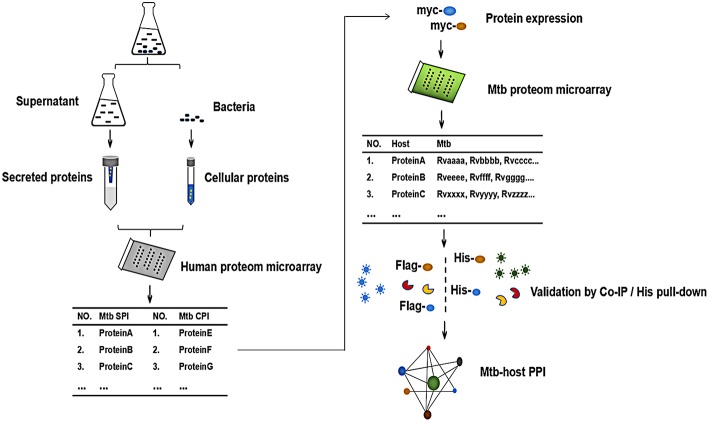
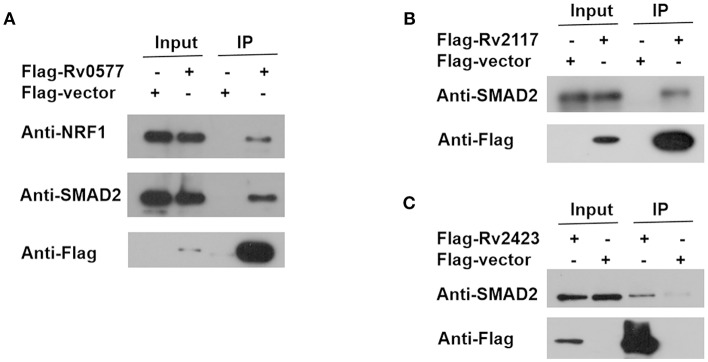
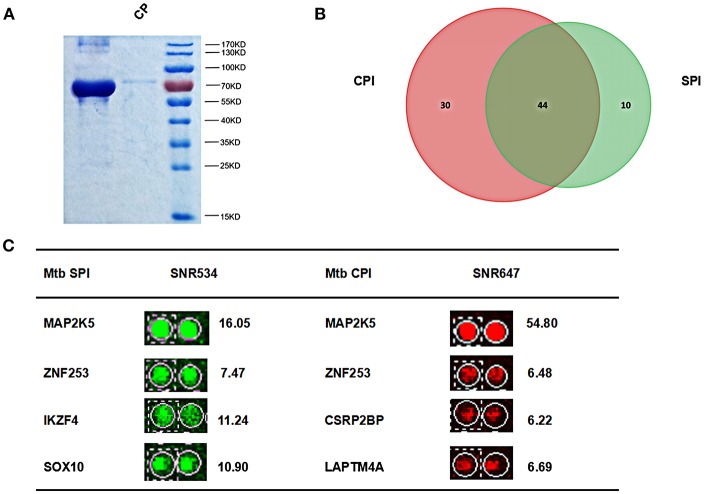
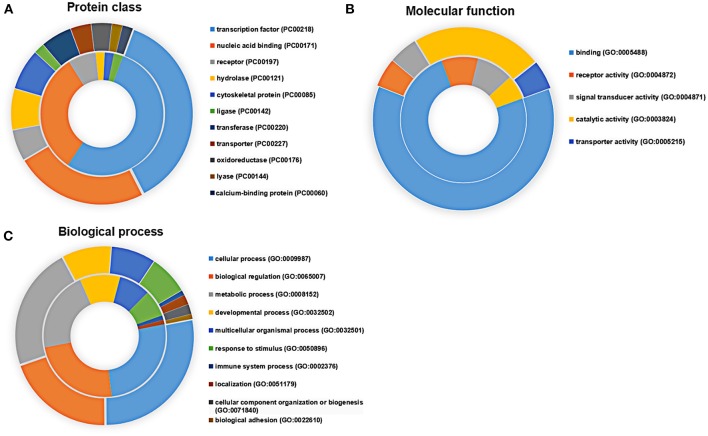
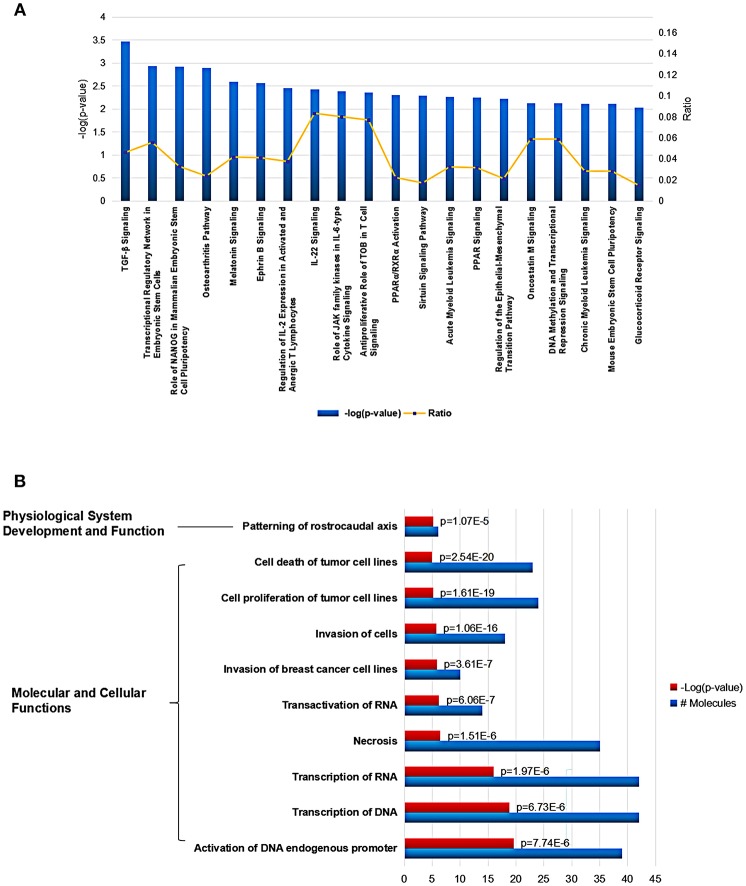
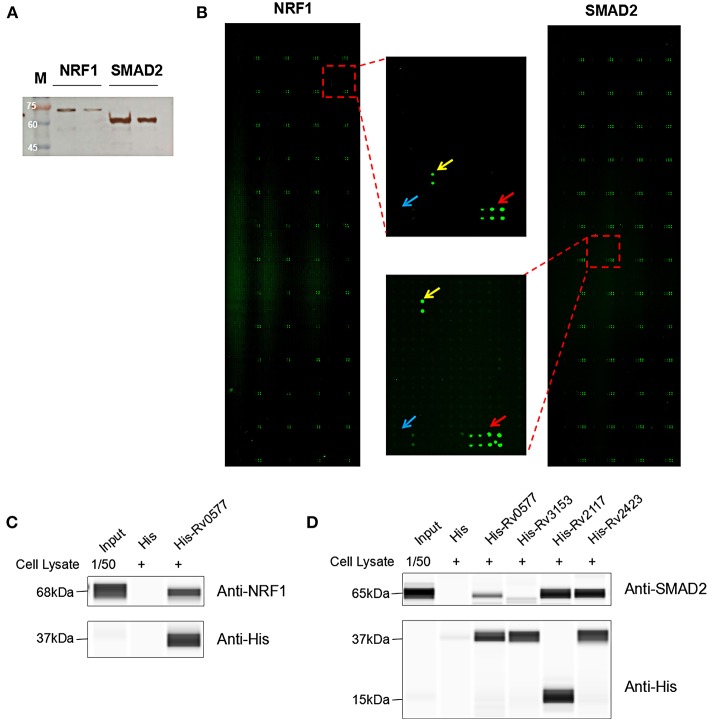
Tuberculosis (TB) is still a serious threat to human health which is caused by mycobacterium tuberculosis (). The main reason for failure to eliminate TB is lack of clearly understanding the molecular mechanism of pathogenesis. Determining human -interacting proteins enables us to characterize the mechanism and identify potential molecular targets for TB diagnosis and treatment. However, experimentally systematic interactors are not readily available. In this study, we performed an unbiased, comprehensive two-way proteome microarray based approach to systematically screen global human interactors and determine the binding partners of effectors. Our results, for the first time, screened 84 potential human interactors. Bioinformatic analysis further highlighted these protein candidates might engage in a wide range of cellular functions such as activation of DNA endogenous promoters, transcription of DNA/RNA and necrosis, as well as immune-related signaling pathways. Then, using proteome microarray followed His tagged pull-down assay and Co-IP, we identified one interacting partner (Rv0577) for the protein candidate NRF1 and three binding partners (Rv0577, Rv2117, Rv2423) for SMAD2, respectively. This study gives new insights into the profile of global interactors potentially involved in pathogenesis and demonstrates a powerful strategy in the discovery of effectors.
结核病(TB)仍然是人类健康的严重威胁,由结核分枝杆菌()引起。未能消除结核病的主要原因是缺乏对发病机制的分子机制的明确认识。确定人类相互作用蛋白使我们能够描述机制并确定用于结核病诊断和治疗的潜在分子靶标。然而,实验性系统相互作用蛋白不易获得。在这项研究中,我们进行了一项无偏见的、全面的双向蛋白质组微阵列方法,以系统地筛选全球人类相互作用蛋白并确定效应蛋白的结合伴侣。我们的结果首次筛选出 84 个潜在的人类相互作用蛋白。生物信息学分析进一步强调,这些蛋白质候选物可能参与广泛的细胞功能,如激活内源性 DNA 启动子、DNA/RNA 转录和坏死以及免疫相关信号通路。然后,我们使用蛋白质组微阵列、His 标记的下拉实验和 Co-IP,分别鉴定出蛋白候选物 NRF1 的一个相互作用伴侣(Rv0577)和 SMAD2 的三个结合伴侣(Rv0577、Rv2117、Rv2423)。这项研究深入了解了全球相互作用蛋白在发病机制中潜在的作用,展示了一种发现效应蛋白的强大策略。