Demler Olga V, Paynter Nina P, Cook Nancy R
Division of Preventive Medicine, Brigham and Women's Hospital, 900 Commonwealth Ave, Brookline MA 02115, (617) 278-0861,
Division of Preventive Medicine, Brigham and Women's Hospital, 900 Commonwealth Ave, Brookline MA 02115, (617) 278-0798,
Diagn Progn Res. 2018;2. doi: 10.1186/s41512-018-0034-5. Epub 2018 Jul 26.
The risk reclassification table assesses clinical performance of a biomarker in terms of movements across relevant risk categories. The Reclassification-Calibration (RC) statistic has been developed for binary outcomes, but its performance for survival data with moderate to high censoring rates has not been evaluated.
We develop an RC statistic for survival data with higher censoring rates using the Greenwood-Nam-D'Agostino approach (RC-GND). We examine its performance characteristics and compare its performance and utility to the Hosmer-Lemeshow goodness-of-fit test under various assumptions about the censoring rate and the shape of the baseline hazard.
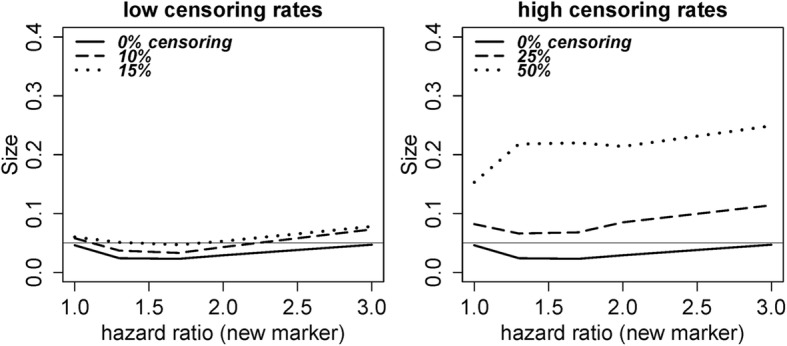
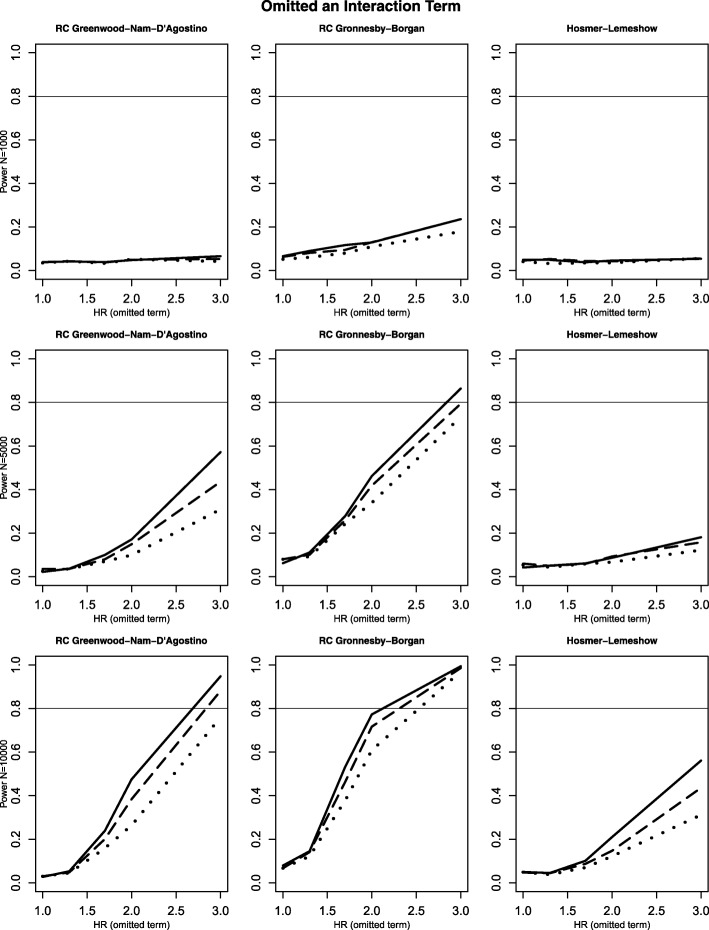
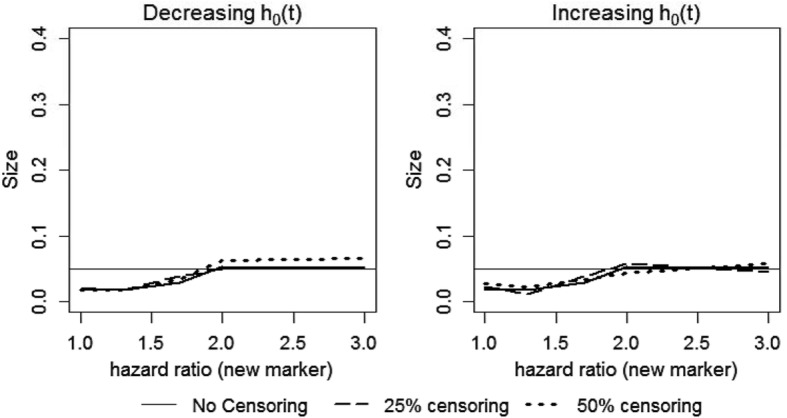
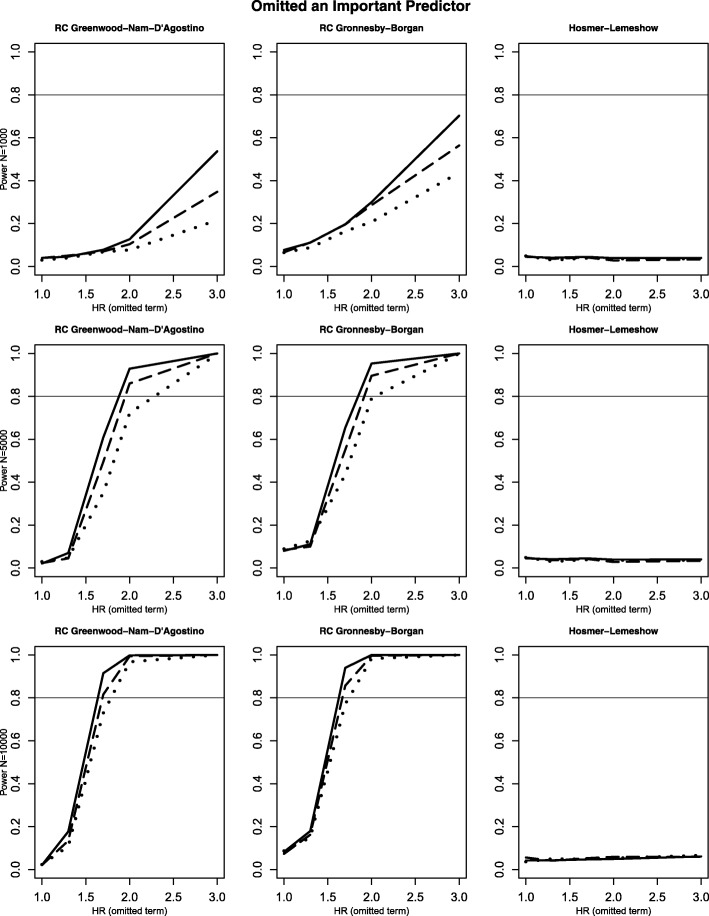
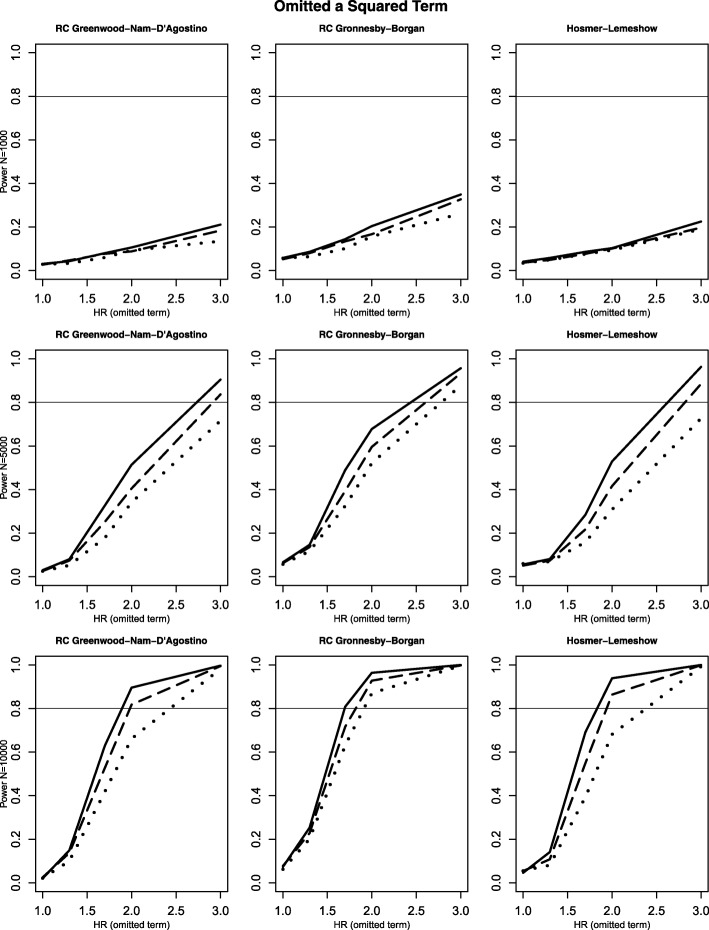
The RC-GND test was robust to high (up to 50%) censoring rates and did not exceed the targeted 5% Type I error in a variety of simulated scenarios. It achieved 80% power to detect better calibration with respect to clinical categories when an important predictor with a hazard ratio of at least 1.7 to 2.2 was added to the model, while the Hosmer-Lemeshow goodness of fit (gof) test had power of 5% in this scenario.
The RC-GND test should be used to test the improvement in calibration with respect to clinically-relevant risk strata. When an important predictor is omitted, the Hosmer-Lemeshow goodness-of-fit test is usually not significant, while the RC-GND test is sensitive to such an omission.
风险重新分类表根据相关风险类别间的变动来评估生物标志物的临床性能。重新分类-校准(RC)统计量已针对二元结局开发,但尚未评估其在截尾率为中度至高的生存数据中的性能。
我们使用格林伍德-南-达戈斯蒂诺方法(RC-GND)为截尾率较高的生存数据开发了一种RC统计量。我们研究了其性能特征,并在关于截尾率和基线风险形状的各种假设下,将其性能和效用与霍斯默-莱梅肖拟合优度检验进行比较。
RC-GND检验对高(高达50%)截尾率具有稳健性,并且在各种模拟场景中均未超过目标5%的I型错误率。当模型中加入一个风险比至少为1.7至2.2的重要预测变量时,它检测临床类别校准改善的功效达到80%,而在此场景中霍斯默-莱梅肖拟合优度(gof)检验的功效为5%。
RC-GND检验应用于检验与临床相关风险分层相关的校准改善情况。当遗漏一个重要预测变量时,霍斯默-莱梅肖拟合优度检验通常不显著,而RC-GND检验对这种遗漏很敏感。