Karm Myong-Hwan, Yoon Syn-Hae, Seo Dong-Kyun, Lee Sookyung, Lee Yongsoo, Cho Seong-Sik, Choi Seong-Soo
Department of Dental Anesthesiology, Seoul National University Dental Hospital.
Department of Anesthesiology and Pain Medicine, National Police Hospital.
Medicine (Baltimore). 2019 Apr;98(15):e15114. doi: 10.1097/MD.0000000000015114.
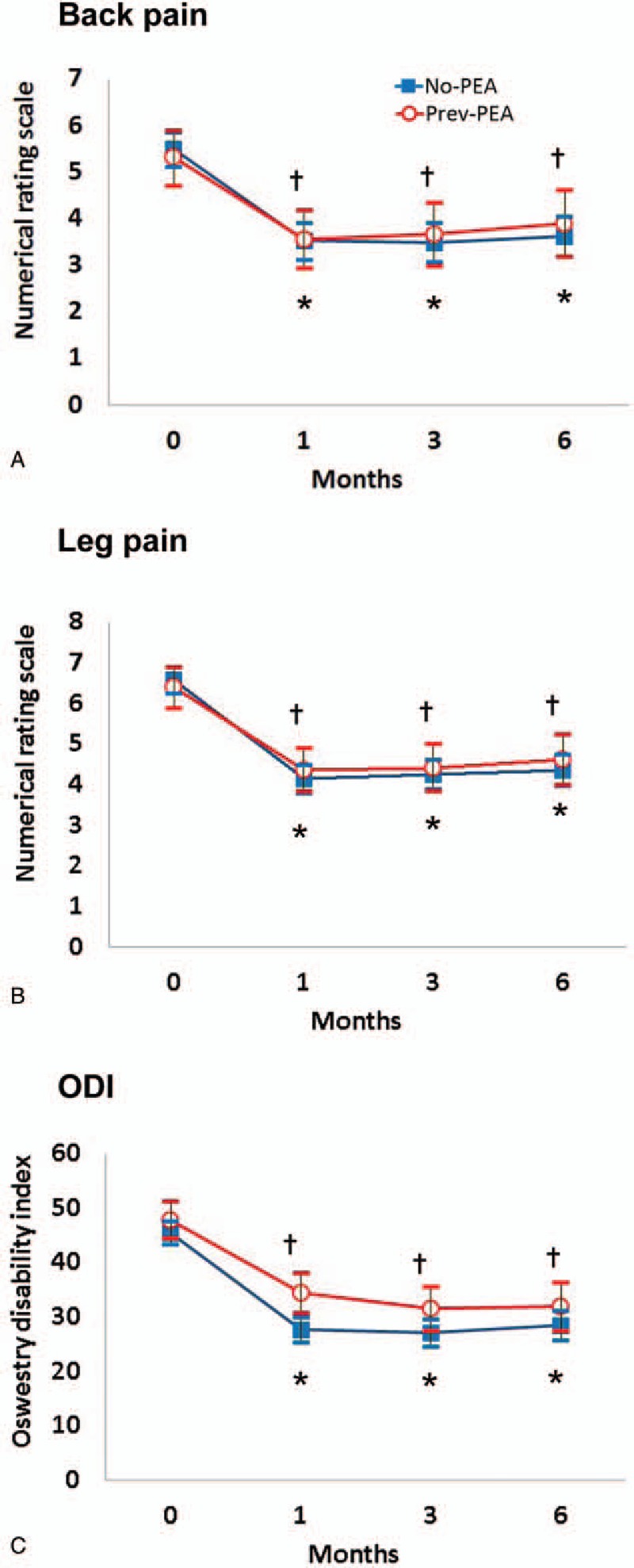
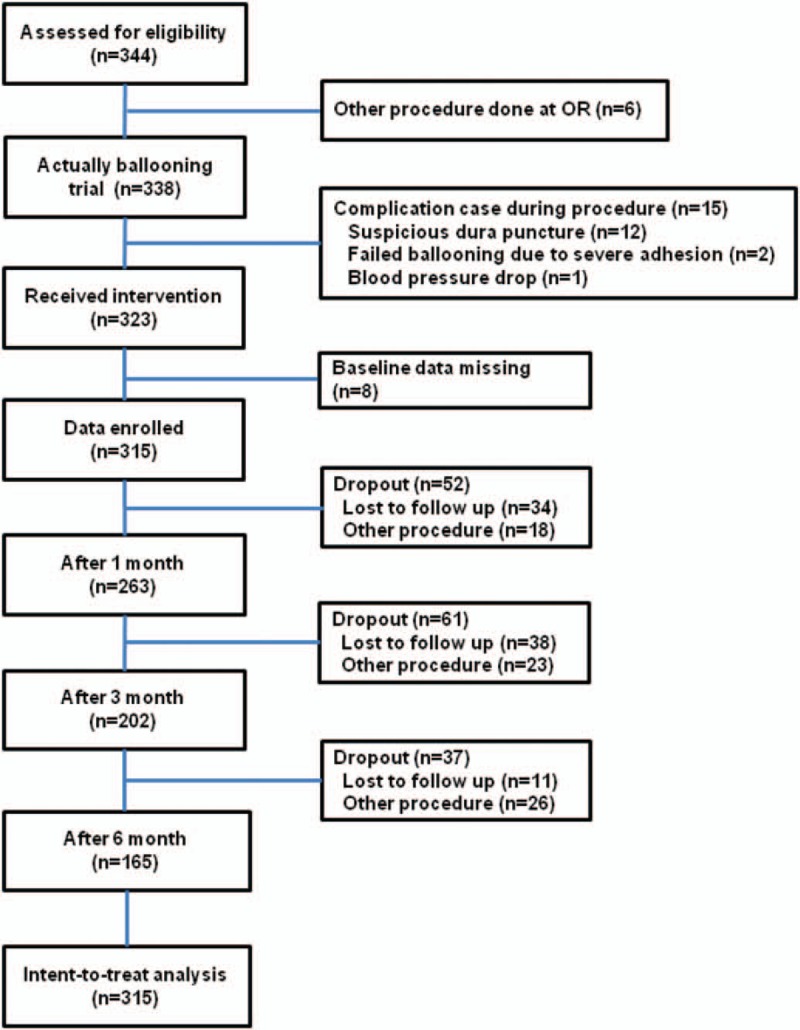
Moderate evidence exists regarding percutaneous epidural adhesiolysis (PEA) being an effective treatment for lumbar spinal stenosis (LSS). Although PEA is successfully performed using balloon-less epidural catheters, many patients with severe adhesions cannot obtain satisfactory results. Combined treatment with balloon-inflatable catheters for PEA and balloon decompression recently demonstrated sufficient pain relief and functional improvement in patients with intractable LSS. We compared the effects of PEA and balloon decompression in patients with intractable LSS who did not undergo PEA and those who were unresponsive to previous PEA with a balloon-less catheter.We examined 315 patients who underwent PEA and balloon decompression with balloon-inflatable catheters. Patients with intractable LSS were divided into those without previous PEA (No-PEA) and those unresponsive to previous PEA using balloon-less catheters (Prev-PEA). The numeric rating scale, Oswestry disability index, and global perceived effect of satisfaction scale were measured at 0, 1, 3, and 6 months after the intervention. Responder analysis was performed based on changes in measured scales and indices.A successful treatment response was observed at 1, 3, and 6 months after the intervention in 56.4%, 42.7%, and 32.9%, respectively, of the No-PEA group and in 48.9%, 37.8%, and 25.6%, respectively, of the Prev-PEA group. No significant between-group differences were detected. Pain intensities and functional status improved and were maintained throughout follow-up after PEA with balloon decompression using balloon-inflatable catheters.This modality may represent a useful alternative to overcome the limitations of preexisting adhesiolysis procedures.
关于经皮硬膜外粘连松解术(PEA)作为腰椎管狭窄症(LSS)的有效治疗方法,有中等证据支持。尽管使用无球囊硬膜外导管成功实施了PEA,但许多粘连严重的患者仍无法获得满意的效果。最近,用于PEA的可充气球囊导管与球囊减压联合治疗在难治性LSS患者中显示出足够的疼痛缓解和功能改善。我们比较了PEA和球囊减压对未接受PEA的难治性LSS患者以及对先前使用无球囊导管的PEA无反应的患者的效果。我们检查了315例行可充气球囊导管PEA和球囊减压的患者。难治性LSS患者分为未接受过先前PEA的患者(未行PEA组)和对先前使用无球囊导管的PEA无反应的患者(先前PEA组)。在干预后0、1、3和6个月测量数字评定量表、Oswestry功能障碍指数和总体满意度量表。根据测量量表和指标的变化进行反应者分析。在干预后1、3和6个月,未行PEA组分别有56.4%、42.7%和32.9%的患者观察到成功的治疗反应,先前PEA组分别有48.9%、37.8%和25.6%的患者观察到成功的治疗反应。未检测到组间显著差异。使用可充气球囊导管进行PEA并球囊减压后,疼痛强度和功能状态得到改善,并在整个随访期间得以维持。这种方法可能是克服现有粘连松解手术局限性的一种有用替代方法。