Cao Hui-Juan, Liang Shi-Bing, Zhou Wei, Wu Jia-Rui, Zhang Cheng-Liang
Centre for Evidence-Based Chinese Medicine, Beijing University of Chinese Medicine, Beijing.
Shanxi University of Chinese Medicine, Taiyuan, Shanxi Province.
Medicine (Baltimore). 2019 Apr;98(15):e15181. doi: 10.1097/MD.0000000000015181.
To systematically evaluate the effect and safety of Xing Nao Jing (XNJ) injection as an add-on treatment on the treatment for viral encephalitis (VE).
Trials assessing the adjunctive effectiveness of XNJ injection for VE were searched from 4 electronic databases from inception to October 31, 2018. Two authors independently extracted data and assessed risk of bias. Statistical analyses were performed using RevMan 5.3 software. Meta-analysis and additional analysis were conducted if data permitted. Trial Sequential Analysis and Grading of Recommendations Assessment, Development and Evaluation (GRADE) were also performed.
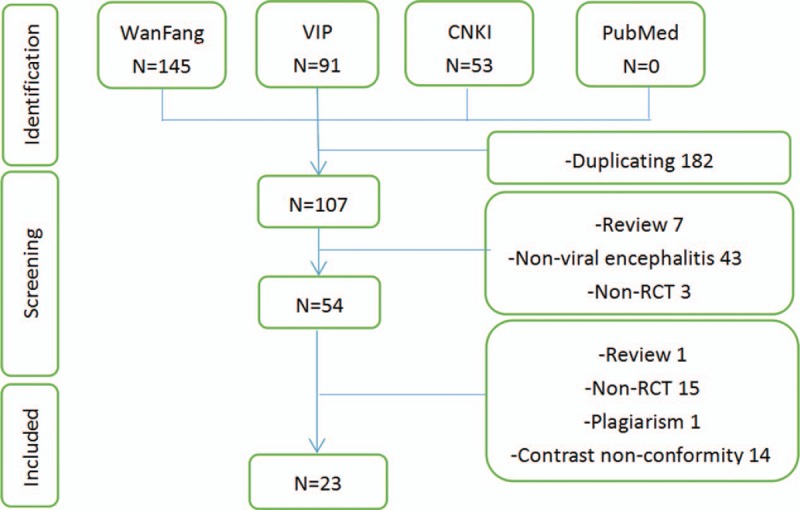
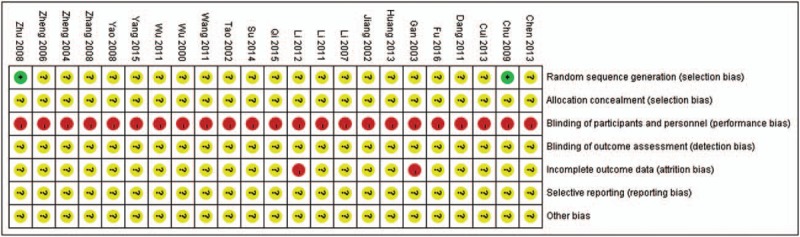
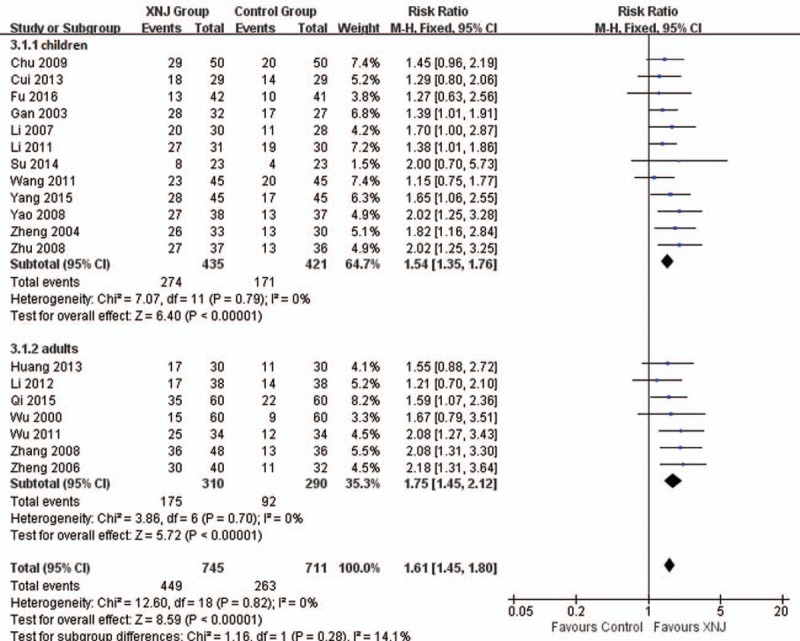
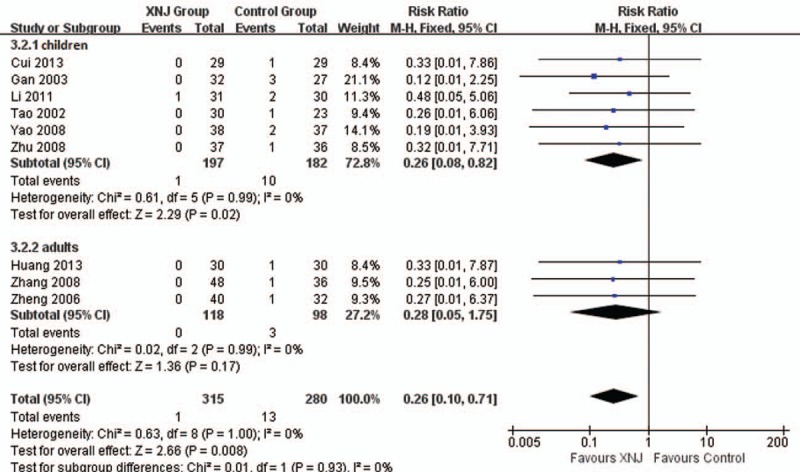
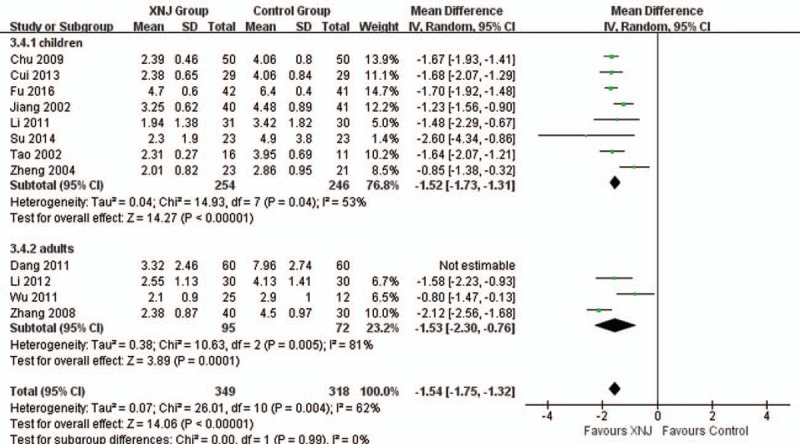
This review involved 23 trials and 1757 participants, all trials were assessed as having unclear risk of bias. Results from 5 meta-analyses, 13 subgroup meta-analyses, and the single studies showed that based on conventional therapy XNJ injection (0.4-0.6 mL/kg daily for children, 20 mL/day for adults) may have better effect on increasing the numbers of cured patients and decreasing the time of recovery of main symptoms for patients with viral encephalitis. Patients used combination of XNJ injection and conventional therapy had higher cured rate (risk ratio 1.61, 95% confidence interval 1.45-1.80, 19 trials, 1456 participants) and less mortality rate (risk ratio 0.26, 95% confidence interval 0.10-0.71, 9 trials, 595 participants). The average difference of time for fever, conscious, or convulsive recovery was average 2 hours shorter in combination group than in control. No difference was found between children and adults according to the subgroup analysis. Safety of the XNJ injection was failed to evaluate due to the insufficient evidence in this review.
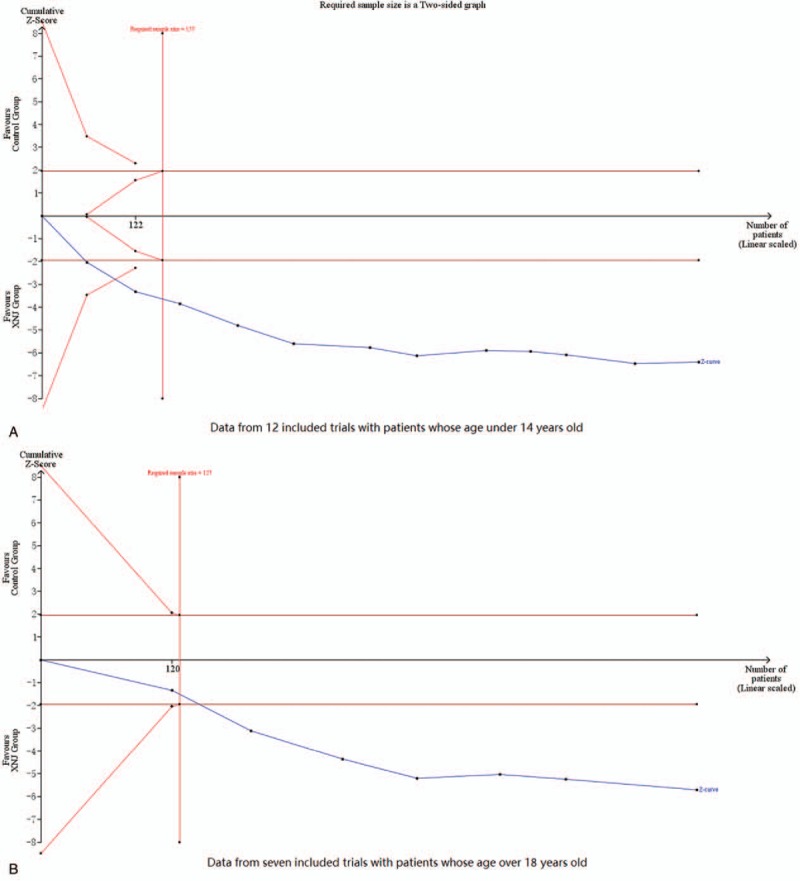
This review found "very low" quality evidence which showed the potential effectiveness of combination of XNJ injection and conventional therapies for VE. Considering the TSA results, conclusion could only be draw on effectiveness of the XNJ injection as add-on treatment for VE patients on increasing the cured rate. Firm conclusion on other outcome measures for effectiveness assessment or safety of XNJ injection could not be draw according to this review due to the insufficient evidence.
系统评价醒脑静注射液辅助治疗病毒性脑炎(VE)的疗效和安全性。
从4个电子数据库建库至2018年10月31日检索评估醒脑静注射液辅助治疗VE疗效的试验。两位作者独立提取数据并评估偏倚风险。使用RevMan 5.3软件进行统计分析。若数据允许,进行荟萃分析和额外分析。还进行了试验序贯分析和推荐意见分级的评估、制定与评价(GRADE)。
本综述纳入23项试验共1757例参与者,所有试验的偏倚风险评估均为不清楚。5项荟萃分析、13项亚组荟萃分析及单个研究的结果显示,在常规治疗基础上,醒脑静注射液(儿童每日0.4 - 0.6 mL/kg,成人每日20 mL)可能对增加病毒性脑炎患者的治愈人数及缩短主要症状恢复时间有更好疗效。使用醒脑静注射液联合常规治疗的患者治愈率更高(风险比1.61,95%置信区间1.45 - 1.80,19项试验,1456例参与者),死亡率更低(风险比0.26,95%置信区间0.10 - 0.71,9项试验,595例参与者)。联合组发热、意识或惊厥恢复时间的平均差异比对照组平均短2小时。亚组分析显示儿童和成人之间无差异。由于本综述证据不足,未能评估醒脑静注射液的安全性。
本综述发现“极低”质量证据表明醒脑静注射液联合常规治疗对VE有潜在疗效。考虑试验序贯分析结果,只能得出醒脑静注射液作为辅助治疗对VE患者提高治愈率的有效性结论。由于证据不足,根据本综述无法对醒脑静注射液有效性评估的其他结局指标或安全性得出确切结论。