Kim Jung Eun, Kim Hei Sung
Department of Dermatology, St. Paul's Hospital, The Catholic University of Korea, Seoul 06591, Korea.
Department of Dermatology, Incheon St. Mary's Hospital, The Catholic University of Korea, Seoul 06591, Korea.
J Clin Med. 2019 Apr 2;8(4):444. doi: 10.3390/jcm8040444.
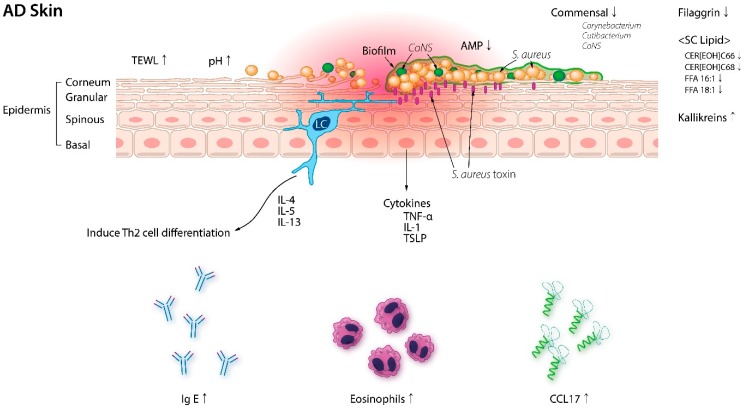
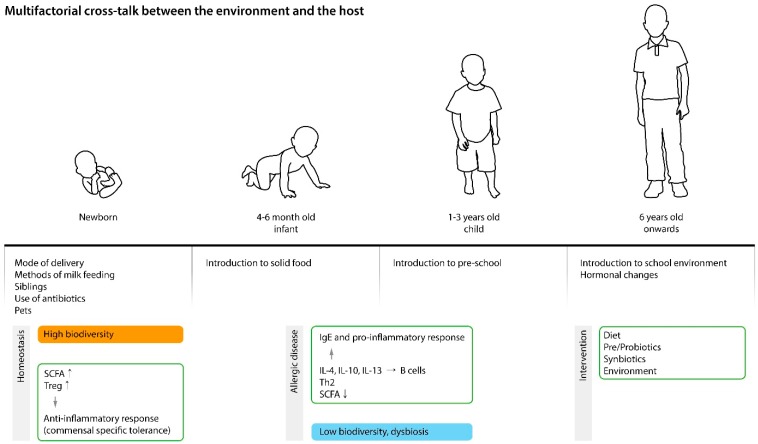
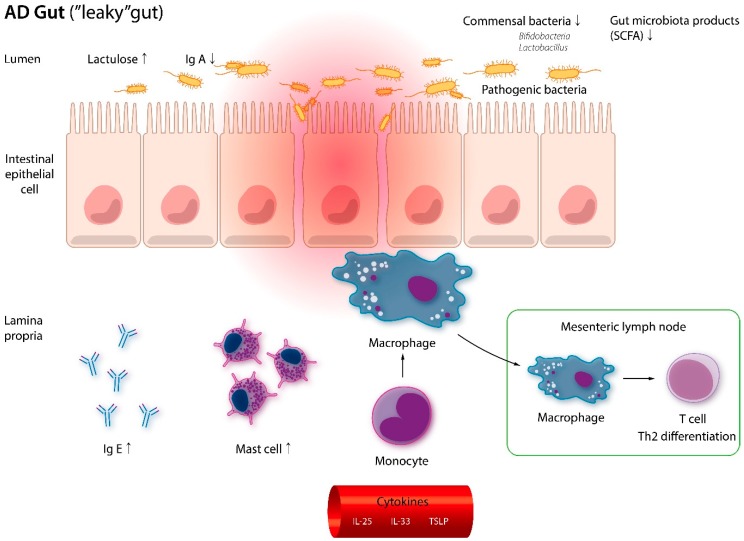
Atopic dermatitis (AD) is a long-standing inflammatory skin disease that is highly prevalent worldwide. Multiple factors contribute to AD, with genetics as well as the environment affecting disease development. Although AD shows signs of skin barrier defect and immunological deviation, the mechanism underlying AD is not well understood, and AD treatment is often very difficult. There is substantial data that AD patients have a disturbed microbial composition and lack microbial diversity in their skin and gut compared to controls, which contributes to disease onset and atopic march. It is not clear whether microbial change in AD is an outcome of barrier defect or the cause of barrier dysfunction and inflammation. However, a cross-talk between commensals and the immune system is now noticed, and their alteration is believed to affect the maturation of innate and adaptive immunity during early life. The novel concept of modifying skin and gut microbiome by applying moisturizers that contain nonpathogenic biomass or probiotic supplementation during early years may be a preventive and therapeutic option in high risk groups, but currently lacks evidence. This review discusses the nature of the skin and gut flora in AD, possible mechanisms of skin-gut interaction, and the therapeutic implications of microbiome correction in AD.
特应性皮炎(AD)是一种长期存在的炎症性皮肤病,在全球范围内高度流行。多种因素导致AD,其中遗传因素以及环境因素都会影响疾病的发展。尽管AD表现出皮肤屏障缺陷和免疫偏差的迹象,但其潜在机制尚未完全明确,AD的治疗通常也非常困难。大量数据表明,与对照组相比,AD患者的皮肤和肠道微生物组成紊乱,微生物多样性缺乏,这导致了疾病的发作和特应性进程。目前尚不清楚AD中的微生物变化是屏障缺陷的结果还是屏障功能障碍和炎症的原因。然而,现在已经注意到共生菌与免疫系统之间的相互作用,并且人们认为它们的改变会影响生命早期先天免疫和适应性免疫的成熟。早年通过使用含有非致病性生物质的保湿剂或补充益生菌来改变皮肤和肠道微生物群的新概念,可能是高危人群的一种预防和治疗选择,但目前缺乏证据。本文综述了AD中皮肤和肠道菌群的性质、皮肤-肠道相互作用的可能机制以及微生物群纠正对AD的治疗意义。