Rey Veronica, Menendez Sofia T, Estupiñan Oscar, Rodriguez Aida, Santos Laura, Tornin Juan, Martinez-Cruzado Lucia, Castillo David, Ordoñez Gonzalo R, Costilla Serafin, Alvarez-Fernandez Carlos, Astudillo Aurora, Braña Alejandro, Rodriguez Rene
University Central Hospital of Asturias-Health and Research Institute of Asturias (ISPA), 33011 Oviedo, Spain.
University Institute of Oncology of Asturias, 33011 Oviedo, Spain.
J Clin Med. 2019 Apr 4;8(4):455. doi: 10.3390/jcm8040455.
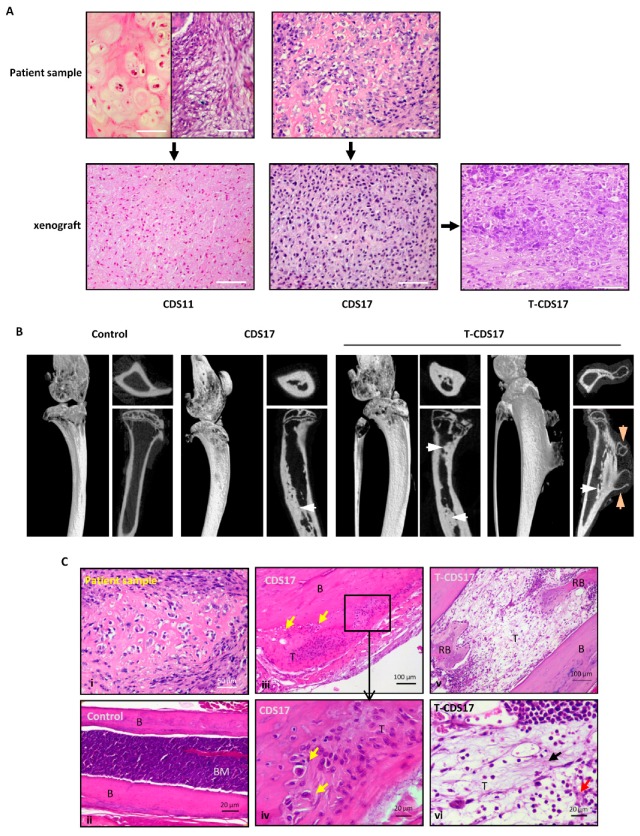
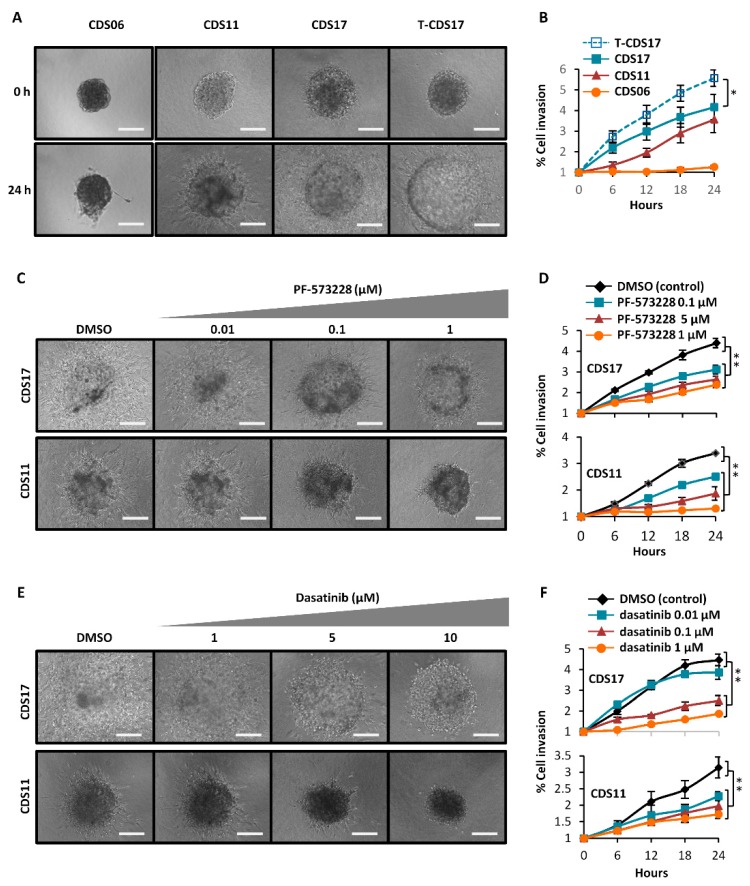
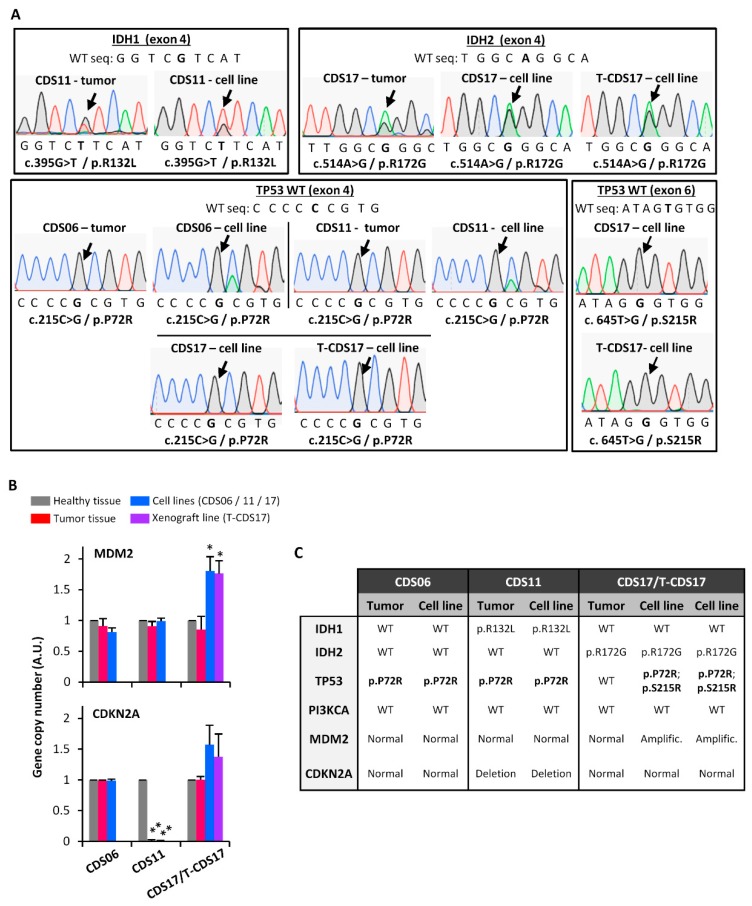
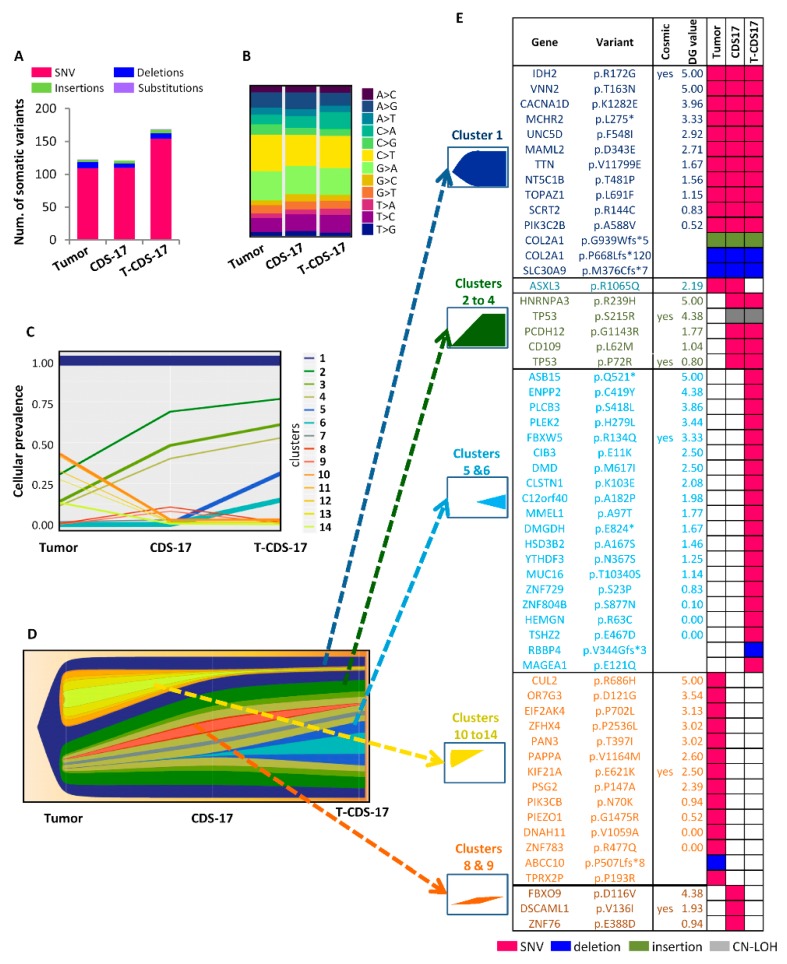
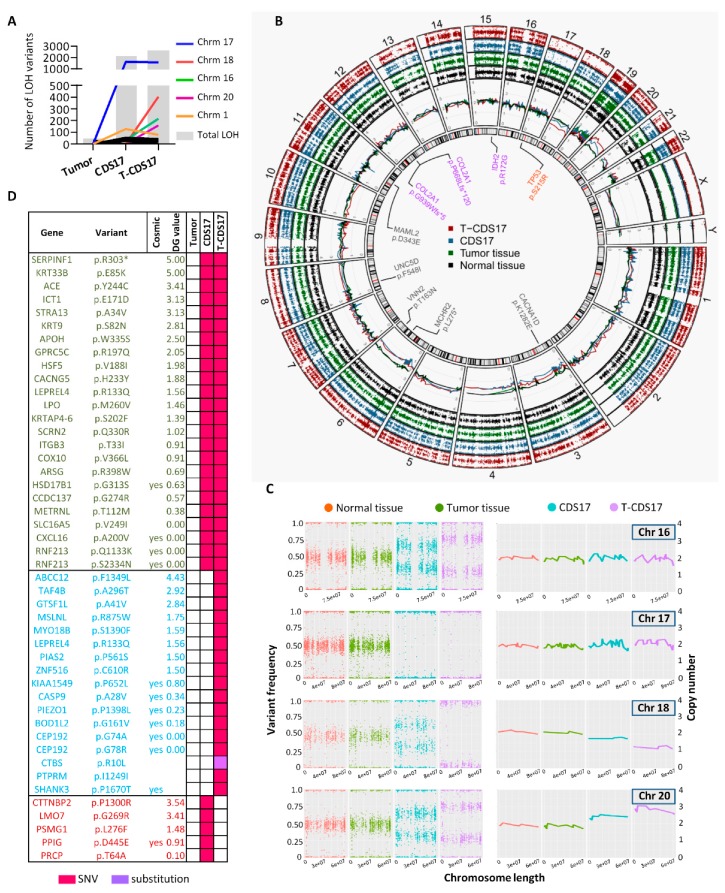
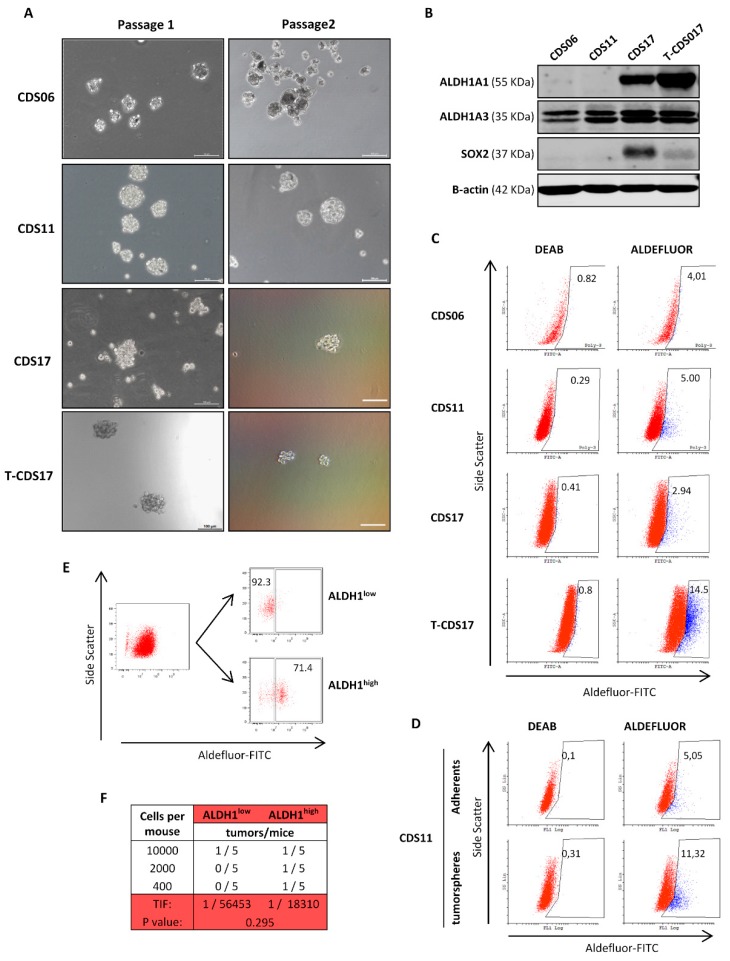
For the cancer genomics era, there is a need for clinically annotated close-to-patient cell lines suitable to investigate altered pathways and serve as high-throughput drug-screening platforms. This is particularly important for drug-resistant tumors like chondrosarcoma which has few models available. Here we established and characterized new cell lines derived from two secondary (CDS06 and CDS11) and one dedifferentiated (CDS-17) chondrosarcomas as well as another line derived from a CDS-17-generated xenograft (T-CDS17). These lines displayed cancer stem cell-related and invasive features and were able to initiate subcutaneous and/or orthotopic animal models. Different mutations in Isocitrate Dehydrogenase-1 (, Isocitrate Dehydrogenase-2 (, and Tumor Supressor P53 () and deletion of Cyclin Dependent Kinase Inhibitor 2A ( were detected both in cell lines and tumor samples. In addition, other mutations in and the amplification of Mouse Double Minute 2 homolog ( arose during cell culture in CDS17 cells. Whole exome sequencing analysis of CDS17, T-CDS17, and matched patient samples confirmed that cell lines kept the most relevant mutations of the tumor, uncovered new mutations and revealed structural variants that emerged during in vitro/in vivo growth. Altogether, this work expanded the panel of clinically and genetically-annotated chondrosarcoma lines amenable for in vivo studies and cancer stem cell (CSC) characterization. Moreover, it provided clues of the genetic drift of chondrosarcoma cells during the adaptation to grow conditions.
在癌症基因组学时代,需要有经过临床注释的、接近患者的细胞系,以适合研究改变的信号通路并用作高通量药物筛选平台。这对于像软骨肉瘤这样耐药性肿瘤尤为重要,因为目前可用的模型很少。在此,我们建立并表征了源自两例继发性(CDS06和CDS11)和一例去分化(CDS - 17)软骨肉瘤的新细胞系,以及另一例源自CDS - 17产生的异种移植瘤(T - CDS17)的细胞系。这些细胞系表现出癌症干细胞相关特征和侵袭性特征,并且能够启动皮下和/或原位动物模型。在细胞系和肿瘤样本中均检测到异柠檬酸脱氢酶 - 1(IDH1)、异柠檬酸脱氢酶 - 2(IDH2)和肿瘤抑制蛋白P53(TP53)的不同突变,以及细胞周期蛋白依赖性激酶抑制剂2A(CDKN2A)的缺失。此外,在CDS17细胞的细胞培养过程中出现了其他基因的突变和小鼠双微体2同源物(MDM2)的扩增。对CDS17、T - CDS17及匹配的患者样本进行全外显子测序分析证实,细胞系保留了肿瘤最相关的突变,发现了新的突变,并揭示了在体外/体内生长过程中出现的结构变异。总之,这项工作扩展了适用于体内研究和癌症干细胞(CSC)表征的临床和基因注释的软骨肉瘤细胞系库。此外,它还提供了软骨肉瘤细胞在适应生长条件过程中遗传漂变的线索。