Hainan Key Laboratory for Sustainable Utilization of Tropical Bioresources, Institute of Tropical Agriculture and Forestry, Hainan University, Haikou, 570228, China.
Biol Direct. 2019 Apr 15;14(1):7. doi: 10.1186/s13062-019-0235-z.
Rubber tree (Hevea brasiliensis) acts as an important tropic economic crop and rubber tree anthracnose, mainly caused by Colletotrichum gloeosporioides, is one of the most common fungal disease, which leads to serious loss of rubber production. Therefore, the investigation on disease resistance is of great worldwide significance. In the past decades, substantial progress has been made on coding gene families related with plant disease resistance. However, in rubber tree, whether the disease resistance mechanism involves noncoding RNAs, especially long noncoding RNAs (lncRNAs), still remains poorly understood.
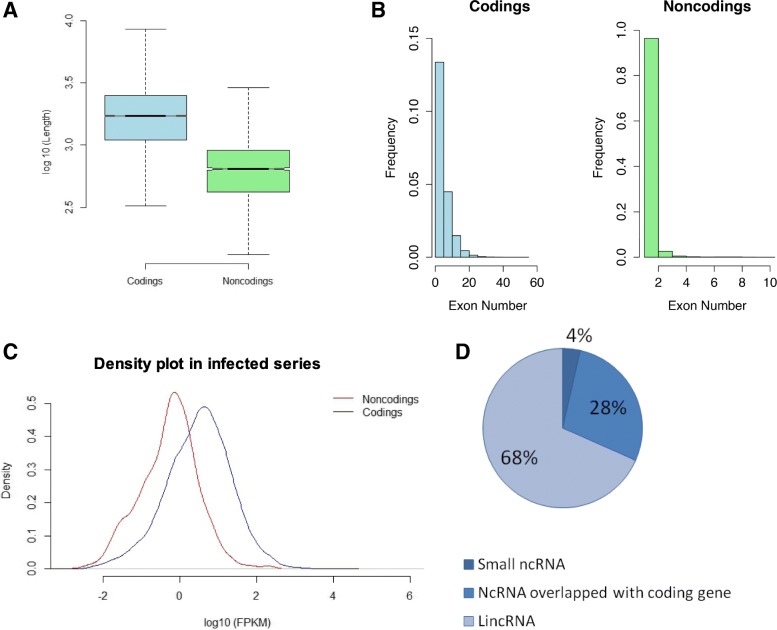
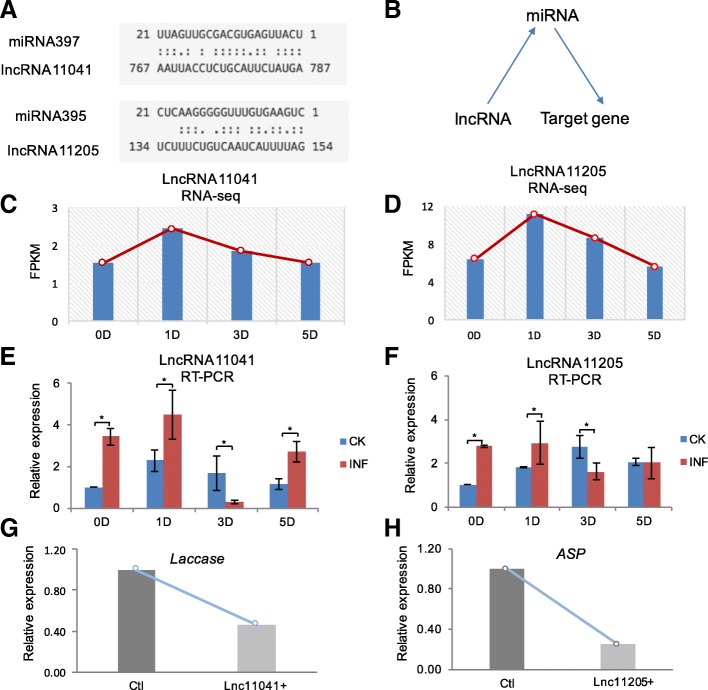
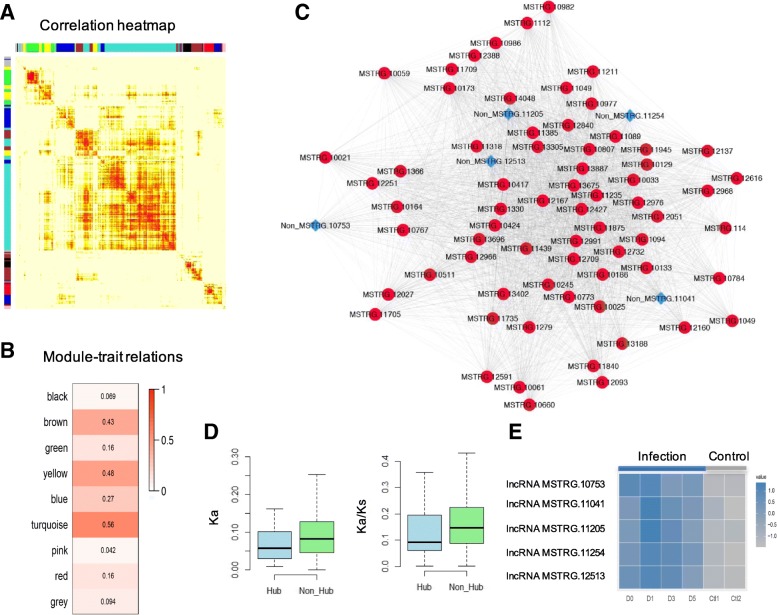
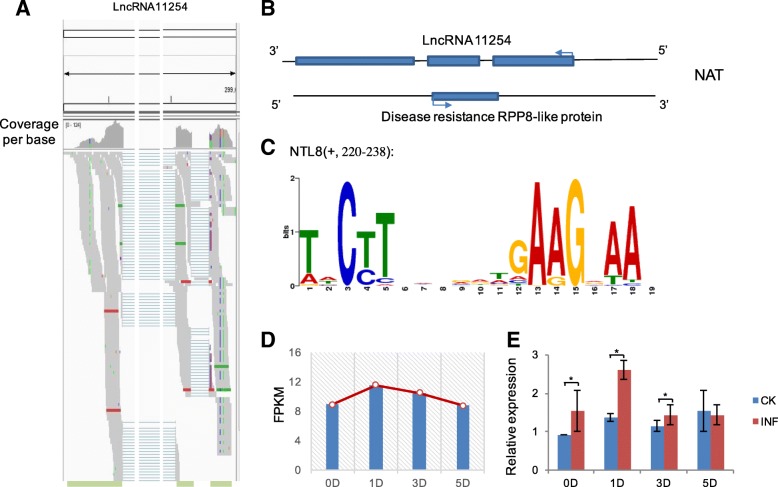
Here, we modeled the development of H. brasiliensis leaf samples inoculated with C. gloeosporioides at divergent stages, explored to identify the expressed ncRNAs by RNA-seq, and investigated the dominant lncRNAs responding to the infection, through constructing a co-expressed network systematically. On the dominant lncRNAs, we explored the potential functional role of lncRNA11254 recruiting the transcription factor, and that lncRNA11041 and lncRNA11205 probably stimulate the accumulation of corresponding disease responsive miRNAs, and further modulate the expressions of target genes, accompanying with experimental examination.
Take together, computational analyses in silico and experimental evidences in our research collectively revealed the responsive roles of dominant lncRNAs to the pathogen. The results will provide new perspectives to unveil the plant disease resistance mechanisms, and will presumably provide a new theoretical basis and candidate prognostic markers for the optimization and innovation of genetic breeding for rubber tree.
This article was reviewed by Ryan McGinty and Roland Huber.
橡胶树(Hevea brasiliensis)是一种重要的热带经济作物,由胶孢炭疽菌(Colletotrichum gloeosporioides)引起的橡胶树炭疽病是最常见的真菌病害之一,导致橡胶产量严重损失。因此,对抗病性的研究具有重要的全球意义。在过去的几十年中,与植物抗病性相关的编码基因家族的研究已经取得了很大进展。然而,在橡胶树中,抗病机制是否涉及非编码 RNA,特别是长非编码 RNA(lncRNAs),仍知之甚少。
在这里,我们模拟了橡胶树叶片样本在不同阶段接种胶孢炭疽菌的发育过程,通过 RNA-seq 鉴定了表达的 ncRNAs,并通过系统构建共表达网络,研究了响应感染的优势 lncRNAs。我们研究了 lncRNA11254 招募转录因子的潜在功能作用,以及 lncRNA11041 和 lncRNA11205 可能刺激相应疾病响应 miRNA 的积累,并进一步调节靶基因的表达,同时进行了实验验证。
综上所述,我们的计算分析和实验证据共同揭示了优势 lncRNAs 对病原体的响应作用。这些结果将为揭示植物抗病机制提供新的视角,并为橡胶树遗传育种的优化和创新提供新的理论依据和候选预后标志物。
本文由 Ryan McGinty 和 Roland Huber 审稿。