Department of Pediatrics, Vanderbilt University Medical Center, 2200 Children's Way, 5121 Doctors' Office Tower, Nashville, TN, 37232-9075, USA.
Department of Surgery, Vanderbilt University Medical Center, Nashville, TN, 37232, USA.
Cell Commun Signal. 2019 Apr 15;17(1):33. doi: 10.1186/s12964-019-0345-3.
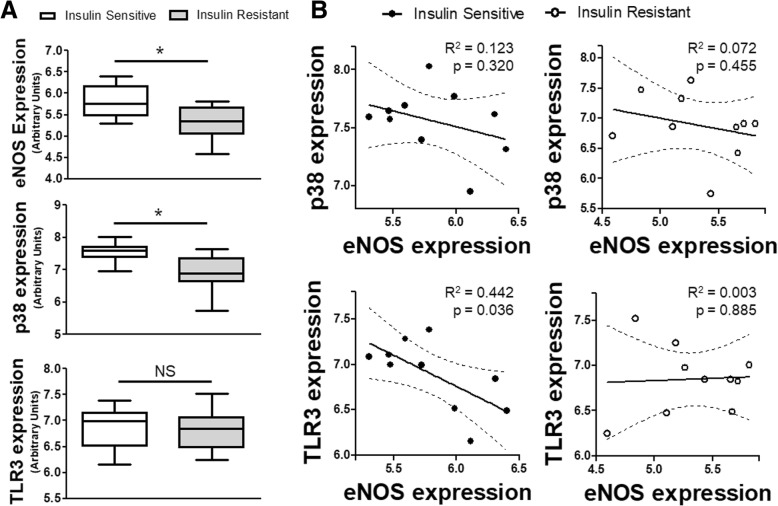
Vascular dysfunction is commonly seen during severe viral infections. Endothelial nitric oxide synthase (eNOS), has been postulated to play an important role in regulating vascular homeostasis as well as propagation of the inflammatory reaction. We hypothesized that the loss of eNOS would negatively impact toll-like receptor 3 (TLR3) signaling and worsen vascular function to viral challenge.
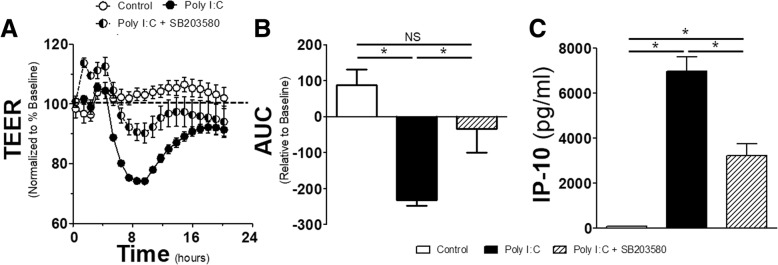
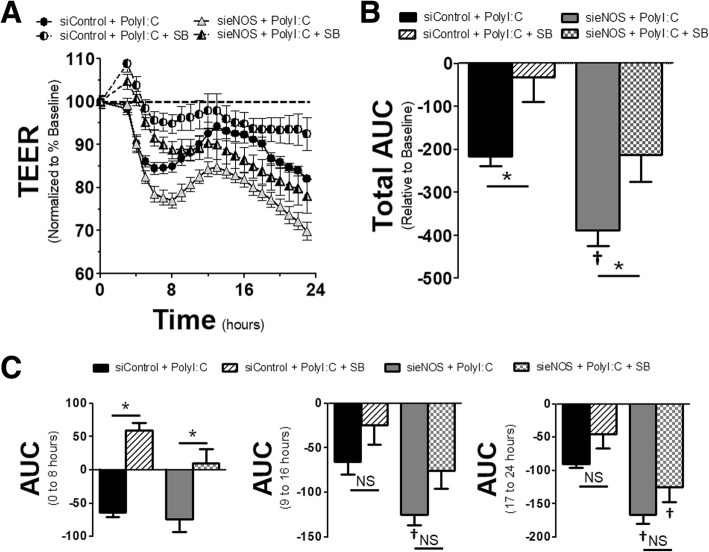
Human microvascular endothelial cells (HMVECs) were exposed to either control or eNOS siRNA and then treated with Poly I:C, a TLR3 agonist and mimicker of dsRNA viruses. Cells were assessed for protein-protein associations, cytokine and chemokine analysis as well as transendothelial electrical resistance (TEER) as a surrogate of permeability.
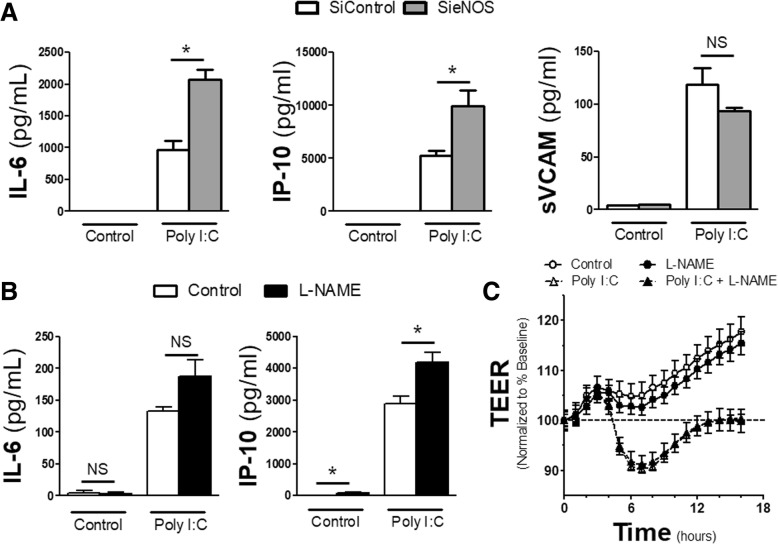
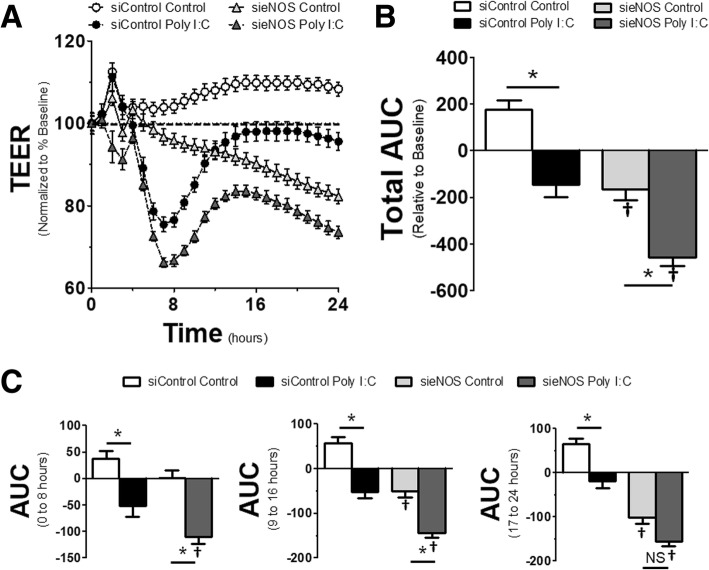
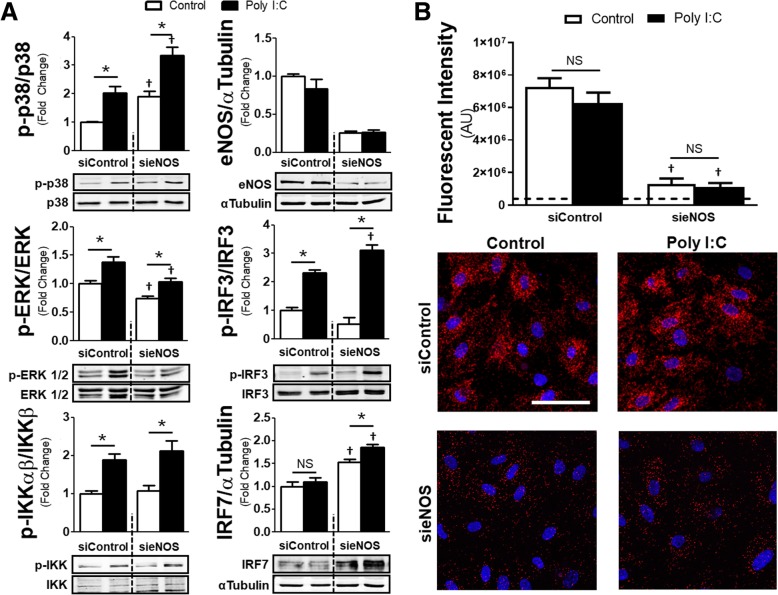
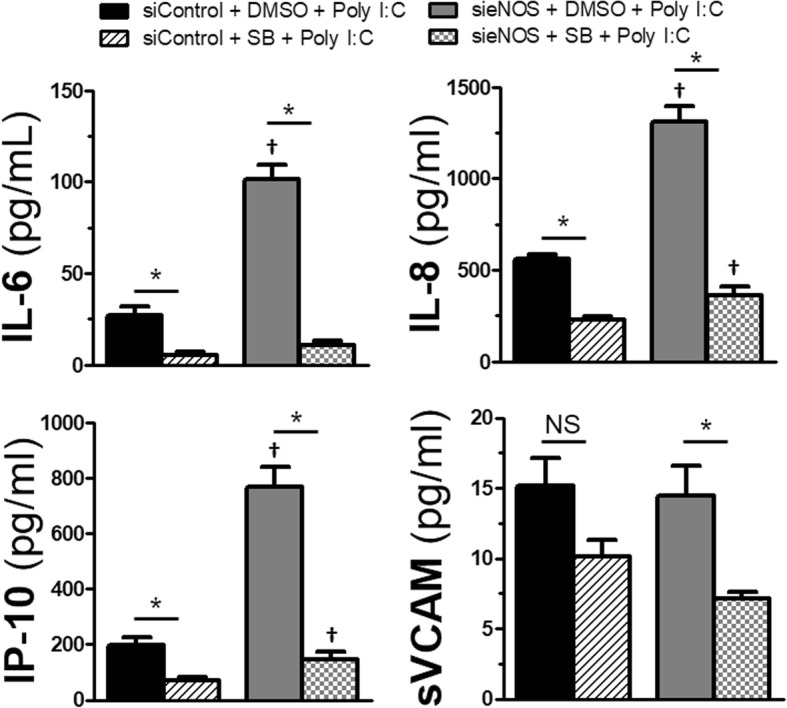
HMVECs that had reduced eNOS expression had a significantly elevated increase in IL-6, IL-8 and IP-10 production after Poly I:C. In addition, the knockdown of eNOS enhanced the change in TEER after Poly I:C stimulation. Western blot analysis showed enhanced phosphorylation of p38 in sieNOS treated cells with Poly I:C compared to siControl cells. Proximity ligation assays further demonstrated direct eNOS-p38 protein-protein interactions. The addition of the p38 inhibitor, SB203580, in eNOS knockdown cells reduced both cytokine production after Poly I:C, and as well as mitigated the reduction in TEER, suggesting a direct link between eNOS and p38 in TLR3 signaling.
These results suggest that reduction of eNOS increases TLR3-mediated inflammation in human endothelial cells in a p38-dependent manner. This finding has important implications for understanding the pathogenesis of severe viral infections and the associated vascular dysfunction.
严重病毒感染时通常会出现血管功能障碍。内皮型一氧化氮合酶(eNOS)被认为在调节血管稳态以及炎症反应的传播中发挥重要作用。我们假设 eNOS 的缺失会对 Toll 样受体 3(TLR3)信号产生负面影响,并使血管功能在受到病毒攻击时恶化。
将人微血管内皮细胞(HMVEC)暴露于对照或 eNOS siRNA 中,然后用 Poly I:C(TLR3 激动剂和双链 RNA 病毒模拟物)处理。评估细胞的蛋白-蛋白相互作用、细胞因子和趋化因子分析以及作为通透性替代物的跨内皮电阻(TEER)。
eNOS 表达降低的 HMVEC 在 Poly I:C 后 IL-6、IL-8 和 IP-10 的产生显著增加。此外,eNOS 的敲低增强了 Poly I:C 刺激后的 TEER 变化。Western blot 分析显示,与 siControl 细胞相比,用 Poly I:C 处理的 sieNOS 细胞中 p38 的磷酸化明显增加。接近连接测定进一步证明了 eNOS-p38 蛋白-蛋白相互作用。在 eNOS 敲低细胞中加入 p38 抑制剂 SB203580,可减少 Poly I:C 后的细胞因子产生,并减轻 TEER 的降低,表明 TLR3 信号中 eNOS 和 p38 之间存在直接联系。
这些结果表明,eNOS 的减少以 p38 依赖的方式增加了人类内皮细胞中 TLR3 介导的炎症。这一发现对于理解严重病毒感染的发病机制和相关的血管功能障碍具有重要意义。