Department of Radiation Medicine, Faculty of Naval Medicine, Second Military Medical University, 800, Xiangyin Road, 200433, Shanghai, P. R. China.
Exp Mol Med. 2019 Apr 15;51(4):1-17. doi: 10.1038/s12276-019-0240-4.
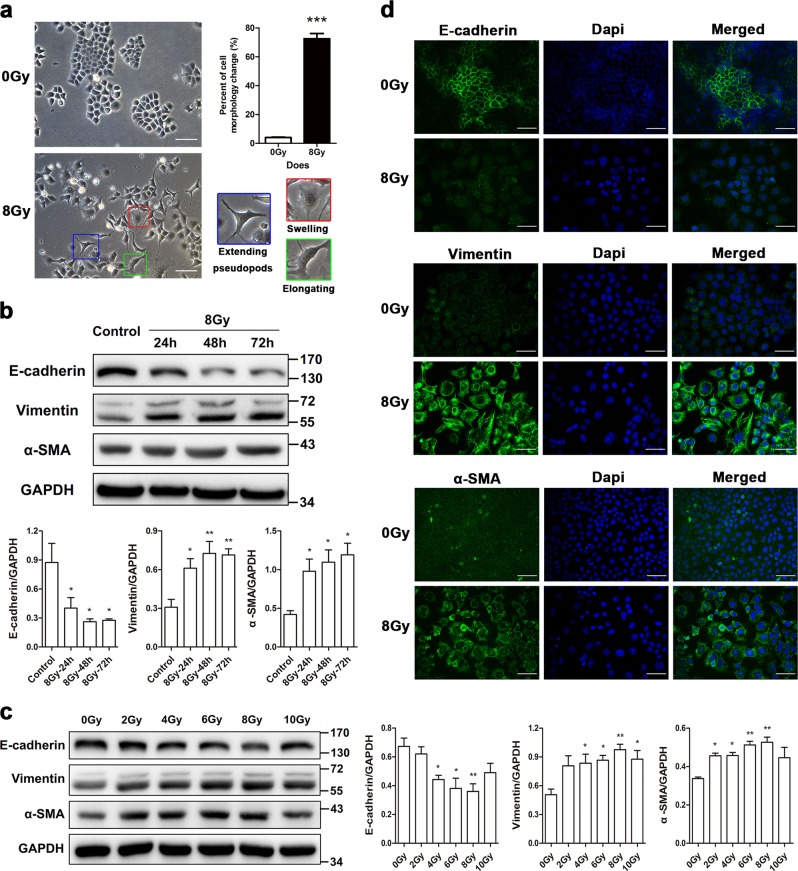
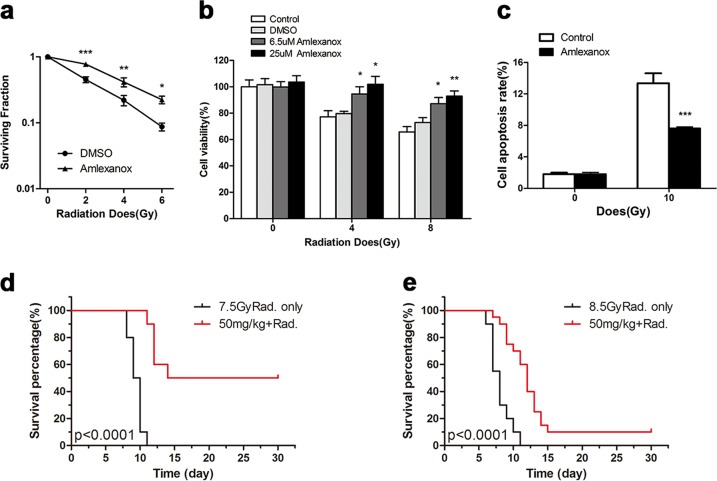
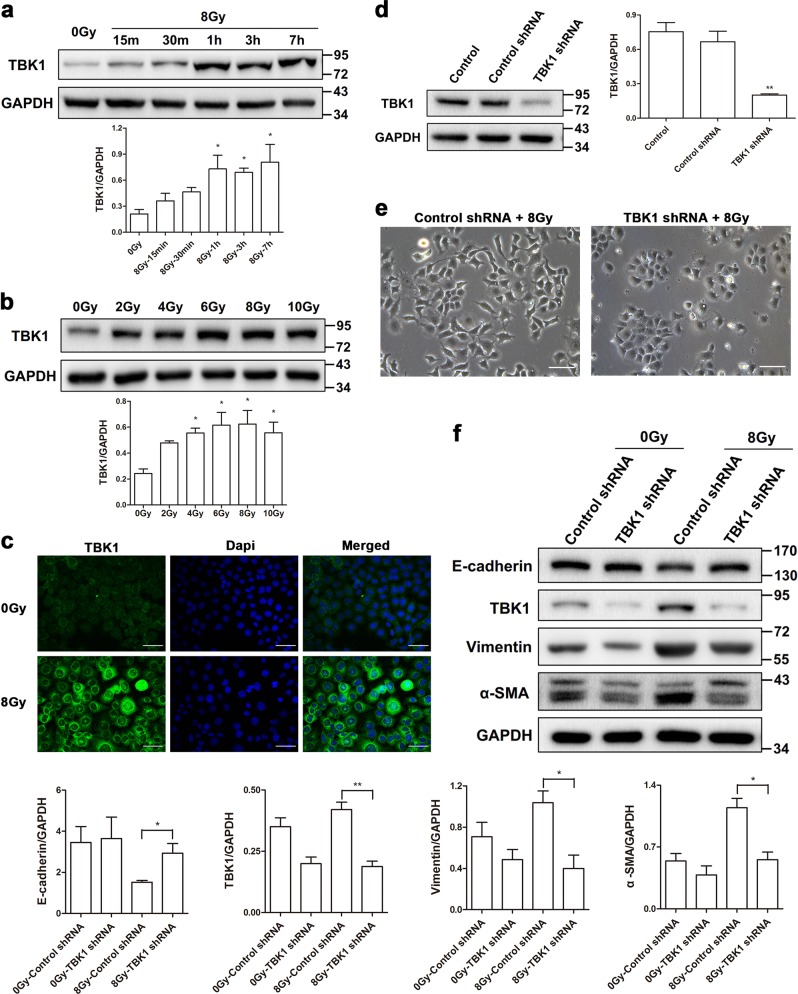
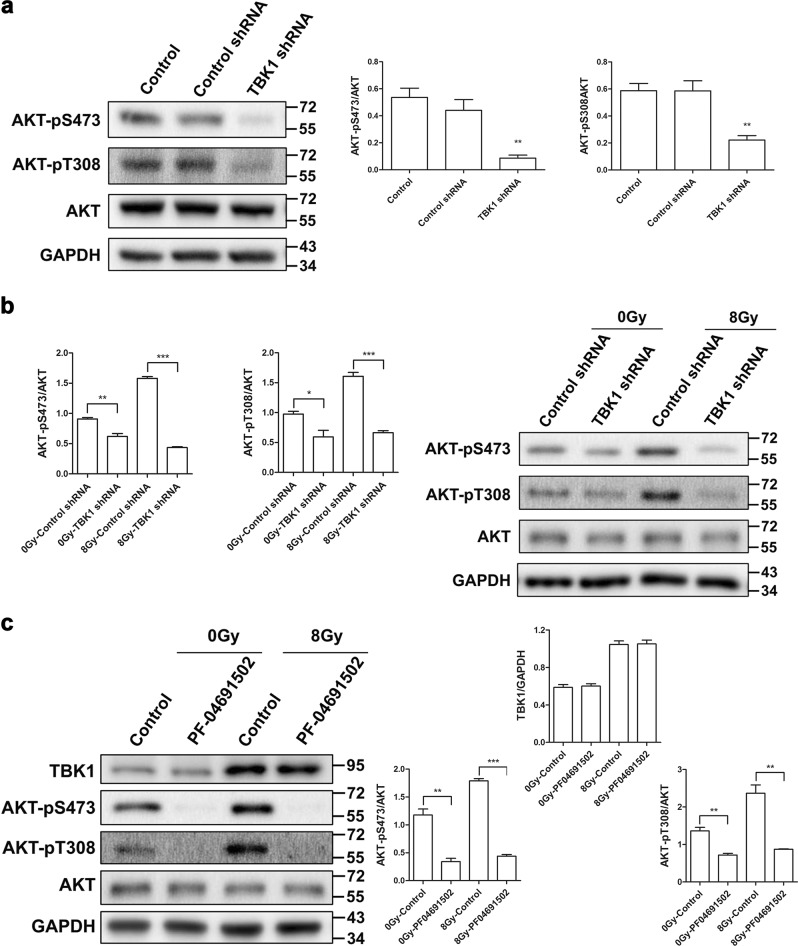
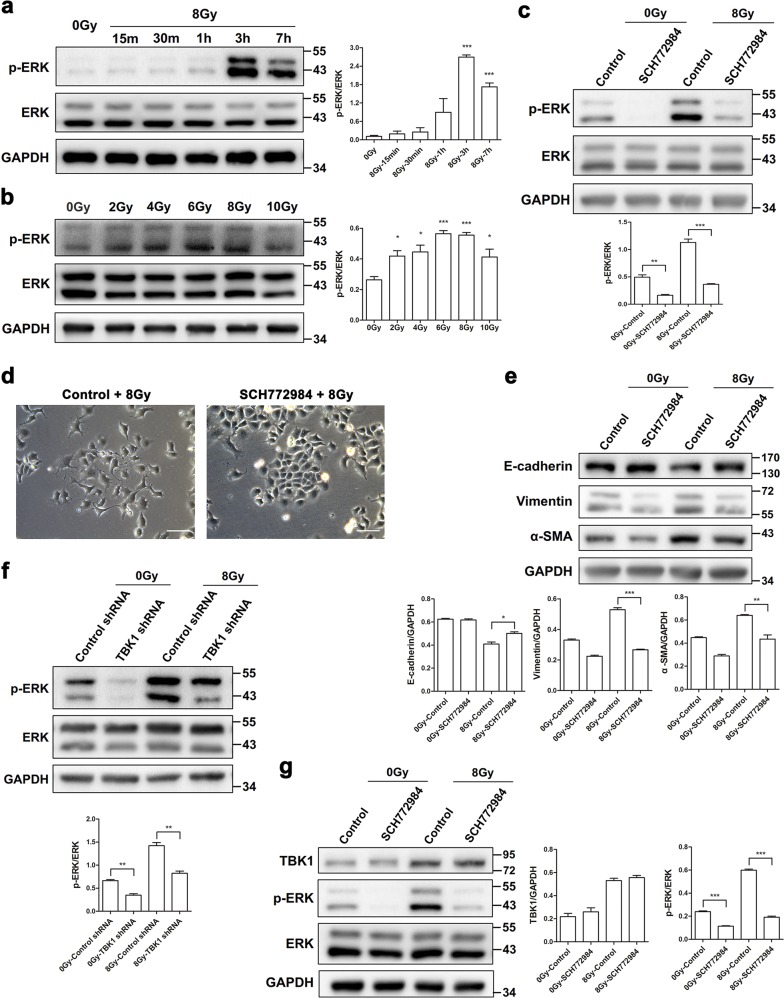
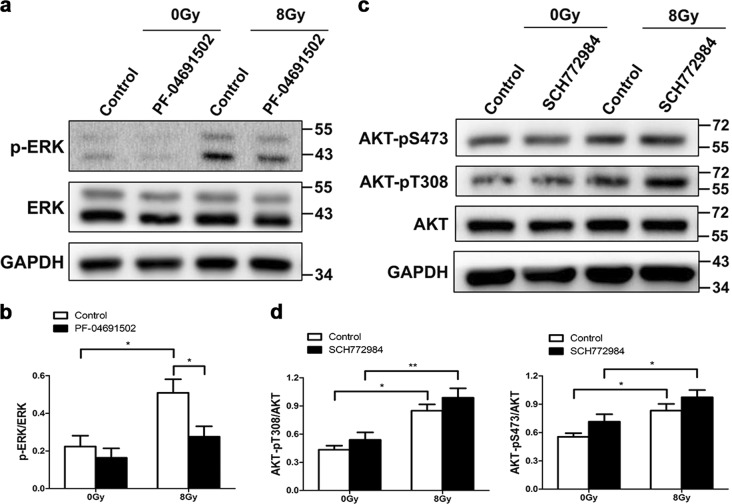
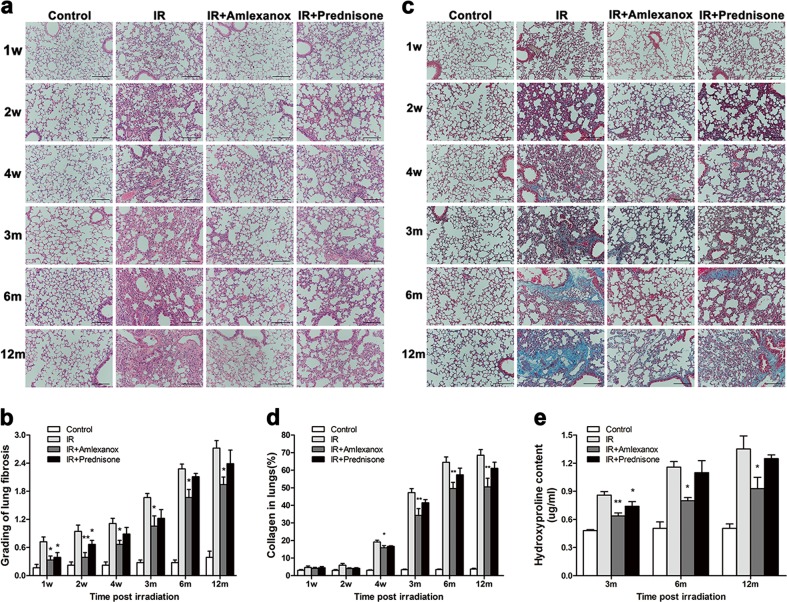
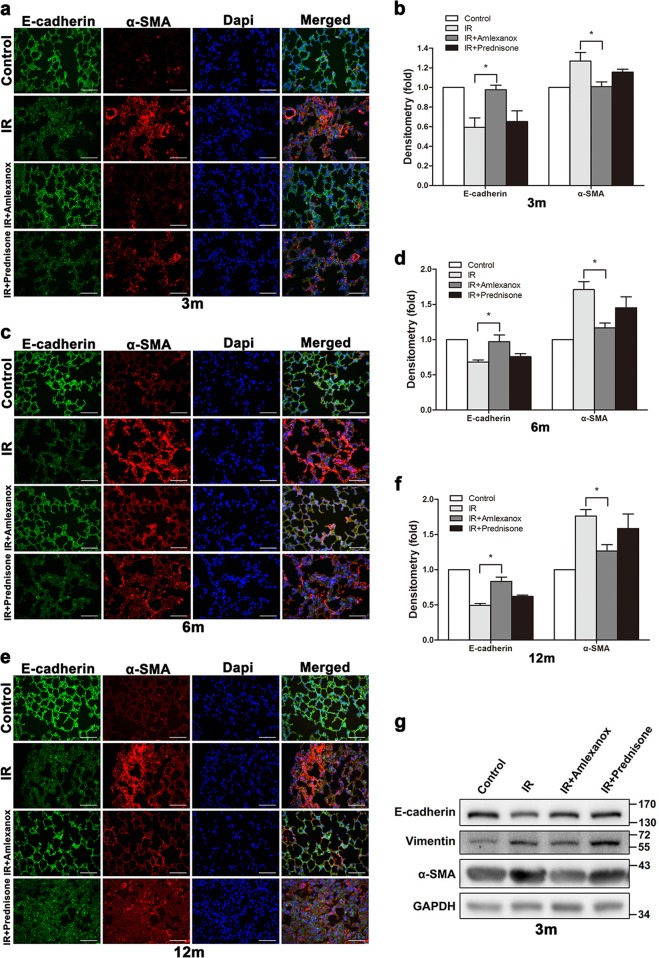
As a common serious complication of thoracic radiotherapy, radiation-induced pulmonary fibrosis (RIPF) severely limits radiation therapy approaches. Epithelial-mesenchymal transition (EMT) is a direct contributor to the fibroblast pool during fibrogenesis, and prevention of EMT is considered an effective strategy to inhibit tissue fibrosis. Our previous study revealed that TANK-binding kinase 1 (TBK1) regulates EMT in lung cancer cells. In the present study, we aimed to investigate the therapeutic potential of targeting TBK1 to prevent RIPF and EMT progression. We found radiation-induced EMT and pulmonary fibrosis in normal alveolar epithelial cells and lung tissues. TBK1 knockdown or inhibition significantly reversed EMT in vivo and in vitro and attenuated pulmonary fibrosis and collagen deposition. Moreover, we observed that TBK1 was elevated in a time- and dose-dependent manner by radiation. Meanwhile, radiation also induced time- and dose-dependent activation of AKT and ERK, each of whose inhibitors suppressed radiation-induced EMT. Intriguingly, silencing of TBK1 with shRNA also blocked the radiation-induced activation of AKT and ERK signaling. The ERK inhibitor did not obviously affect the expression of TBK1 or phosphorylated AKT, while AKT inhibition suppressed activation of ERK without changing the expression of TBK1. Finally, we found that a TBK1 inhibitor inhibited inflammatory cytokine expression in a RIPF model and Amlexanox protected normal cells and mice from ionizing radiation. In conclusion, our results indicate that the TBK1-AKT-ERK signaling pathway regulates radiation-induced EMT in normal alveolar epithelial cells, suggesting that TBK1 is a potential target for pulmonary fibrosis prevention during cancer radiotherapy.
作为胸部放疗的常见严重并发症,放射性肺纤维化(RIPF)严重限制了放射治疗方法。上皮-间充质转化(EMT)是纤维化过程中成纤维细胞池的直接贡献者,预防 EMT 被认为是抑制组织纤维化的有效策略。我们之前的研究表明,TANK 结合激酶 1(TBK1)调节肺癌细胞中的 EMT。在本研究中,我们旨在研究靶向 TBK1 预防 RIPF 和 EMT 进展的治疗潜力。我们发现辐射诱导正常肺泡上皮细胞和肺组织中的 EMT 和肺纤维化。TBK1 敲低或抑制在体内和体外均显著逆转 EMT,并减轻肺纤维化和胶原沉积。此外,我们观察到 TBK1 被辐射以时间和剂量依赖性方式上调。同时,辐射还诱导 AKT 和 ERK 的时间和剂量依赖性激活,其抑制剂中的每一种都抑制了辐射诱导的 EMT。有趣的是,用 shRNA 沉默 TBK1 也阻断了 AKT 和 ERK 信号的辐射诱导激活。ERK 抑制剂对 TBK1 或磷酸化 AKT 的表达没有明显影响,而 AKT 抑制在不改变 TBK1 表达的情况下抑制 ERK 的激活。最后,我们发现 TBK1 抑制剂抑制了 RIPF 模型中的炎症细胞因子表达,而 Amlexanox 可保护正常细胞和小鼠免受电离辐射。总之,我们的结果表明,TBK1-AKT-ERK 信号通路调节正常肺泡上皮细胞中的辐射诱导 EMT,表明 TBK1 是癌症放疗期间预防肺纤维化的潜在靶点。