Genomic Medicine Group, J. Craig Venter Institute, La Jolla, California, USA.
School of Dentistry, The University of California, Los Angeles, California, USA.
mBio. 2019 Apr 16;10(2):e00321-19. doi: 10.1128/mBio.00321-19.
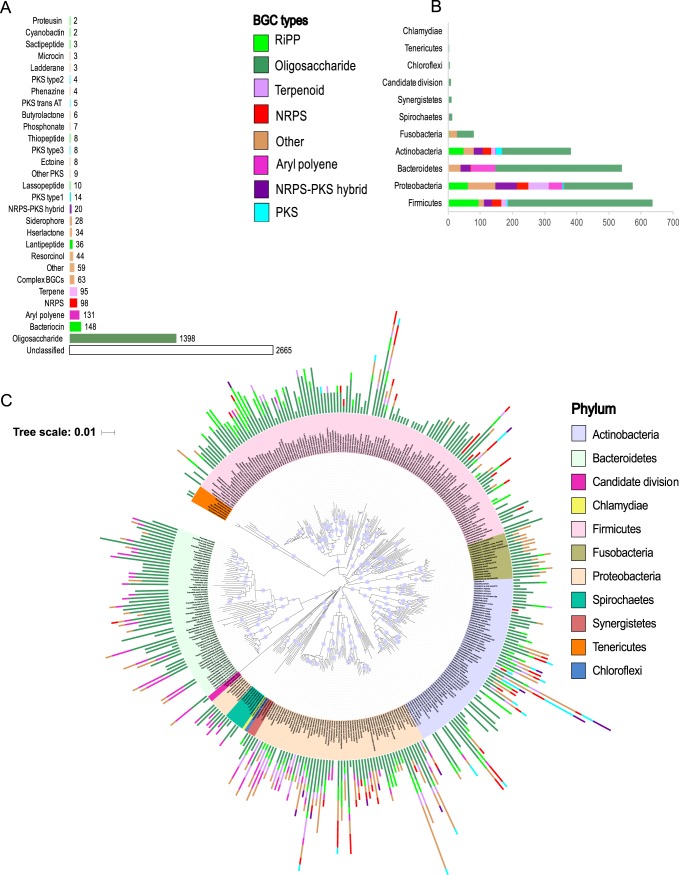
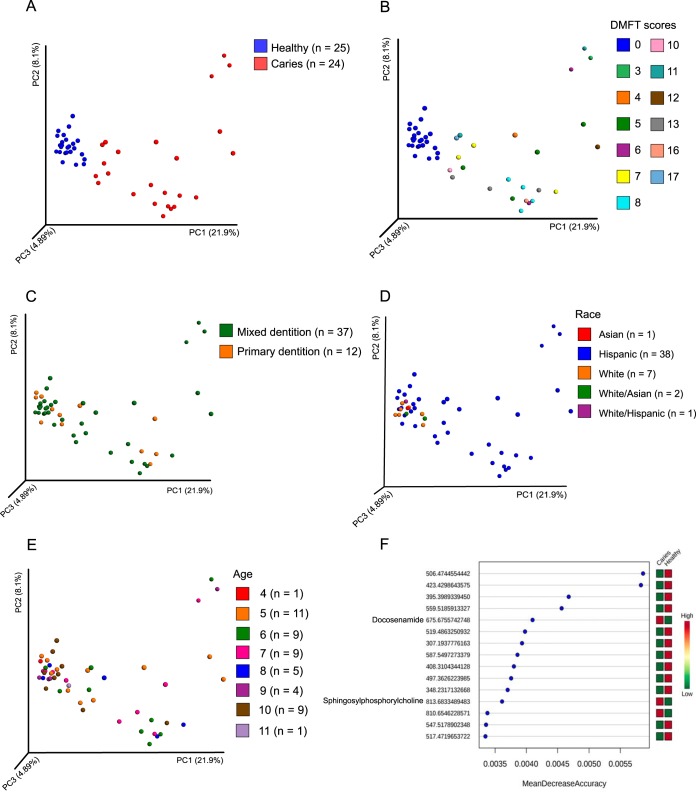
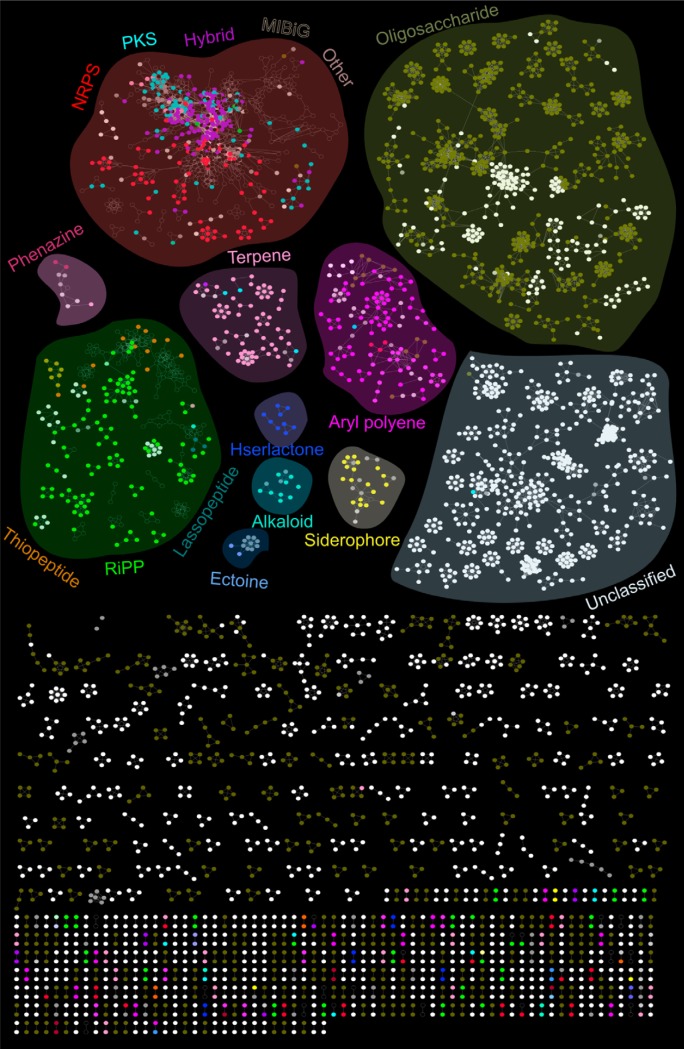
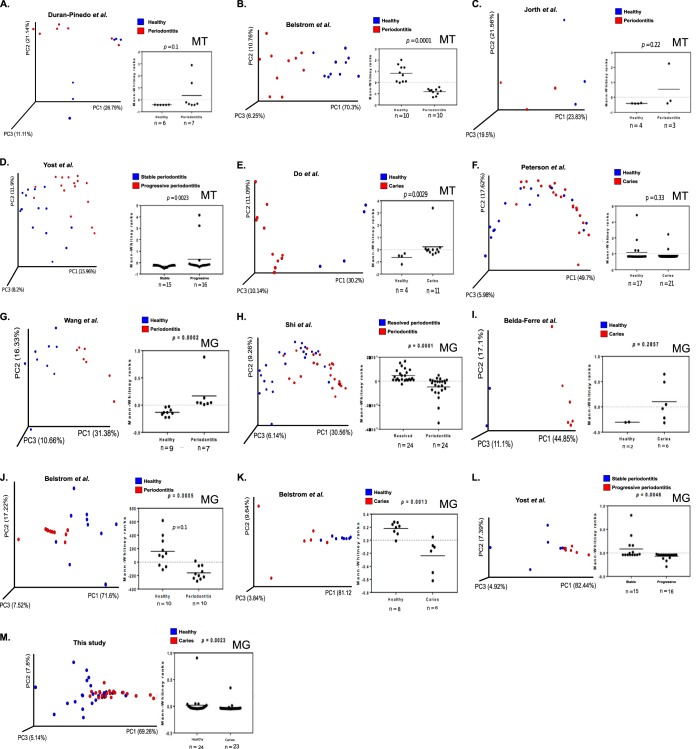
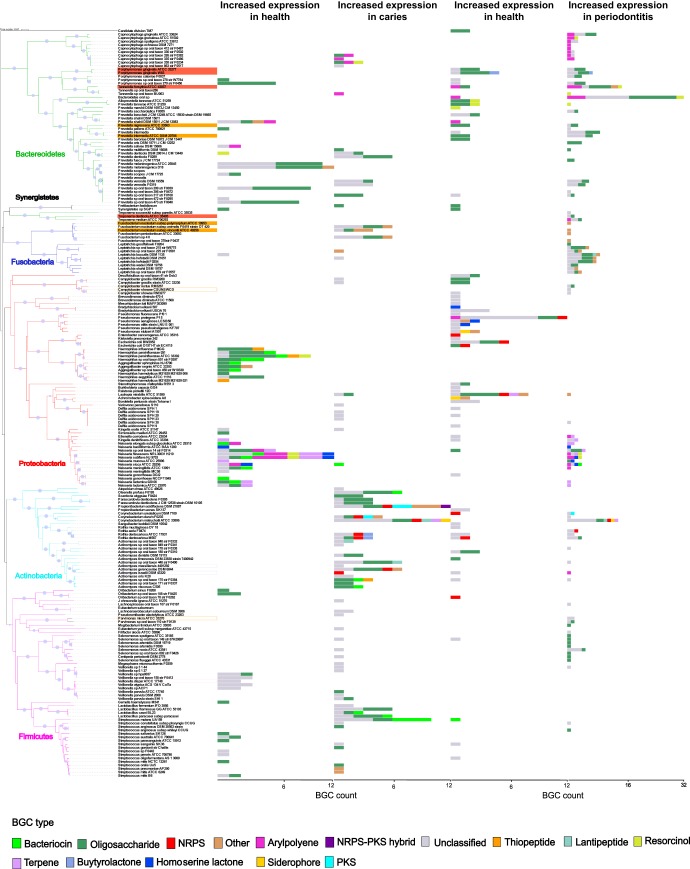
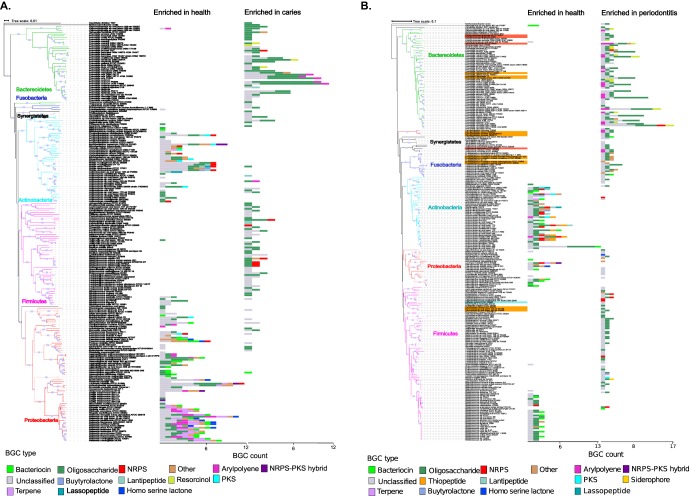
Small molecules are the primary communication media of the microbial world. Recent bioinformatic studies, exploring the biosynthetic gene clusters (BGCs) which produce many small molecules, have highlighted the incredible biochemical potential of the signaling molecules encoded by the human microbiome. Thus far, most research efforts have focused on understanding the social language of the gut microbiome, leaving crucial signaling molecules produced by oral bacteria and their connection to health versus disease in need of investigation. In this study, a total of 4,915 BGCs were identified across 461 genomes representing a broad taxonomic diversity of oral bacteria. Sequence similarity networking provided a putative product class for more than 100 unclassified novel BGCs. The newly identified BGCs were cross-referenced against 254 metagenomes and metatranscriptomes derived from individuals either with good oral health or with dental caries or periodontitis. This analysis revealed 2,473 BGCs, which were differentially represented across the oral microbiomes associated with health versus disease. Coabundance network analysis identified numerous inverse correlations between BGCs and specific oral taxa. These correlations were present in healthy individuals but greatly reduced in individuals with dental caries, which may suggest a defect in colonization resistance. Finally, corroborating mass spectrometry identified several compounds with homology to products of the predicted BGC classes. Together, these findings greatly expand the number of known biosynthetic pathways present in the oral microbiome and provide an atlas for experimental characterization of these abundant, yet poorly understood, molecules and socio-chemical relationships, which impact the development of caries and periodontitis, two of the world's most common chronic diseases. The healthy oral microbiome is symbiotic with the human host, importantly providing colonization resistance against potential pathogens. Dental caries and periodontitis are two of the world's most common and costly chronic infectious diseases and are caused by a localized dysbiosis of the oral microbiome. Bacterially produced small molecules, often encoded by BGCs, are the primary communication media of bacterial communities and play a crucial, yet largely unknown, role in the transition from health to dysbiosis. This study provides a comprehensive mapping of the BGC repertoire of the human oral microbiome and identifies major differences in health compared to disease. Furthermore, BGC representation and expression is linked to the abundance of particular oral bacterial taxa in health versus dental caries and periodontitis. Overall, this study provides a significant insight into the chemical communication network of the healthy oral microbiome and how it devolves in the case of two prominent diseases.
小分子是微生物世界的主要通讯介质。最近的生物信息学研究探索了产生许多小分子的生物合成基因簇 (BGCs),突出了人类微生物组编码的信号分子令人难以置信的生化潜力。到目前为止,大多数研究都集中在理解肠道微生物组的社交语言上,而口腔细菌产生的关键信号分子及其与健康和疾病的关系仍需要研究。在这项研究中,在代表广泛口腔细菌分类多样性的 461 个基因组中总共鉴定了 4915 个 BGC。序列相似性网络为 100 多个未分类的新型 BGC 提供了一个假定的产物类别。新鉴定的 BGC 与来自口腔健康个体、龋齿个体或牙周炎个体的 254 个宏基因组和宏转录组进行了交叉参考。该分析揭示了 2473 个 BGC,它们在与健康和疾病相关的口腔微生物组中存在差异表达。共现网络分析确定了 BGC 与特定口腔分类群之间存在许多负相关关系。这些相关性在健康个体中存在,但在患有龋齿的个体中大大减少,这可能表明定植抗性缺陷。最后,确证的质谱分析鉴定了几种与预测 BGC 类产物同源的化合物。总的来说,这些发现极大地扩展了口腔微生物组中已知生物合成途径的数量,并为这些丰富但了解甚少的分子以及影响龋齿和牙周炎发展的社会化学关系提供了图谱,龋齿和牙周炎是世界上最常见和最昂贵的两种慢性传染病。健康的口腔微生物组与人类宿主共生,重要的是提供对潜在病原体的定植抗性。龋齿和牙周炎是世界上最常见和最昂贵的两种慢性传染病,是由口腔微生物组的局部失调引起的。细菌产生的小分子,通常由 BGC 编码,是细菌群落的主要通讯介质,在从健康到失调的转变中起着至关重要但尚未完全了解的作用。本研究全面绘制了人类口腔微生物组 BGC 库图谱,并确定了与健康相比疾病的主要差异。此外,BGC 的表达与特定口腔细菌分类群的丰度有关,无论是在健康还是在龋齿和牙周炎中。总的来说,这项研究提供了对健康口腔微生物组化学通讯网络的重要洞察,以及在两种主要疾病情况下它是如何退化的。